Updated October 2026
Tarpon Springs is an incorporated city with its own tree rules, separate from Pinellas County's code, so removal permits go through the city. Common jobs here are trimming oaks over older homes near the bayous, cleaning and removing palms, dealing with storm damage on waterfront lots and grinding stumps.
Water on three sides
Tarpon Springs is shaped by water: the Anclote River, the bayous that wind through the older neighborhoods and the Gulf beyond the sponge docks. Waterfront lots bring salt wind, soft ground and, along some shorelines, mangroves, while inland streets carry big oaks and pines.
Crews reach Tarpon Springs from our Hudson head office in Pasco or our Tampa service office, whichever is closer to the job that day.
Low waterfront lots can stay soft for days after heavy rain, so crews protect lawns and seawalls with mats and plan where heavy wood is lowered. On inland streets, oaks and pines near older homes are the usual work, from deadwood removal to full takedowns.
Bayou lots and old oaks
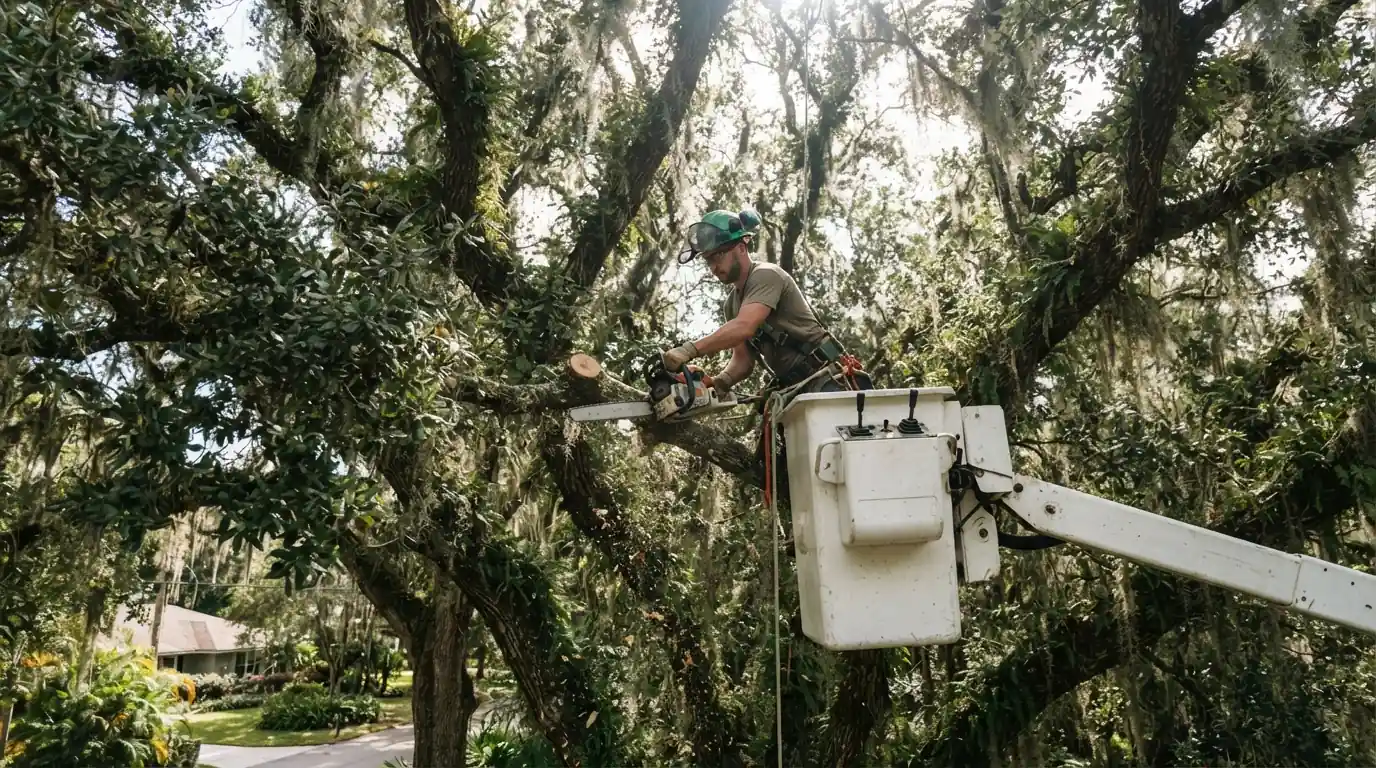
Older homes near the bayous often sit under big live oaks and laurel oaks that lean toward the water and the light. Reducing their weight and lifting limbs off roofs keeps them standing. Laurel oaks past their prime are the common removals.
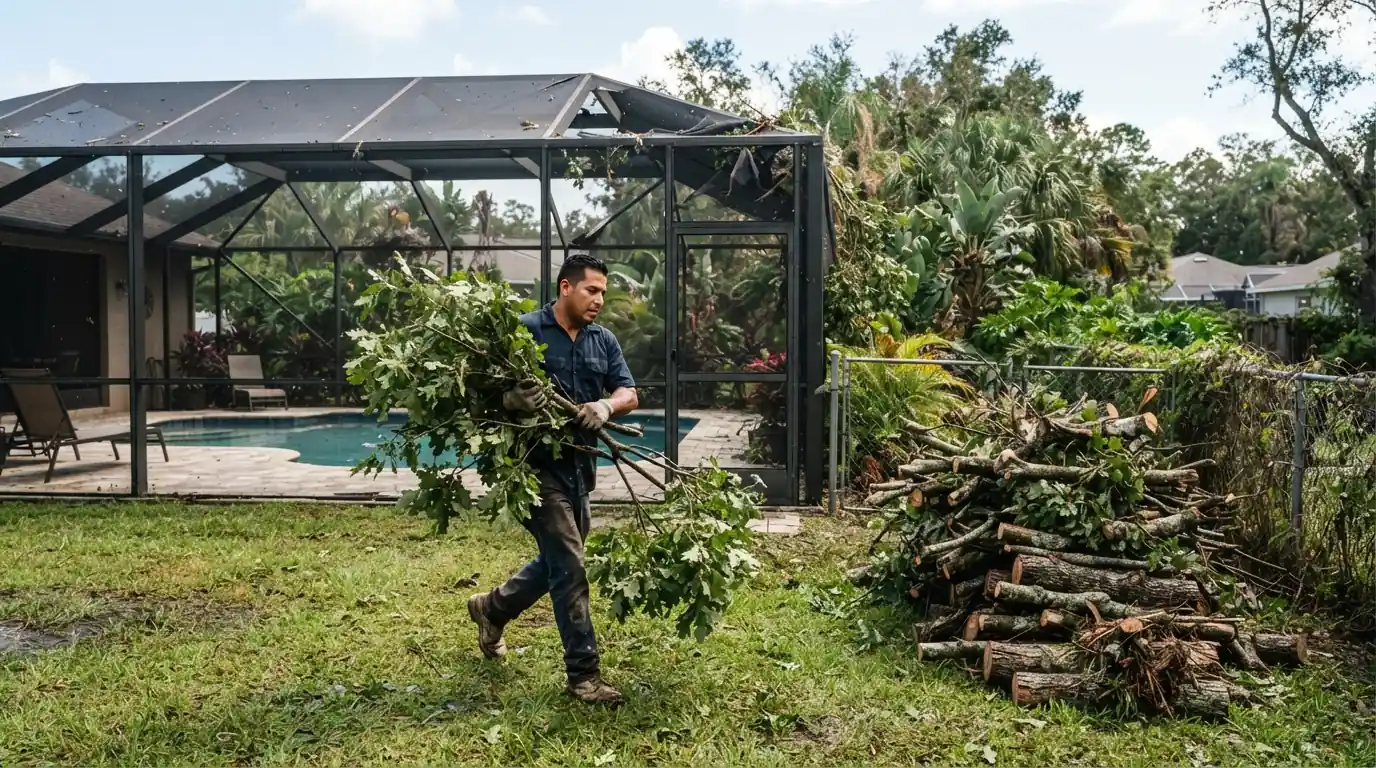
Palms take the salt well but still need cleaning, and storms push wind and water across low waterfront lots, so cleanup after named storms is a regular call.
Tarpon Springs tree rules
Tarpon Springs is an incorporated Pinellas city that sets its own tree rules apart from the county code, so removal permits go through the city rather than Pinellas County. Mangroves on bayou and river shorelines follow the state trimming law instead. We confirm the city's requirement and any shoreline limits before scheduling. Shoreline limits are checked before any cutting starts.
Most requested in Tarpon Springs
Nearby areas we cover
Or see the whole Tampa Bay service area.
Tarpon Springs tree questions
Yes, separate from the Pinellas County code.
Hudson or Tampa, whichever is closer that day.
Yes, with weight reduction and clearance cuts.
Yes, limbs, fronds and fallen trees.
They follow the state mangrove law.
Yes, with mats and careful lowering.