Updated October 2026
Hurricane tree preparation in Tampa means thinning dense live oak canopies so wind passes through, removing deadwood, hangers and palm seed pods, and taking down trees too weak to last a storm. Book it before the season opens on June 1, while crews have time for careful pruning instead of storm calls.
What a pre-season visit covers
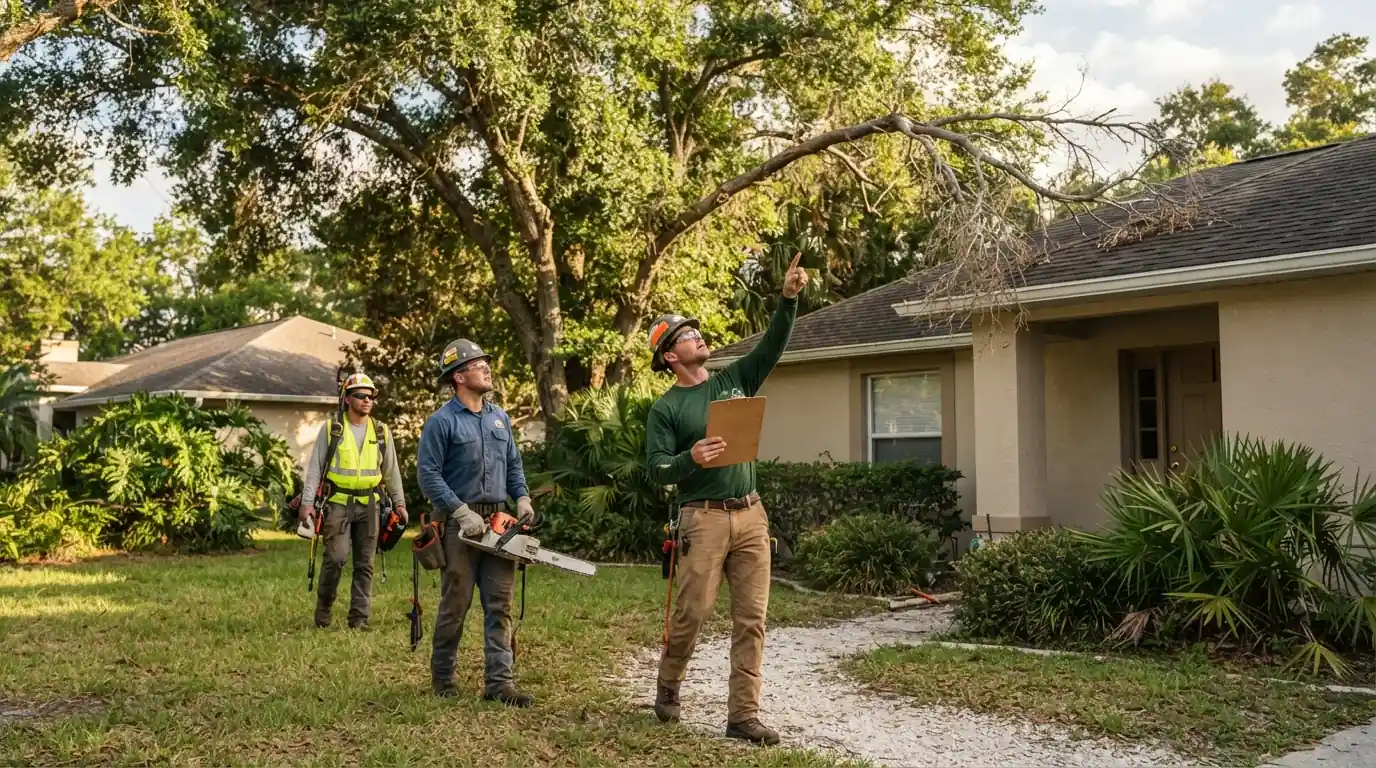
- A walk of every tree within falling distance of the house
- Interior thinning on live oaks with dense crowns
- Deadwood and hangers removed over roofs and drives
- Palm fronds, seed pods and loose boots cleaned out
- Limbs cut back from the roof, lanai and service drop
- A plain list of any tree we think should come down
Why pre-season work beats storm calls
A storm does not choose which limb fails; it finds the weakest one. On Tampa lots that is usually deadwood in a laurel oak, a live oak crown so thick it acts like a sail, or a palm carrying a season of dead fronds and pods.
Before a storm you also get a choice of cuts. Afterwards the job is whatever the wind left; in April a climber can thin properly and leave a healthier tree.
Pre-season canopy thinning
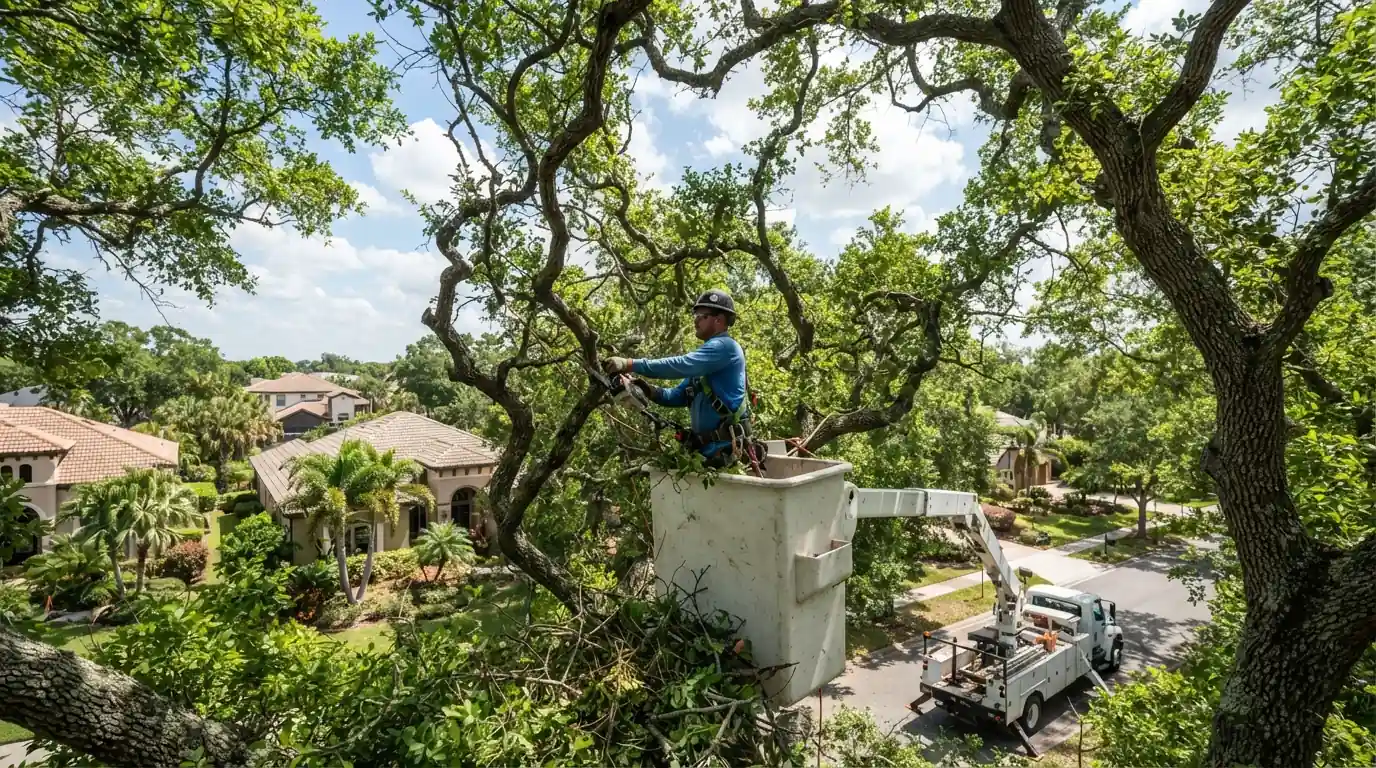
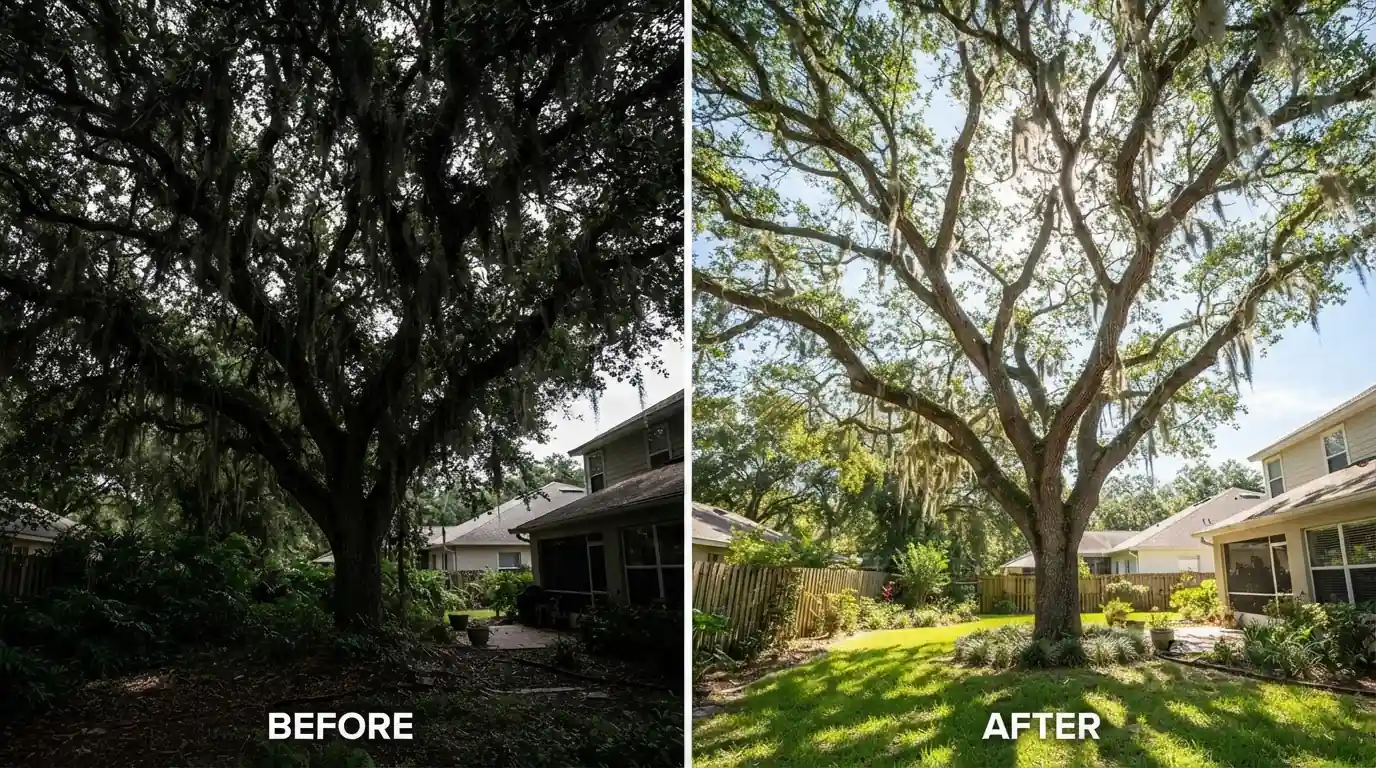
Live oaks grow dense, heavy crowns, and a solid canopy catches wind like a sail. Thinning removes selected interior branches so air moves through the crown and the load on each limb drops, without changing the tree's outline much. Good thinning takes a modest share of the live canopy, spread evenly, with each cut at the branch collar so it seals. It is not topping, and a crew that offers to cut the whole top back is making the tree weaker.
Typical planning range: pruning averages $450 in Tampa with a general range of $375 to $525. Market figures, not a quote from us.
Deadwood and hanger removal
Dead branches are brittle, and they are the first things a gust throws, often onto a roof, a car or a pool cage. Hangers, limbs already broken and caught in the canopy, are worse because they can fall with no wind at all. A climber or bucket takes both out over the structure first, then works outward. On older laurel oaks this pass also shows whether the wood in the big limbs is still sound. If it is not, you hear about it that day.
Palm frond and seed pod clean-out
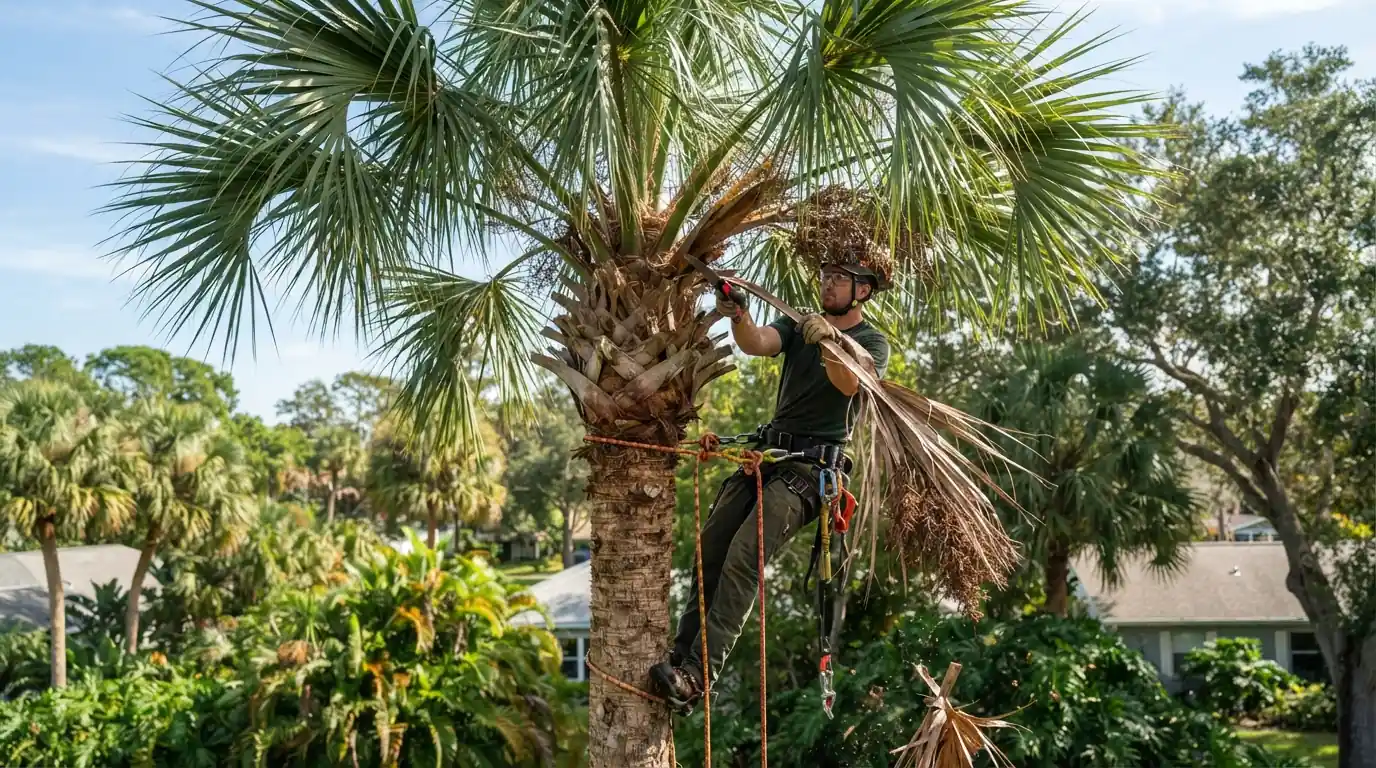
Palms shed on their own, just not on your schedule. Dead fronds, seed stalks and fruit clusters turn into projectiles in a storm, and a crown full of them hides problems. We take off what is dead or hanging, plus the pods and loose boots, and stop there. Green fronds feed the palm and shield the bud, so stripping a palm to a narrow tuft before a storm, the so-called hurricane cut, weakens it for a year or more.
Removal of trees that should not ride out a storm
Some trees are past pruning. A laurel oak with a hollow trunk, a tree leaning harder than last year, or a pine rooted in soggy sand beside the house may be safer down in May than on the roof in September. We say so plainly, walk you around the tree to show you why, and handle the permit when the tree is protected. Most healthy trees need thinning, not removal, and we will tell you that too, even when it means a smaller job for us.
What 2024 taught Tampa Bay about storm-ready trees
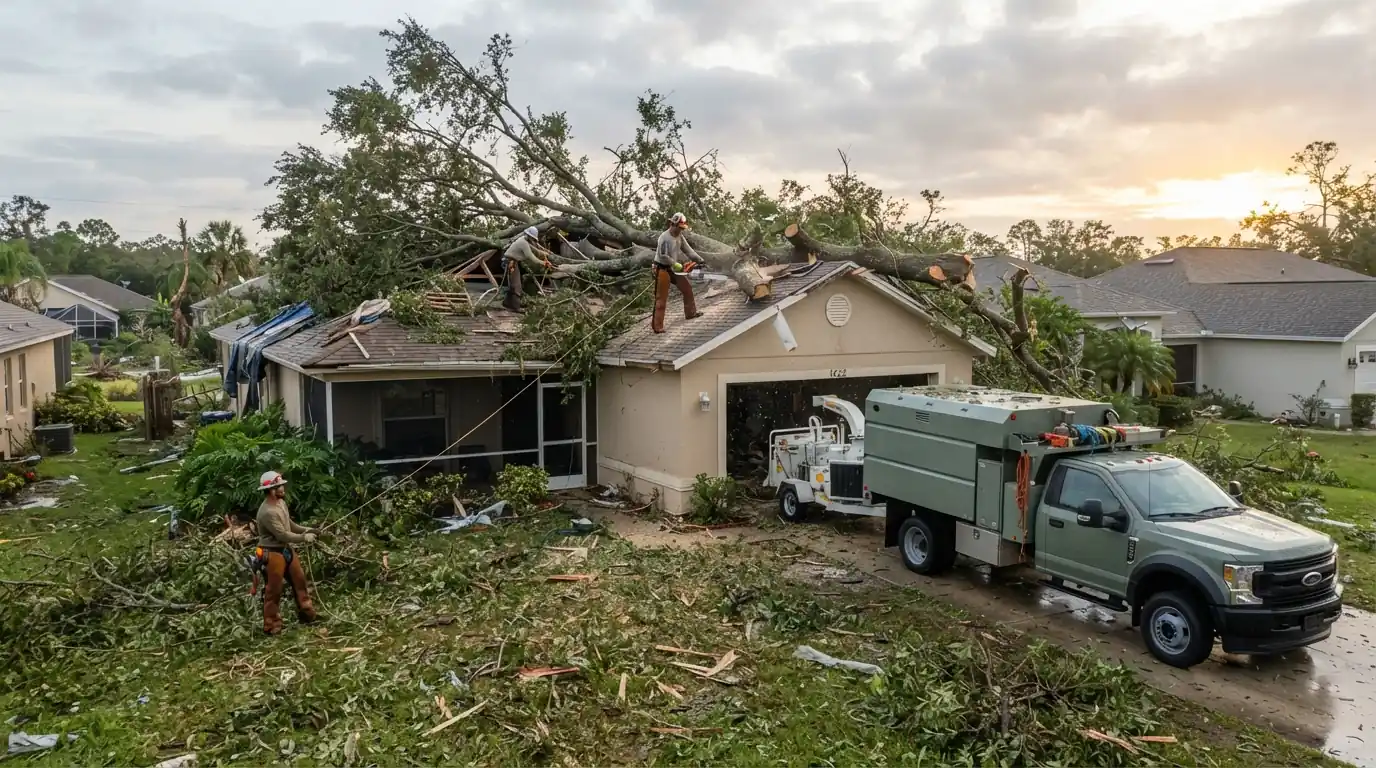
Helene and Milton showed which trees fail. Laurel oaks did the most damage in older neighborhoods, including homes hit by falling laurel oaks in a Brandon neighborhood, while most healthy trees stayed standing. In Plant City, Bloomingdale and Valrico, where massive oaks shade whole lots, interior thinning is what lets those live oak canopies pass wind in hurricane season instead of catching it.
Signs a tree needs attention before June
- Dead limbs up top
Bare branches that did not leaf out this spring.
- A crown you cannot see through
Dense live oaks that block the sky from below.
- A new lean
A lean that changed after rain, or soil heaving at the base.
- Fungus at the base
Shelf-like conks on an oak trunk can mean decay inside.
- Bronzing palm crowns
Sabals yellowing or bronzing in the crown need a look.
How a pre-season visit runs
- 1Book a walk
Call and tell us how many trees are near the house.
- 2Yard walk
A foreman looks at each tree within falling distance.
- 3Written plan
You get the cuts, any removals and the price.
- 4Permits
We file any pruning or removal permit first.
- 5Pruning day
Climbers thin, deadwood and clear limbs over the house.
- 6Palms
Dead fronds and pods come out; green fronds stay.
- 7Cleanup
Brush is chipped or hauled and the yard raked.
What sets the price of pre-season pruning
Pre-season work is priced by the trees, not the forecast.
- Number of treesA full-lot walk costs more than one oak.
- Tree sizeTall oaks need climbers or a bucket.
- Truck accessA bucket truck is faster than climbing.
- Palms in the mixPalm clean-outs are priced per palm.
- PermitsLarge Tampa oaks need a pruning permit.
- DebrisChipping on site saves hauling.
Typical planning range: small tree trimming $225 to $500 in Tampa. Market figures, not a quote from us.
Storm-prep questions from Tampa homeowners
Spring is best. The season opens June 1, and pruning before then leaves time for permits.
No. Thinning removes selected interior branches and keeps the shape. Topping cuts the crown back and weakens the tree.
Inside the City of Tampa, pruning needs a permit once the trunk is 24 inches or more across. We check before we cut.
No. Remove dead fronds and pods only. Green fronds protect the bud.
Laurel oaks past middle age, overgrown live oaks, and shallow-rooted trees in waterlogged soil.
Yes, with the reason. Most healthy trees need pruning, not removal.
Yes. Brush is chipped or hauled and the yard is raked before we leave.
Other storm and pruning work
From our guides: Hurricane Season Tree Prep for Tampa Yards