Updated October 2026
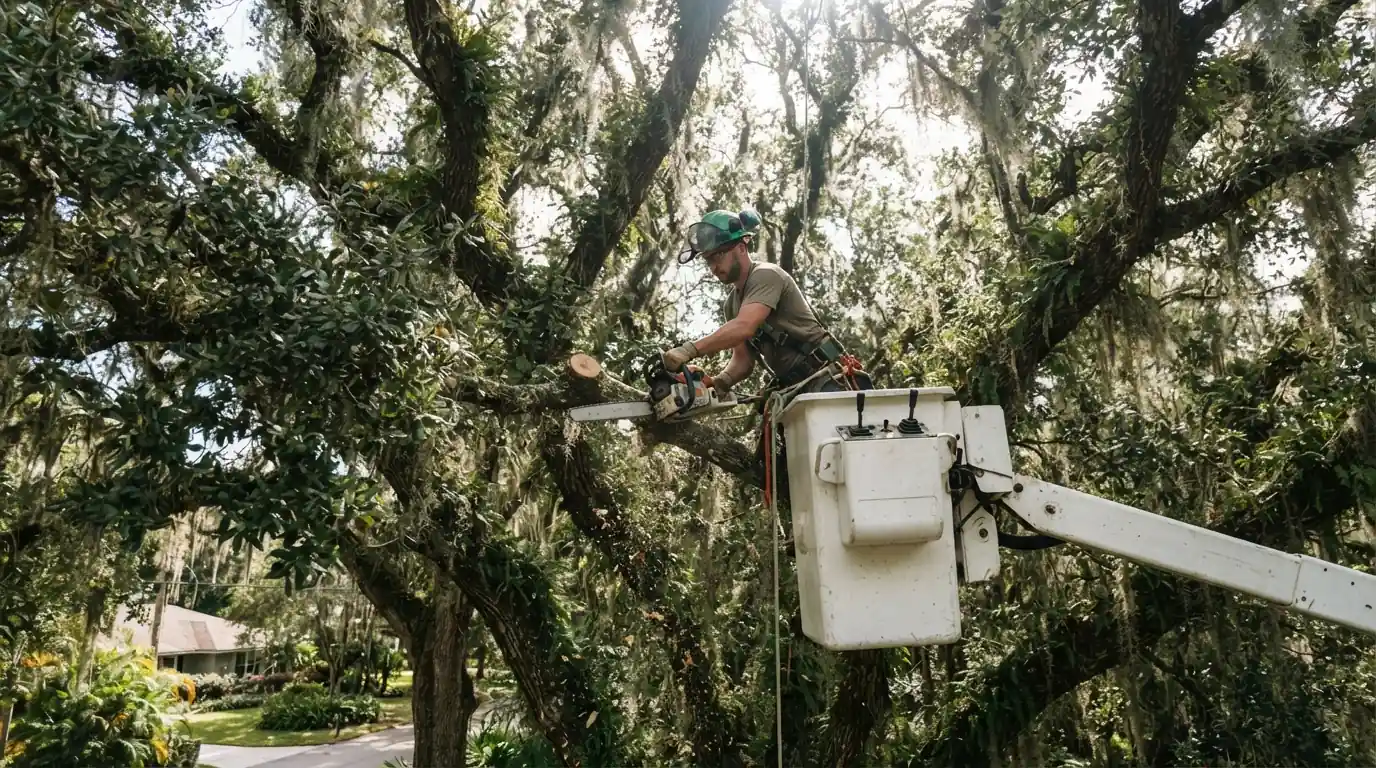
Tree trimming in Tampa should remove specific branches for a reason: dead wood, weight, clearance or structure. Each cut is made at the branch collar so the wound seals, and a healthy tree rarely loses more than a modest share of its live canopy in one visit. Inside city limits, pruning a tree 24 inches or more across needs a permit.
What our trimming visit includes
- A walk around each tree before any cutting
- Cuts at the branch collar, never flush or stubbed
- Deadwood out first, over roofs and drives
- Clearance set for what passes underneath
- Permit checked for large trees
- Brush chipped or hauled and the yard raked
Four kinds of cuts, one goal
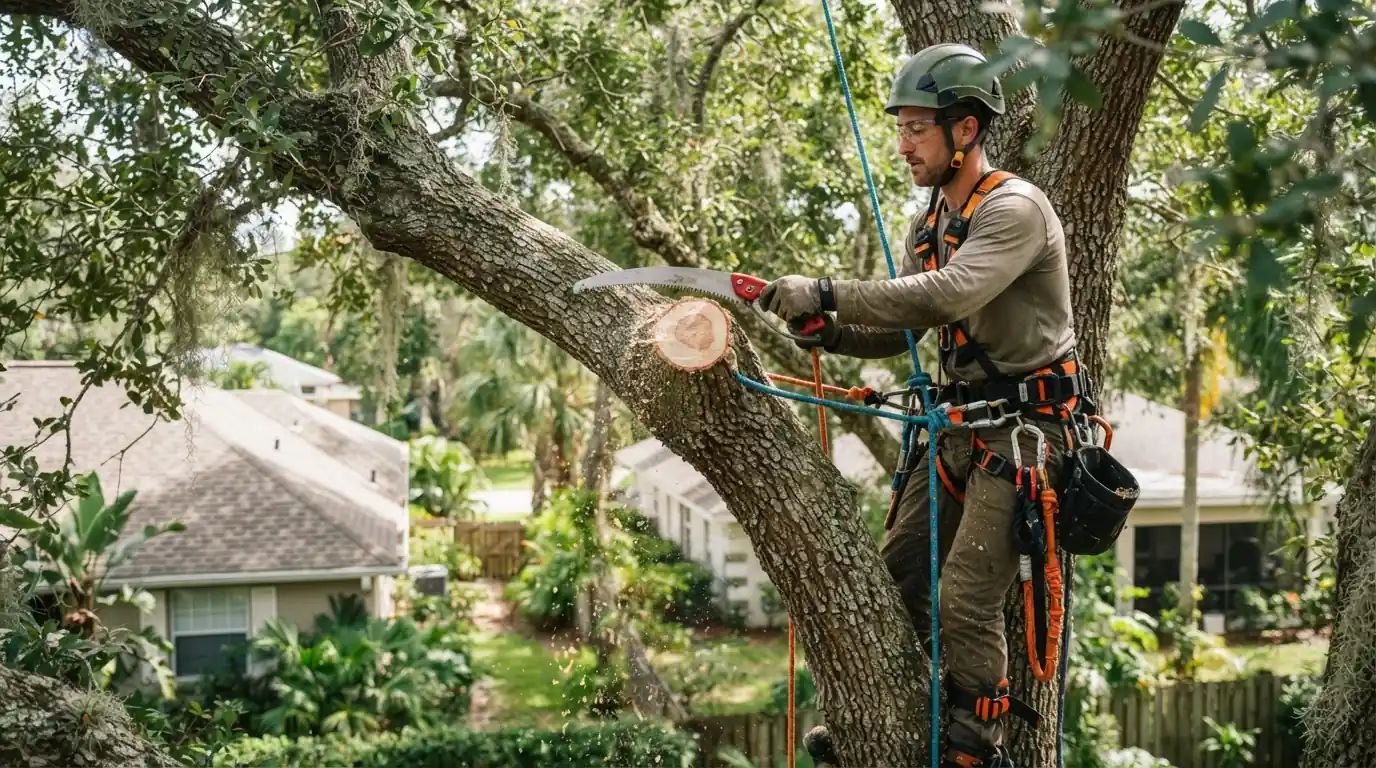
Most trimming jobs mix four tasks: thinning the crown, raising the lower limbs, removing deadwood and reducing branches that reach too far. The mix depends on the species, the tree's age and what sits beneath it.
What stays the same is the cut. A proper pruning cut sits just outside the collar where branch meets trunk, never flush and never a stub.
Crown thinning
Crown thinning removes selected interior and crossing branches so light and wind move through the canopy. It lowers the load on each limb and cuts down on storm breakage without changing the tree's shape. A good thin is spread evenly through the crown, not stripped from the inside out, which is the mistake that leaves long bare limbs with foliage only at the ends. On most healthy trees, a modest share of the live canopy is all that comes out in one visit.
Typical planning range: pruning averages $450 in Tampa with a general range of $375 to $525. Market figures, not a quote from us.
Crown raising and clearance
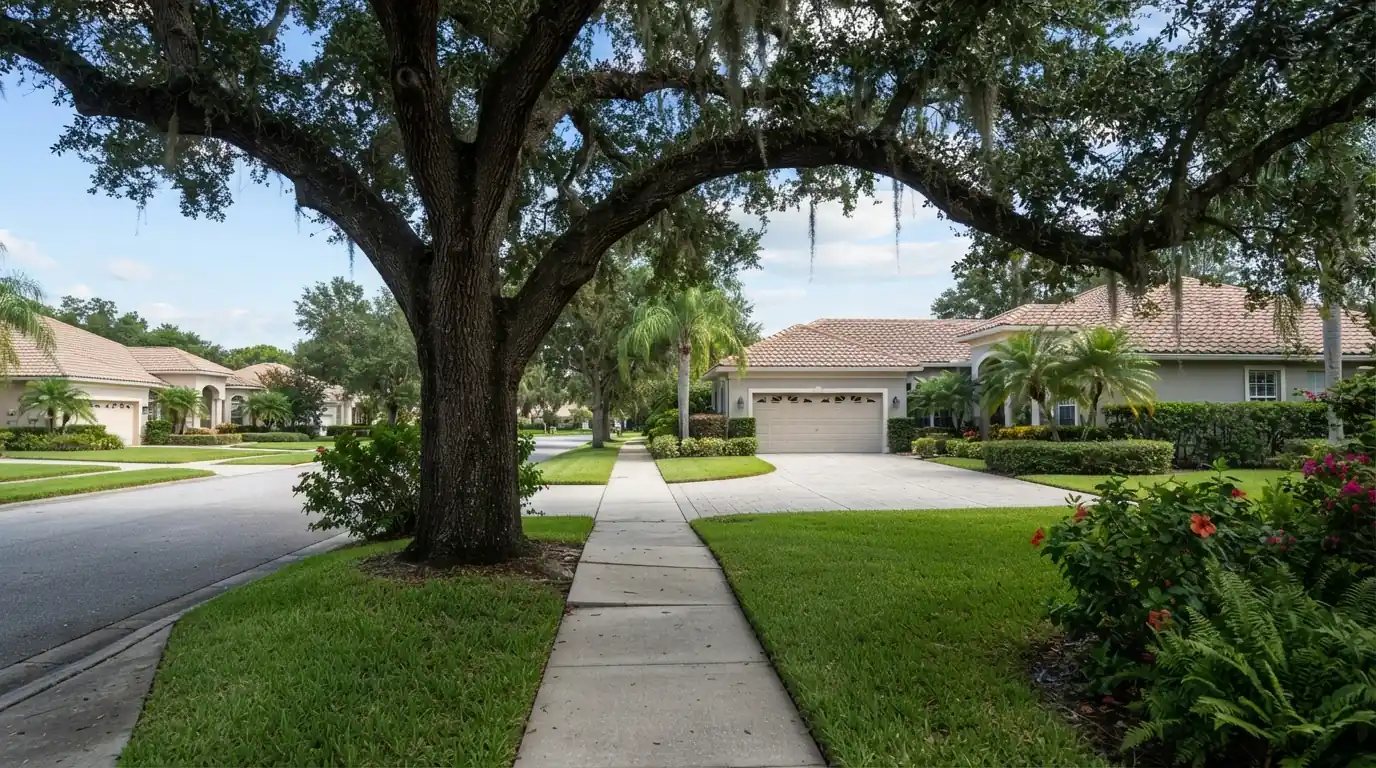
Crown raising lifts the lower limbs to give clearance over driveways, sidewalks, roofs and play areas. Clearance targets are set by what needs to pass underneath, whether that is a person, a car or a delivery truck. We remove or shorten the lowest limbs in stages on young trees, since taking too much from the bottom at once weakens the trunk. On mature trees, a big low limb is cut back to a lateral branch rather than removed flush against the trunk.
Deadwooding
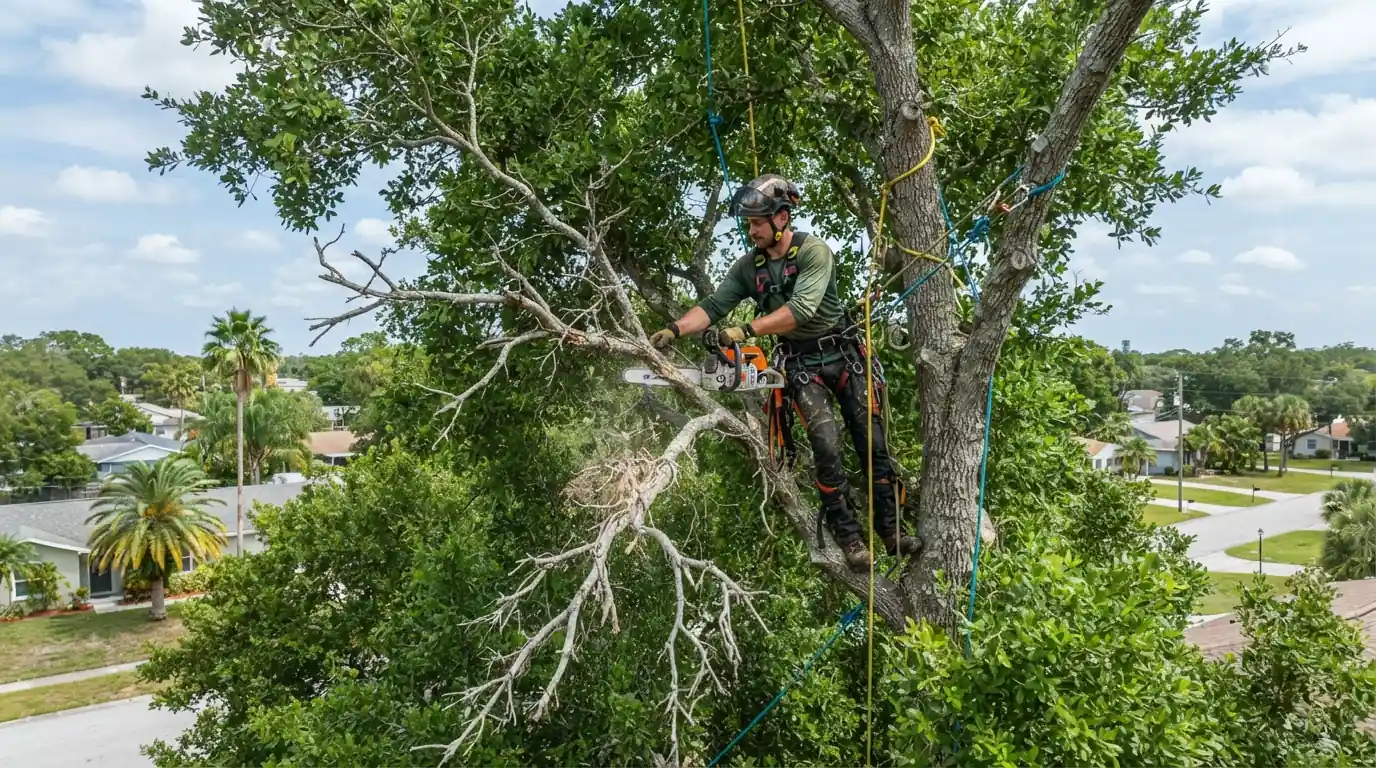
Deadwooding takes out dead, dying and broken branches. Dead limbs are brittle and fall without wind, often onto the things people care about most, so they are the first thing we remove. Dead wood also shows where a tree is struggling: a canopy dying back from the top can point to root problems, and a dead limb on one side can mean damage at its base. We tell you what we see while we are up there, in plain words.
Canopy reduction
Canopy reduction shortens long limbs and the overall size of the crown, usually to pull branches back from a house, a neighbor's roof or a power line. Done right, each limb is cut back to a smaller branch that can take over as the new tip. Done wrong, it becomes topping: stubs cut across the middle of limbs that sprout weak shoots and rot inside. We reduce, we never top, and we are happy to explain the difference on site.
Pruning rules and patterns around Tampa
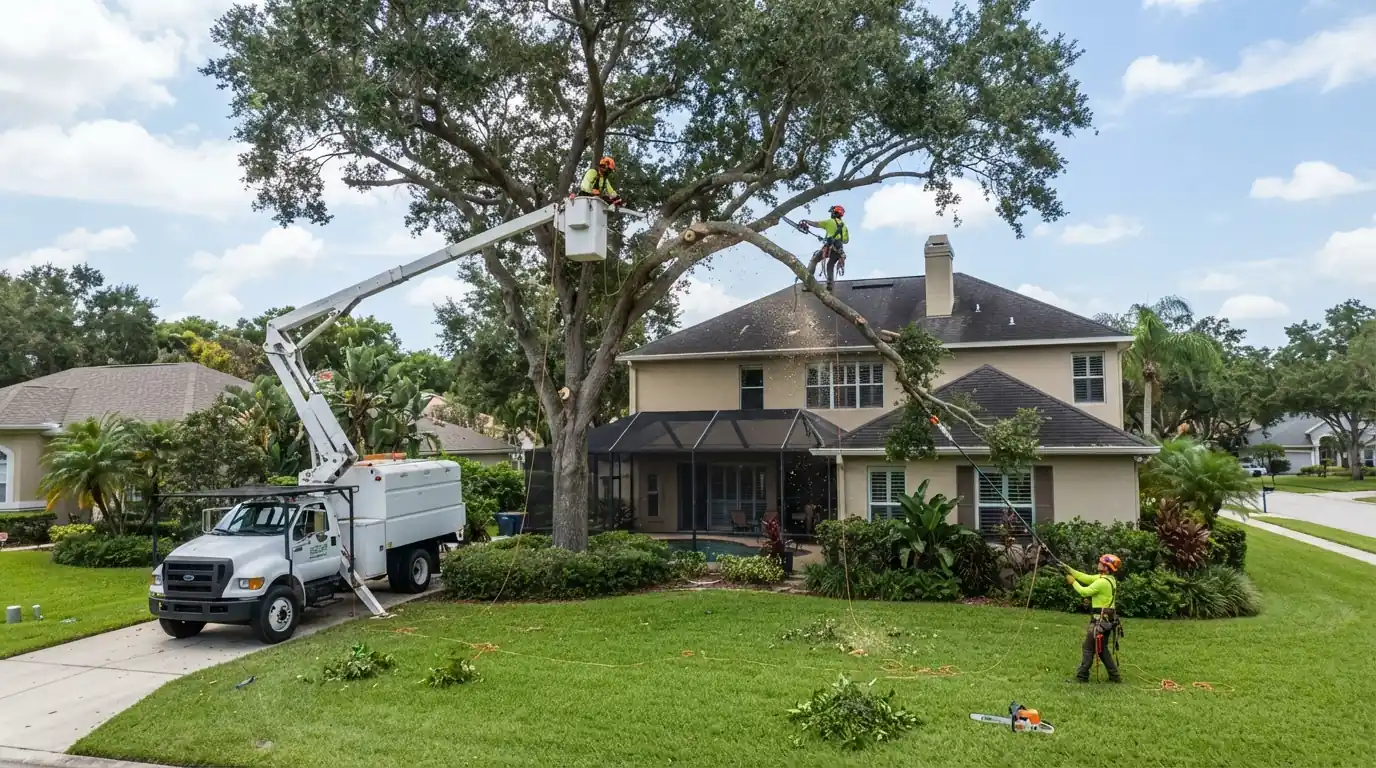
Inside Tampa, pruning a tree 24 inches or more across needs a permit, and trees in the city right-of-way need Parks Forestry permission before anyone cuts. In unincorporated Hillsborough County, up to 25 percent of a non-grand oak's canopy can be pruned without a permit, and the thresholds in Pinellas County and Pasco County differ the moment you cross the line. We check which rule covers your address before the climb.
Thinning, reduction or topping?
| Factor | Thinning | Reduction | Topping |
|---|---|---|---|
| What is cut | Selected interior branches | Limbs back to a smaller branch | Limbs cut across mid-length |
| Tree afterwards | Same shape, lighter | Smaller, still natural | Stubs and weak regrowth |
| Our view | Yes | Yes, when needed | Never |
How a trimming visit runs
- 1Call
Tell us which trees and what bothers you.
- 2Walk
We look at each tree and agree the cuts.
- 3Quote
Per tree, with any permit noted.
- 4Climb or bucket
Deadwood first, then thinning and clearance.
- 5Check
We step back and look at the balance.
- 6Clean
Brush chipped and hauled.
- 7Notes
Anything worrying we saw, in plain words.
What trimming costs in Tampa
Trimming is priced per tree, by size, access and the work involved.
- Tree sizeTall trees need climbers or a bucket.
- Type of workDeadwooding is quicker than thinning.
- AccessBackyards without truck access take longer.
- HazardsLimbs over roofs or lines.
- PermitLarge trees need one first.
- DebrisChipping or hauling the brush.
Typical planning range: small tree trimming $225 to $500 in Tampa. Market figures, not a quote from us.
Trimming questions from Tampa homeowners
Most mature shade trees every three to five years; young trees more often while their structure forms.
Any time for deadwood; structural pruning is easiest before storm season.
Inside Tampa, only for trees 24 inches or more across. We check before cutting.
Not with proper cuts and a modest amount removed at once.
We can trim back to the property line on your side.
No. Topping weakens trees; we reduce instead.
Yes. Brush is chipped or hauled and the yard raked.
More pruning work
From our guides: Choosing a Tree Service in Tampa, FL: What to Ask