Updated October 2026
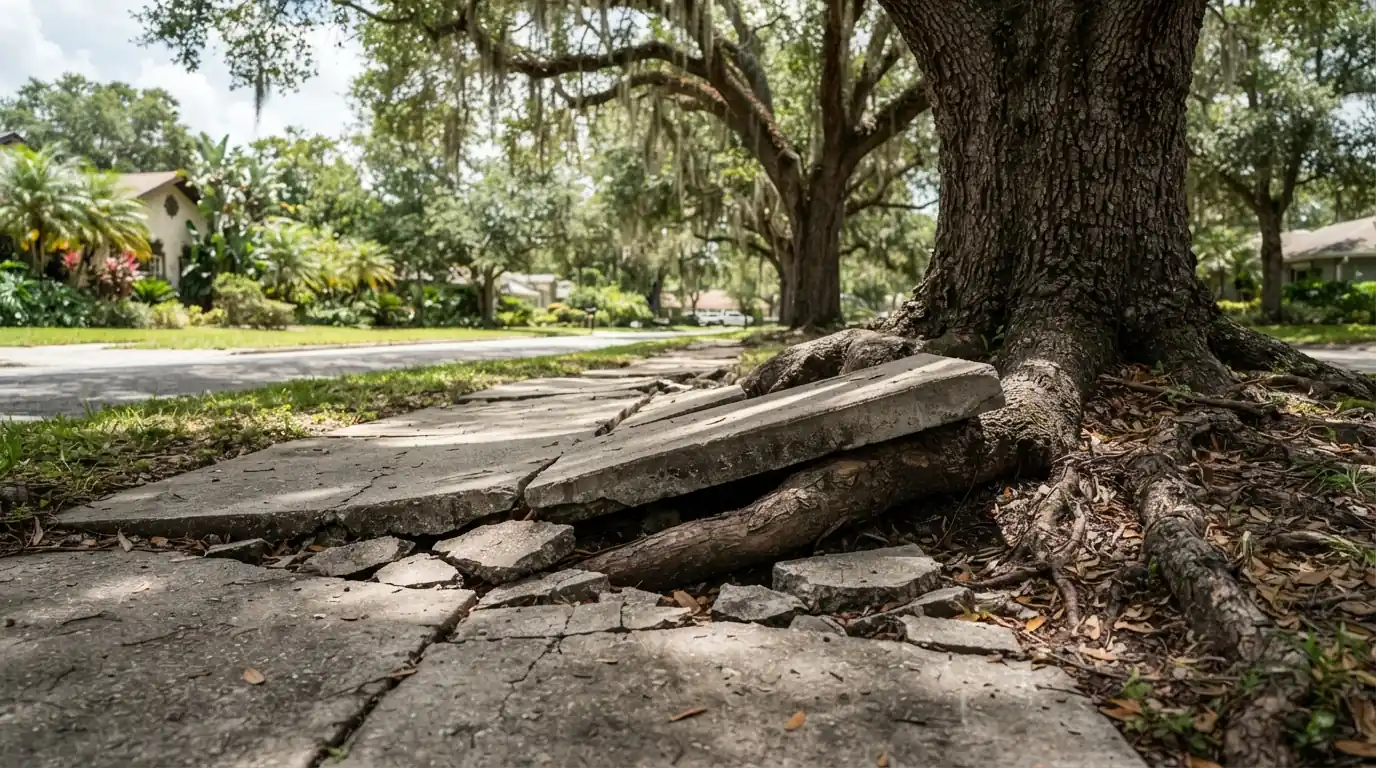
Root pruning cuts specific roots that are lifting concrete or growing toward a foundation, and a root barrier is a vertical panel set in a trench to deflect new roots downward. Pruning too close to the trunk can destabilize a tree, so we cut as far out as the problem allows and tell you when a root cannot safely be cut.
Fixing the concrete without losing the tree
Every root cut takes away some of the tree's anchorage and water supply. The closer to the trunk, and the bigger the root, the more it matters, especially in wet Tampa soil where stability is already a question.
So root work starts with a map: which roots are doing the damage, how big they are and how far they sit from the trunk.
What root work costs
There is no reliable published range for Tampa root work, so we price after seeing the trench line.
- Trench lengthHow much concrete edge to expose.
- Root sizeBig roots take longer to cut.
- BarrierPanel depth and length.
- AccessHand digging near slabs.
- RestorationBackfill and sod afterwards.
- Tree checksStability after cutting.
Sidewalk and driveway root pruning
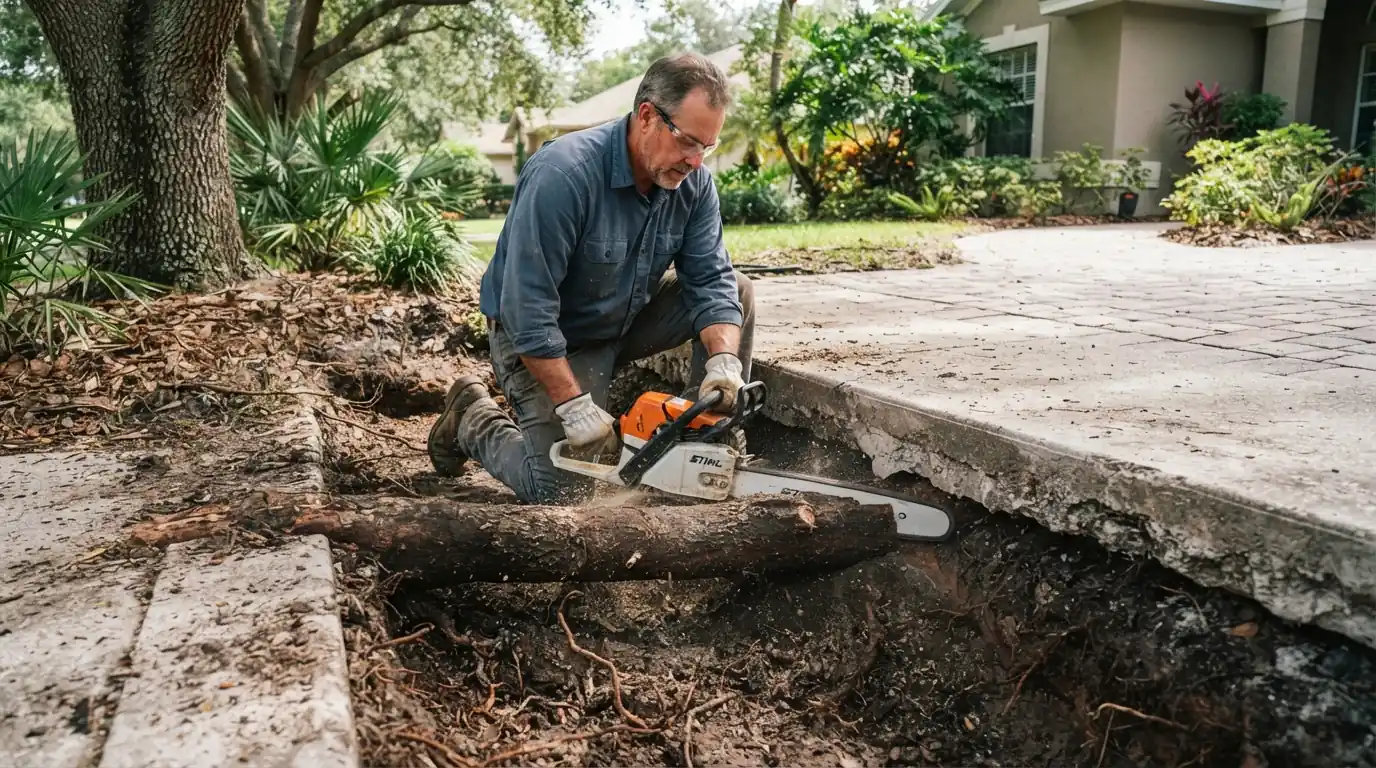
Sidewalk and driveway root pruning starts with a trench along the edge of the concrete to expose the roots doing the lifting. Each root is cut cleanly with a saw, not torn out with a machine, so it seals and the tree recovers. We cut only what is needed to let the slab be repaired, and we note any roots too large or too close to the trunk to cut safely. The concrete repair itself is usually the next trade in line.
Root barrier installation
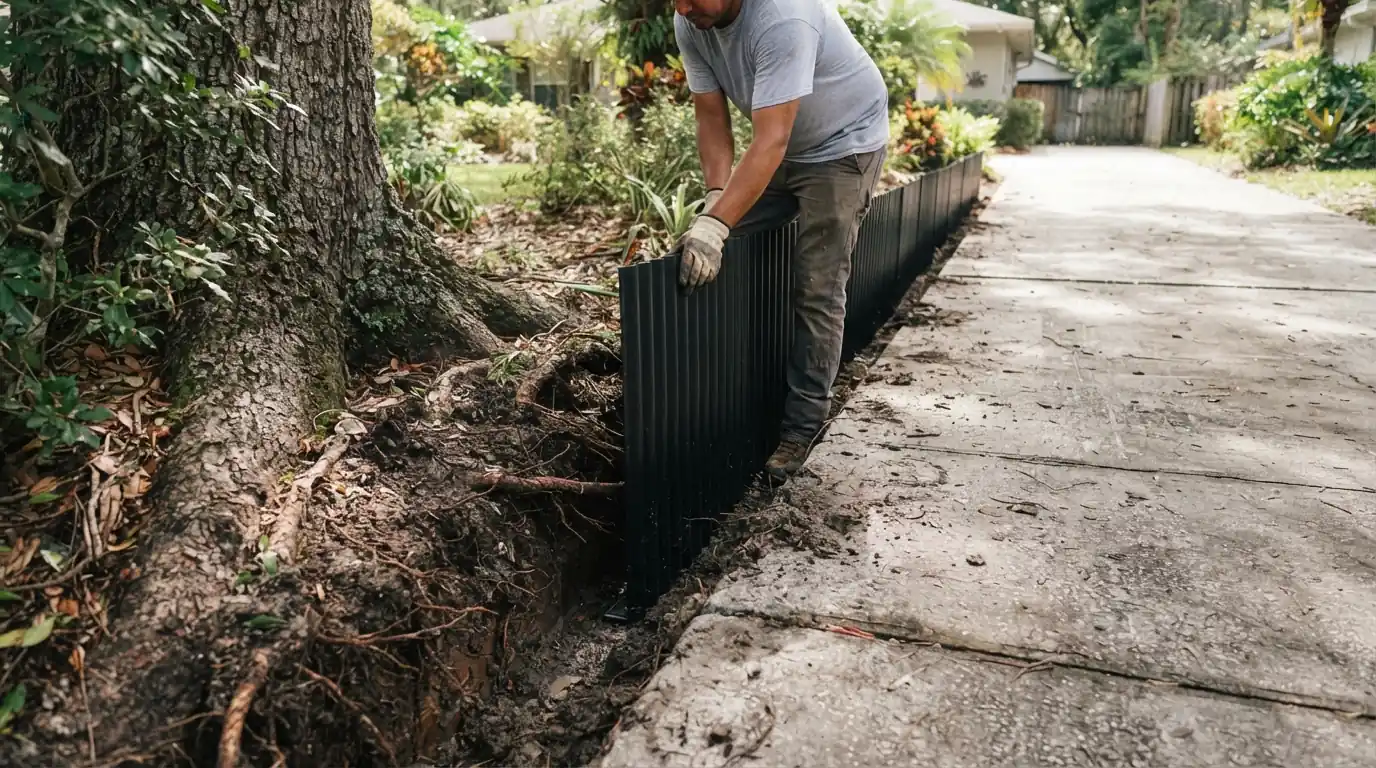
Root barrier installation puts a vertical panel into the trench after pruning, usually along the edge of the drive, walk, pool or foundation. The barrier's ribs steer new roots downward, so they pass under the slab at depth instead of just beneath it. It does not stop a tree from rooting, and it will not help if it is set too shallow or too short. We size the depth and run to the concrete being protected, not to a standard length.
Surface root management
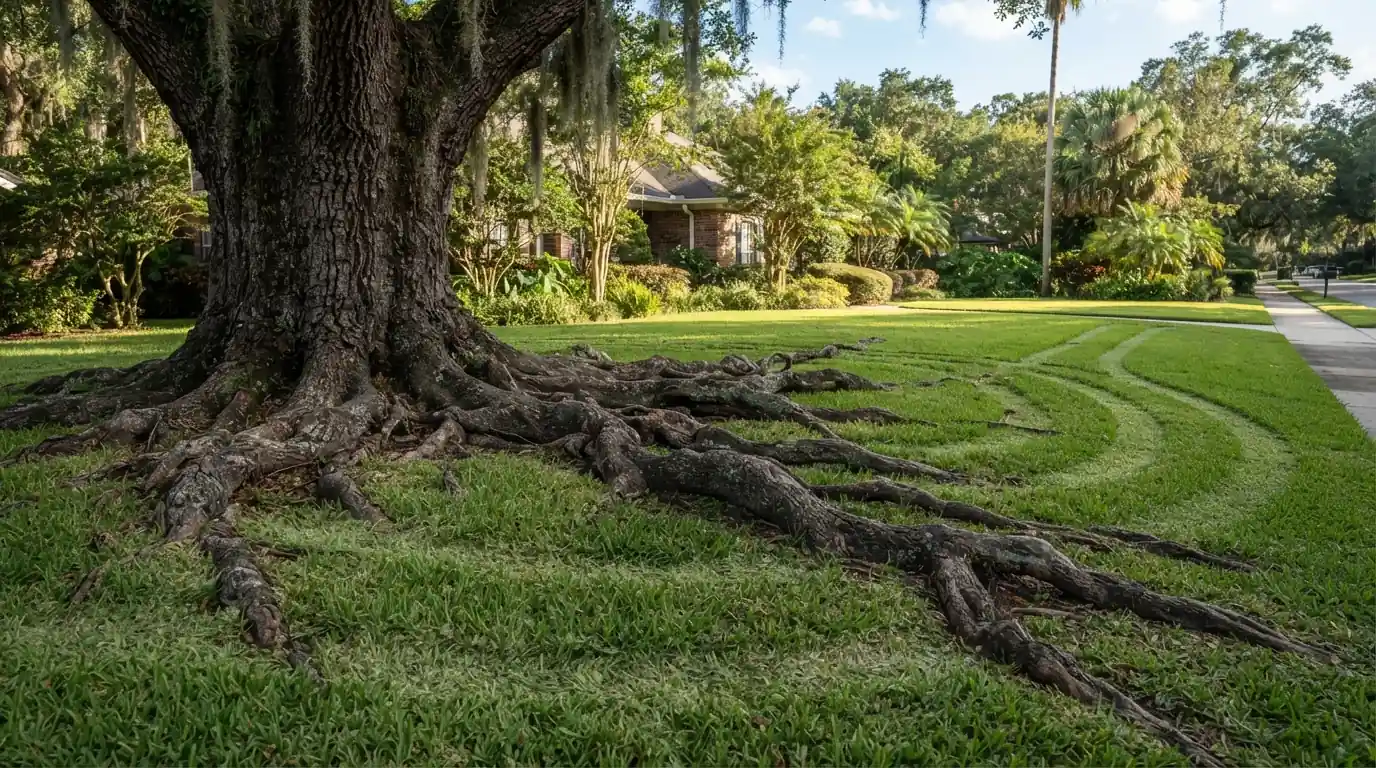
Surface roots are roots growing at or above the soil line, common on live oaks and in compacted lawns. Cutting them flush often starts a cycle of new roots in the same place, so the better fix is usually selective pruning of the worst offenders, a layer of soil or mulch over the rest, and a change in how the lawn is watered. We tell you which roots can come out and which should stay because they hold the tree up.
Roots near a foundation or septic
Roots near a foundation or a septic system are a different question. Tree roots rarely break sound foundations, but they will exploit cracks and follow moisture, and roots in septic lines and drain fields cause expensive failures. Pruning and a deep barrier along the foundation or between the tree and the drain field solve most of these. When the tree is too close to fix without losing it, we say so plainly and talk through removal and replanting farther away.
Root pruning or root barrier?
| Factor | Root pruning | Root barrier |
|---|---|---|
| What it does | Cuts roots doing the damage | Steers new roots downward |
| How long it lasts | Until roots regrow | Years, if set deep enough |
| Best used | Before a slab repair | Together with pruning |
Roots and soil around Tampa
Much of Hillsborough County, Pinellas County and Pasco County sits on a high water table, and roots there spread wide and shallow instead of deep. That is why so many sidewalks and drives lift, and also why cutting roots here needs care: heavy rain saturates the soil until roots lose their grip, so a tree with fewer anchor roots is more likely to fail in a storm.
How root work runs
- 1Call
Tell us what is lifting or cracking.
- 2Look
We check the tree, the roots and the slab.
- 3Plan
Which roots, how deep, and the price.
- 4Locate
Utility lines marked first.
- 5Trench and cut
Roots exposed and cut cleanly.
- 6Barrier
Panels set where needed.
- 7Backfill
Trench filled and tidied.
Signs roots are becoming a problem
- Lifted slab edges
A sidewalk or drive panel raised at one side.
- Cracks near the tree
New cracks running toward the trunk.
- Pavers heaving
Patio pavers lifting in a line.
- Slow drains
Toilets and drains slowing in a line near a tree.
- Roots in the mower path
Surface roots growing thicker each year.
Root questions
Not if we cut selectively and far enough from the trunk.
Yes, when set deep enough and along the full run of concrete.
We handle the roots; a concrete contractor handles the slab.
Rarely on sound foundations, but they exploit existing cracks.
Pruning and a barrier help; the line may need a plumber.
Small ones, yes. Large roots near the trunk should stay.
Yes, city right-of-way trees need approval first.
More stump and root work
From our guides: Stump Grinding vs Full Stump Removal in Tampa