Updated October 2026
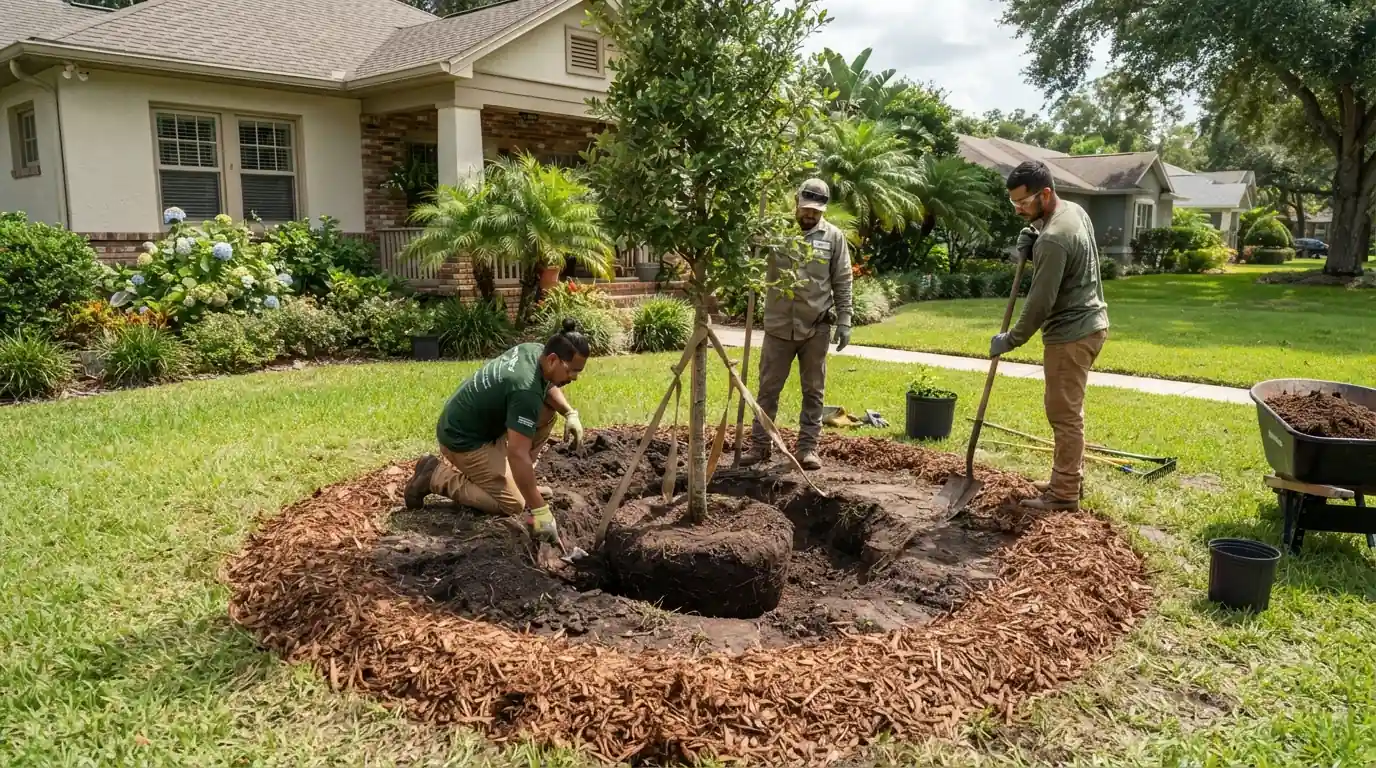
Planting a tree in Tampa starts with the right species for wind and wet soil, a hole wider than it is deep, and the root flare at or just above grade. New trees need regular watering until established, and staking only until the roots can hold them. Many replacement trees are also required as permit mitigation.
Right tree, right place, right depth
Most young trees that fail do so because they were planted too deep, in the wrong spot, or never watered through their first summer. Species choice matters as much: a fast grower that breaks in its first storm is not a bargain.
We look at the space, the soil, the sun and what the tree will reach in twenty years before anything is dug.
What planting and transplanting cost
There is no reliable published range for Tampa planting labor, so we price by the job.
- Tree sizeBigger trees, bigger holes.
- SpeciesNursery prices vary widely.
- AccessBackyards without truck access.
- TransplantDigging and moving a root ball.
- StumpGrinding before replanting.
- AftercareWatering and follow-up checks.
Replacement tree planting
Replacement planting fills the gap after a removal, whether the old tree came down in a storm or on purpose. Tampa and Hillsborough permits often require replacement trees as mitigation, so the species and size may be set by the permit. We plant the replacement away from the old stump and roots when we can, in a spot where it has room to grow, and grind the old stump deep if the new tree has to go in the same place.
Wind-resistant species selection
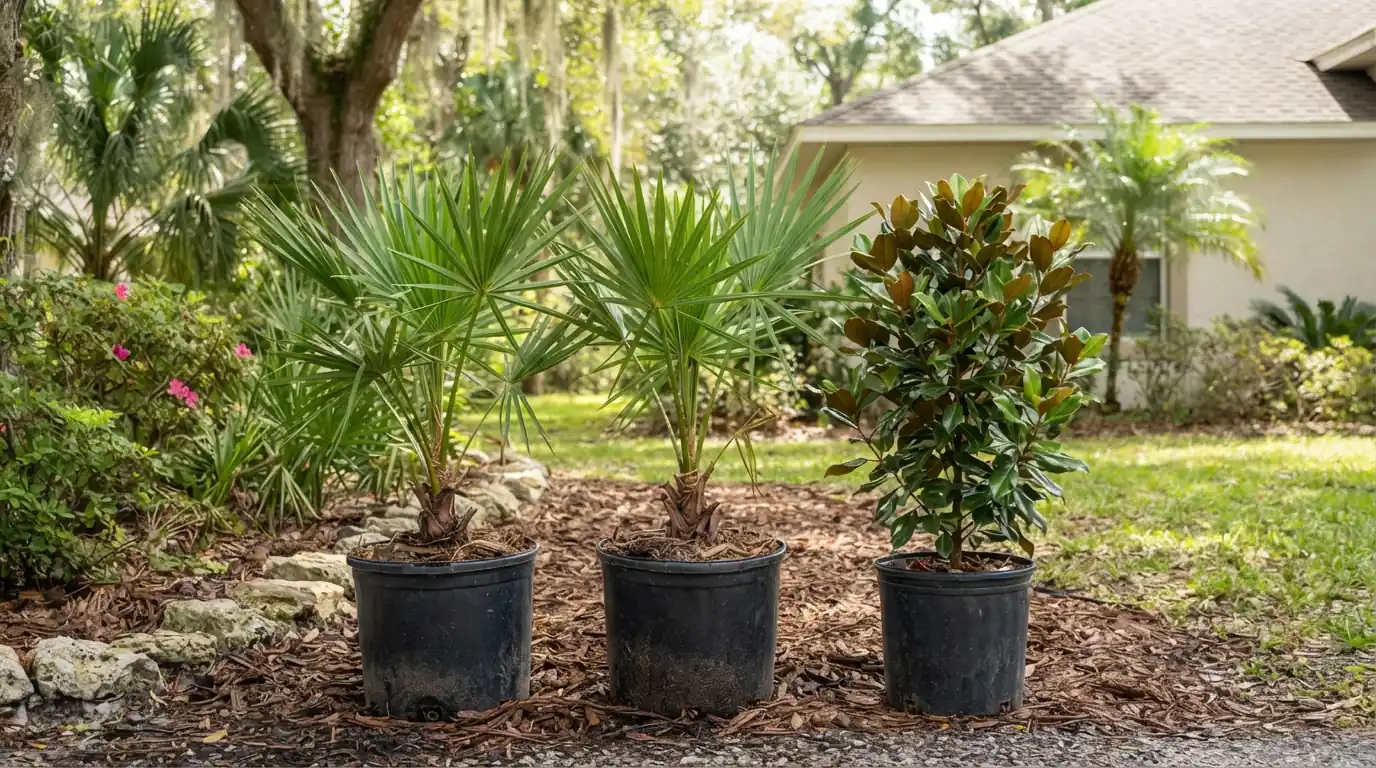
Wind-resistant species matter more here than almost anywhere. Live oaks, sabal palms, southern magnolias and bald cypress hold up far better in hurricanes than fast, brittle trees like laurel oaks, and they cope with wet soil. We match the species to your space: a live oak needs a lot of room to spread, a sabal fits a narrow side yard, and a cypress handles the low, soggy corner of the lot where other trees struggle to root and stay upright.
Transplanting small trees and palms
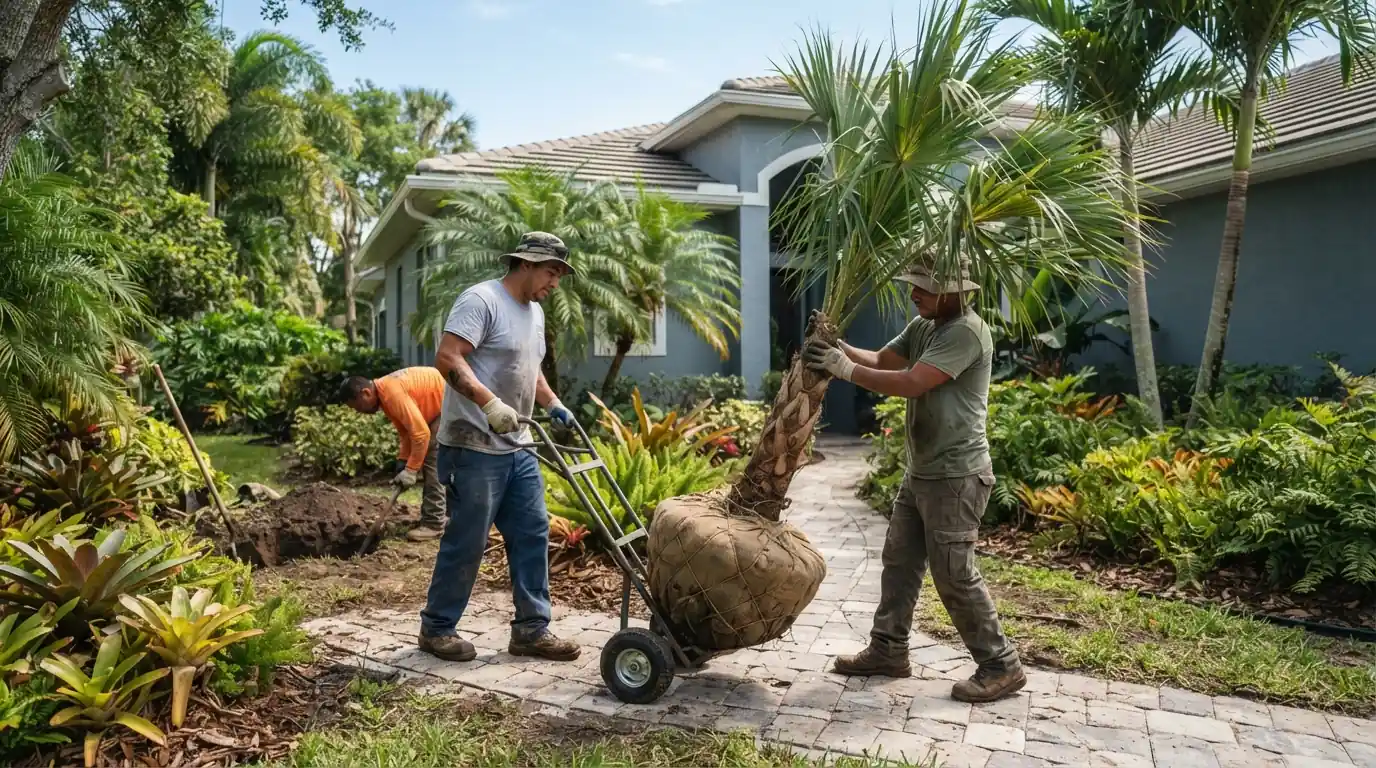
Transplanting moves a tree or palm you want to keep but in a better place. Palms move well because their roots regrow from the base, so even good-sized palms can be dug with a root ball and replanted. Broadleaf trees move best when young; a large tree loses most of its roots in the move and needs heavy watering for a year or more. We tell you honestly whether a tree is a good candidate for moving or better replaced with a young one.
Staking and first-year care
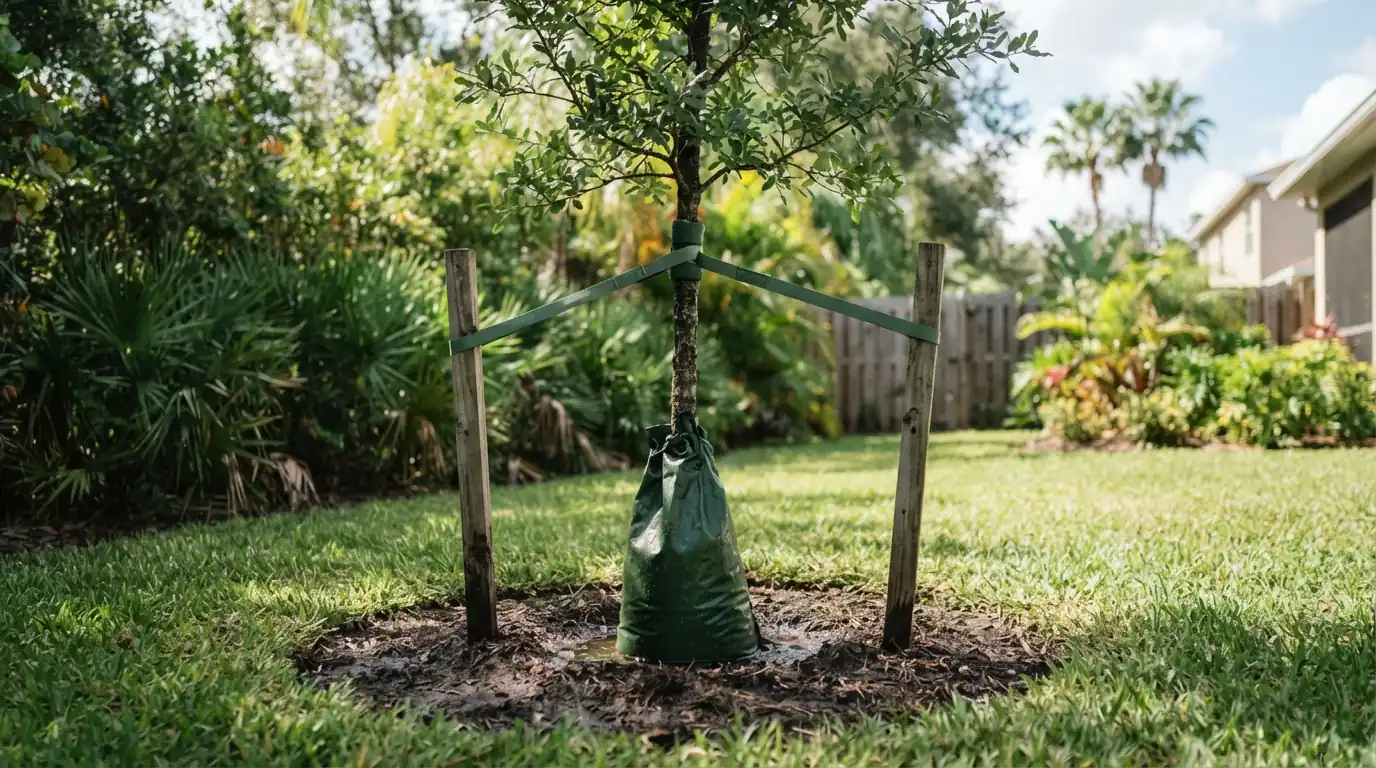
The first year decides whether a new tree makes it. That means regular deep watering through the first summer, a mulch ring kept away from the trunk, and stakes only if the tree cannot stand on its own, removed once the roots have taken hold. Stakes left too long weaken the trunk and can girdle it. We check new plantings, loosen or remove supports on time and point out any watering problems early, before the tree shows stress in its leaves.
Which replacement tree fits?
| Factor | Live oak | Sabal palm | Bald cypress |
|---|---|---|---|
| Space needed | Large, spreading | Narrow | Medium, upright |
| Wind | Very good | Very good | Very good |
| Wet soil | Tolerates | Tolerates | Thrives |
What a planting from us includes
- Species chosen for wind, soil and space
- Utility lines located before digging
- Wide hole with the root flare at grade
- Backfill with native soil, no amendments piled in
- Mulch ring kept off the trunk
- Stakes only when needed, removed on time
Replanting Tampa's canopy
USF researchers found Tampa lost about five percent of its canopy in the 2024 storms, with South Tampa and East Tampa losing the most. Recently planted trees were vulnerable too, because their shallow developing roots could not hold in waterlogged soil. That is why species choice, planting depth and first-year care matter so much when the canopy is being replaced across Tampa.
How a planting runs
- 1Call
Tell us what you want to plant or move.
- 2Site look
Space, sun, soil and lines.
- 3Species
We agree the tree and the spot.
- 4Locate
Utility lines marked first.
- 5Plant
Right depth, native backfill, mulch.
- 6Support
Stakes only if needed.
- 7Check
First-year care and follow-up.
Planting questions
Live oak for big spaces, sabal palm for tight ones; it depends on the spot.
Early in the rainy season helps, but watering matters more than timing.
With the root flare at or just above the soil.
Regularly through its first summer at least.
Often, yes; palms transplant well.
Sometimes, as permit mitigation. We check.
Only if they cannot stand alone, and not for long.
More tree health work
From our guides: Best Trees to Plant in Tampa After a Removal