Updated October 2026
Removing an oak in Tampa usually needs a permit, because oaks 5 inches or more across at 4.5 feet are protected inside city limits and Grand Trees of 32 inches or more need public notice. Most oak removals are laurel or water oaks in decline; healthy live oaks are rarely removed and are the most heavily protected.
Why oak removals are their own job
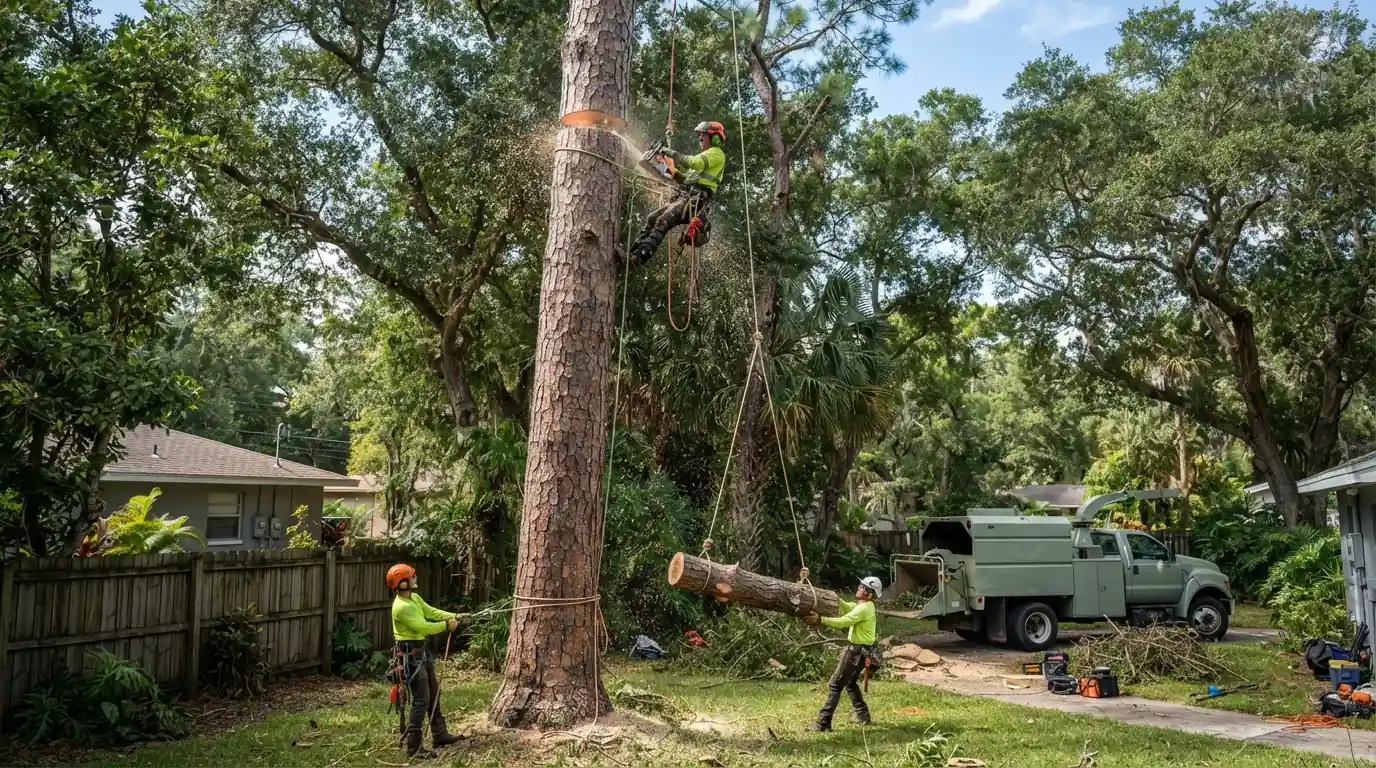
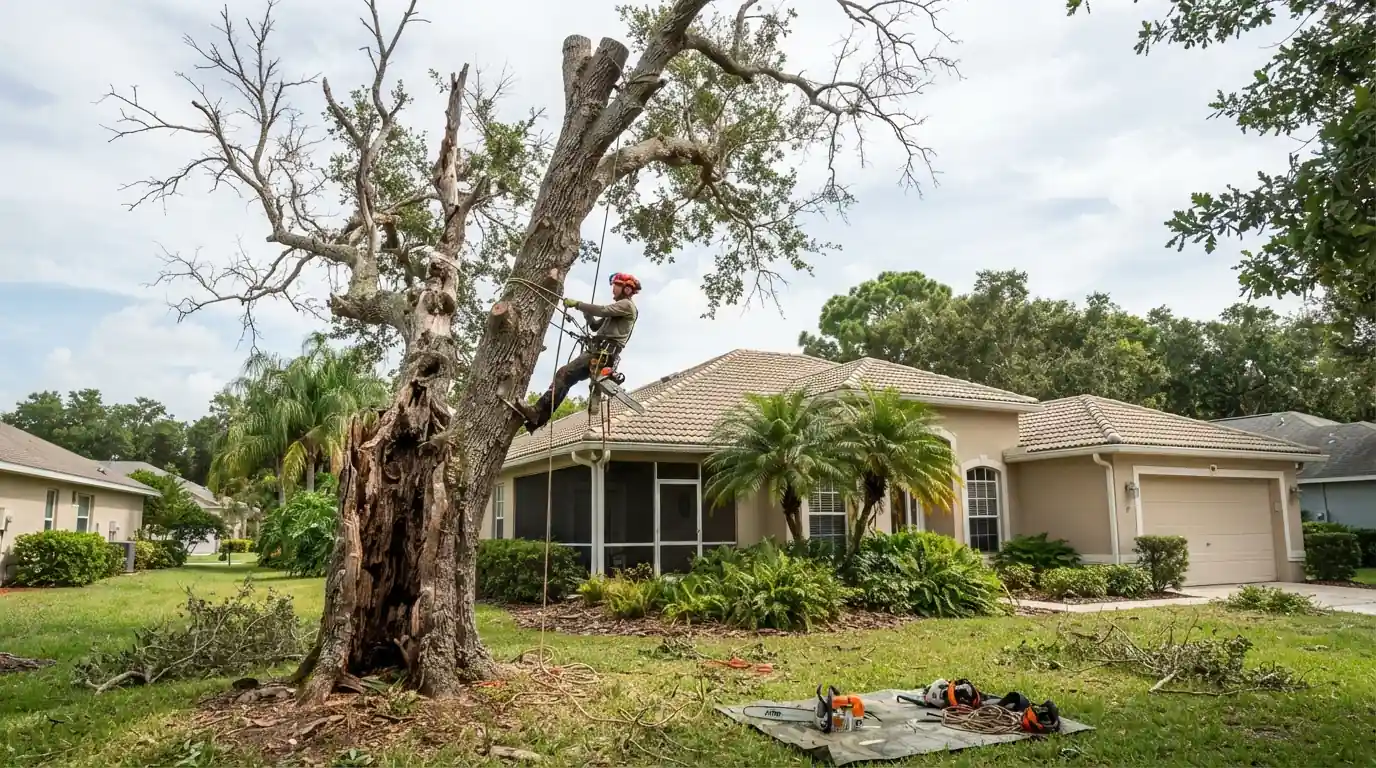
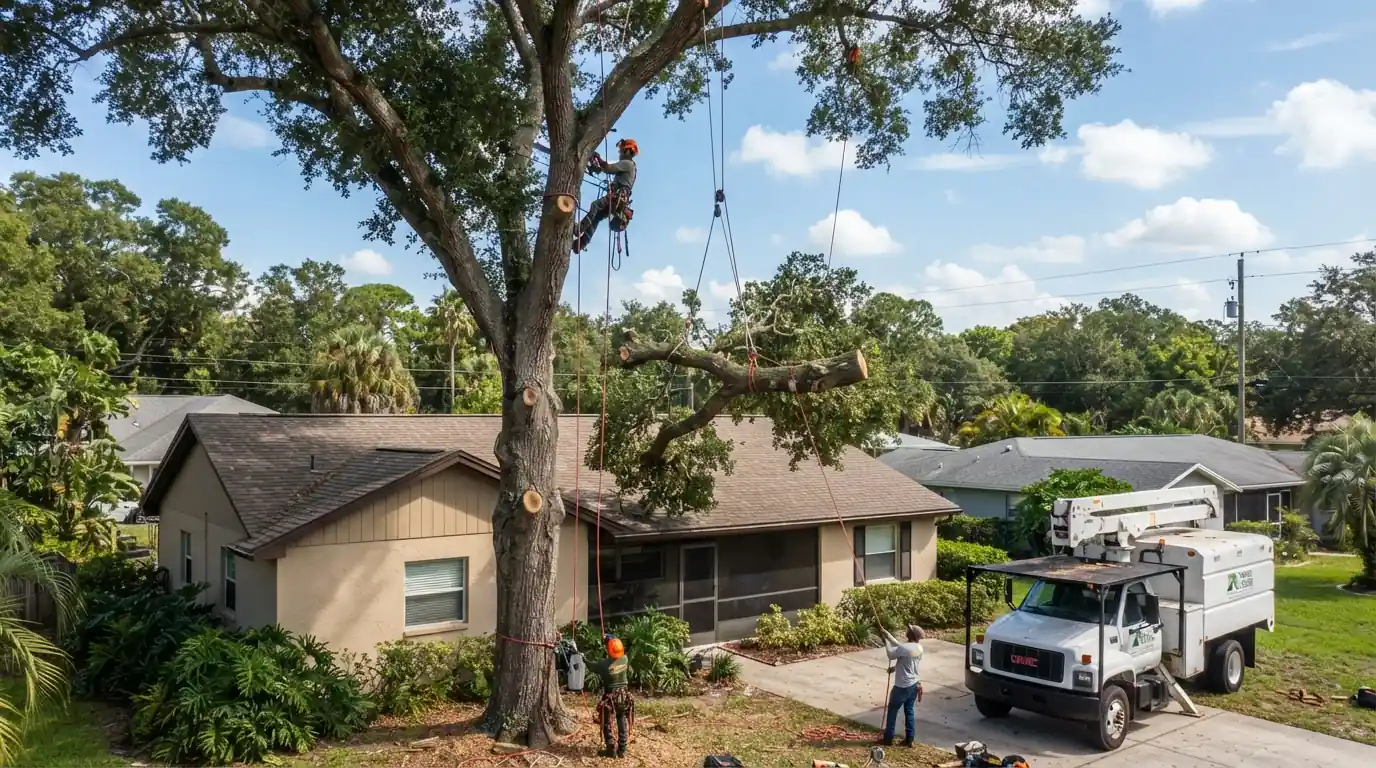
Oaks are heavy, spreading and often hollow by the time they need to come out. That combination means sectional takedowns over roofs, careful rigging from sound wood, and a crane when the trunk is too heavy to rope.
The paperwork is different too. Oaks sit at the top of local protection rules, so the permit comes first.
What oak removal costs
Oak removals are priced by size, condition and what the tree is over.
- Trunk sizeBig oaks mean more cuts and wood.
- ConditionHollow wood slows rigging.
- What is underneathRoofs and cages mean sections.
- Crane timeFor trunks too heavy to rope.
- PermitsOaks often need paperwork.
- Stump and haulSeparate lines on the quote.
Typical planning range: $800 to $3,500 per tree for most residential removals in Florida; small trees under 30 feet from about $200 with easy access; very large, hazardous or crane-only trees over 80 feet $5,000 to $15,000+. Market figures, not a quote from us.
Laurel oak removal
Laurel oaks make up most of our oak removals. They grow fast, typically live 50 to 70 years, and become prone to heart rot as they age, so many Tampa neighborhoods now have laurel oaks decaying at the same time. Because a hollow trunk cannot be trusted as a rigging point, the climber works from sound wood and takes the heaviest limbs down first. When the tree is too far gone to climb, a bucket truck or a crane does the lifting.
Typical planning range: $875 to $2,750 to remove a large tree near a structure in Tampa. Market figures, not a quote from us.
Water oak removal
Water oaks are the other short-lived oak in Tampa yards, easy to spot by their spoon-shaped leaves that widen toward the tip. Like laurel oaks, they grow quickly and decay from the inside as they age, often dropping large limbs without warning. We check the trunk and the main unions before planning the takedown, since the decay decides where the climber can tie in. Most water oak removals near houses come down in roped sections rather than being felled.
Live oak removal and Grand Tree rules
Live oaks are rarely removed, and for good reason: they can live for centuries and sit at the top of Florida's protection ladder. Inside Tampa, any tree 32 inches or more across is a Grand Tree that needs public notice before removal, and big oaks in unincorporated Hillsborough need a condition evaluation. When a live oak truly has to come out, because of root failure, a split trunk or advanced decay, we document exactly why and file the paperwork first.
Hollow and decayed oak removal
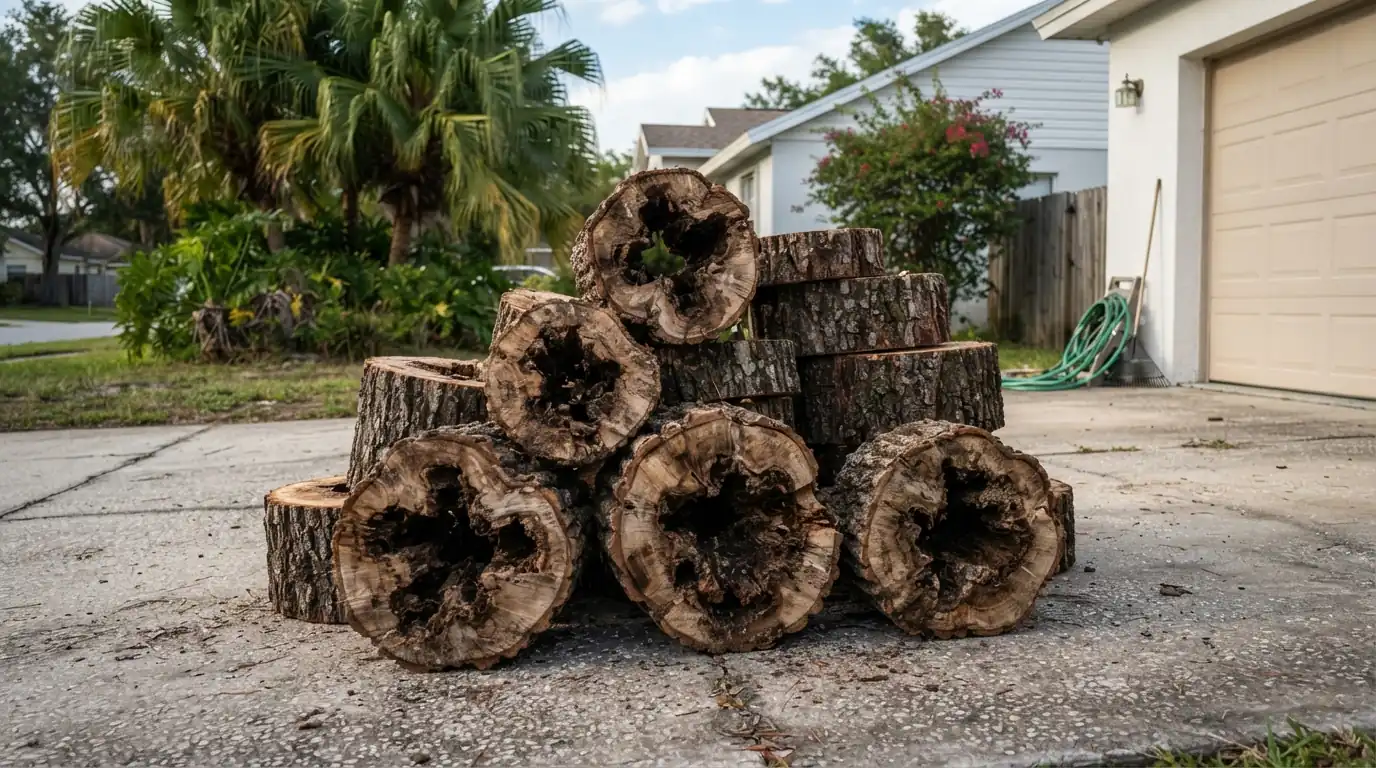
A hollow oak is not automatically dangerous, but a big hollow in a heavy tree over a house usually is. We sound the trunk, look at the root flare and check for fungal conks before deciding. When removal is the answer, the crown is lightened first, then the trunk comes down in short sections so no piece is heavier than the rigging can hold. The rounds are hauled away or left cut, and the stump is ground if you want it gone.
Laurel, water or live oak?
| Factor | Laurel oak | Water oak | Live oak |
|---|---|---|---|
| Typical lifespan | About 50 to 70 years | Short-lived | Centuries |
| Common reason to remove | Heart rot and hollows | Decay, limb drop | Rarely; root or trunk failure |
| Permit weight | Standard oak rules | Standard oak rules | Often Grand Tree notice |
Oak removal rules around Tampa
Inside Tampa, removing an oak 5 inches or more across needs a permit, and Grand Trees of 32 inches or more need public notice. In unincorporated Hillsborough County, oaks 34 inches or more across need a tree condition evaluation for the fast review, and a grand oak inspection adds 55 dollars to the site permit. Older neighborhoods like the Brandon streets hit in 2024 are full of laurel oaks now reaching the end of their lifespan.
How an oak removal runs
- 1Call
Tell us the oak, its size and what is under it.
- 2Identify and measure
Species and trunk size for the permit rule.
- 3Assess
Decay, unions and the root flare checked.
- 4Permit
Filed before the removal is booked.
- 5Lighten
Crown taken down first.
- 6Trunk
Short sections, roped or lifted.
- 7Clean up
Wood hauled, stump ground if chosen.
Signs an oak may need to come down
- A hollow trunk
Cavities or a hollow sound when tapped.
- Fungus at the base
Shelf-like conks on the trunk or roots.
- Dead upper limbs
A crown dying back from the top.
- Large limbs dropping
Heavy branches falling on calm days.
- New lean or heaving soil
A shift after heavy rain.
Oak removal questions
Yes for oaks 5 inches or more across at 4.5 feet inside city limits.
Rarely. They are heavily protected, and large ones need public notice.
They typically live 50 to 70 years and rot inside as they age.
It depends on how much sound wood remains and what is underneath.
Usually, in roped sections; very heavy trunks may need one.
It is priced as its own line so you can choose.
Often a live oak where there is room; we can suggest others.
Other removal work
From our guides: Laurel Oak or Live Oak? How to Tell in Tampa