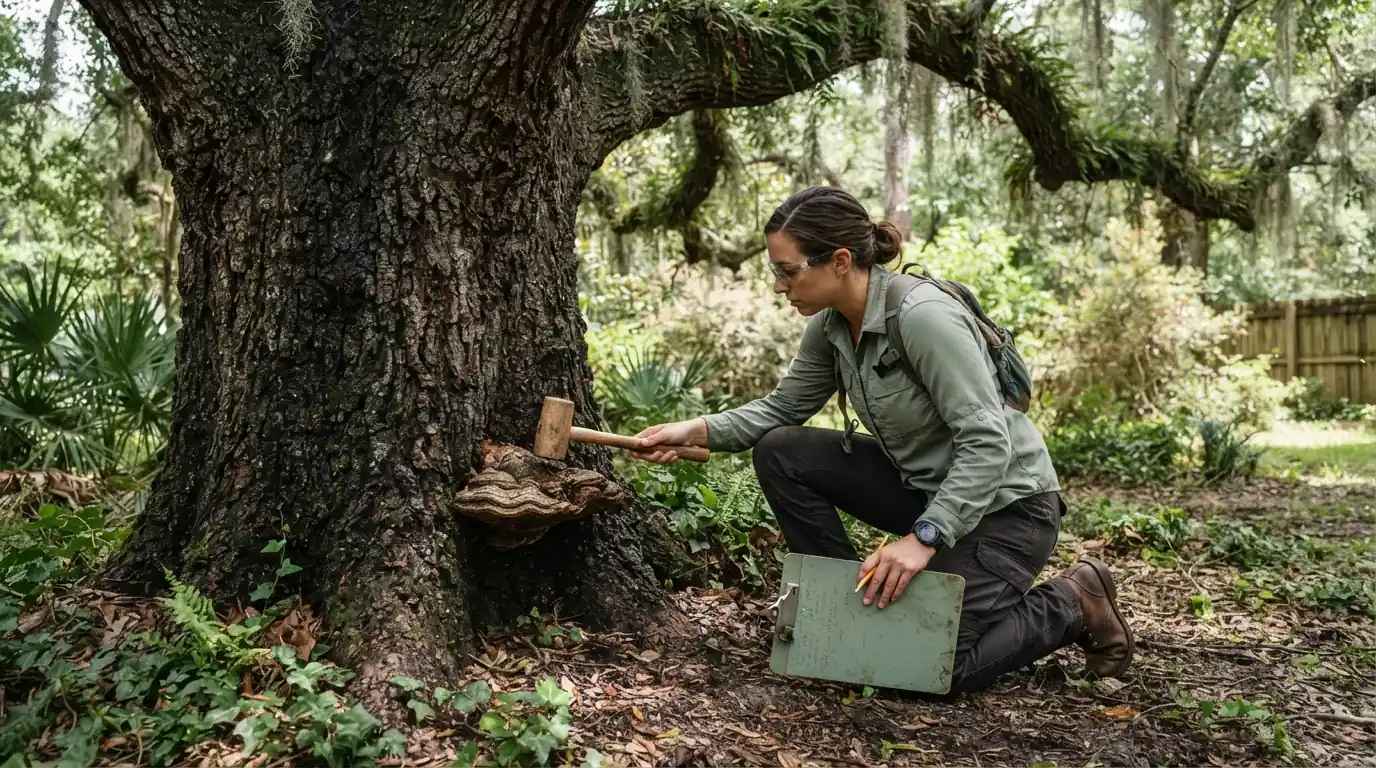
Updated October 2026
Cabling installs a steel or synthetic cable high in the crown between two stems or limbs to limit how far they can move apart. Bracing puts threaded rods through a weak or split union lower down. Both reduce the chance of failure; neither makes a tree safe on its own, and both need inspection after storms and every year or two.
Support, not a guarantee
A support system shares the load between parts of the tree so a weak union is not doing all the work. It is used on trees worth keeping, where removal would lose too much shade, value or history.
It is paired with pruning to lighten the load, and it only works when the rest of the tree, roots included, is sound.
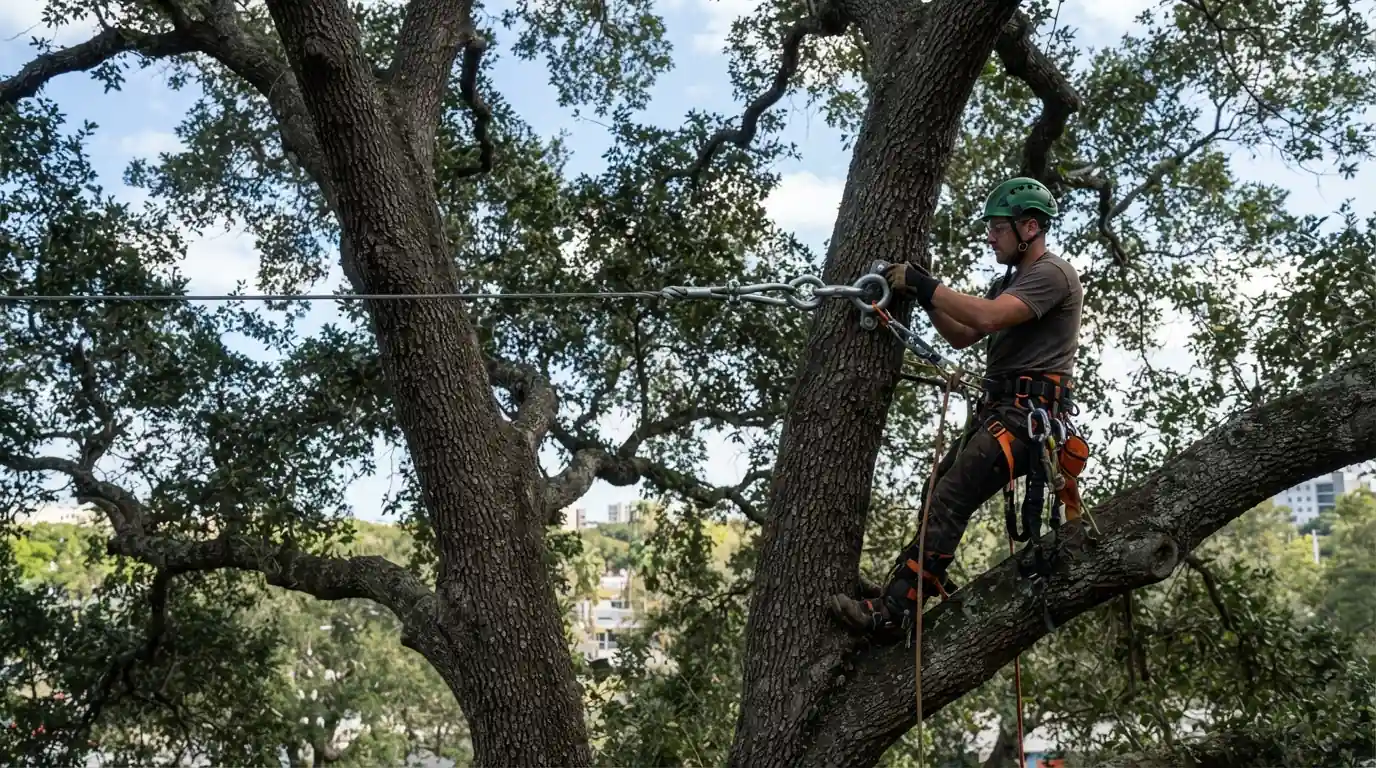
Co-dominant stem cabling
Co-dominant stems are two trunks of similar size growing from the same point, and the union between them is often weaker than a normal branch attachment. In wind the two stems pull apart, and a crack starts at the fork. A cable installed about two thirds of the way up the stems limits that movement. We pair it with pruning to reduce weight on the heavier side, because a cable holding an unbalanced crown is working harder than it should.
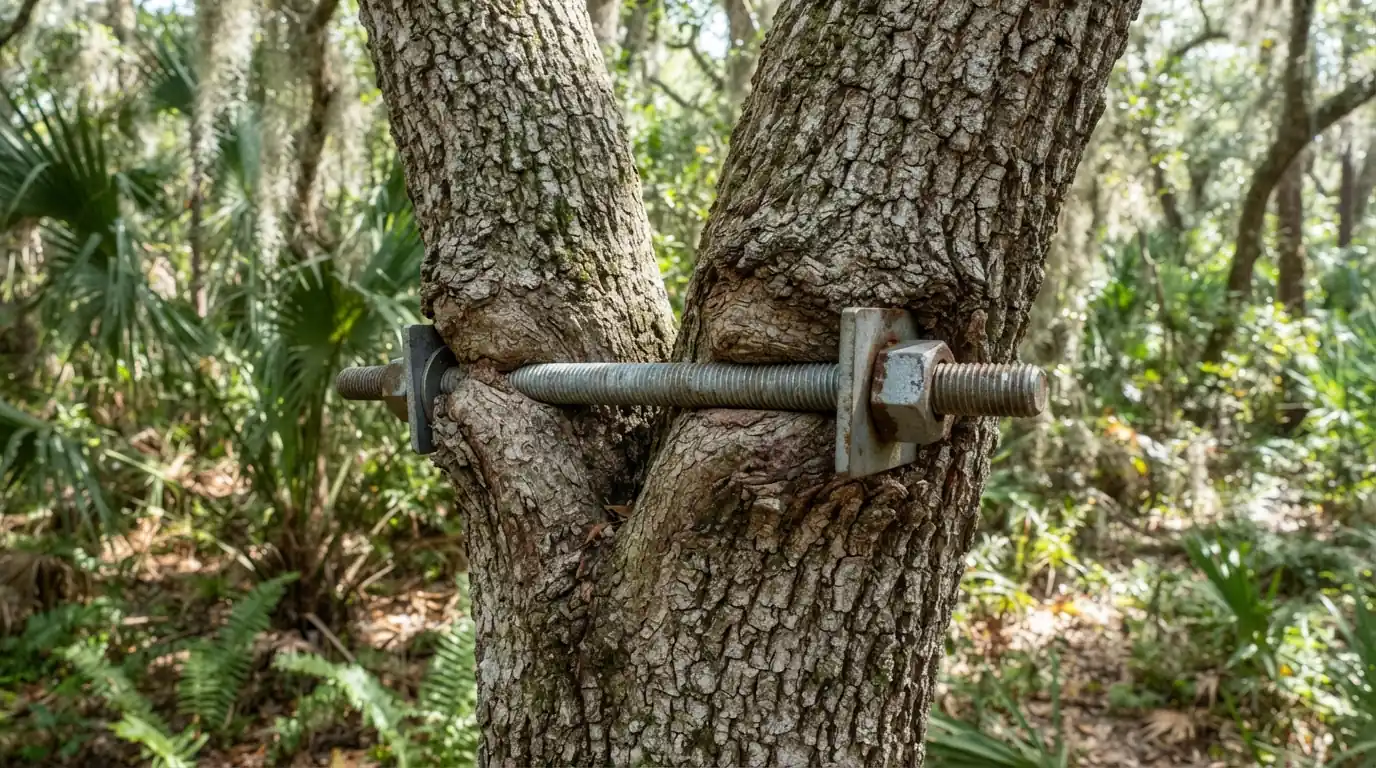
Split-crotch bracing
A split crotch, where a fork has already cracked, needs more than a cable. Brace rods are threaded steel rods drilled through the union and tightened with washers and nuts, clamping the split so it cannot open further. Rods go in below the crack and are usually combined with a cable higher up. The tree will not heal the split closed, but it can grow wood around the hardware and hold together for many years with regular checks by the crew that installed it.
Storm-cracked limb support
Storm-cracked limbs are the judgment call. A crack in a big limb over a roof usually means the limb comes off, but a cracked limb that carries a large share of a valuable tree's crown can sometimes be held with a cable to the main trunk or a neighboring limb. We look at the depth of the crack, the wood around it and what sits underneath before recommending support over removal, and we explain the risk plainly either way.
Cable inspection and replacement
Cables and rods need inspection. Hardware can loosen, cables can be damaged by a falling limb, and trees grow around anchors in ways that change how they work. We check existing systems for wear, slack and tree growth, retighten or replace them, and adjust the height as the crown grows. Installed systems should be checked every year or two and after any major storm, and we keep notes of what was installed where, so the next inspection starts from a record.
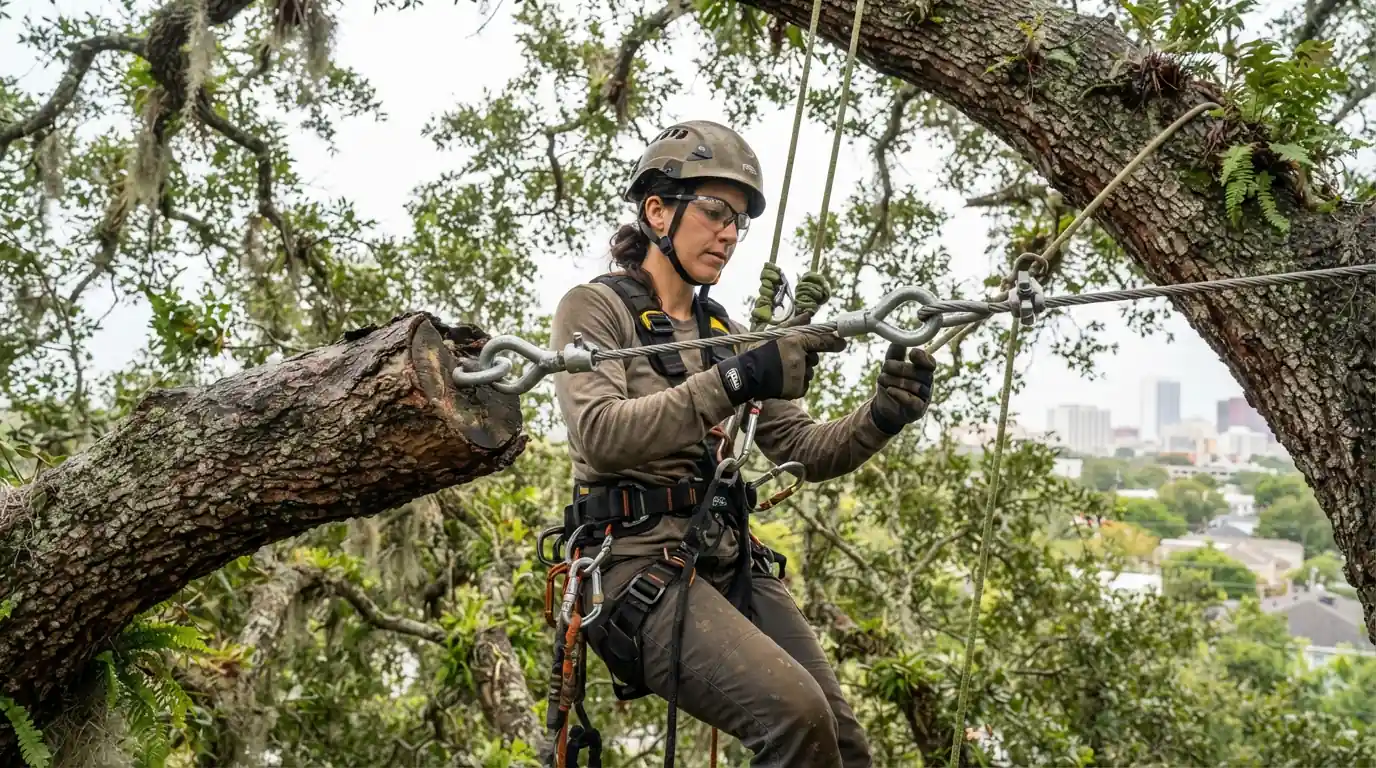
Big oaks worth supporting around Tampa
Massive oaks are common in Plant City, Bloomingdale and Valrico, and live oaks there grow the heavy canopies that make weak forks work hardest. After Helene and Milton, many owners found cracks in unions that had held for decades. For a large live oak that would take generations to replace, cabling plus thinning often keeps the tree and lowers the risk to the house.
Signs a tree may need support
- Two equal trunks
Stems of the same size from one fork.
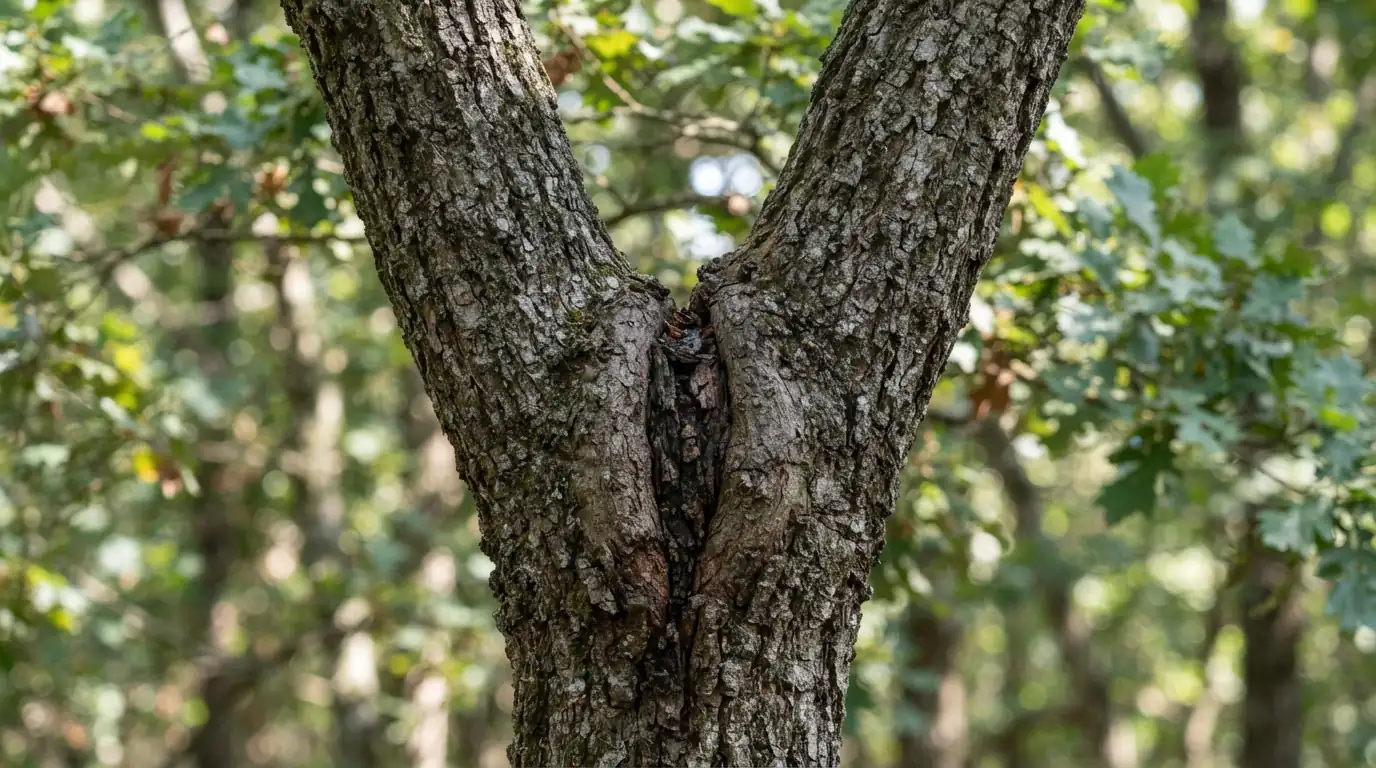
- Bark trapped in a fork
A tight V with bark folded inside.
- A crack at the union
A seam running down from a fork.
- Weeping or rot at a fork
Dark staining or soft wood there.
- Old cables
Hardware nobody has checked in years.
Cable, brace rod or removal?
| Factor | Cable | Brace rod | Removal |
|---|---|---|---|
| Used for | Limiting stem movement | Clamping a split union | Unsound trees |
| Where | High in the crown | Through the union | Whole tree |
| Upkeep | Regular checks | Regular checks | None |
How a support install runs
- 1Call
Tell us about the fork or crack.
- 2Assess
Union, trunk and roots checked.
- 3Plan
Cables, rods and pruning agreed.
- 4Prune
Weight taken off first.
- 5Install
Anchors, cables and rods fitted.
- 6Tension
System set and checked.
- 7Record
Notes kept for future checks.
What cabling and bracing cost
There is no reliable published range for Tampa support systems, so we price the tree.
- Number of cablesOne union or several.
- Tree heightAnchors sit high in the crown.
- Brace rodsDrilled and fitted at the union.
- PruningWeight reduction alongside.
- AccessClimb or bucket truck.
- InspectionsOngoing checks.
Cabling and bracing questions
The anchors make small wounds the tree grows around.
Many years, with regular checks and adjustment.
Safer, not guaranteed. Support lowers the risk.
Only trees with sound roots and trunks.
Depends on the tree and the load. We explain on site.
Pruning permits may apply to large trees; cabling itself rarely.
Yes. We inspect, adjust or replace them.
More tree health work
From our guides: Laurel Oak or Live Oak? How to Tell in Tampa