Updated October 2026
Pine removal in Tampa usually means a tall slash or longleaf pine, or a shallow-rooted sand pine, that is dead, dying or leaning toward a structure. Pines killed by bark beetles or lightning dry out and become brittle quickly, so they should come down soon. Inside city limits, pines 5 inches or more across need a removal permit.
Why pines are removed differently
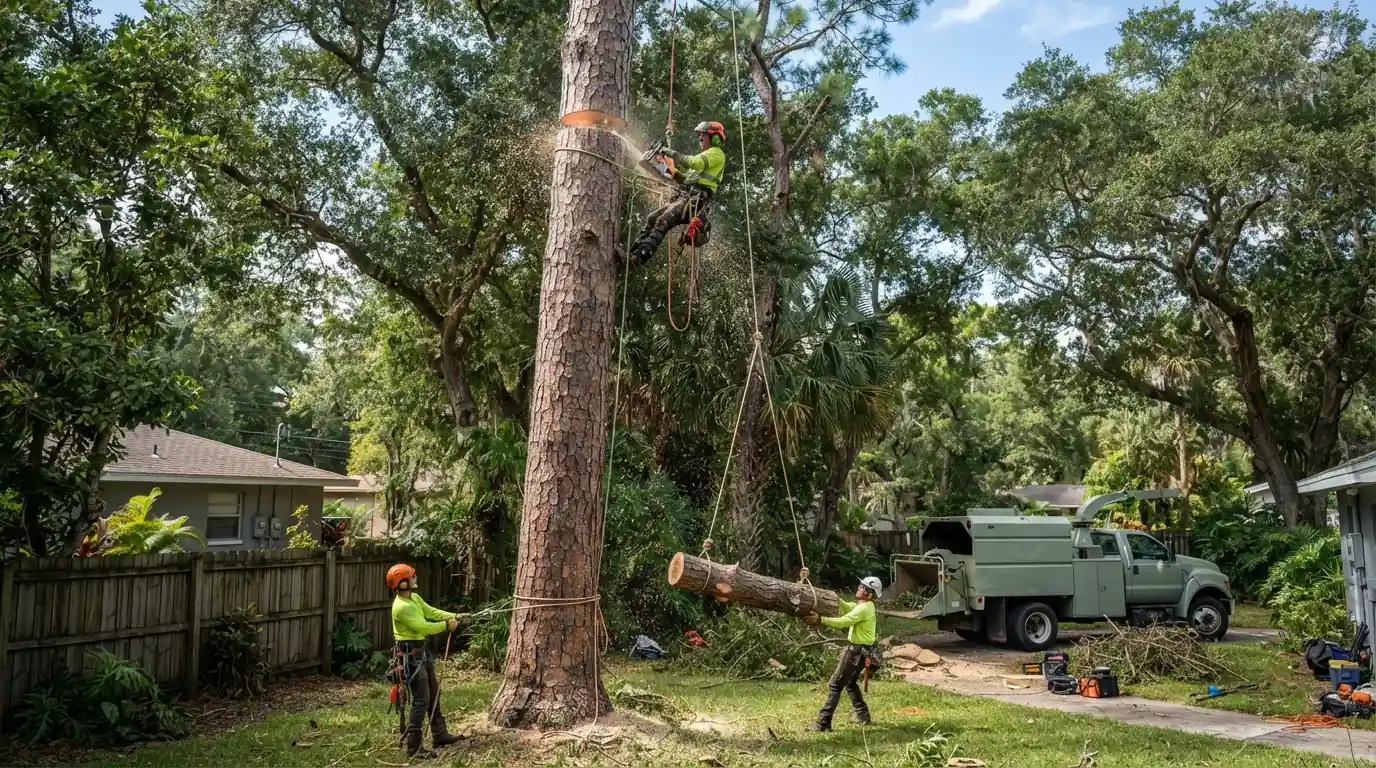
A pine is tall, straight and relatively light for its height, so where there is a clear drop zone it can often be felled in one piece, which is quicker and cheaper than sectioning.
The catch is speed. Once a pine starts dying, the wood dries and weakens within months, and a climber can no longer trust it.
What pine removal costs
Pines are priced by height, condition and whether they can be felled.
- HeightTall pines mean more rigging.
- Drop zoneFelling whole is quicker.
- ConditionDead wood needs a bucket or crane.
- Nearby structuresSections over roofs and lines.
- PermitsProtected pines need paperwork.
- Stump and haulSeparate lines.
Typical planning range: $800 to $3,500 per tree for most residential removals in Florida; small trees under 30 feet from about $200 with easy access; very large, hazardous or crane-only trees over 80 feet $5,000 to $15,000+. Market figures, not a quote from us.
Slash and longleaf pine removal
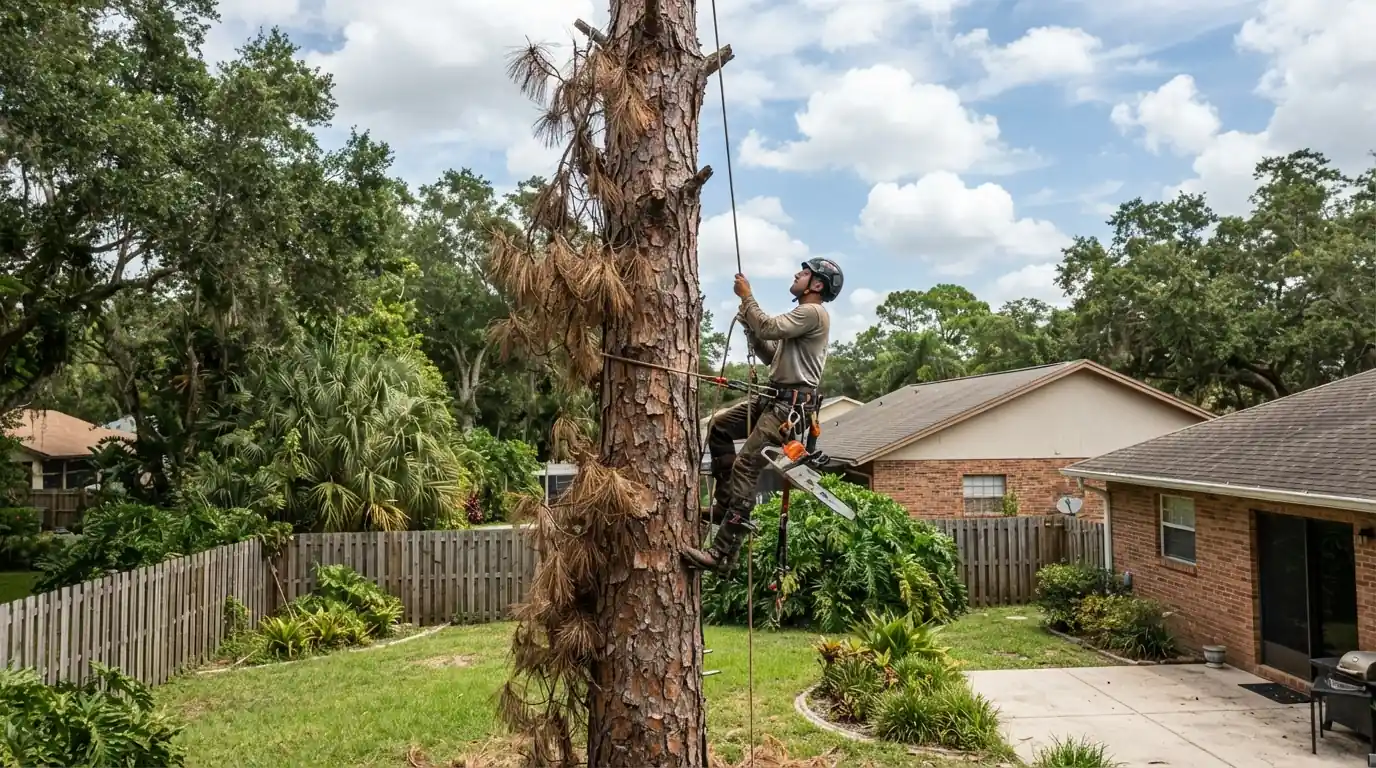
Slash and longleaf pines are the tall pines that tower over many Tampa yards. When one needs to come out and there is open ground in the direction it will fall, it can be notched and felled whole, then cut up on the ground. Near houses, fences or power lines, a climber takes it down from the top in sections, lowering the heavy pieces on a rope. Either way, the trunk is cut into rounds and hauled, and the stump can be ground.
Typical planning range: $800 to $3,500 per tree for most residential removals in Florida; small trees under 30 feet from about $200 with easy access; very large, hazardous or crane-only trees over 80 feet $5,000 to $15,000+. Market figures, not a quote from us.
Sand pine removal
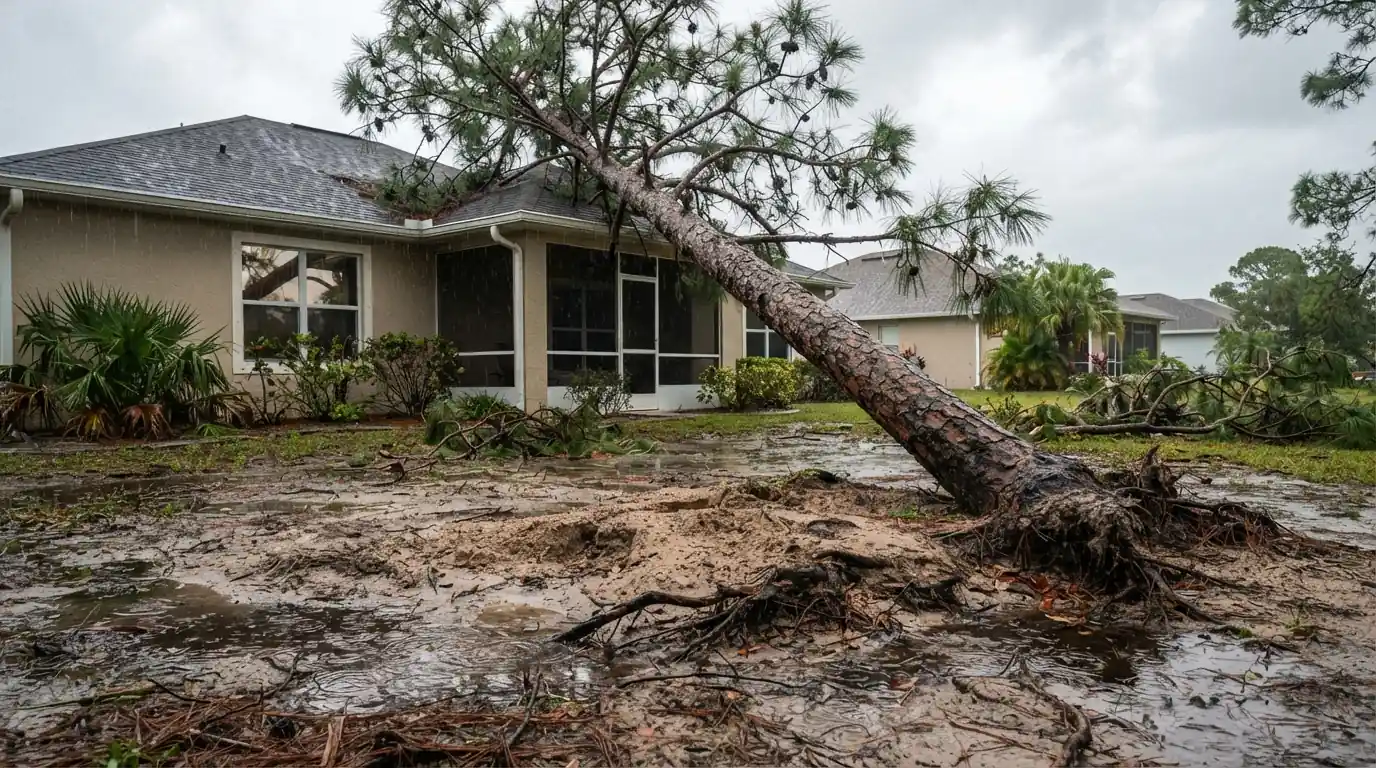
Sand pines grow on the dry, sandy ridges of the region and have shallow roots. They are among the first trees to go over when heavy rain saturates the soil, often uprooting at wind speeds a well-anchored live oak rides out. A sand pine leaning at the house after a storm is a priority job. We check whether the root plate is still moving, secure the trunk if it is, and take the tree down before the next rain.
Beetle-killed pine removal
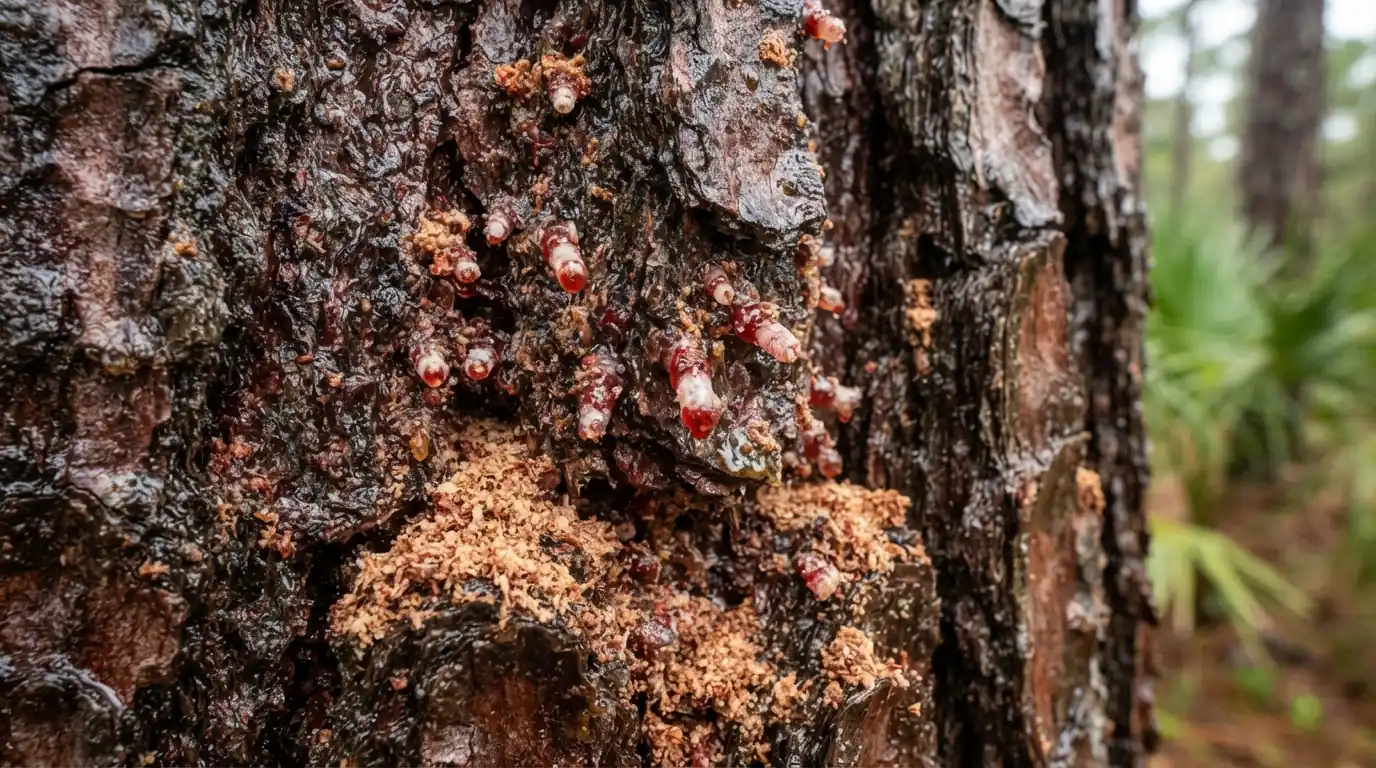
Bark beetles attack pines that are already stressed by drought, root damage or lightning. The signs are small blobs of resin called pitch tubes on the bark, reddish boring dust in the bark crevices, and a crown that turns from green to yellow to brown within weeks. By the time the needles are brown, the tree is dead and the beetles have often moved on to the next pine. Removing infested trees quickly helps protect the healthy pines around them.
Lightning-struck pine removal
A lightning strike can blow a strip of bark down the length of a pine or kill it outright, and struck pines often attract beetles soon after. Even a pine that still looks green can decline within months. We look at the scar, the crown and the bark along the strike, and recommend removal when the damage runs deep or beetles have moved in. A pine that has to come down after lightning is best removed before the wood turns brittle.
Felling a pine yourself
| Question | Doing it yourself | Our crew |
|---|---|---|
| Small pine in open ground | Possible with experience and a clear fall zone. | Quicker, with the stump ground too. |
| Tall pine near a house | Pines can barber-chair and split when cut wrong. | Felled or sectioned with a planned cut. |
| Dead or beetle-killed pine | Brittle wood breaks unpredictably. | Taken down from a bucket or by crane. |
Pines and soil around Tampa Bay
Much of Hillsborough County, Pinellas County and Pasco County sits on a high water table, and heavy storm rain saturates the soil until roots lose their grip. That is why shallow-rooted sand pines uproot at wind speeds a well-anchored live oak shrugs off. Inside Tampa, pines 5 inches or more across are protected, so a removal permit is usually needed unless the tree is a clear hazard.
How a pine removal runs
- 1Call
Tell us the pine and what is near it.
- 2Look
Condition, lean and drop zone checked.
- 3Permit
Filed when the pine is protected.
- 4Plan the cut
Felled whole or sectioned from the top.
- 5Takedown
Controlled fall or roped sections.
- 6Haul
Rounds and brush loaded out.
- 7Stump
Ground now or later.
Signs a pine is dying
- Pitch tubes on the bark
Small resin blobs from beetle entry holes.
- Boring dust
Reddish sawdust in bark crevices.
- Needles fading
Green turning yellow, then brown.
- A lightning scar
A strip of bark missing down the trunk.
- A new lean
Soil lifting on one side after rain.
Pine removal questions
Usually, for pines 5 inches or more across inside city limits.
Soon. Dead pine wood turns brittle within months.
Yes. Removing infested trees quickly helps.
Where there is a clear drop zone, yes.
Shallow roots in saturated soil lose their grip.
Often, especially if beetles move in.
Yes, as a separate line on the quote.
Other removal work
From our guides: Signs a Tampa Tree Is Dying or Dangerous