Updated October 2026
Tree protection during construction keeps the trees you are keeping alive through a build: a fenced zone around each root area, clean root pruning before any digging near it, clearance pruning so equipment does not tear limbs, and checks during the work. Most construction damage is to roots, and it can take years to show in the crown.
Why roots need protecting
Most of a tree's roots are in the top foot or two of soil and spread well past the edge of the canopy. Trucks compact that soil, trenches cut through it, and new grade buries it.
A tree can look fine through the whole project and start dying two or three years later, long after the builder has gone.
What tree protection costs
There is no reliable published range for tree protection in Tampa, so we price it by the site and the trees being kept.
- Number of treesHow many the plan keeps.
- Fence lengthBigger root zones, more fencing.
- Root pruningTrench lines near trees.
- Clearance pruningLimbs in the equipment path.
- Site visitsChecks through the build.
- AftercareSoil work once the build ends.
Tree protection zone fencing
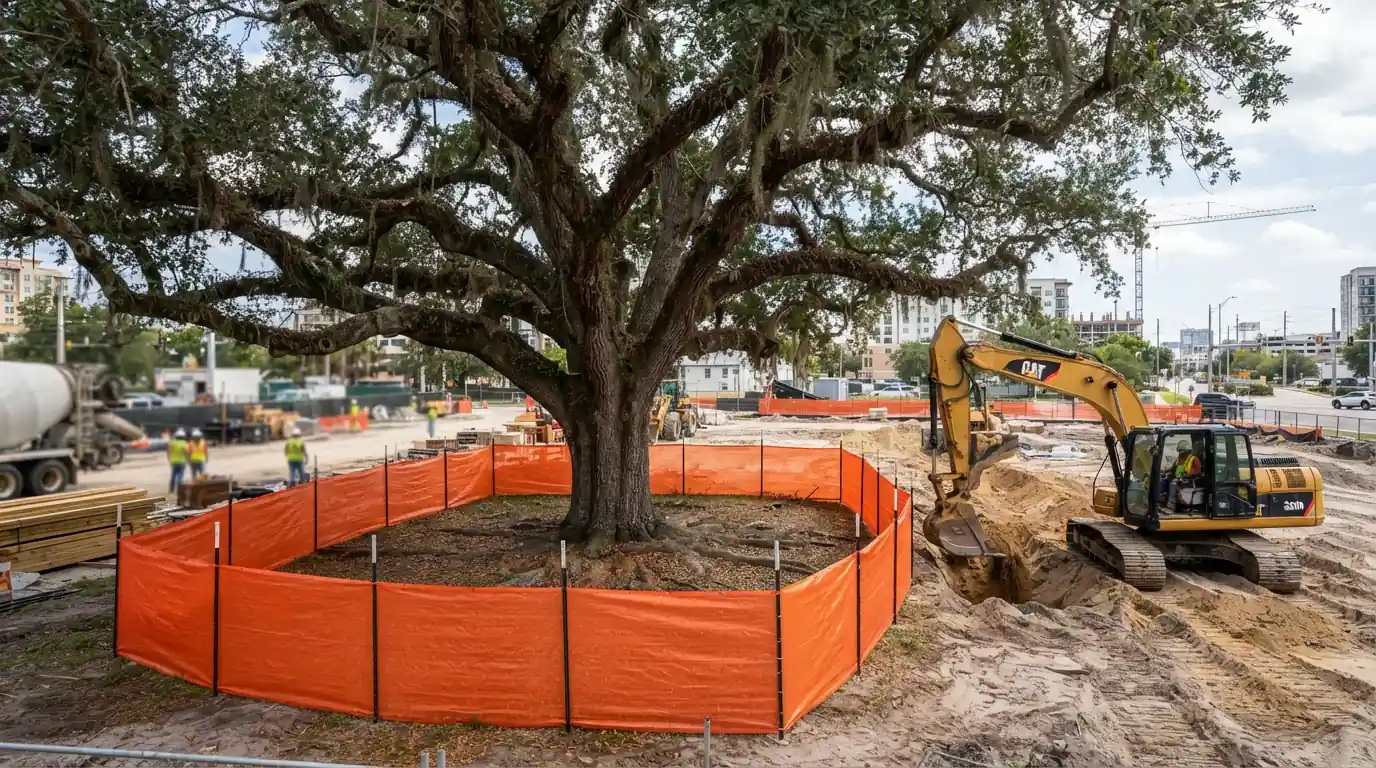
The protection zone is a fenced area around each tree the plan keeps, usually at least to the edge of the canopy and wider for big trees. Inside it there is no parking, no material storage, no washing out concrete and no grade changes. Where equipment has to cross the root zone, a thick layer of mulch or ground protection mats spreads the load. We set the fence before site work starts and label it so every trade on the job knows why it is there.
Root pruning before digging
When a footing, utility line or driveway has to be dug near a tree, the roots in that line are cut cleanly before the excavator arrives. We expose them by hand or with an air tool and cut them with a saw, so the wounds are clean and small instead of torn and shattered by a bucket. Where possible, utilities are tunneled under large roots instead of trenched through them. It is a small cost that decides whether the tree survives the project.
Clearance pruning before equipment arrives
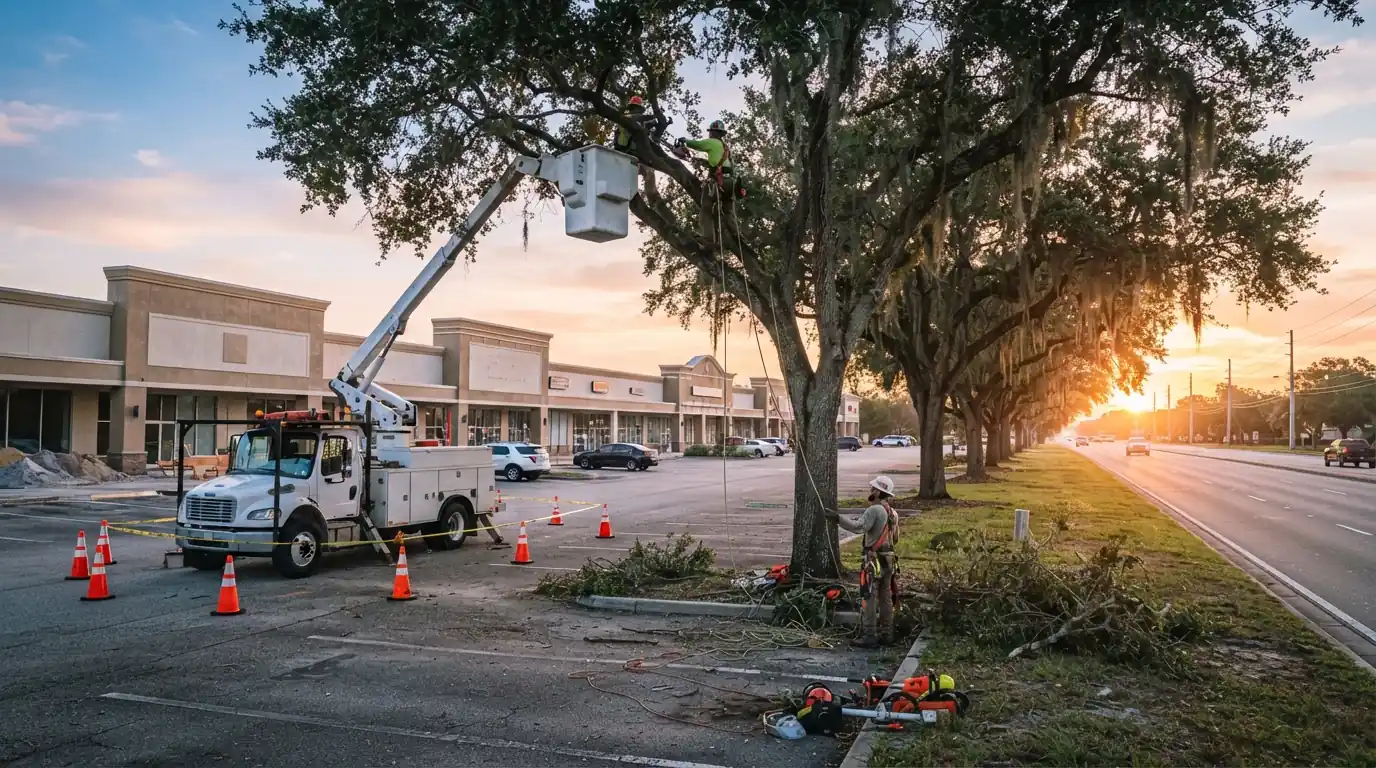
Construction brings tall equipment: dump trucks, concrete pump booms, cranes and material deliveries. Low limbs that are in the way get broken, often badly. We prune for clearance ahead of time, taking limbs back to a proper collar or a side branch, and raise the crown only as much as the equipment really needs. Clean cuts made on our schedule heal far better than the ragged breaks left by a truck backing in, and the tree keeps its shape once the site is clear.
Monitoring through the build
Protection only works if it stays in place for the whole job. We check the site at key stages of the build, confirm the fences are still standing, look for new soil piles, trenches or spills in the root zones, and water the trees during dry spells if the site has cut them off from irrigation. After the build we look at the trees again, loosen compacted soil where needed and recommend the care that helps them settle back into the finished landscape.
Protected root zone or not?
| Factor | Protected | Unprotected |
|---|---|---|
| What happens to roots | Kept outside the fence | Trenched, compacted or buried |
| When damage shows | Rarely at all | Often two or three years later |
| Typical outcome | Tree settles back in | Decline and removal |
How long tree protection takes
Setting up fencing and pre-construction pruning is usually a single day. Checks during the build are short visits timed to the stages that put roots at risk, such as excavation and utility work.
Construction and tree rules around Tampa
Inside Tampa, tree removals tied to construction are evaluated under the building permit, so the trees being kept are part of the plan too. In unincorporated Hillsborough County, site work usually needs a Land Alteration and Landscaping permit, and protected oak removals usually need a permit, a tree survey and a written arborist assessment, with fees and fines often calculated per inch of trunk. Losing a protected oak to construction damage is expensive as well as permanent.
How tree protection runs
- 1Call
Tell us the project and which trees stay.
- 2Site walk
Trees, root zones and the build plan checked.
- 3Plan
Fence lines, root cuts and clearance agreed.
- 4Fence
Protection zones set before site work.
- 5Root and limb work
Clean cuts ahead of digging and equipment.
- 6Checks
Visits at the risky stages of the build.
- 7Wrap-up
Final look and aftercare advice.
Tree protection questions
At least to the edge of the canopy, wider for big trees.
Only on thick mulch or ground mats, and as little as possible.
Clean cuts heal; roots torn by an excavator do not.
Often two or three years after the work ends.
Yes. We coordinate fencing and root work with the schedule.
Yes, pools are one of the most common root-zone jobs.
We check the trees and recommend any soil or care work.
More property-wide tree work
From our guides: Tampa Tree Removal Permits: What Needs One