Updated October 2026
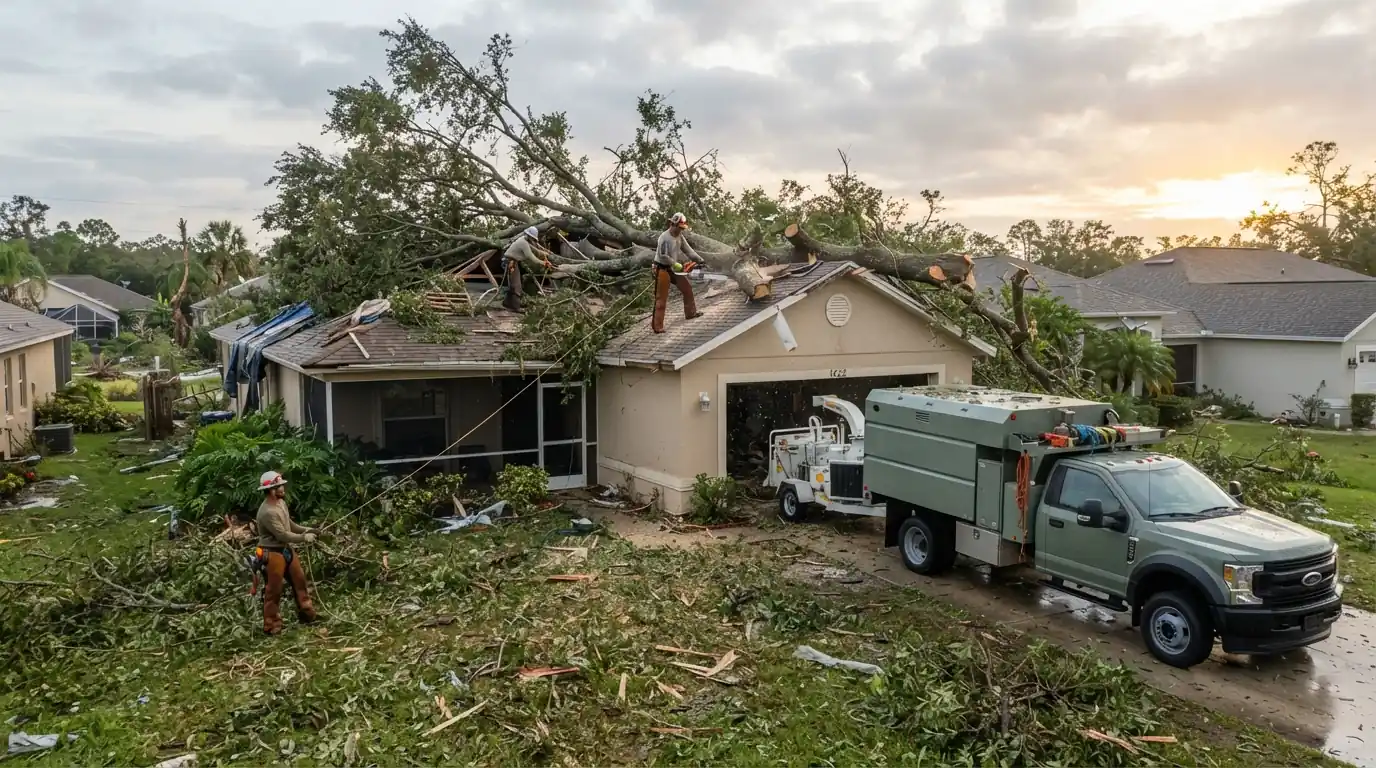
If a tree has fallen on your Tampa house, car or fence, get everyone out of the rooms beneath it, stay well clear of any wires, and call (813) 548-5624. We answer 24/7, send a crew to stabilize the tree, and take it off the structure in rigged sections so the roof takes no second hit.
Call tonight, not in the morning, if you see this
- Branches through the roofline
Daylight or dripping water in the attic means the deck is pierced.
- A trunk on the eave
The load settles as wind shifts and can crack rafters.
- A hanger over a walkway
A broken limb caught in the canopy can drop without warning.
- Soil lifted on one side
A root plate that rose after rain is still moving in wet sand.
- Contact with a wire
Treat the tree as live and call the power company first.
What an emergency visit actually involves
Most emergency calls come in the dark, in the rain, or both. The first job is the scene, not the tree. The foreman checks for wires, sees what the tree rests on, and decides whether it comes off from the ground or needs a climber, bucket or crane to take the weight.
Once the load is off, the wood is cut into carryable pieces and the doors and driveway are opened. Grinding waits for dry ground.
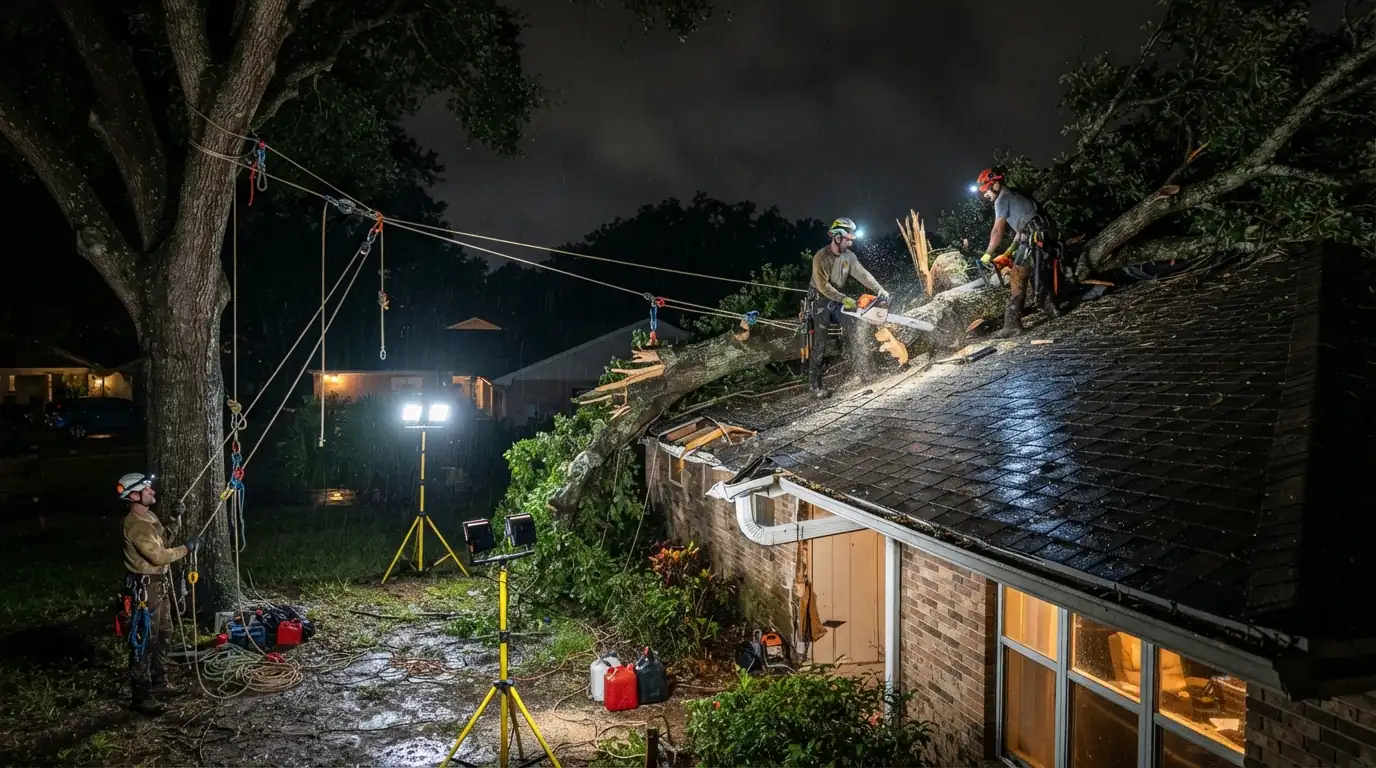
From the phone call to a clear roof
- 1You call
Tell us what the tree hit and whether wires are involved.
- 2Crew dispatched
A crew rolls with saws, rigging and lights.
- 3Scene check
The foreman confirms wires are clear and sets a drop zone.
- 4Weight comes off
Limbs are lowered in sections, never dropped on the roof.
- 5Structure cleared
The trunk is cut free and lifted off.
- 6Opening flagged
If the roof is open, we tell you so a roofer can cover it.
- 7Cleanup
Wood goes to the curb or the truck; grinding is booked later.
Tree on a house or roof
The usual emergency is a laurel oak or pine limb through the roofline after a gust. Dragging it off by hand scrapes it across the shingles and can collapse the deck it rests on. We tie off the top, cut the branches that carry no weight first, then lower the load-bearing pieces on a rope so the roof takes no new impact. When the trunk is too heavy to rope down, a crane lifts it straight up and off.
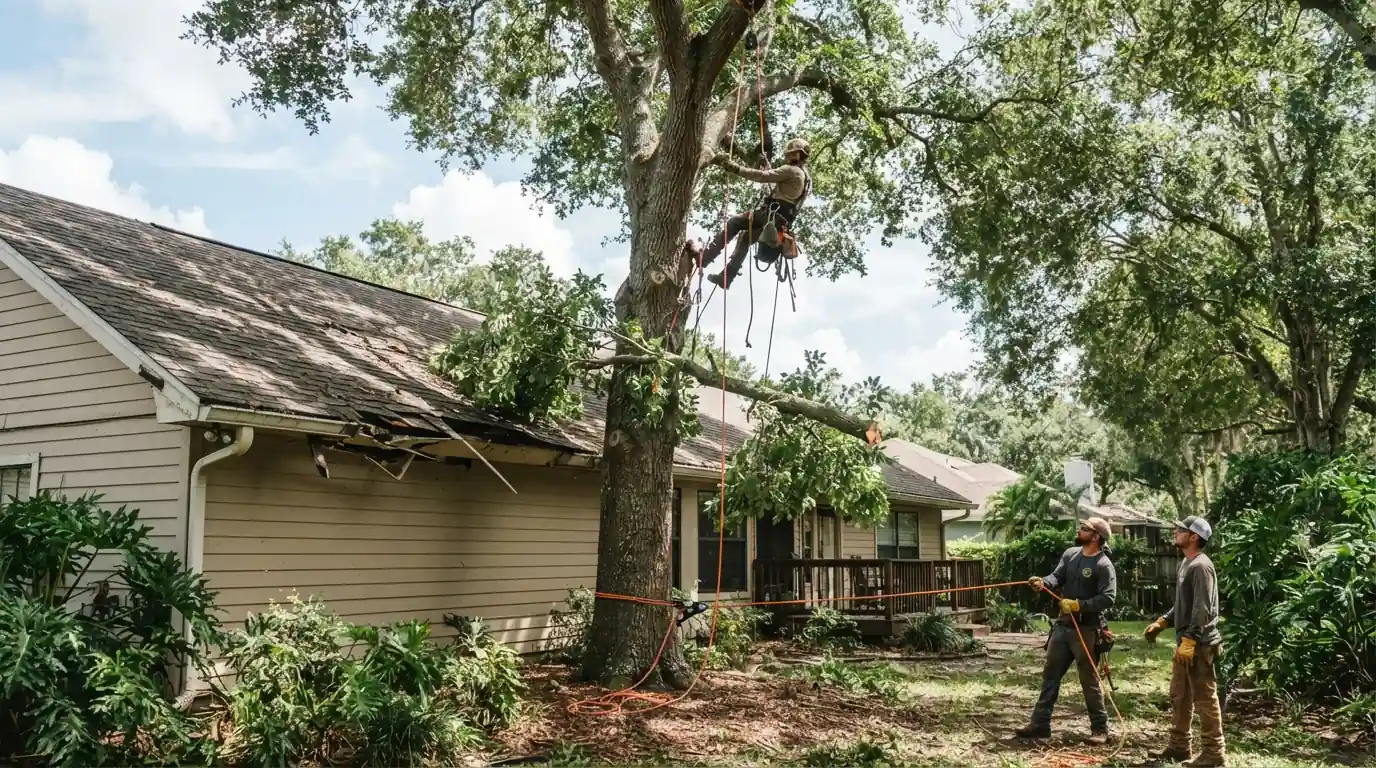
Tree blocking a driveway or road
A tree across the driveway traps cars and blocks the lane an ambulance would need. The trunk is already down, but a trunk that landed across a slope or a vehicle can be bent and spring sideways when cut. Relief cuts take the tension out first. We open a lane so you can get out, then cut the rest into rounds two people can move. Brush goes into one pile off to the side, so the lane stays open while the crew finishes the trunk.
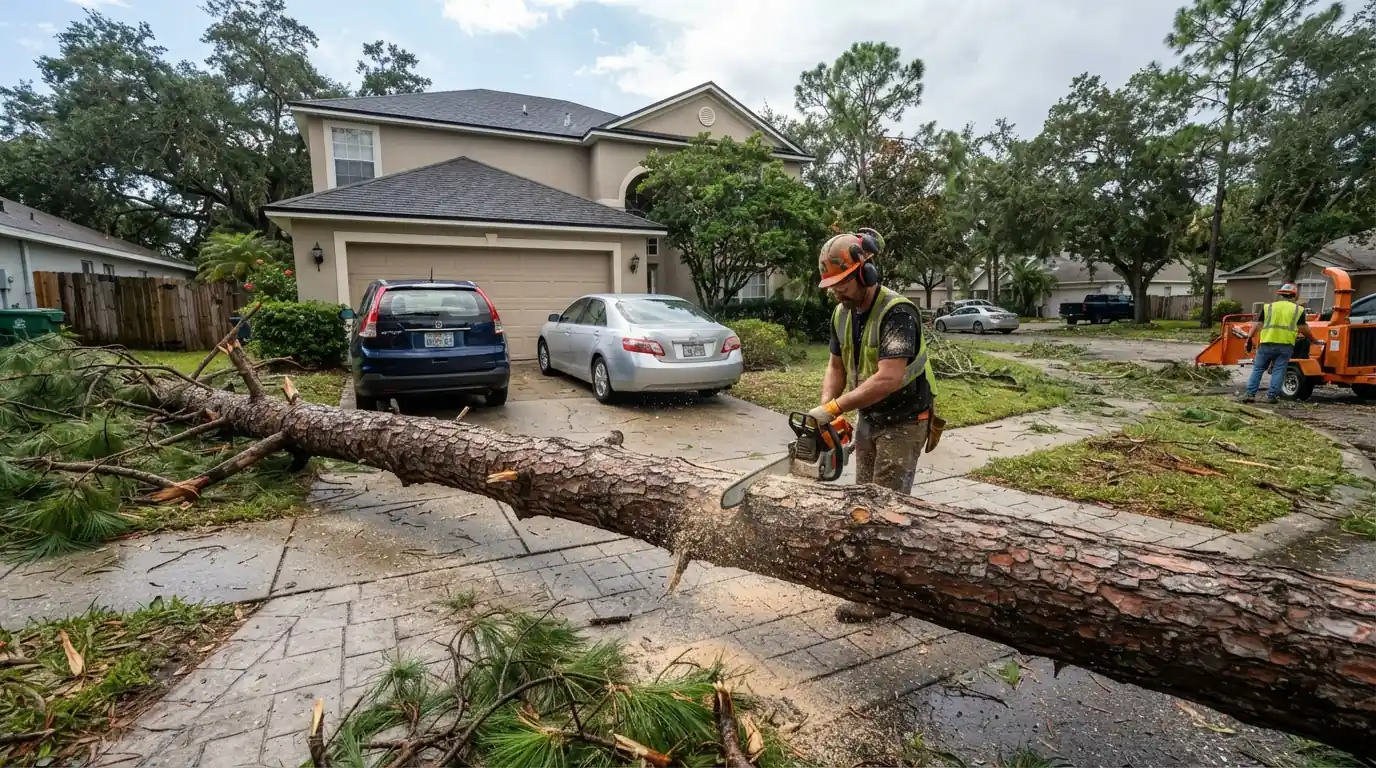
Split or hanging limbs
A limb that cracked but did not fall is often the most dangerous thing in the yard. It hangs in the canopy, held by bark and other branches, and drops when the wind shifts or someone walks underneath. A climber or bucket operator ties the hanger off before it is cut, then lowers it on a line instead of letting it free-fall. We also check the tear it left, since a ragged stub on a laurel oak lets decay in.
Uprooted tree on a fence or car
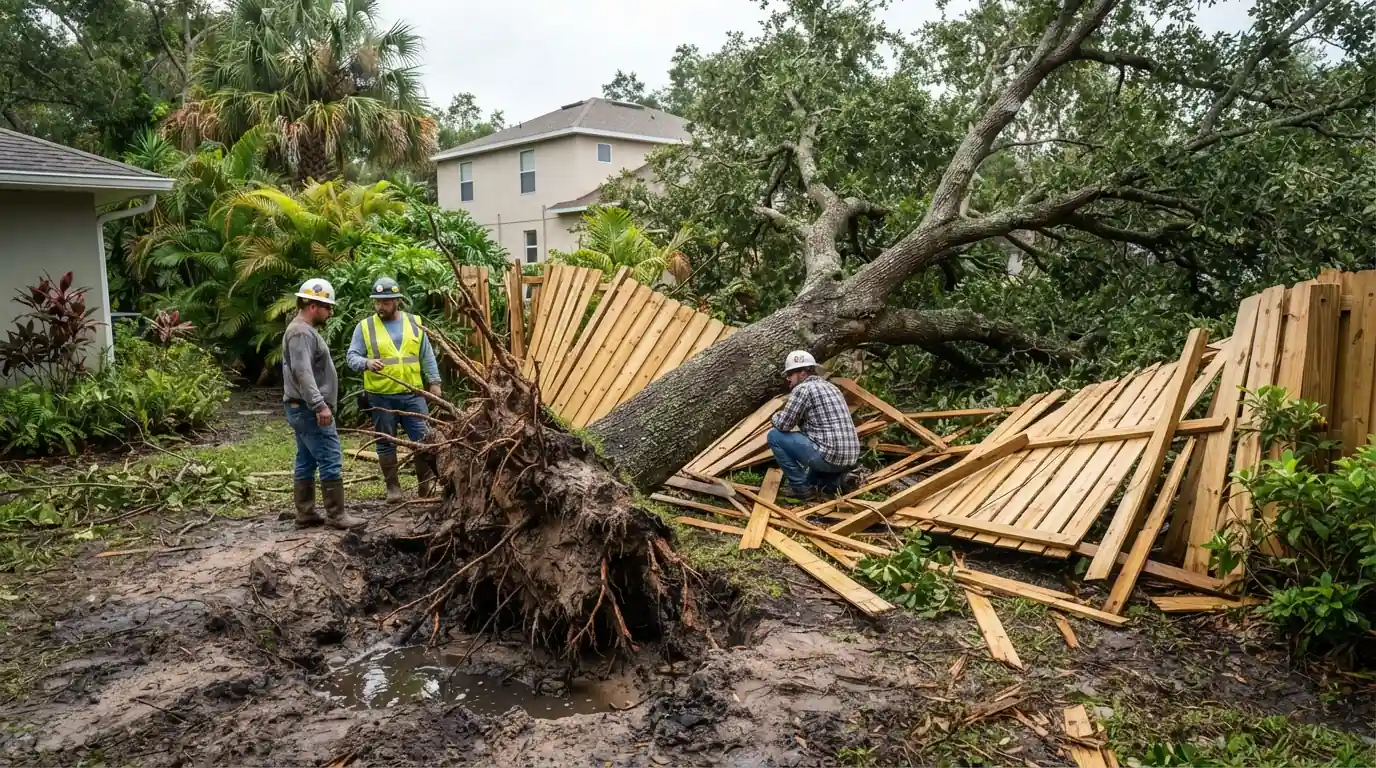
When the root plate lifts, the whole tree is the problem, not one limb. After heavy rain the sand under a Tampa yard goes soft and a tree can keep tipping for hours. We check whether the plate is still moving and brace or winch the trunk if it is, then take the crown down before the trunk so the fence or car is not crushed further. Adjusters want photos of the tree where it landed, so take yours first.
Why Tampa trees come down the way they do
Helene soaked Tampa before Milton dropped 11.43 inches in a single day, and waterlogged soil let even wind-resistant trees fail. Laurel oaks did the most damage, including homes hit in a Brandon neighborhood, while USF researchers found South Tampa and East Tampa lost the most canopy. On the high water table under Hillsborough County, a shallow-rooted tree can tip in wind a live oak rides out.
Why this is not a chainsaw-and-a-neighbor job
| Question | Doing it yourself | Our crew |
|---|---|---|
| Tree resting on the roof | Cutting from a broken, sloped roof under a moving load. | The weight is rigged off before any cut releases it. |
| Wires nearby | Contact can be fatal even when a line looks dead. | We start once the utility has cut the power. |
Emergency tree questions we hear most
Often, when a covered storm drops a tree on a covered structure, usually with a cap. Your adjuster decides.
Yes. We answer 24/7 and send crews after dark; full cleanup can wait for daylight.
Keep people out of rooms under the tree, stay clear of wires, and photograph the damage.
Not until the power company has cut the line. Then we clear the tree from around it.
A single tree usually comes off in one visit; a crane job adds scheduling time.
Usually not. The emergency visit is about the structure; grinding is booked once the ground dries.
We haul it away or stack it at the curb, your choice.
What drives the cost of an emergency removal
Emergency pricing follows the rigging, not the clock.
- How it restsA trunk on a roof needs more rigging.
- Size and speciesOaks weigh far more than palms.
- Crane or no craneTrees too heavy to rope down need a crane.
- AccessSide yards and pool cages add labor.
- WiresWaiting on the utility adds time.
- Haul-awayCurb stacking costs less than trucking.
Typical planning range: emergency trimming around $250 per hour in Tampa; clearing broken or dead branches from a large tree about $1,000. Market figures, not a quote from us.
Other storm work we handle
From our guides: A Tree Fell on Your House in Tampa: What to Do First