Updated October 2026
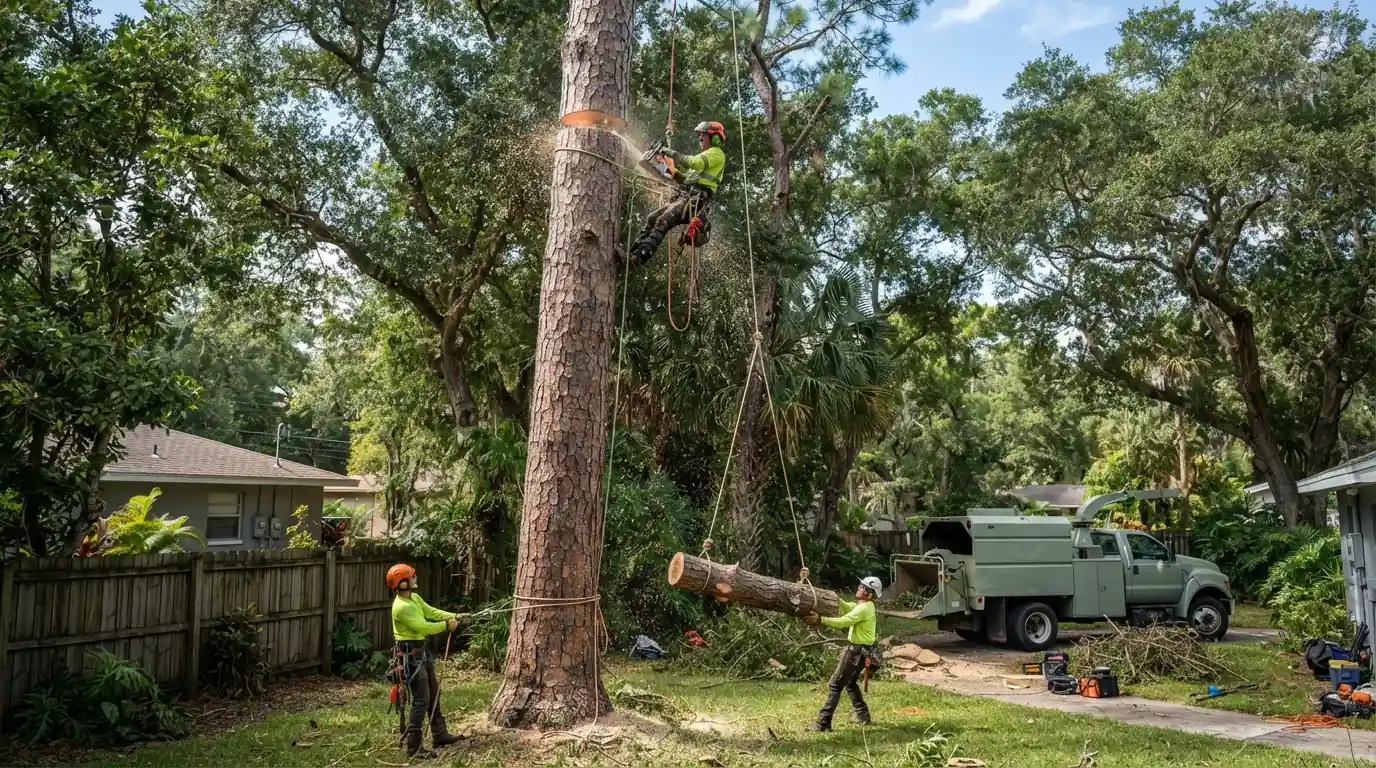
In unincorporated Hillsborough County, Brazilian pepper, chinaberry, camphor, Norfolk Island pine, Chinese tallow and queen palm can be removed without a permit, and Tampa's permit rule also excludes listed invasive species. The hard part is regrowth: most of these resprout from the stump and roots, so removal has to include stump work and follow-up.
Why invasive removal is a two-visit job
Cutting an invasive tree down is the easy part. Brazilian pepper and chinaberry answer a chainsaw by sending up new shoots from the stump and roots, and a thicket cut once can be back to head height in a season.
So the job has two halves: take the trees out and grind the stumps, then return to deal with whatever comes back before it hardens off.
What sets the price of invasive removal
Thickets are priced by area and density; single trees like any removal.
- AreaHow long the fence line or lot is.
- DensityTangled thickets take longer.
- Tree sizeBig camphors come down in sections.
- StumpsGrinding every stump adds time.
- Follow-upResprout visits are part of the plan.
- Haul or chipChipping saves hauling.
Typical planning range: $800 to $3,500 per tree for most residential removals in Florida; small trees under 30 feet from about $200 with easy access; very large, hazardous or crane-only trees over 80 feet $5,000 to $15,000+. Market figures, not a quote from us.
Brazilian pepper removal
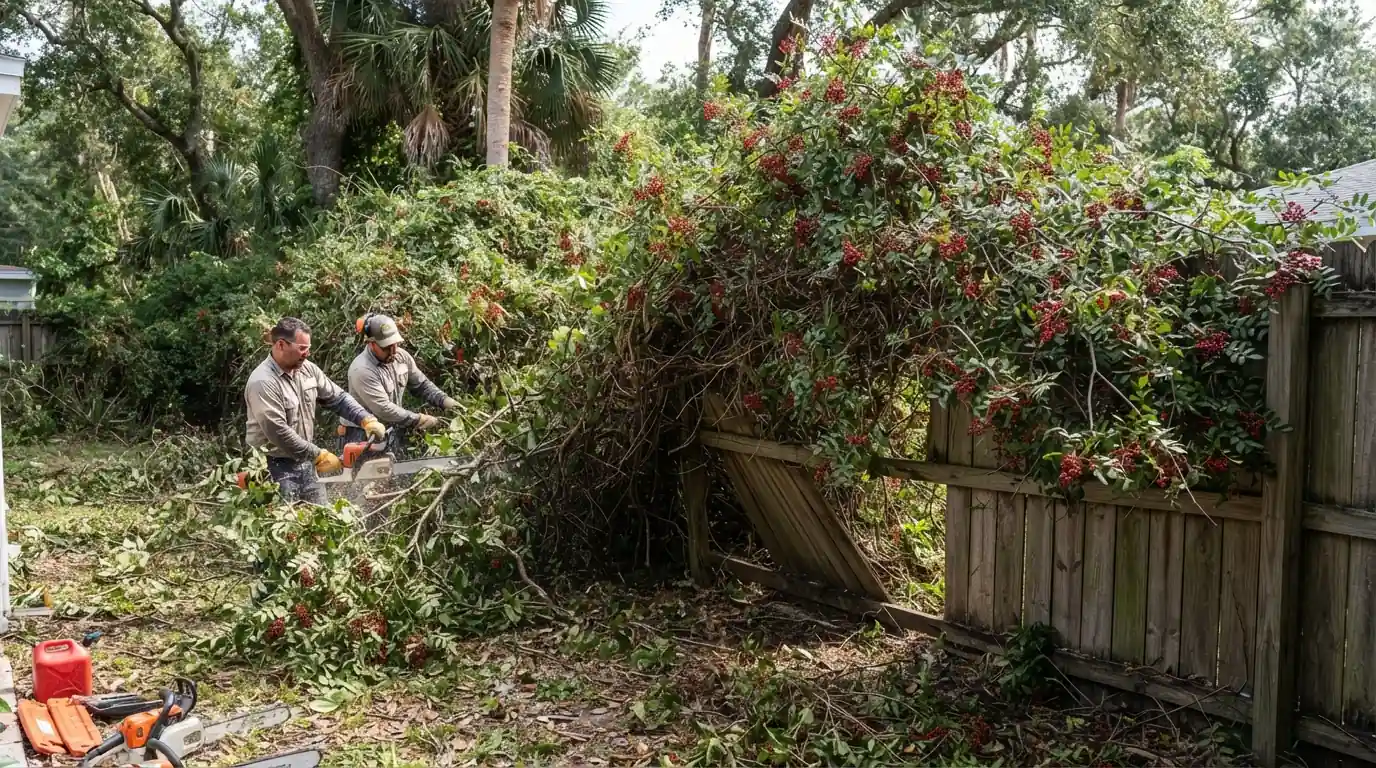
Brazilian pepper is the one we pull out most. It forms thickets along fences, ditches and back lot lines, shades out everything under it, and spreads by the red berries birds carry. The trunks are soft and tangled, so thickets are cut from the outside in and chipped as we go. Because it resprouts hard, the stumps are ground or treated the same day. Expect a follow-up visit for sprouts, since one pass rarely finishes a thicket that has been growing for years.
Australian pine removal
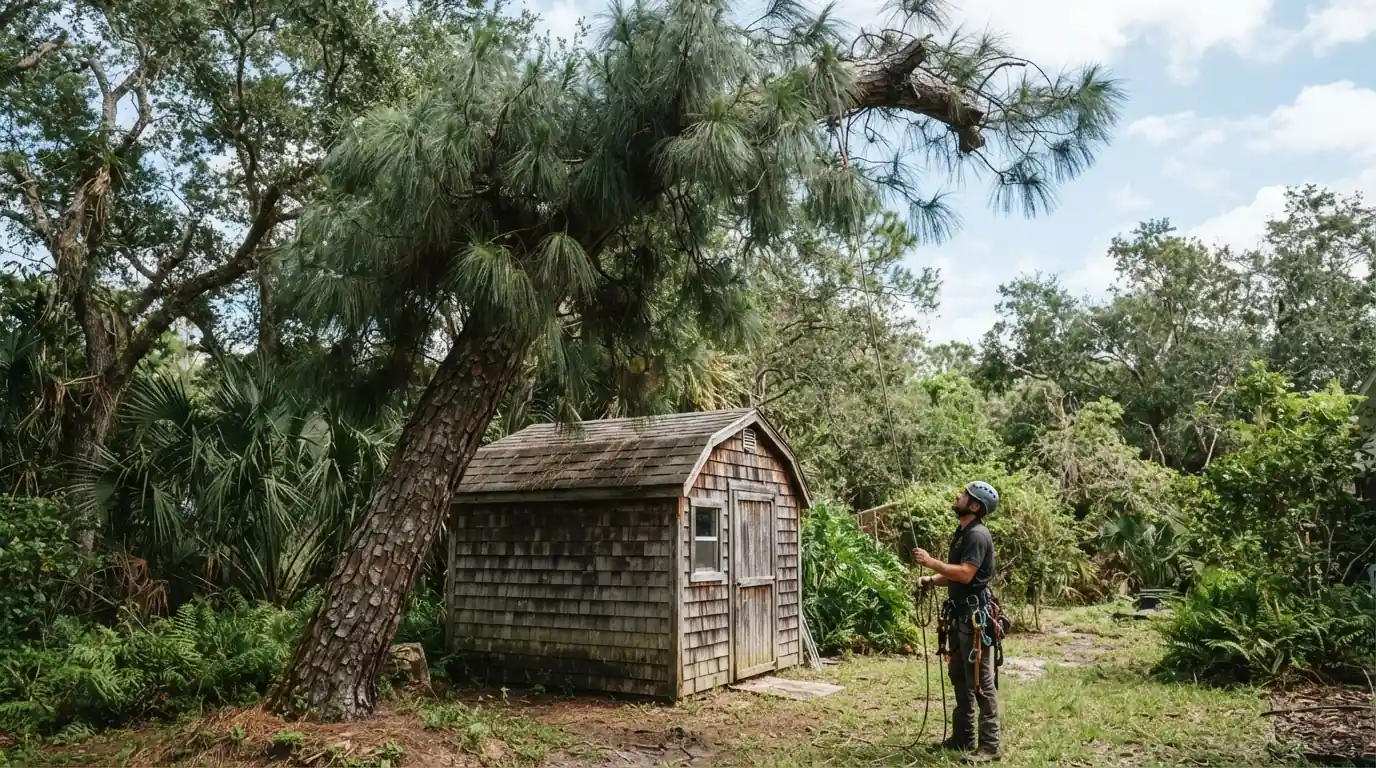
Australian pine is not a true pine, and it is one of the least storm-worthy trees in Florida yards. It grows tall on shallow roots, its wood is brittle, and it tends to go over whole in high wind. We take it down in sections where it leans over a roof or shed, and fell it where there is room. The needles and small branches make a surprising amount of brush, so chipping it on site saves a lot of hauling.
Chinaberry and camphor removal
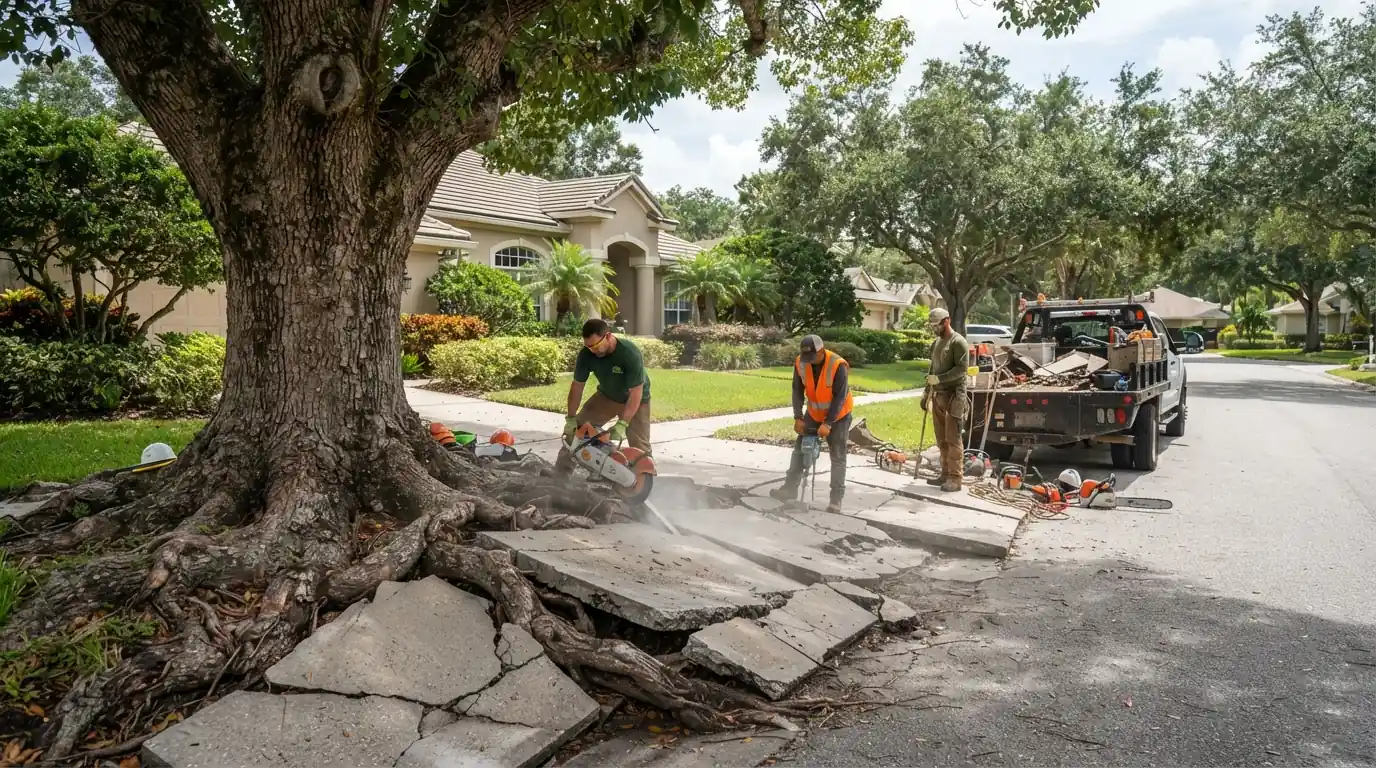
Chinaberry and camphor are former landscape trees that now seed into yards and wooded edges. Camphor grows big, with surface roots that lift walks and driveways, and chinaberry spreads by seed and root suckers. Both are on Hillsborough County's exempt list, so they can come out without a removal permit in the unincorporated county. Large camphors near a house come down in sections like any big tree, and their surface roots are ground back from the slabs they have been lifting.
Regrowth control after removal
Regrowth control is what separates a removal that lasts from one you pay for twice. Pepper, chinaberry and similar species send up shoots from stumps and roots for months. We grind stumps below grade and come back to cut or treat new sprouts before they harden, usually within the season. Replanting the cleared area with something that shades the ground also helps, and we can suggest wind-resistant natives that suit the spot and the amount of sun it gets once the invasives are gone.
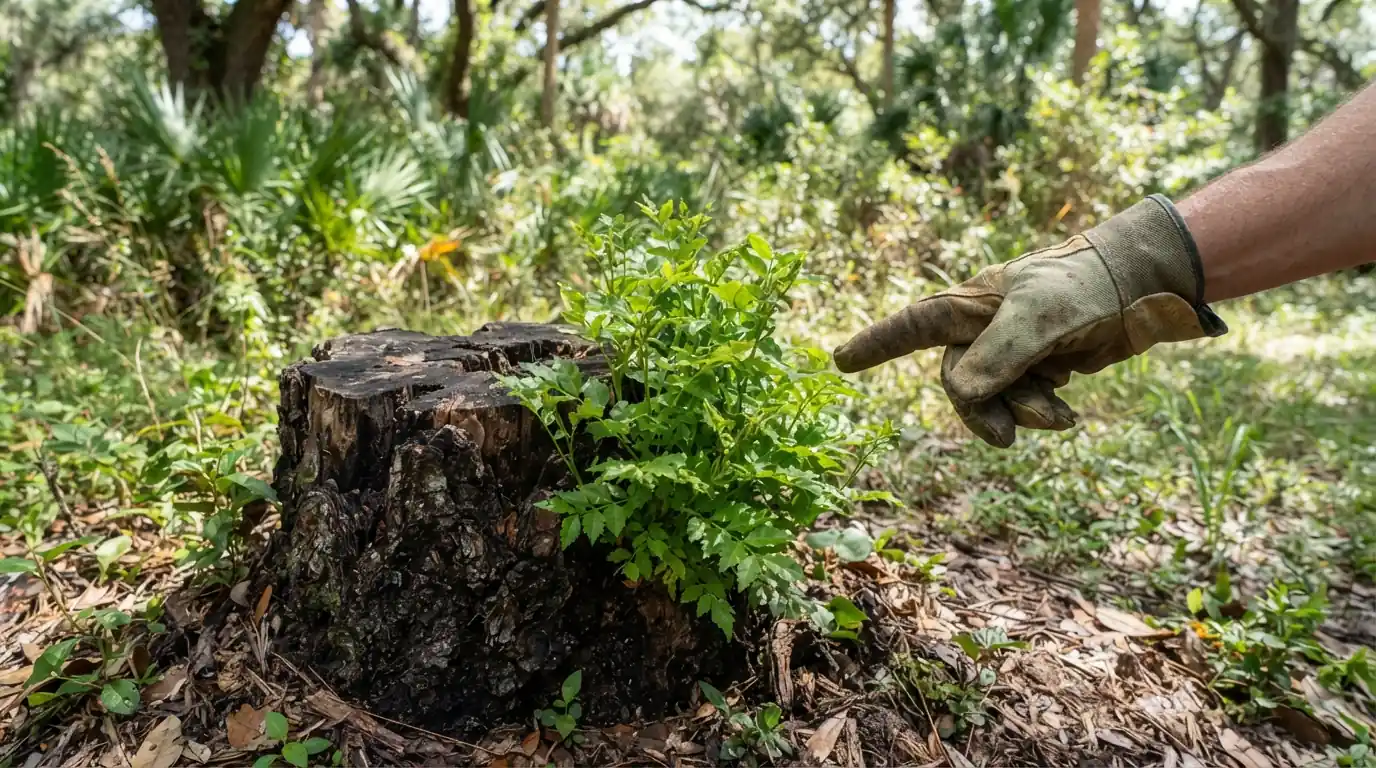
Grind or treat the stump?
| Factor | Grind | Cut-stump treatment |
|---|---|---|
| What it does | Removes the stump below grade | Stops the stump from resprouting |
| Regrowth | Roots can still sucker | Much less from the stump |
| Replanting | Ready right away | Stump stays until it rots |
Invasive trees and the rules around Tampa
Hillsborough County's exempt list lets Brazilian pepper, chinaberry, camphor, Norfolk Island pine, Chinese tallow and queen palm come out without a removal permit, but trees inside a wetland or water body are still regulated. That matters on lots that back onto creeks and ponds. Inside Tampa, the removal permit rule also excludes listed invasive species, so most yard jobs start the same week.
How invasive clearing runs
- 1Walk the line
We identify species and mark keeper plants.
- 2Plan
You get the scope, stump plan and price.
- 3Cut
Thickets cut from the outside in.
- 4Chip
Brush chipped or loaded as we go.
- 5Stumps
Ground below grade or treated.
- 6Clean
Area raked and left open.
- 7Follow-up
We return for resprouts in season.
Signs an invasive tree is taking over
- A thicket along the fence
Dense, tangled shrubs with red berries in winter.
- Seedlings everywhere
Young trees popping up in beds and along the lot line.
- Shade killing the lawn
Grass and natives thinning out under a fast grower.
- Roots lifting concrete
Camphor roots cracking walks and drives.
- Wispy tall pines
Australian pines towering over a roof or shed.
Invasive tree questions
Not in unincorporated Hillsborough County, unless it sits in a wetland or water body.
Pepper and chinaberry resprout, so plan on a follow-up visit.
Yes. We cut, chip and grind along the full line.
It is shallow-rooted and brittle, so it often fails in storms.
Wind-resistant natives that shade the ground slow the comeback.
Yes, or chip it on site if the truck can reach it.
Rarely near a house, since its roots lift slabs and it seeds into yards.
More removal work
From our guides: Tampa Tree Removal Permits: What Needs One