Updated October 2026
HOA tree maintenance in Tampa usually runs on a multi-year pruning cycle that covers every common-area tree in rotation, with hazard trees handled first and a pre-season storm walk each spring. Boards get a written priority list and budget figures, and residents get notice before crews arrive in their section of the community.
What an HOA plan includes
- Walk and inventory of common-area trees
- Hazard trees ranked and handled first
- Pruning cycle split into yearly sections
- Pre-season storm walk each spring
- Resident notices before crews arrive
- Budget figures the board can plan with
A plan instead of a list of complaints
Without a plan, HOA tree work runs on resident complaints: whoever calls loudest gets their tree pruned. A cycle changes that, because every tree gets looked at in turn, the worst problems come first, and the board can budget years ahead.
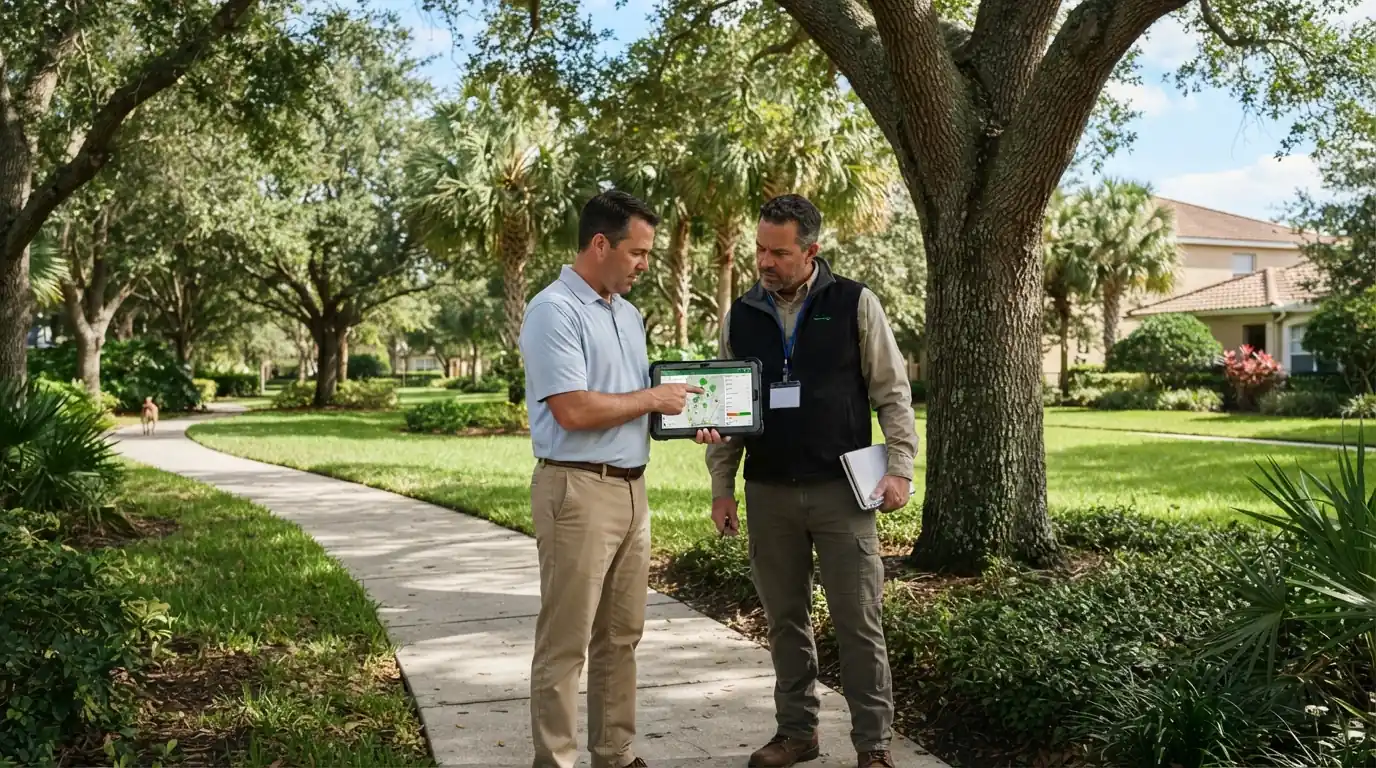
We start with a walk of the common areas and a simple inventory the board can keep.
Annual community pruning cycles
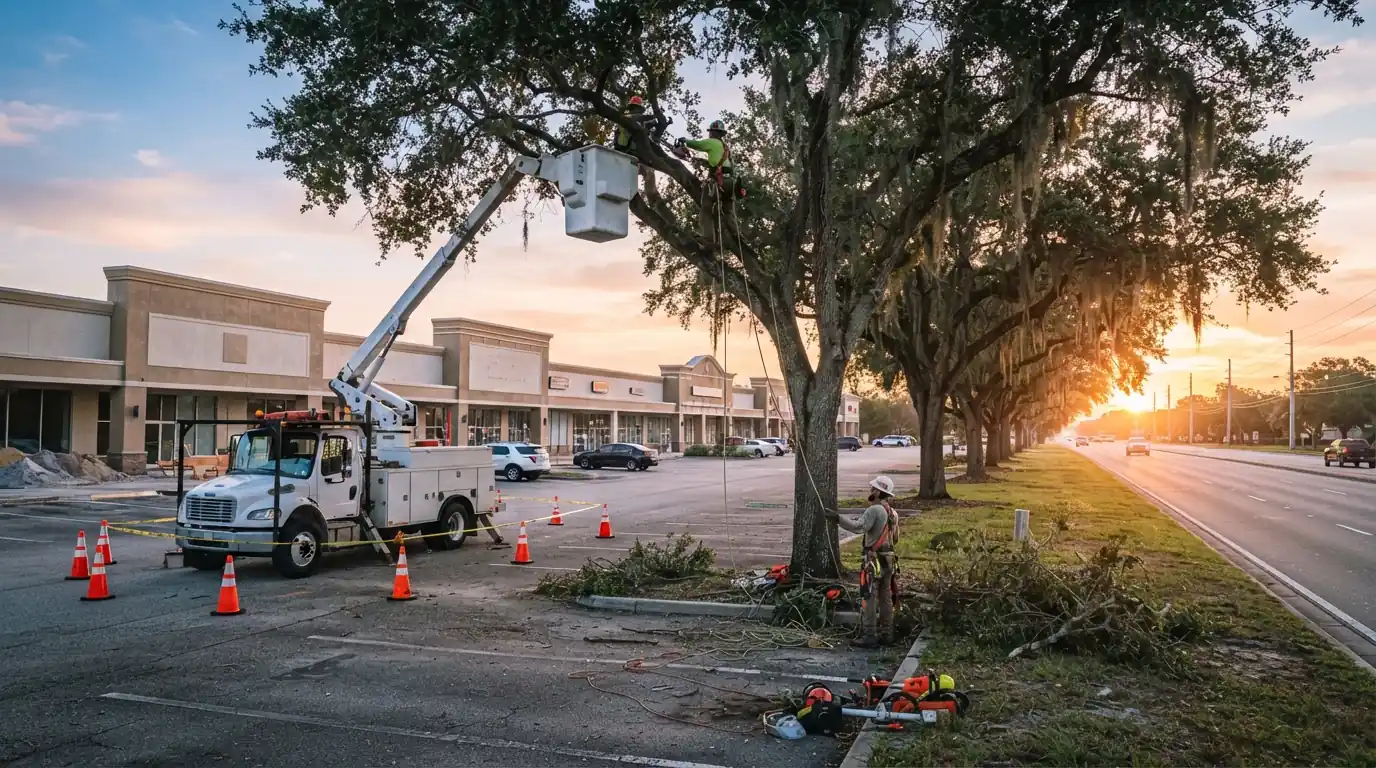
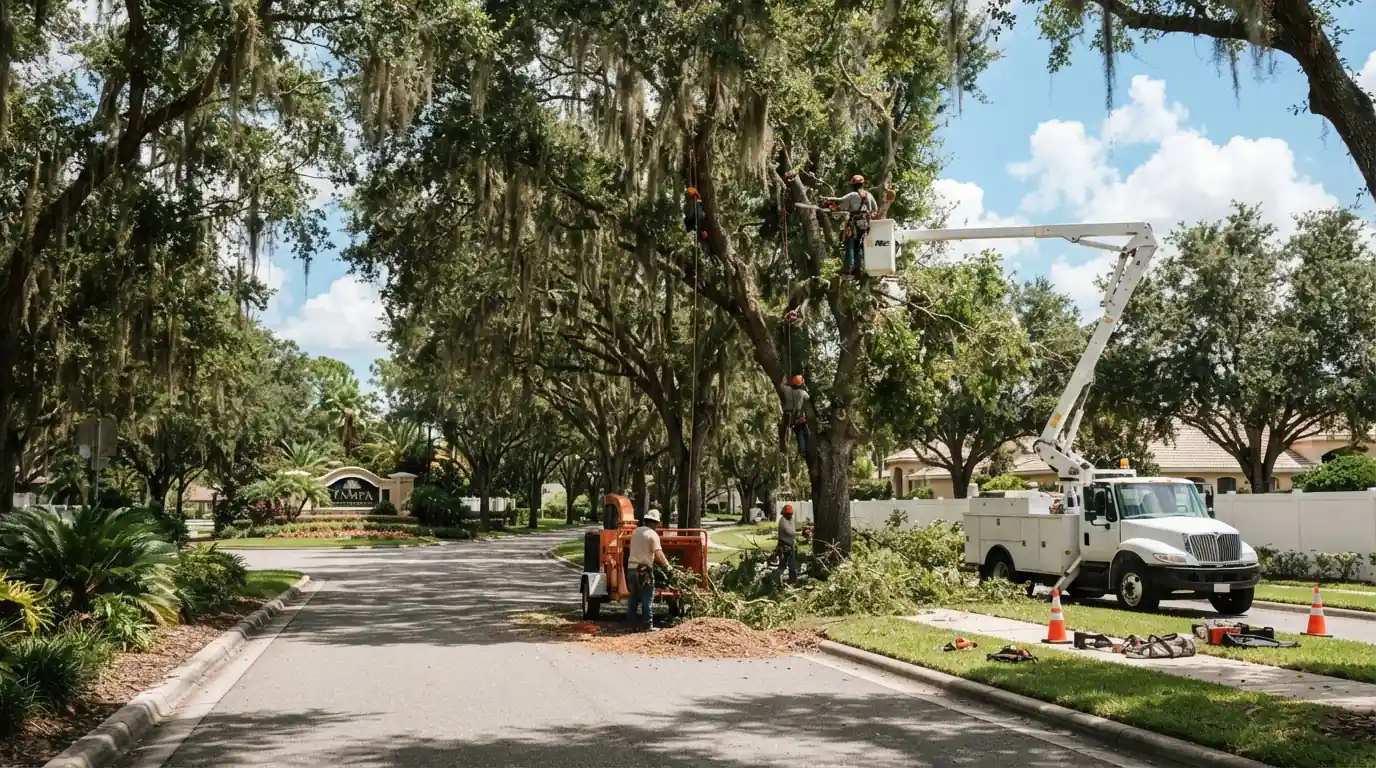
Annual community pruning cycles split the common-area trees into sections and prune one section each year, so every tree is looked at every few years and the cost stays level. Entrance boulevards, streets, pond banks and amenity areas each get their own clearance standard. We keep a record of what was done where, so the next year's section and budget are already known. Residents in the section get notice before crews arrive, and streets are worked behind cones with a flagger where needed.
Common-area tree removal
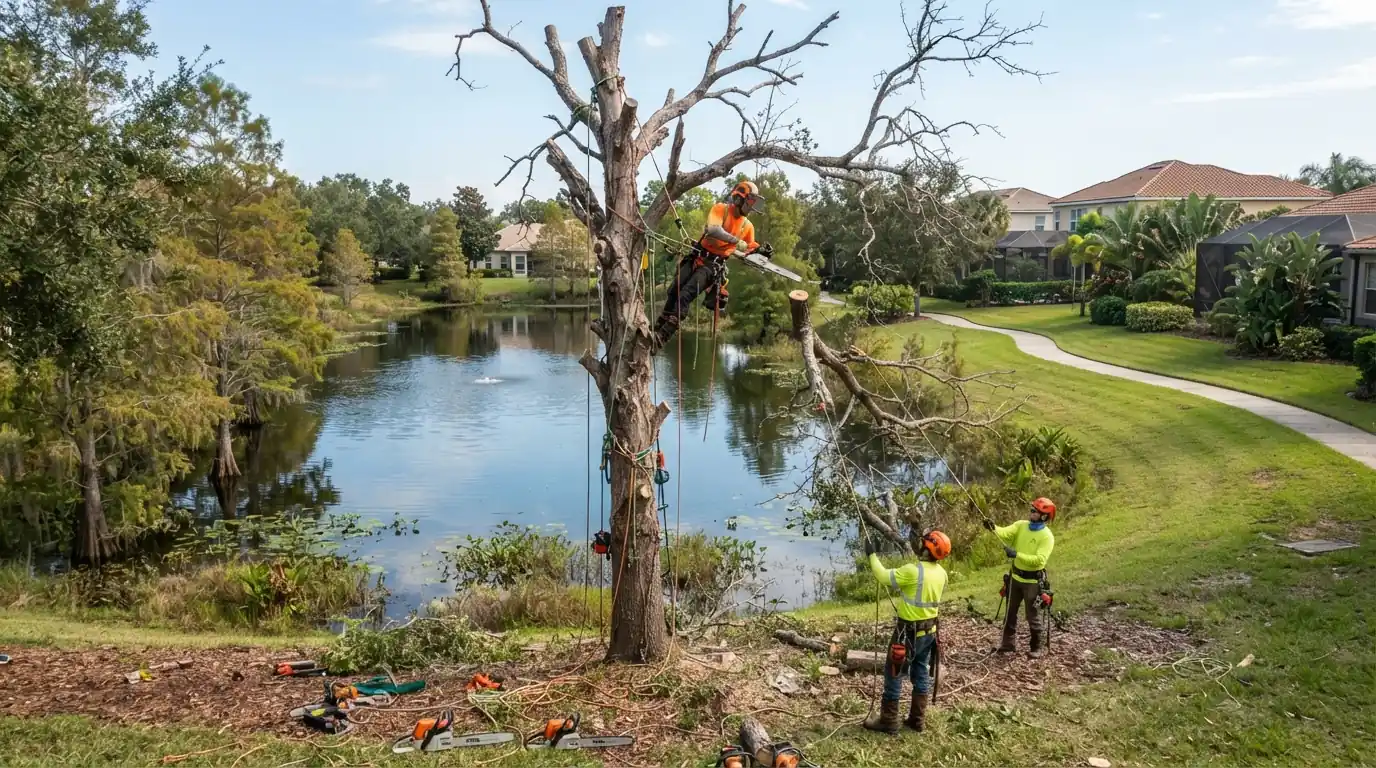
Common-area tree removal covers dead, hazardous and storm-damaged trees on land the association owns. Many communities built in the same era are full of laurel oaks reaching the end of their lifespan at once, so removals tend to cluster. We price them together, handle permits where trees are protected, grind the stumps and recommend replacements that suit the spot. Removals near homes or amenities are scheduled first, ahead of trees standing in open green space where a failure hits nothing.
Hurricane readiness for HOAs
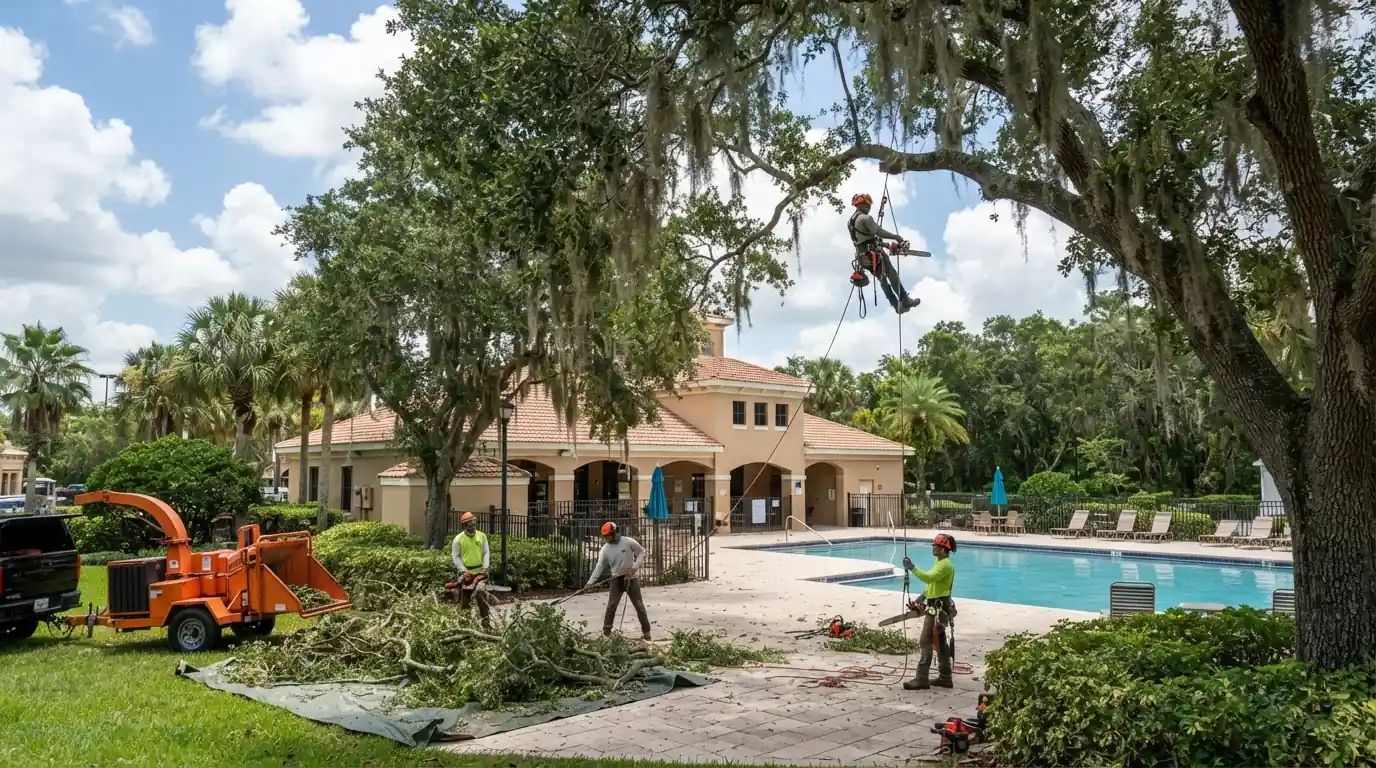
Hurricane readiness for an HOA means walking every common-area tree before June, thinning dense live oaks near homes and amenities, removing deadwood and hangers, and clearing limbs off clubhouses, pools and gatehouses. After a storm, communities on a plan with us are already known to the crew, which makes the response faster and simpler. We also agree in advance which areas get cleared first, usually entrances and roads, so the board is not deciding anything in the middle of a crisis.
Board reports and budgeting
Boards need numbers they can take to a meeting. We give you a written priority list, a cycle schedule and budget figures for the next few years, in plain language rather than arborist jargon. When a resident asks why their tree is or is not on this year's list, the answer is on paper. We can attend a board meeting to walk through the plan, and we update the inventory as work is done so the record stays current from one board to the next.
What Tampa communities are dealing with
Older Tampa Bay neighborhoods planted with laurel oaks saw the most 2024 storm damage, including homes hit by falling laurel oaks in a Brandon neighborhood. In communities like Carrollwood and Town 'n' Country, the same pattern repeats: laurel oaks past their short lifespan, live oaks with early Ganoderma and bronzing sabals. A community-wide plan catches those trees in order, before the next storm finds them.
Cycle pruning or complaint-driven work?
| Factor | Pruning cycle | Complaint-driven |
|---|---|---|
| Coverage | Every tree in rotation | Only the trees people call about |
| Budget | Level year to year | Spikes after storms |
| Risk | Hazards found early | Hazards found late |
How a community plan starts
- 1Call
Tell us the community and who manages it.
- 2Walk
Common areas walked and trees listed.
- 3Rank
Hazards, clearance and cycle sections.
- 4Budget
Figures for the board.
- 5Notices
Residents told before work.
- 6Work
Section by section, behind cones.
- 7Update
Inventory and plan kept current.
What HOA tree maintenance costs
There is no reliable published range for Tampa HOA contracts, so we price the community after a walk.
- Number of treesCommon areas vary widely.
- Cycle lengthShorter cycles cost more each year.
- RemovalsLaurel oaks near end of life.
- AccessPond banks and back lots.
- Storm planPre-season walks and priority lists.
- ReplantingReplacement trees where needed.
HOA tree questions
Often three to five years, set by the number of trees and the budget.
That depends on your documents; we work to what the association owns.
Yes. We can walk the board through the plan.
We provide notices for the association to send before work.
Yes. We answer 24/7 and clear agreed priority areas first.
We can recommend and plant wind-resistant replacements.
Yes. One contact and one schedule for the community.
More property-wide tree work
From our guides: Best Trees to Plant in Tampa After a Removal