Updated October 2026
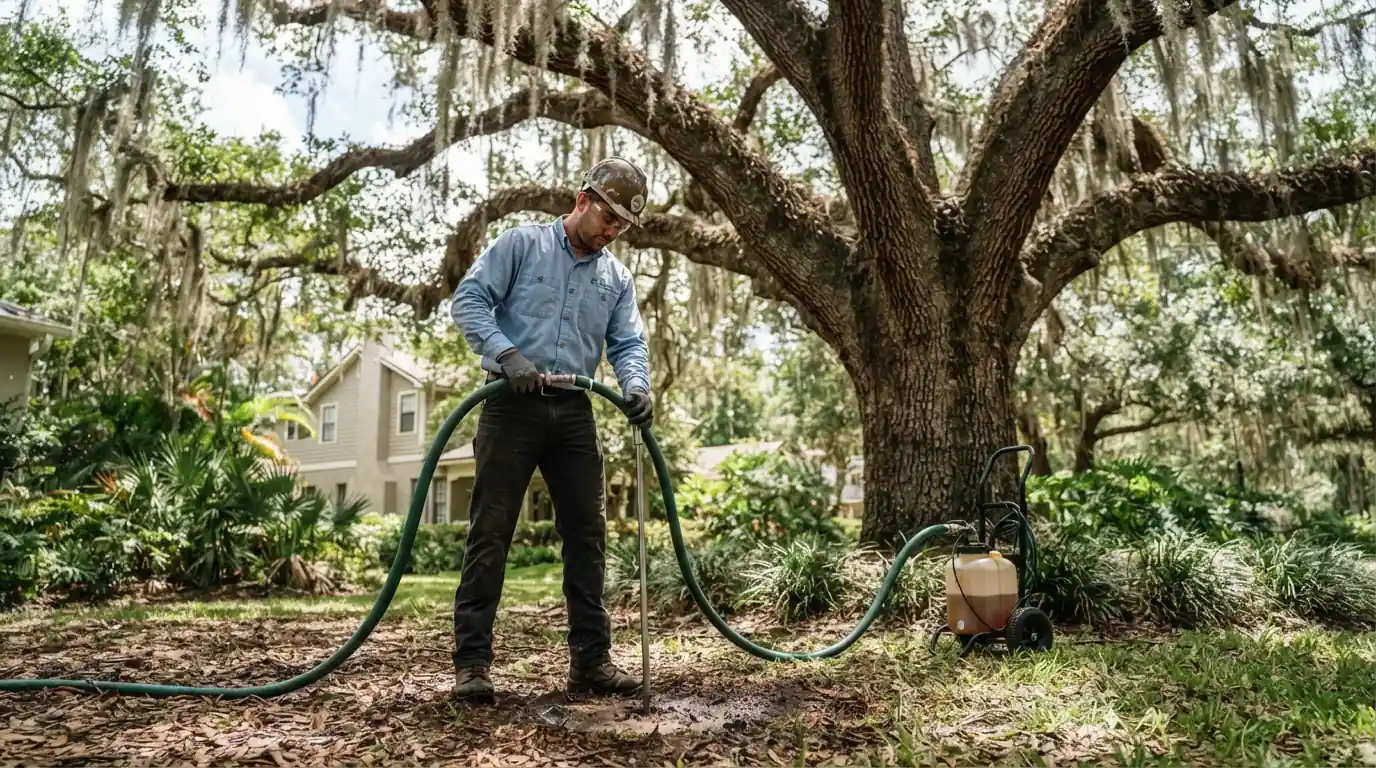
Deep root fertilization injects a liquid nutrient mix into the soil across a tree's root zone, below the turf, so the tree gets it instead of the grass. In Tampa, lawn and landscape fertilizer containing nitrogen or phosphorus cannot be applied from June 1 through September 30, so timing matters. Palms need their own nutrient blends.
Feed the tree, not the lawn
Surface fertilizer mostly feeds the grass on top of the roots. Injecting it into the root zone puts it where the tree's feeder roots actually are, spread across the canopy footprint and beyond.
Fertilizer is not medicine. A tree declining from rot, root damage or waterlogged soil needs those problems fixed; nutrients only help a tree that can use them.
Fertilization for stressed oaks
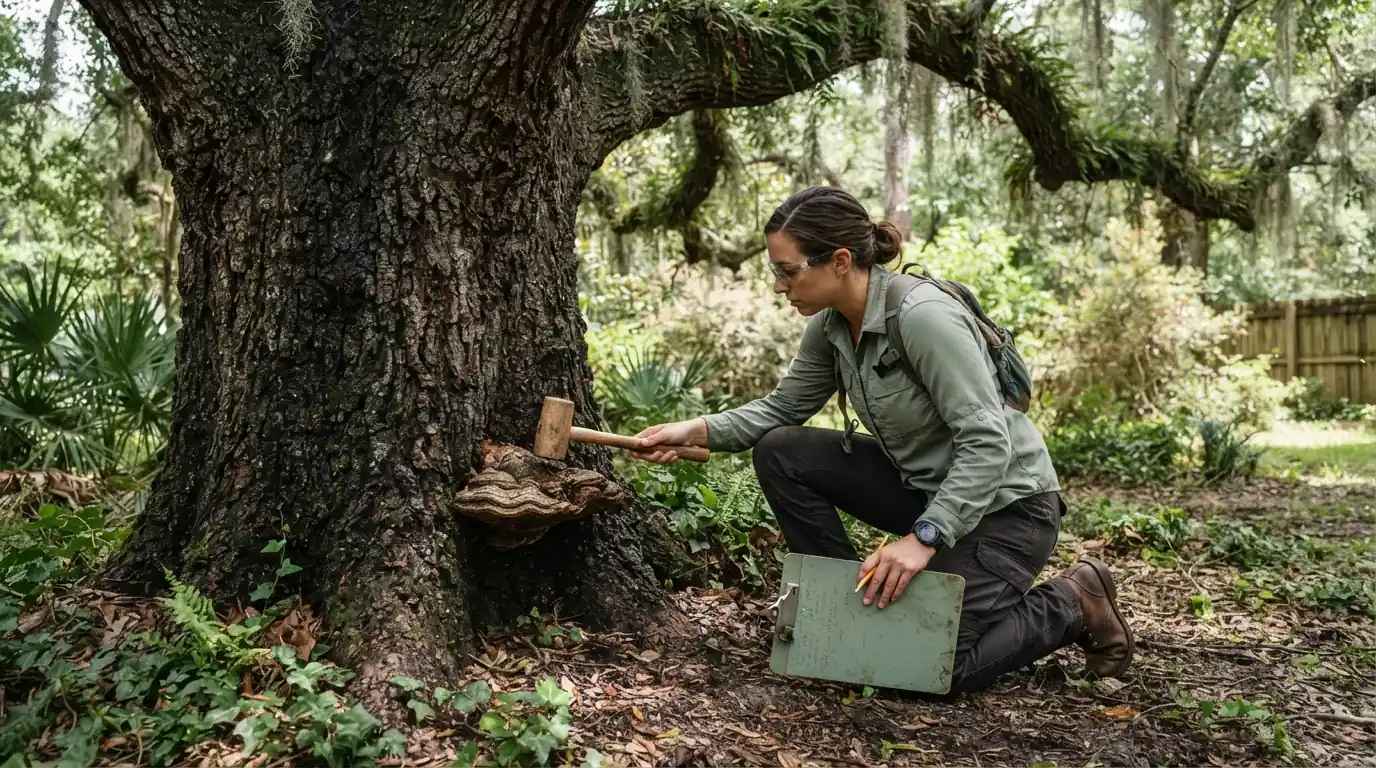
Stressed oaks are the most common reason people call: a live oak thinning after the storms, a laurel oak with small pale leaves, a tree that lost roots to trenching. We look at the cause first, since a soil test and a look at the root flare tell us more than the leaves do. If nutrients are short, a slow-release blend is injected across the root zone outside the summer restricted season, and the tree is checked again the following year.
Palm nutrient programs
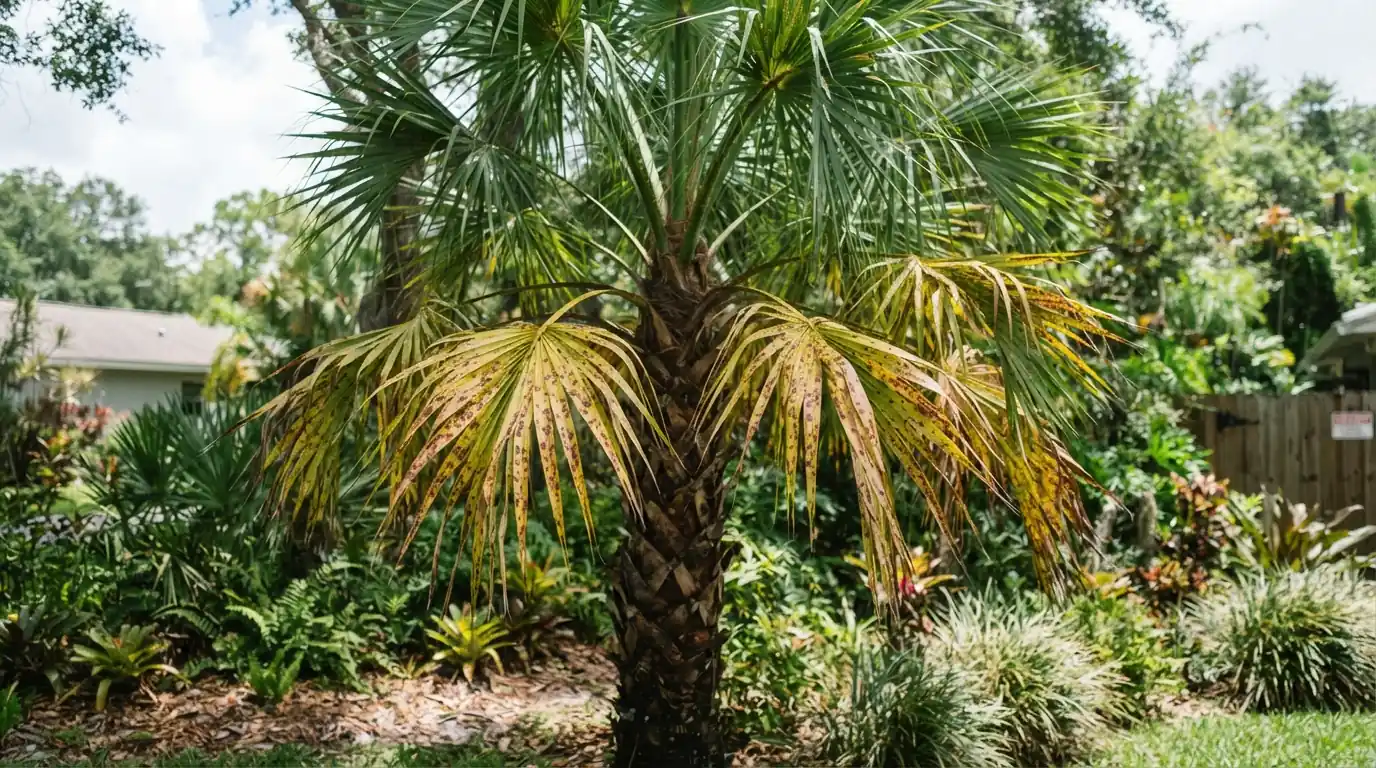
Palms have different needs from broadleaf trees. Florida's sandy soils run short of potassium, magnesium and manganese, and palms show it as yellowing, spotting or frizzled new fronds. A palm-specific blend applied over the root zone corrects it slowly, over months, because the damaged fronds do not recover; only new growth comes in healthy. In summer, only products with no nitrogen or phosphorus can go down inside Tampa, so we time the whole program around the season and the rules.
Post-construction recovery
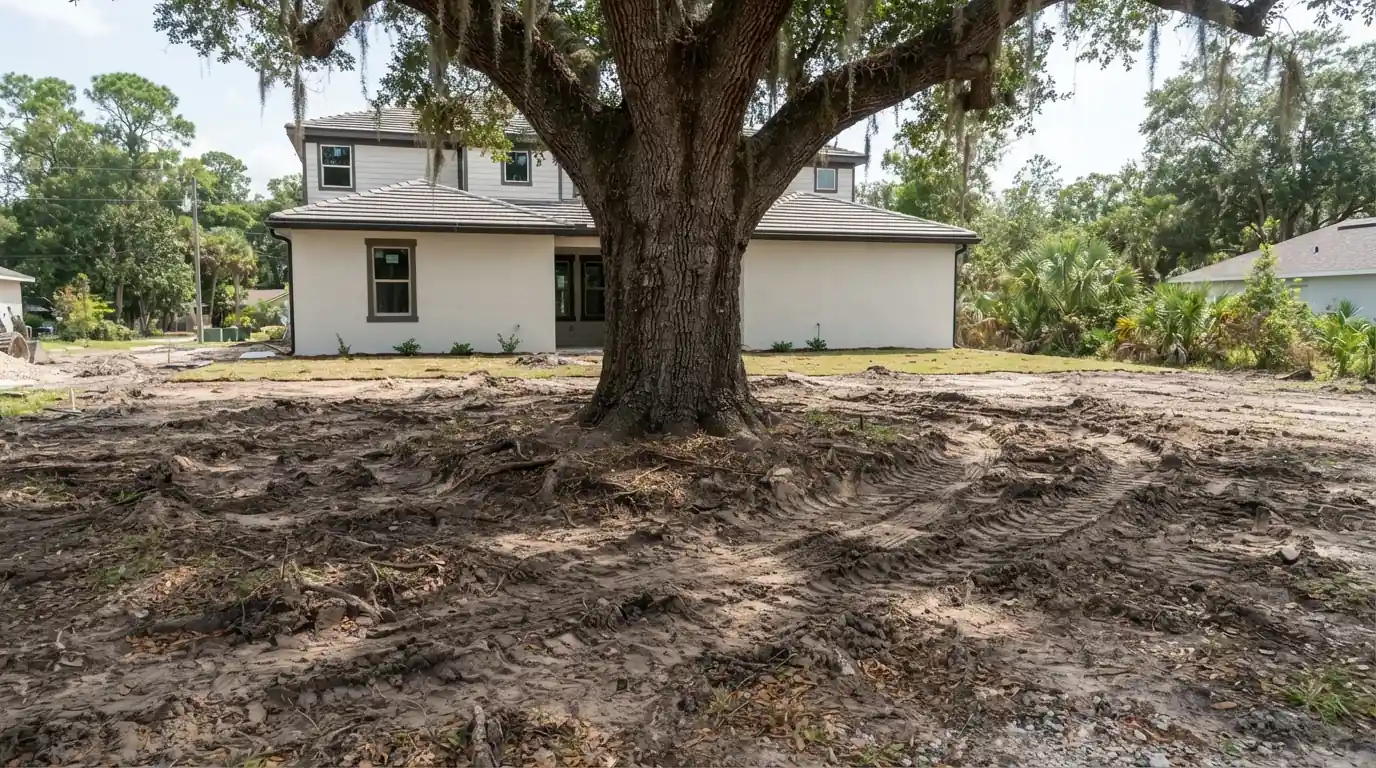
Post-construction recovery is a big part of tree care in growing neighborhoods. Heavy equipment compacts the soil over the roots, trenches cut them, and grade changes bury them. A tree can take years to show the damage. We check the root zone, loosen compacted soil, add a mulch layer where turf used to be, and feed only once the soil can take in water and air. Pruning out dead wood usually comes with the program, so the tree is not feeding branches it has already lost.
Soil aeration
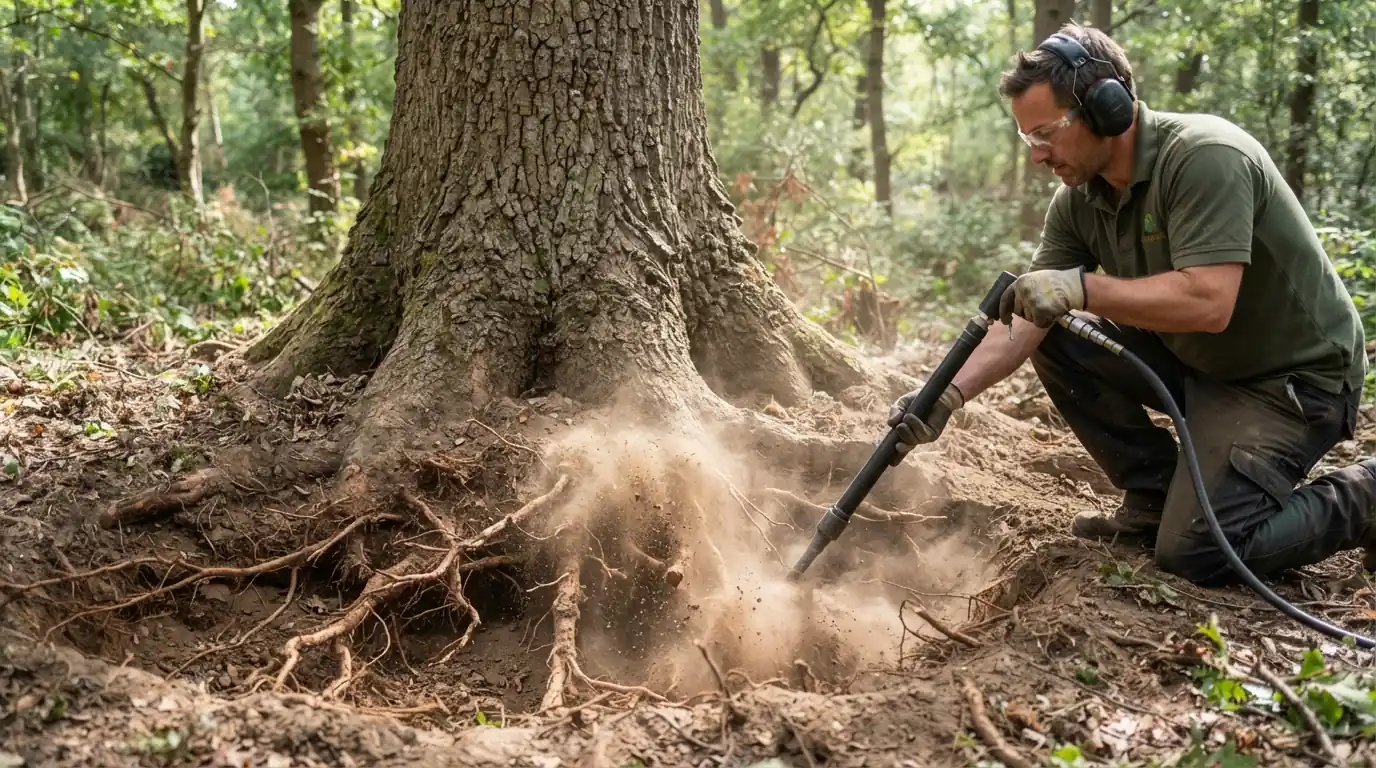
Soil aeration loosens compacted ground around the roots so water and air can reach them. An air tool blows soil away from roots without cutting them, which also lets us look at the root flare for girdling roots or rot hidden under the soil line. The loosened soil can be mixed with organic matter and covered with mulch. On heavily compacted lots, aeration does more for a tree than fertilizer alone ever could, and it is often the first step.
Fertilizer rules and soil around Tampa
Inside Tampa, lawn and landscape fertilizer containing nitrogen or phosphorus cannot be applied from June 1 through September 30, and phosphorus needs a soil test first. Pinellas County runs the same window with a 10-foot buffer from water, and Hillsborough County's rule adds a pause before forecast heavy rain. After 2024's waterlogged soils weakened so many root systems, fall and spring feeding is when stressed trees get help.
Signs a tree may need feeding or soil work
- Small, pale leaves
New growth smaller or lighter than usual.
- Thinning crown
More sky showing through each year.
- Palm frond spotting
Yellow spots on the oldest fronds.
- Frizzled new fronds
Small, withered new palm growth.
- Compacted ground
Hard, bare soil over the root zone.
Feeding trees yourself
| Question | Doing it yourself | Our crew |
|---|---|---|
| Lawn fertilizer near trees | Mostly feeds the grass, and summer rules apply. | Injected into the root zone in season. |
| Palm spikes and granules | Uneven and easy to overdo. | Palm blends matched to the deficiency. |
How a feeding program runs
- 1Call
Tell us what the tree is doing.
- 2Look
Crown, root flare and soil checked.
- 3Cause
Nutrition or something else.
- 4Test
Soil tested if needed.
- 5Soil work
Aeration and mulch where compacted.
- 6Feed
Injected in season, palm blends for palms.
- 7Re-check
Growth looked at next season.
What deep root fertilization costs
There is no reliable published range for Tampa tree feeding, so we price by the program.
- Tree sizeLarger root zones need more.
- Number of treesSeveral trees in one visit.
- PalmsPalm blends priced per palm.
- Soil testWhen the cause is unclear.
- AerationAir tool work around roots.
- Follow-upChecks the next season.
Tree fertilization questions
Fall through spring. Nitrogen and phosphorus are restricted June 1 to September 30.
Rarely. It helps trees that can still use it.
Often potassium or magnesium shortage in sandy soil.
No. New fronds come in healthy once fed.
When the cause is unclear, a soil test comes first.
Loosening compacted soil so roots get water and air.
Only when a need shows; not on a fixed schedule.
More tree health work
From our guides: Signs a Tampa Tree Is Dying or Dangerous