Updated October 2026
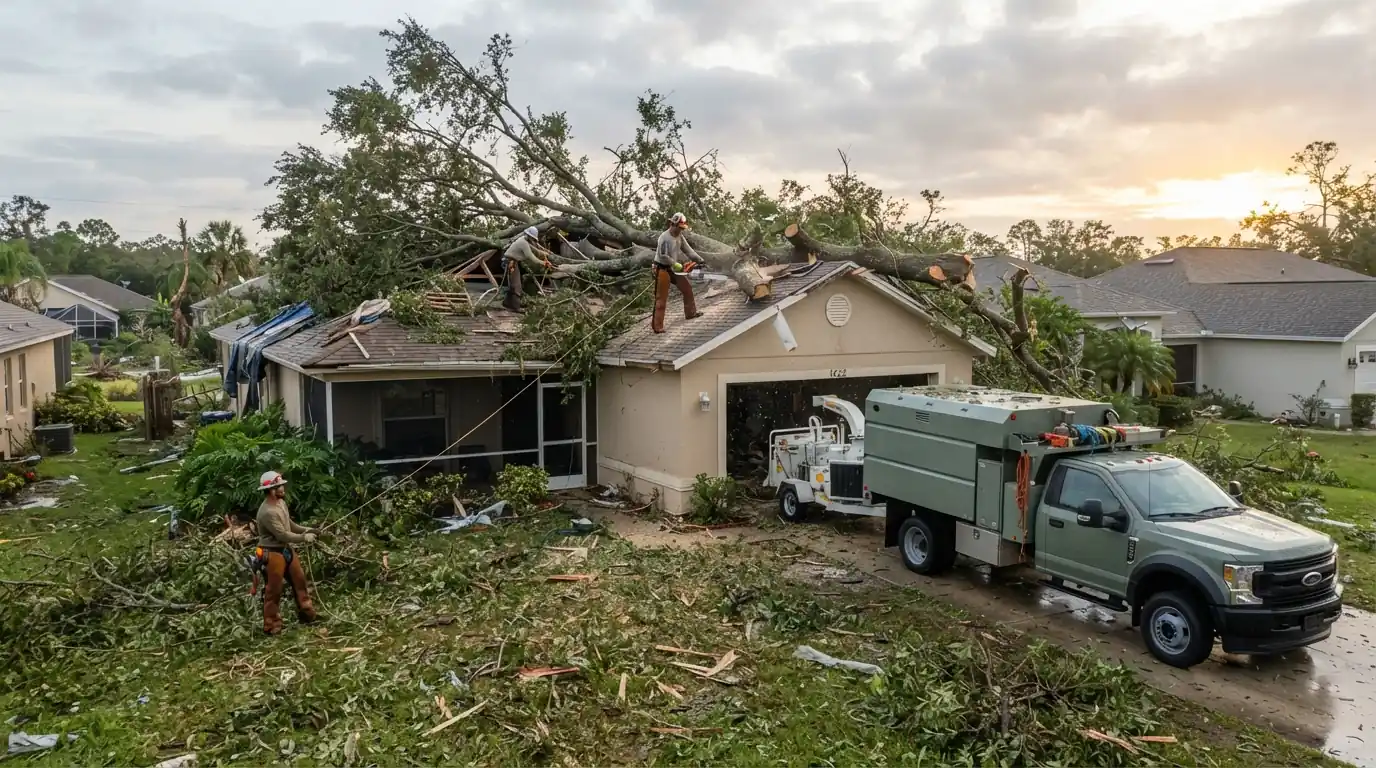
Storm-damaged tree restoration is pruning that repairs a standing tree after a storm: broken limbs and torn stubs are cut back to sound wood, the crown is rebalanced, and the sprouts that follow are thinned over one to three visits. It suits healthy trees that lost limbs, not trees with a split trunk or a lifted root plate.
What restoration pruning does
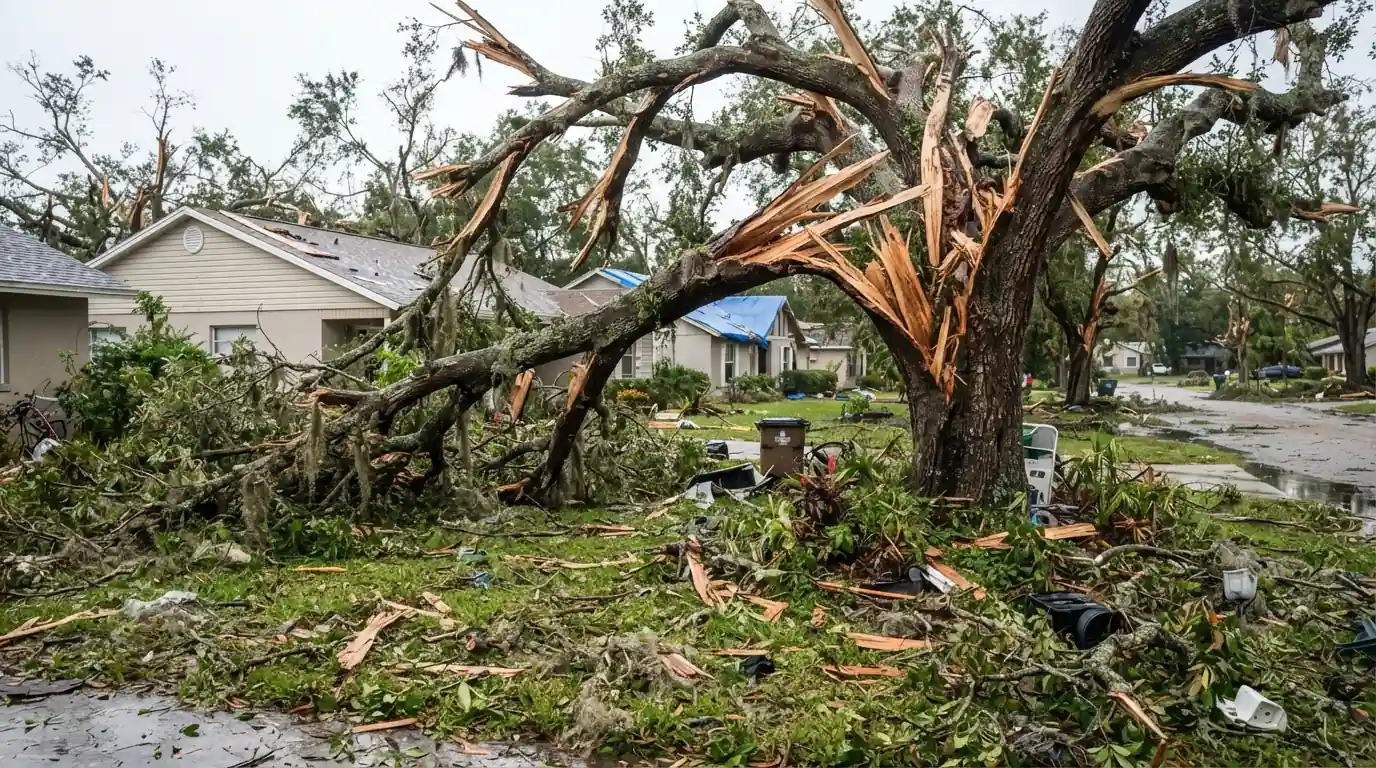
A storm leaves ragged breaks, hanging stubs and a lopsided crown. Left alone, torn stubs rot and the tree answers with a burst of weak sprouts that break in the next storm.
Restoration turns that into a plan: clean cuts now, then selective thinning of the regrowth until the tree has a sound structure again.
What storm restoration costs
Restoration is priced per visit, by tree size and how much damage there is.
- Tree sizeBig oaks need climbers or a bucket.
- Damage levelMore broken limbs, more cuts.
- HangersCaught limbs come down first.
- AccessOver roofs and pool cages takes longer.
- Follow-upsLater visits are usually smaller.
- DebrisChipped or hauled off site.
Typical planning range: pruning averages $450 in Tampa with a general range of $375 to $525. Market figures, not a quote from us.
Broken limb and torn stub cleanup
The first visit deals with the damage the storm left. Broken limbs are removed or shortened back to a healthy side branch, and torn stubs are cut cleanly at the branch collar so the tree can seal them. Bark that was ripped down the trunk is trimmed back to live tissue with smooth edges rather than left hanging. Hangers still caught in the canopy come out first, before anyone works beneath them, and every piece over the house is roped down.
Crown restoration after limb loss
A tree that lost a big limb or a side of its crown is left unbalanced, and an unbalanced crown catches wind unevenly. Crown restoration reduces the heavy side a little and keeps as much healthy foliage as possible, because the tree needs its leaves to recover. It is done in stages, not all at once. Taking too much after a storm stresses a tree that is already short of food, and it is the most common mistake we are called in to fix.
Sprout and regrowth management
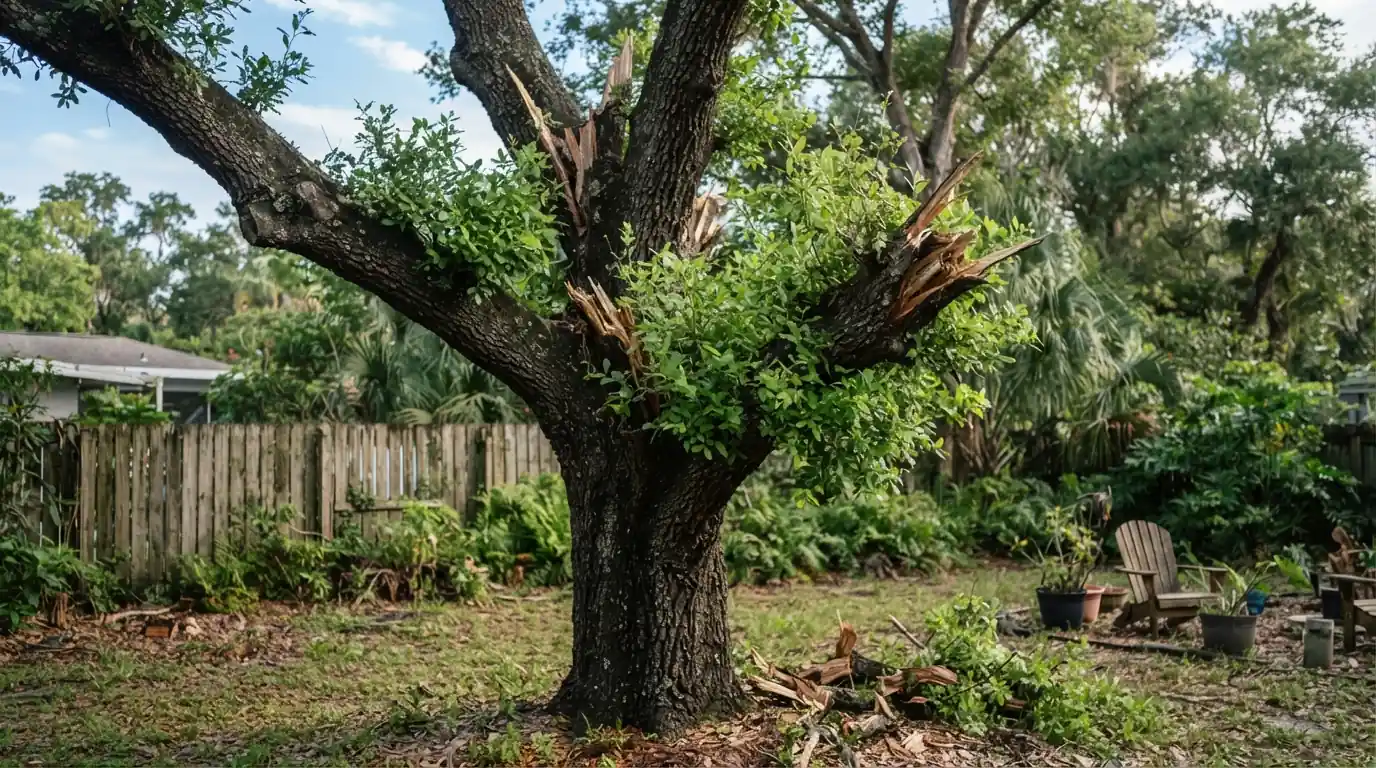
Within a season, a damaged tree pushes out clusters of fast sprouts around every wound. Most are weakly attached and will break if they are all left to grow. On the follow-up visits we keep the best-placed, strongest sprouts to rebuild the limbs and remove the rest, so the new crown ends up with real structure. It usually takes one to three visits over a few years, and live oaks respond especially well when the work is done patiently.
Typical planning range: emergency trimming around $250 per hour in Tampa; clearing broken or dead branches from a large tree about $1,000. Market figures, not a quote from us.
Save-or-remove storm assessment
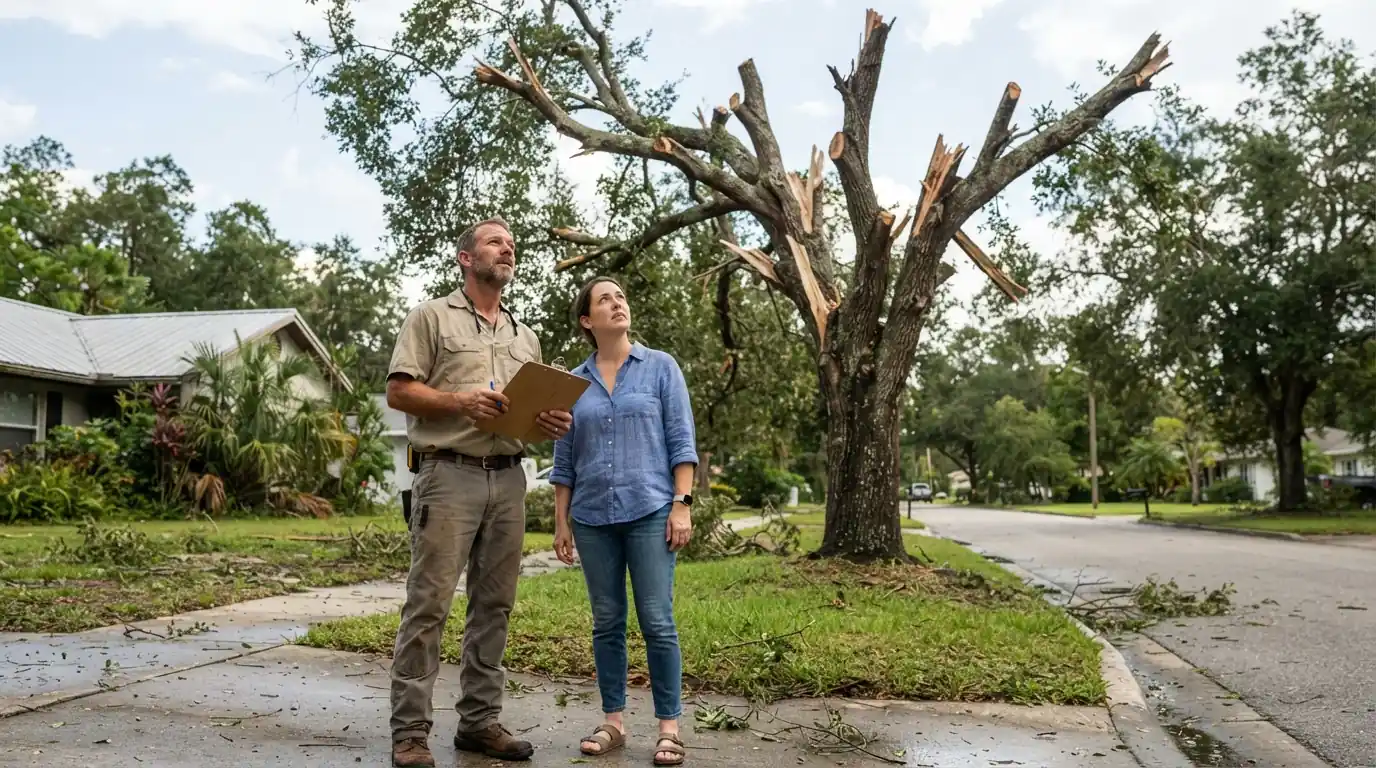
Some trees are not worth restoring. A split trunk, a crack running into the main union, a lifted root plate or a laurel oak already hollow inside will not come back safely, however well it is pruned. We look at the trunk, the root flare and how much of the crown survived, then give you a straight answer. When a tree can be saved, restoration costs far less than removal and replanting, and you keep decades of shade over the house.
How long restoration takes
The cleanup visit is usually a single day. The full restoration runs over one to three visits spread across a few growing seasons, because the tree has to regrow before the next cuts make sense.
Why restoration matters after Tampa storms
The 2024 storms left thousands of damaged trees standing across Tampa. USF researchers found the city lost nearly 5 percent of its canopy, with South Tampa and East Tampa losing the most. Many of the trees still standing, including laurel oaks in older neighborhoods like the Brandon streets hit hardest, lost limbs rather than their lives, and careful restoration is what decides whether they recover or fail next season.
How a restoration runs
- 1Call
Tell us what broke and what it is over.
- 2Assess
Trunk, roots and crown checked for saveability.
- 3Plan
Cuts for now and follow-up visits, with prices.
- 4Hangers first
Caught limbs removed before any other work.
- 5Clean cuts
Broken wood cut back to sound collars.
- 6Follow-up
Sprouts thinned over the next seasons.
- 7Check
We confirm the tree is recovering.
Signs a storm-damaged tree needs attention
- Torn stubs
Ragged, splintered ends where limbs broke off.
- Hanging limbs
Broken branches still caught in the crown.
- Stripped bark
Bark peeled down the trunk or a big limb.
- A lopsided crown
One side lost most of its branches.
- Sprout clusters
Dense new shoots bursting from old wounds.
Storm restoration questions
Often, if the trunk and roots are sound and enough of the crown survived.
Small ones from the ground, yes. Anything overhead or over the house, no.
Healthy trees push out new shoots; restoration pruning shapes them.
Hangers and broken limbs right away; shaping cuts can wait for calm weather.
Usually, and you keep the tree's shade and value.
Typically one to three over a few seasons.
A split trunk usually means removal or, at best, bracing. We check first.
More storm work
From our guides: Hurricane Season Tree Prep for Tampa Yards