Updated October 2026
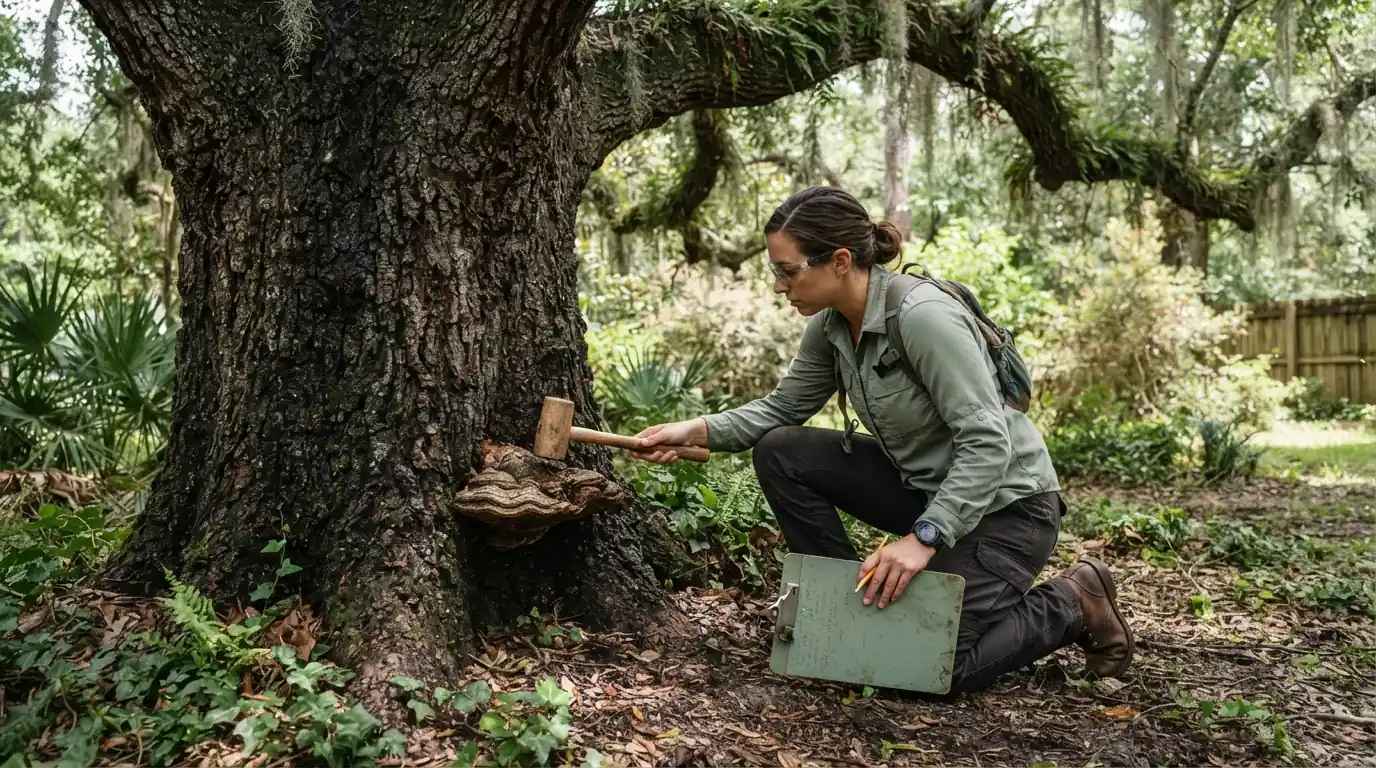
A tree risk assessment looks at how likely a tree or limb is to fail and what it would hit if it did. We check the lean, trunk, root flare, canopy and soil, then recommend keeping, pruning, cabling or removing it. Written documentation used under Florida's statute must come from an ISA-certified arborist or licensed landscape architect.
What our assessment covers
- The target zone under and around the tree
- Soil, root flare and visible roots
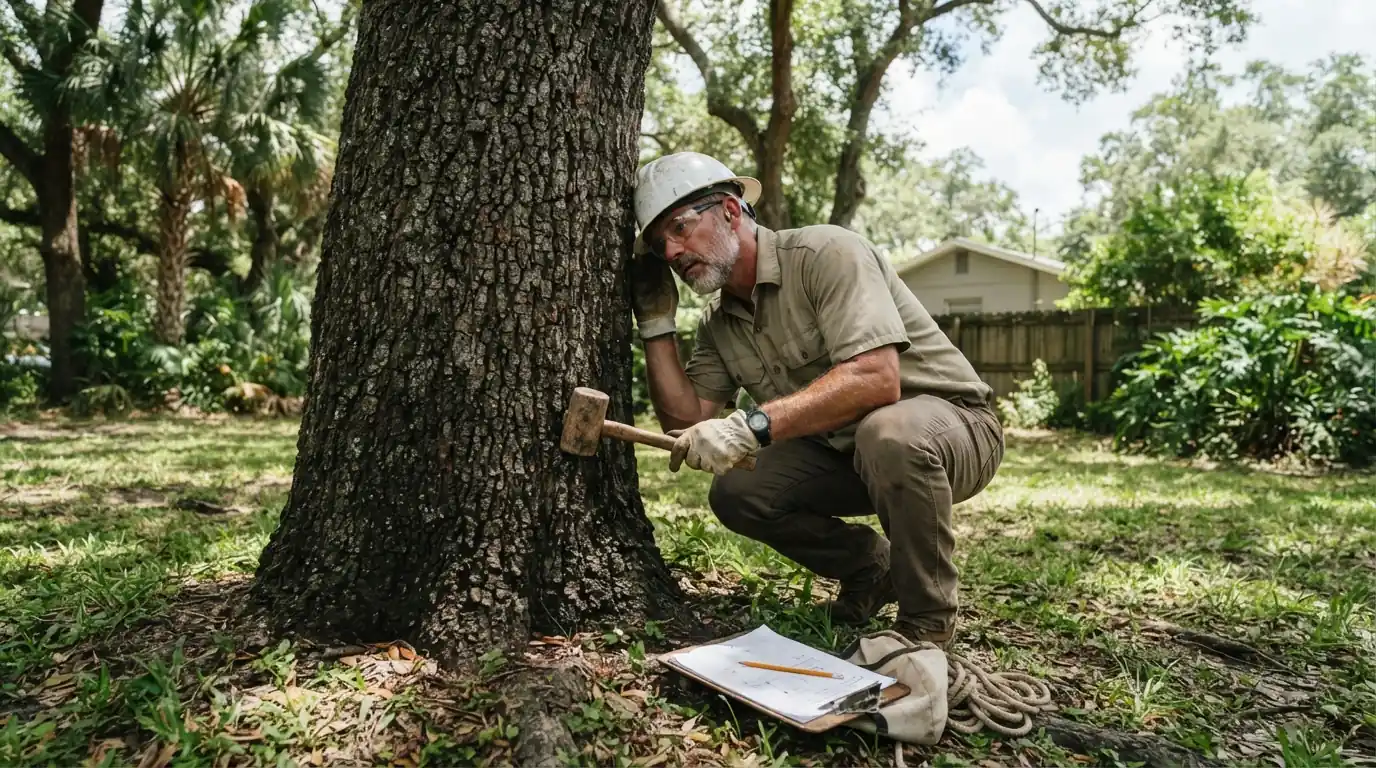
- Trunk sounding for hollows and decay
- Main unions, cracks and cavities
- Crown dieback, deadwood and hangers
- A plain recommendation with reasons
What we actually look at
Risk is two things multiplied: the chance of failure and what sits under the tree. A cracked limb over an empty lot is a low priority; the same limb over a bedroom is not.
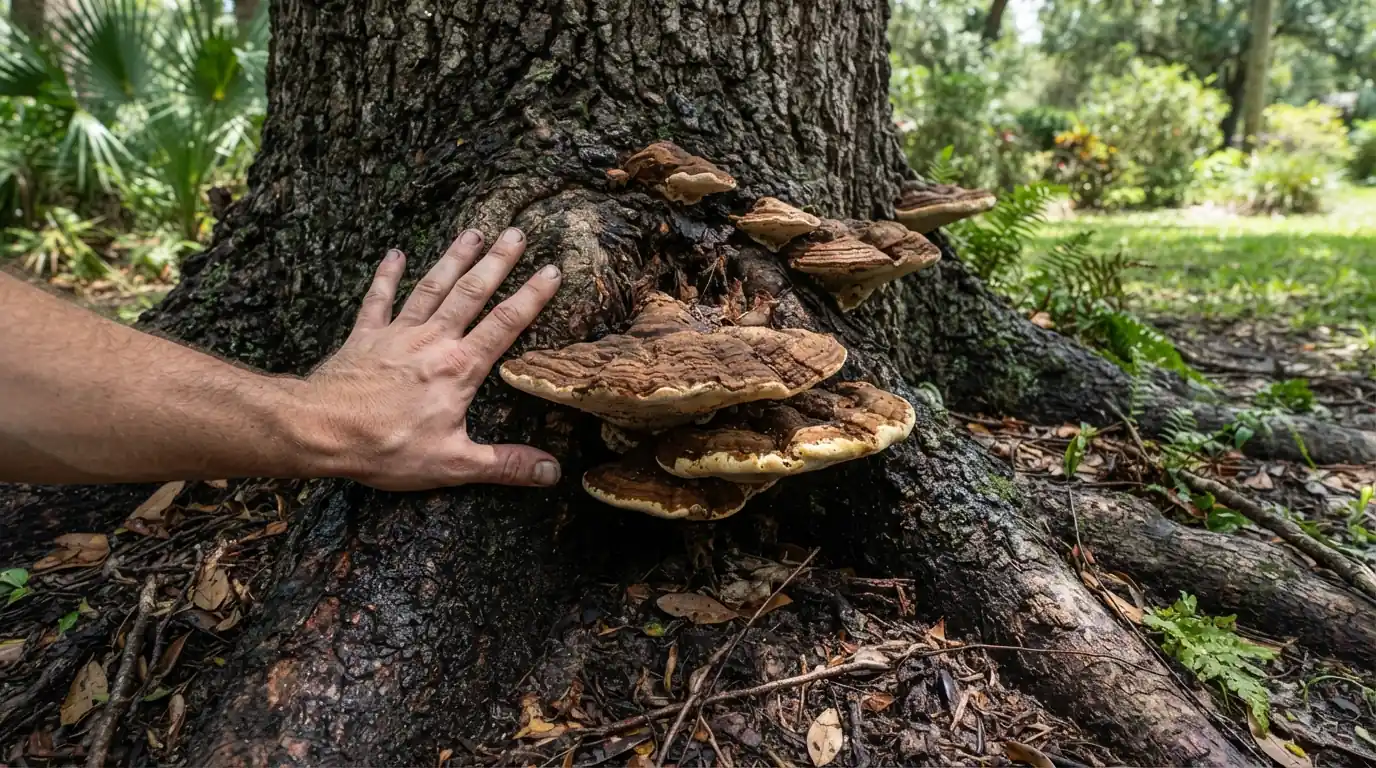
So we start with the target zone, then work from the ground up: soil, root flare, trunk, the main unions and the crown.
Leaning tree evaluation
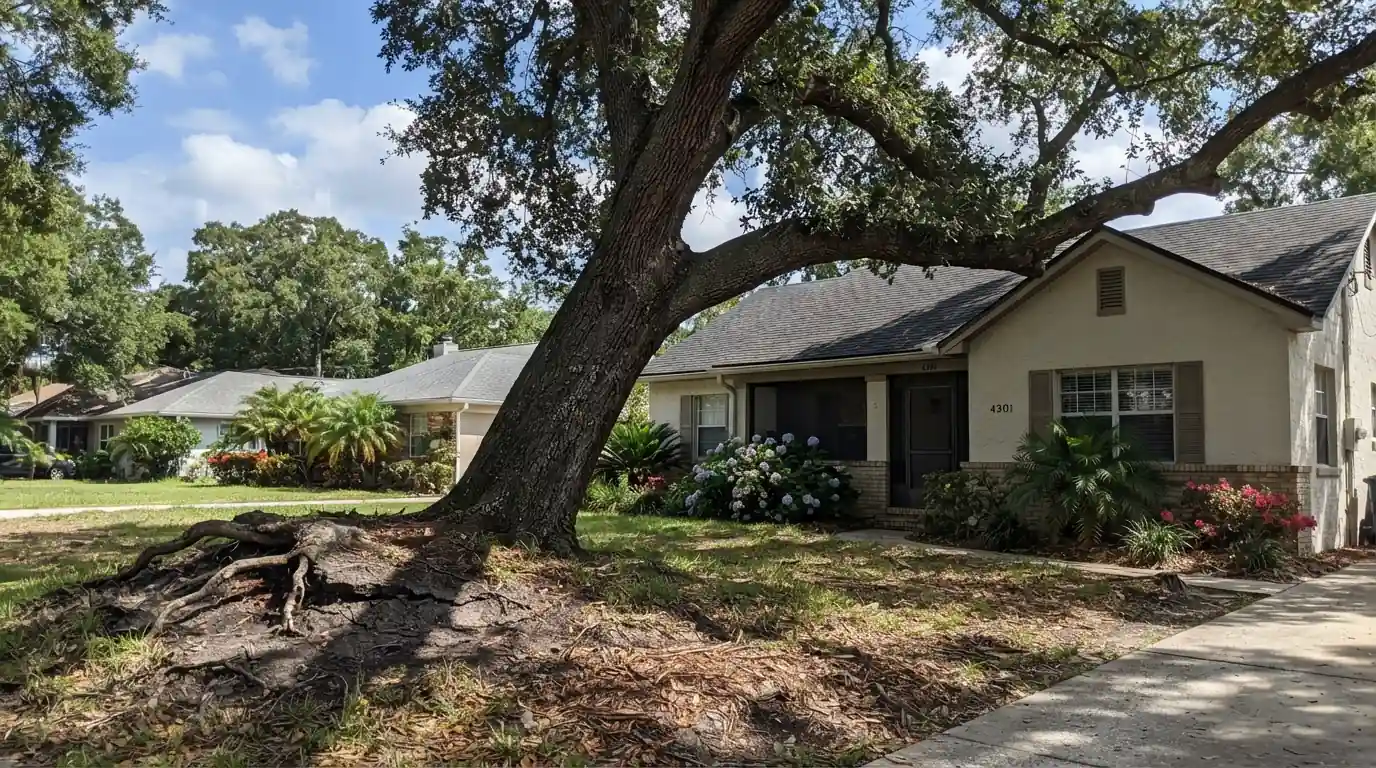
A leaning tree is not automatically a dangerous one. Trees that grew leaning toward light often stay put for decades. What we look for is change: a lean that increased recently, soil cracking or heaving on the side away from the lean, exposed or broken roots, and a waterlogged root zone. We also check what the tree would hit and whether a small shift would put it on the house. The answer can be pruning, cabling support or removal, and often nothing at all.
Hollow or decayed trunk checks
Hollow and decayed trunks are common in older laurel oaks, which start hollowing and breaking down around 40 to 60 years. A hollow alone does not doom a tree; what matters is how much sound wood is left around it. We sound the trunk with a mallet, look for cavities, cracks and fungal conks, and check the root flare, where decay often starts. We tell you honestly what we can see from outside, and when a closer look needs specialist testing equipment.
Pre-hurricane property walk
A pre-hurricane property walk looks at every tree that could reach the house, the drive or the neighbors, and ranks them. Dead limbs, hangers, heavy laurel oak limbs over roofs and dense live oak crowns go on the list first. You get a plain priority order, so the budget goes where the risk is highest, and the work can be booked well before storm season rather than all at once after it, when every crew in town is booked.
Pre-purchase tree inspection
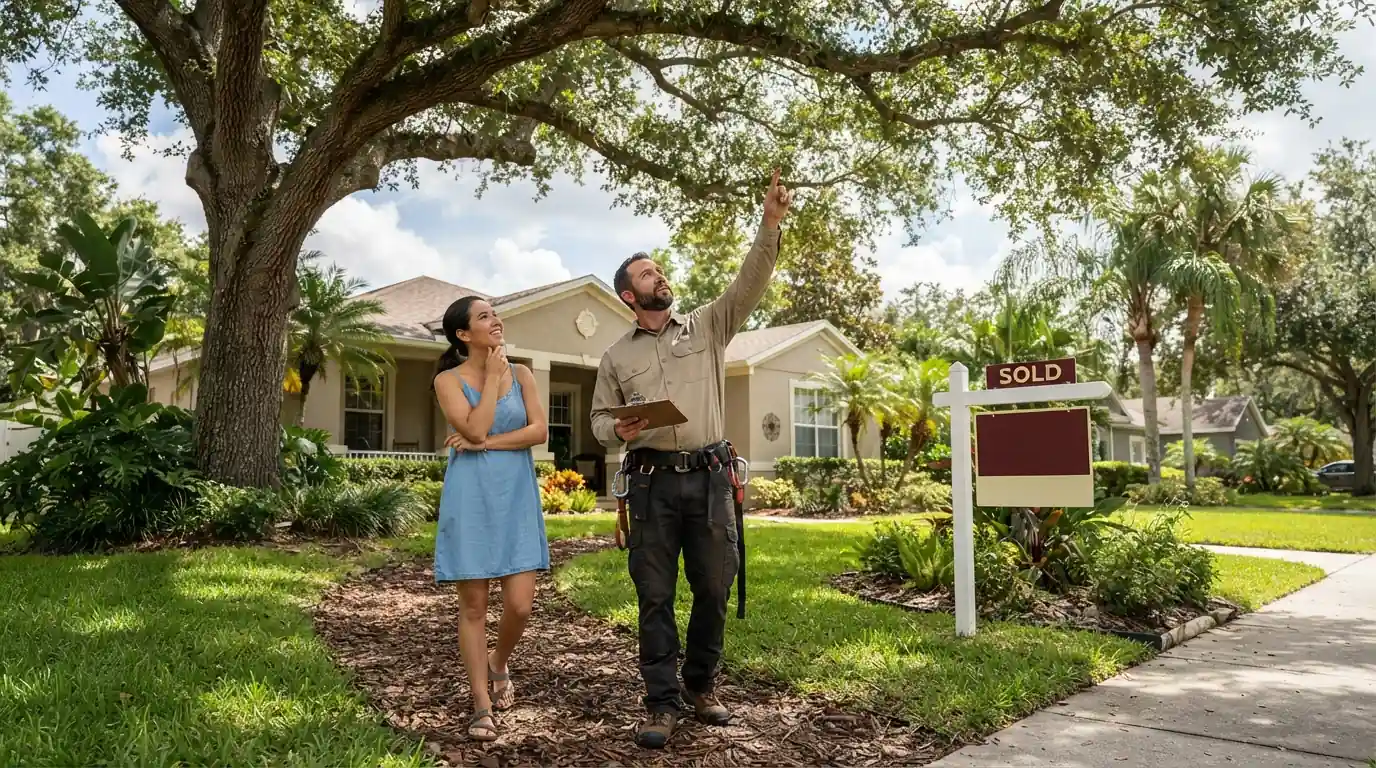
Buying a home with big trees is also buying their problems. A pre-purchase inspection walks the property with you or your agent, identifies each large tree, and flags anything likely to need removal, cabling or heavy pruning soon, with a rough idea of the work involved and how soon it is needed. It is a useful number to have before closing, and it tells you which trees are assets worth protecting through any renovation plans, pool builds or additions you have in mind.
The trees that fail first around Tampa
In Tampa yards the trees that fail first are live oaks with early Ganoderma at the base, sabal palms going bronze in the crown, and laurel oaks past their short natural lifespan. Carrollwood and Town 'n' Country are typical of the communities where those species, soils and storm exposures repeat, and falling laurel oaks damaged homes in a Brandon neighborhood in 2024. Those three are where our assessments start.
Call for an assessment if you see this
- A new or growing lean
Especially after heavy rain.
- Soil heaving at the base
Cracks on the side away from the lean.
- Conks or mushrooms
Fungus on the trunk or root flare.
- Cavities and cracks
Openings in the trunk or main limbs.
- Dieback in the crown
Bare branches at the top of the tree.
How an assessment runs
- 1Call
Tell us which tree worries you and why.
- 2Target zone
What the tree could hit.
- 3Ground up
Soil, roots and root flare.
- 4Trunk
Sounding, cracks and cavities.
- 5Crown
Deadwood, unions and dieback.
- 6Answer
Keep, prune, support or remove.
- 7Plan
Priority order and pricing.
What a tree assessment costs
There is no reliable published range for Tampa assessments, so we price by the property.
- Number of treesOne tree or the whole lot.
- Tree sizeBig trees take longer to check.
- AccessCanopy views from the ground or a climb.
- Written notesA summary you can keep.
- Specialist testsBeyond visual checks, if needed.
- Follow-upRe-checks after storms.
Risk assessment questions
Many leaning trees are stable. A new lean or heaving soil is the warning sign.
Often, if enough sound wood remains around the hollow.
For removal under Florida's statute, from an ISA-certified arborist or licensed landscape architect.
Yes. Spring leaves time for the work.
Yes, before closing, with you or your agent.
It decays the base; how far it has gone decides the answer.
No. Most trees need pruning or nothing at all.
More tree health work
From our guides: Signs a Tampa Tree Is Dying or Dangerous