Updated October 2026
Tree disease diagnosis in Tampa starts with the species and the symptoms: where the decline is, how fast it moved, and what is on the bark, roots or leaves. Common local problems include Ganoderma root and butt rot, laurel wilt in bay trees, palm bud rot and nutrient deficiencies, and borers or scale on stressed trees.
Reading what the tree is telling you
Most tree problems leave a pattern. Decline from the top down points to roots; one dead limb points to something at its base; yellowing between the veins of new palm fronds points to nutrition. The pattern narrows the list before any test.
When the signs are not clear, a sample can go to a plant diagnostic lab, and we tell you what we would do while you wait.
Ganoderma and root rot
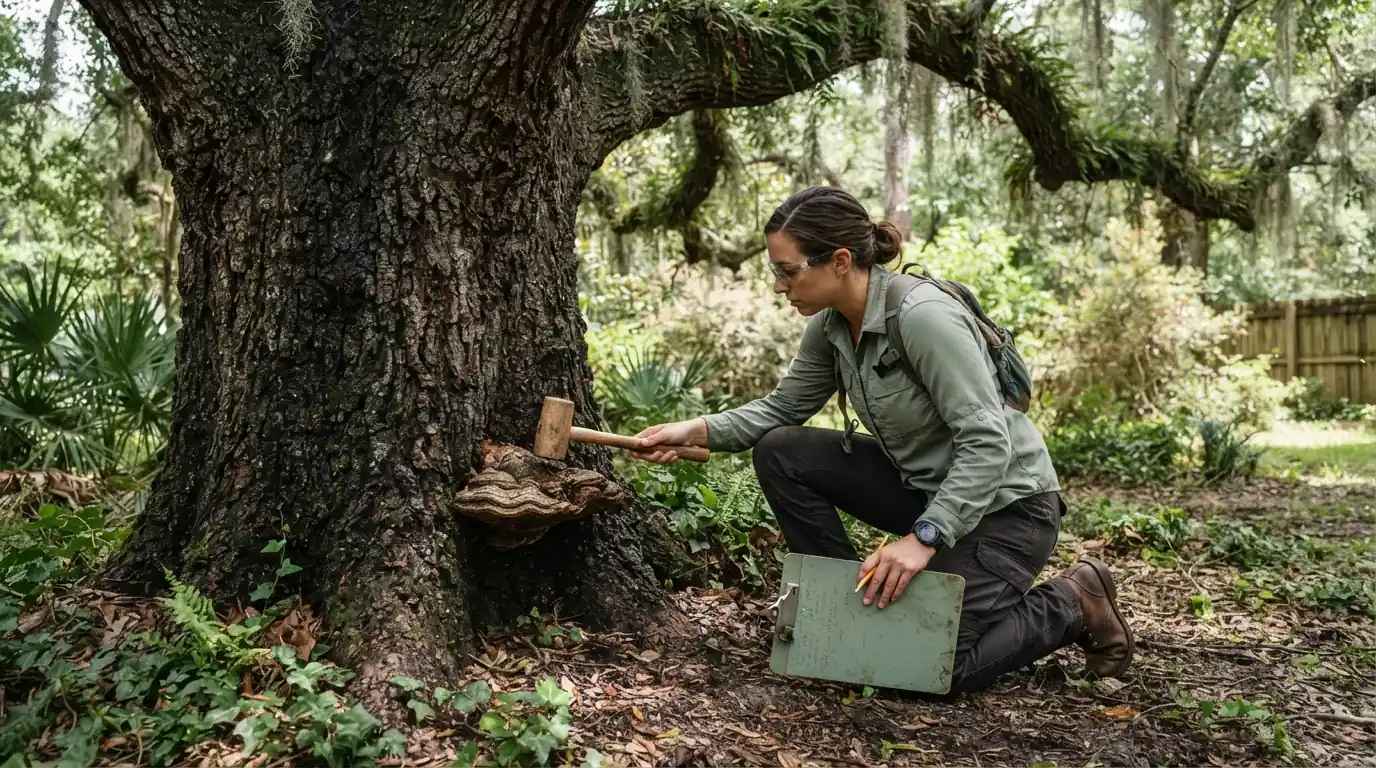
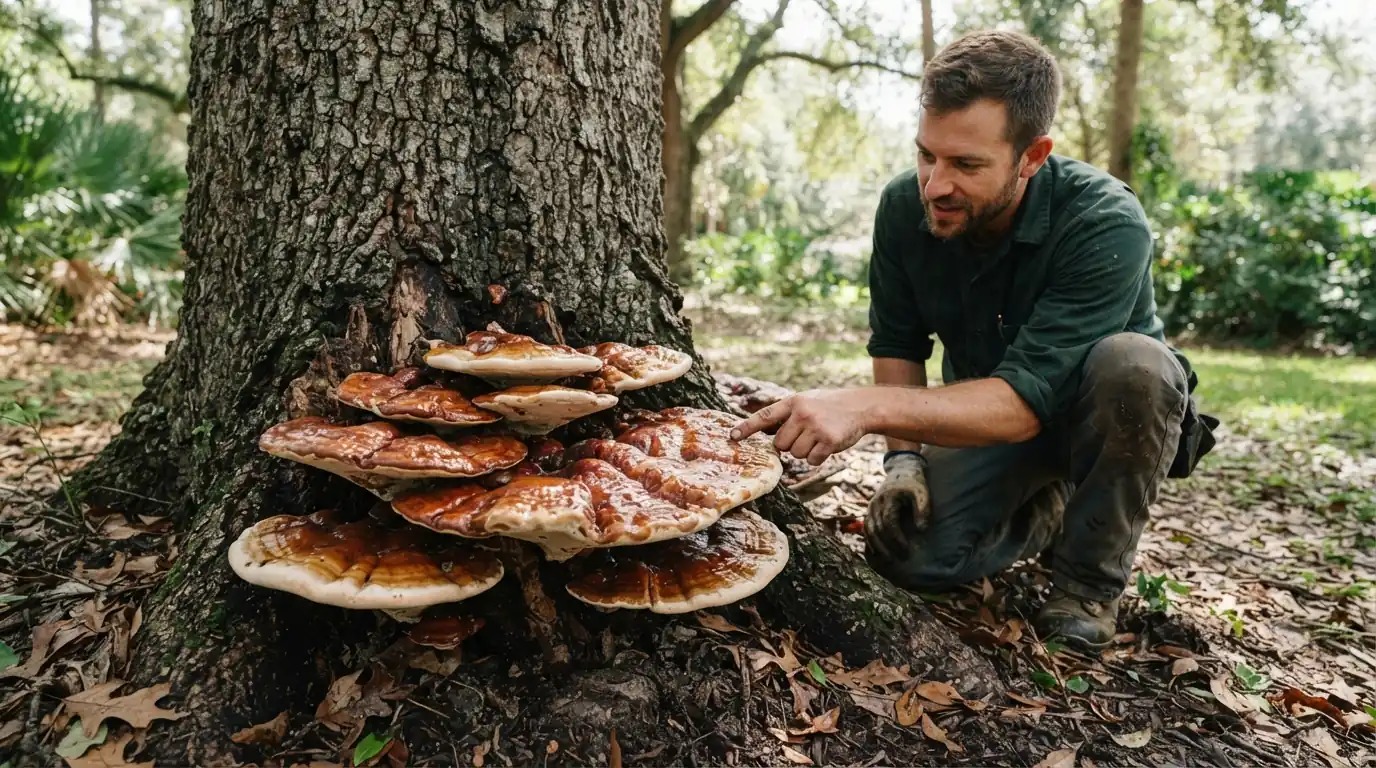
Ganoderma is a group of wood-decay fungi that rot the root flare and lower trunk. On live oaks the first sign is often a shelf-like conk at the base, sometimes with a thinning crown above it. The fungus cannot be cured, so the question is how much sound wood remains and what the tree would hit if it failed. In palms, Ganoderma butt rot is fatal and spreads through soil, so affected palms are removed and not replaced with another palm in the same spot.
Laurel wilt
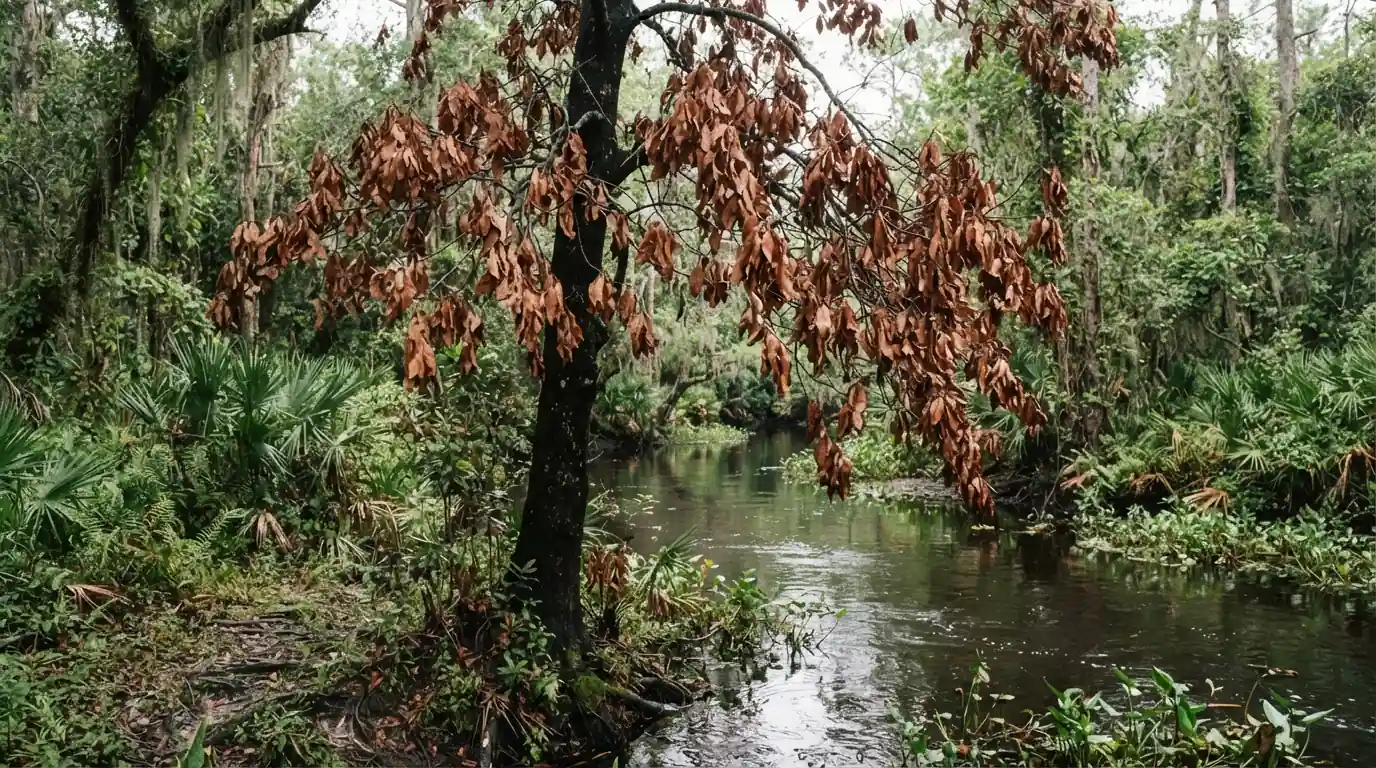
Laurel wilt is an incurable fungus carried by a tiny beetle, and it can kill a bay tree within weeks. It hits redbay and swamp bay, and avocado belongs to the same family, but laurel oaks are not affected despite the name. Leaves wilt and turn reddish brown while staying on the branch, and the sapwood shows dark streaks. Dead trees should come down and stay on site as chips or be disposed of locally, not moved as firewood, which spreads the beetle.
Palm bud rot and nutrient deficiency
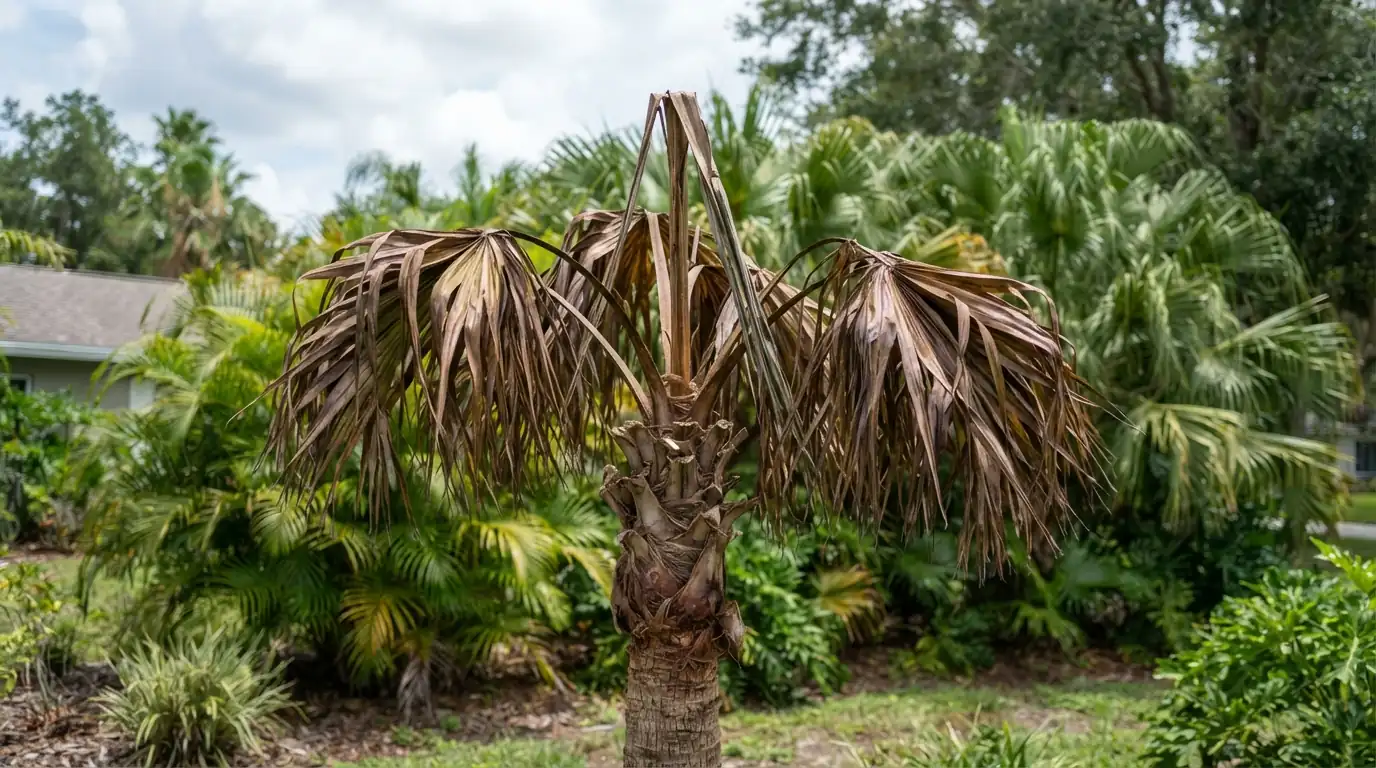
Palm problems usually show in the newest fronds and the spear leaf. Bud rot kills the growing point, and once the spear pulls out the palm cannot recover. Nutrient deficiencies are more common and fixable: potassium shortage shows as spotting and yellowing on the oldest fronds, and manganese shortage leaves new fronds small and frizzled. Bronzing crowns on sabals point to a serious problem that needs a closer look before any money is spent on feeding or treating the palm.
Borers and scale
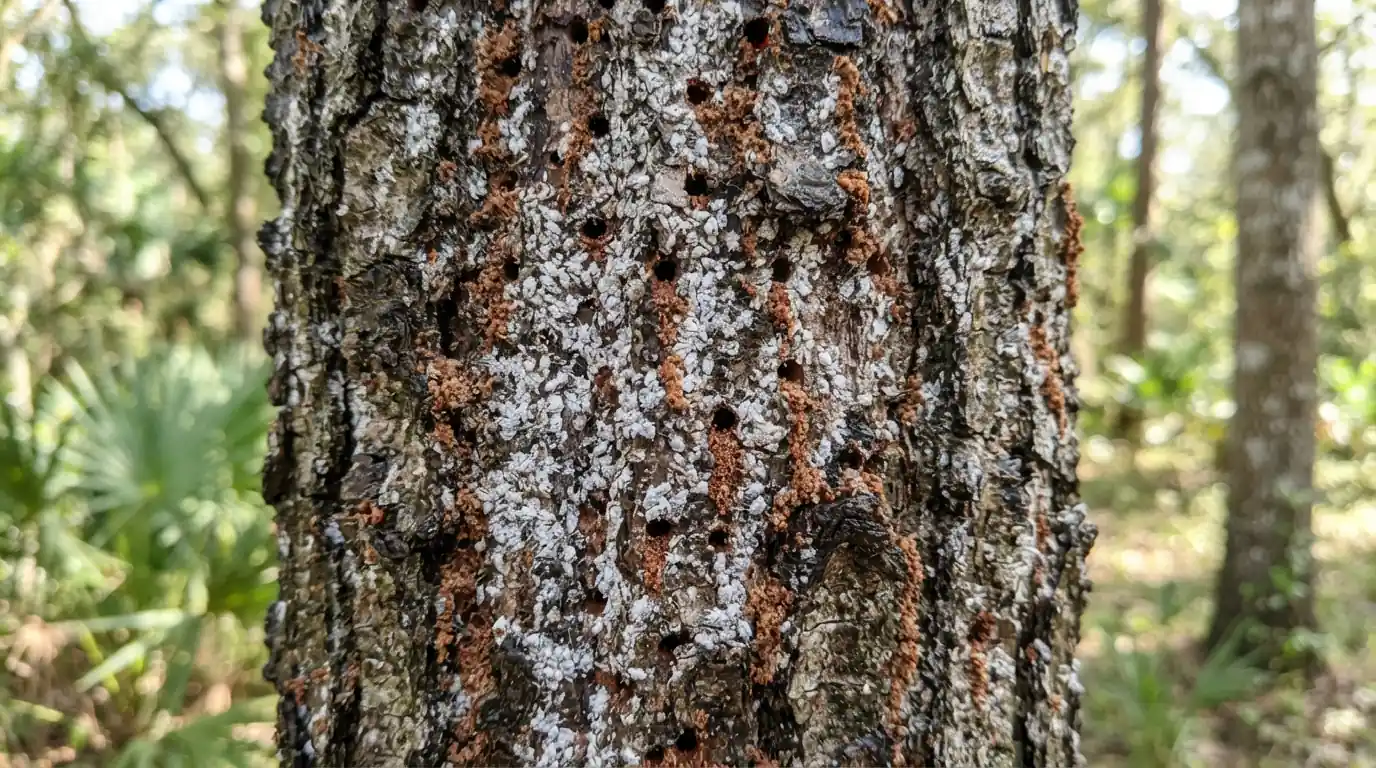
Borers and scale insects are usually a symptom, not the cause. They move into trees already stressed by drought, root damage, construction or storm wounds, and heavy infestations point back to whatever weakened the tree first. We look for exit holes, sawdust-like frass, sap weeping and crusty scale on twigs, then work on the underlying stress: pruning out dead wood, improving the soil and watering, and removing trees that are too far gone to recover, before they fail on their own.
Tree health problems we see around Tampa
Laurel wilt is spreading through Tampa Bay, with roughly 200,000 trees at risk, mainly native swamp bays along the Hillsborough River floodplain and in the Brooker Creek, Alafia River and Little Manatee River watersheds. In the neighborhoods, live oaks with early Ganoderma and sabals going bronze are the familiar pattern in communities like Carrollwood and Town 'n' Country, where the same species and soils repeat on street after street.
Symptoms worth a call
- Conks at the base
Shelf fungus on the trunk or root flare.
- Sudden wilting
Leaves browning but staying attached.
- A dead spear leaf
The center palm frond wilting or pulling out.
- Top-down dieback
Bare branches at the top of the crown.
- Holes and sawdust
Borer exit holes and frass on the bark.
What you can check yourself
| Question | Doing it yourself | Our crew |
|---|---|---|
| Leaf and frond changes | Photograph them and note when they started. | We match the pattern to the cause. |
| Fungus at the base | Do not knock conks off; photograph them. | We judge how much sound wood remains. |
How a diagnosis visit runs
- 1Call
Describe what changed and when.
- 2Identify
Species first, then symptoms.
- 3Inspect
Leaves, bark, root flare and soil.
- 4Narrow down
Pattern matched to likely causes.
- 5Sample
Sent to a lab if needed.
- 6Plan
Care, pruning, removal or wait.
- 7Re-check
A follow-up look when it helps.
What a diagnosis visit costs
There is no reliable published range for Tampa diagnosis visits, so we price by the property.
- Number of treesOne tree or several.
- AccessCrown views may need a climb.
- Lab workSample testing if needed.
- Follow-upRe-checks over a season.
- Care workPruning or feeding afterwards.
- RemovalIf the tree cannot be saved.
Tree disease questions
No. We judge the remaining sound wood and the risk instead.
No. It affects bay trees and relatives, not laurel oaks.
Often a nutrient shortage; the pattern tells us which.
Usually not once the bud is dead.
Borers follow stress; fixing the stress matters more.
A sample can go to a plant diagnostic lab when signs are unclear.
Some diseases spread; we tell you which and how to limit it.
More tree health work
From our guides: Signs a Tampa Tree Is Dying or Dangerous