Updated October 2026
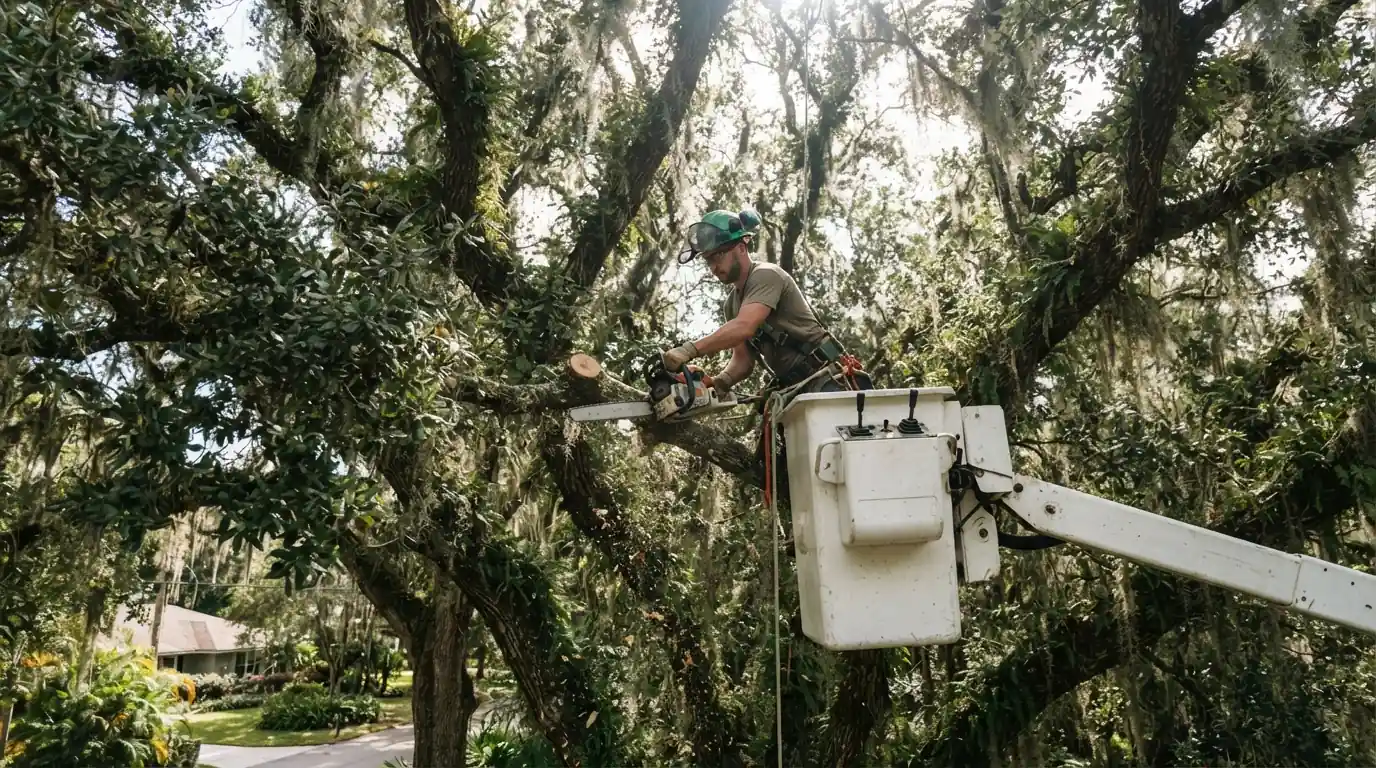
Clearance trimming in Tampa cuts limbs back from roofs, gutters, pool cages, lanais and fences so wind cannot drive them into the structure. Branches are shortened to a side branch, not stubbed at the roofline, so regrowth is slow. Lines at the house belong to the utility, and trees in the city right-of-way need permission first.
Why clearance cuts are different
A branch that brushes the roof on a calm day hits it hard in a storm, and one that overhangs the pool cage drops leaves, fruit and twigs onto the screen all year. The goal is a gap the tree cannot close in a season.
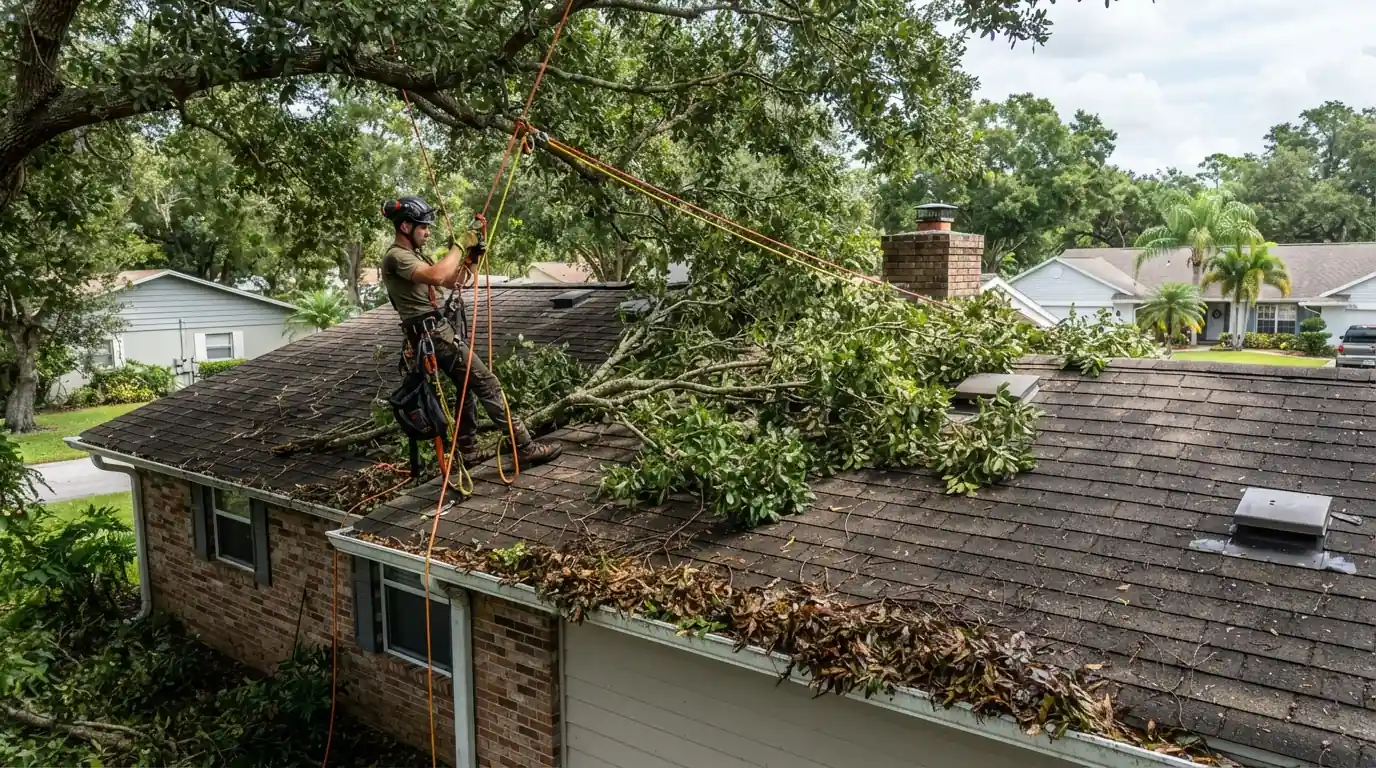
That means cutting back to a healthy side branch, not chopping at the roofline, and working over the structure with ropes so nothing drops on it.
What clearance trimming costs
Clearance work is priced by the trees involved and what they hang over.
- Number of treesSeveral trees over one roof add up.
- Limb sizeHeavy limbs need rigging.
- What is underneathPool cages slow the work.
- AccessSide yards without truck access.
- LinesWork near the drop takes care.
- DebrisBrush chipped or hauled.
Typical planning range: small tree trimming $225 to $500 in Tampa. Market figures, not a quote from us.
Branches on the roof or gutters
Branches on the roof or in the gutters cause slow damage long before a storm: they scrape granules off the shingles, hold moisture against the deck, clog gutters with leaves and give squirrels and rats a path onto the roof. We cut every limb that touches or overhangs the roof back to a side branch, leaving a real gap, and take out anything dead over the house first. Gutters are left clear of the debris we create, and the roof is blown off before we go.
Limbs over a pool cage or lanai
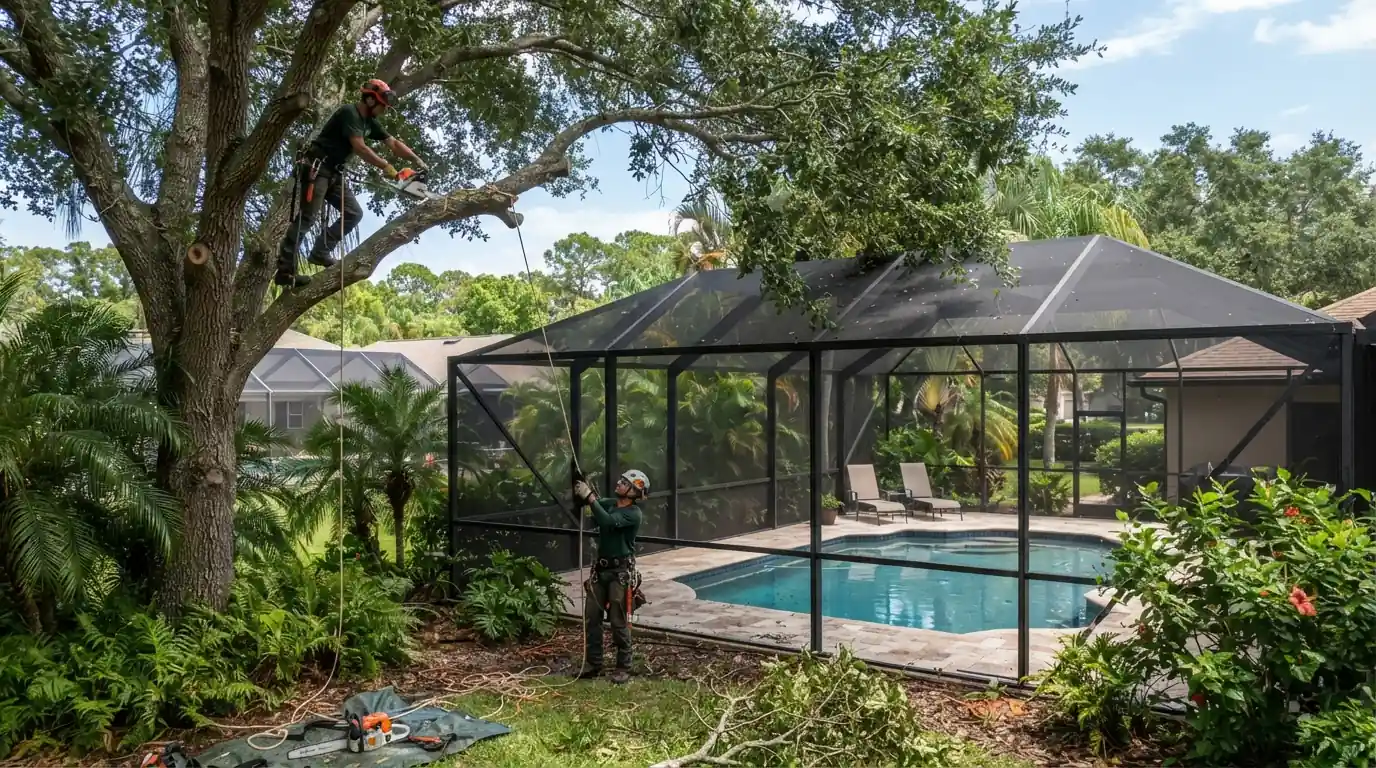
Pool cages and lanais are easy to damage and expensive to rescreen. Overhanging limbs drop leaves, acorns and fruit onto the screen, and a single branch in a storm can tear a panel or bend a frame. We rope every piece over the enclosure and lower it outside the cage, never onto it. The aim is to leave the canopy far enough back that the screen stays clean between visits and a gust cannot reach the frame, even at the end of a wet growing season.
Clearance from a service drop or fence
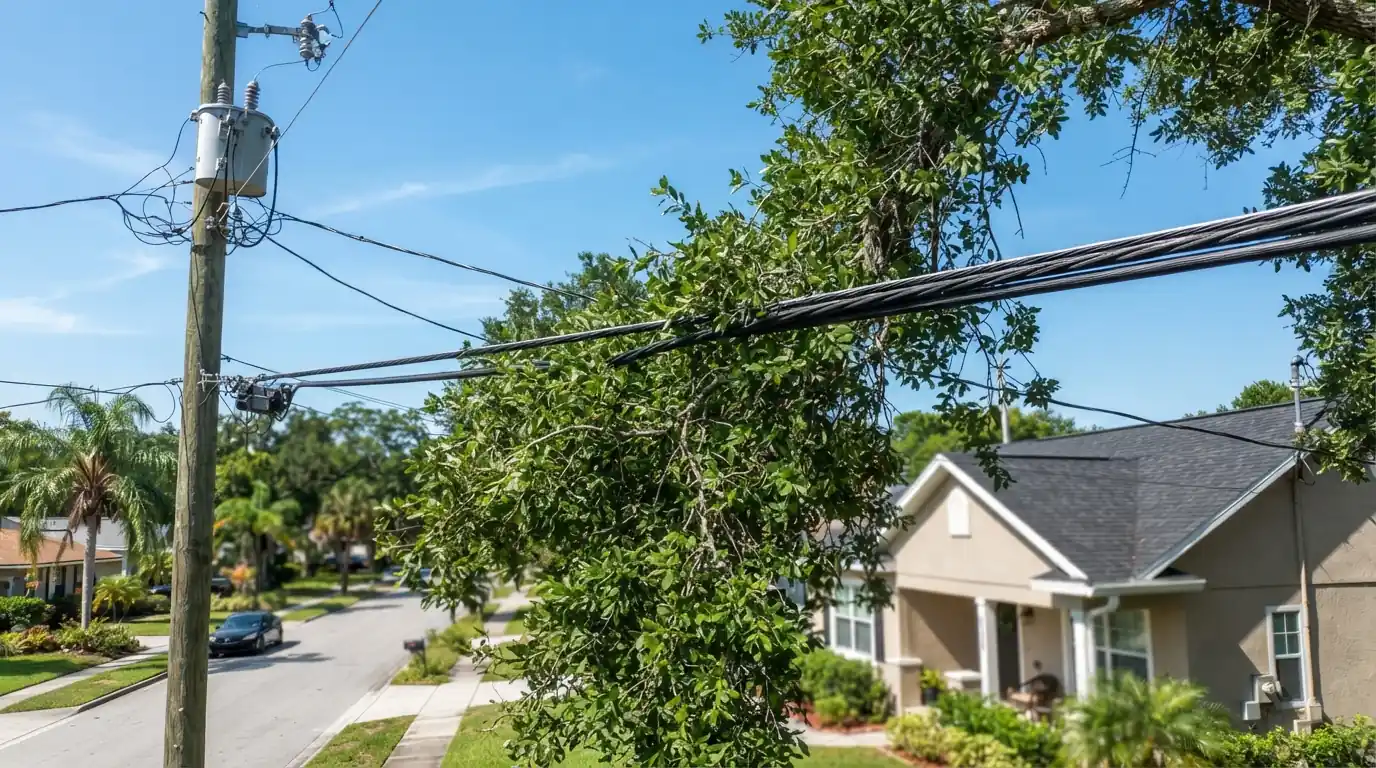
Service drops, the wires running from the pole to your house, are the utility's responsibility, and anything touching or close to them is handled carefully. We trim branches that are growing toward the drop when it is safe to do so, and we call for the utility when a limb is already on the line. Clearance from fences, sheds, walls and play sets follows the same rules as the roof: back to a side branch, never a stub that sprouts a thicket of new shoots.
Neighbor-line overhang
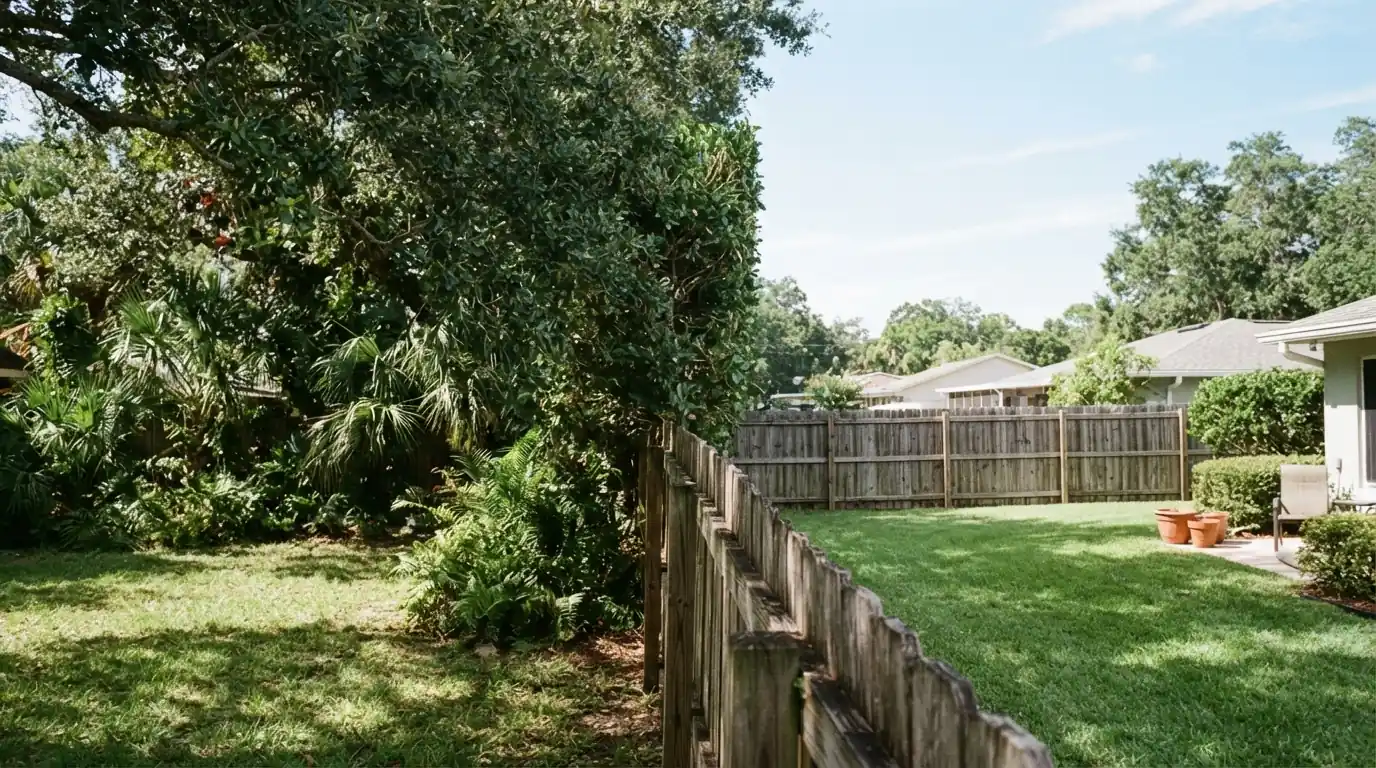
Neighbor-line overhang is one of the most common calls. In most cases you can trim branches back to your property line from your side, as long as the work does not harm the tree itself. We cut to the line cleanly and tell you if taking more would damage a tree that is not yours. Talking to the neighbor first always helps, and many neighbors are happy to share the cost when the same tree hangs over both yards.
What a clearance visit covers
- Every limb touching or over the roof cut back
- Deadwood over the house removed first
- Pool cage and lanai limbs roped and lowered
- Branches trimmed back from fences and sheds
- Gutters and roof cleared of our debris
- Right-of-way and line questions flagged
Trimming off the roof yourself
| Question | Doing it yourself | Our crew |
|---|---|---|
| Small branch over a low eave | Possible from the ground with a pole saw. | Quicker, with the gutters cleaned too. |
| Limbs over the pool cage | Dropped branches tear screens. | Pieces roped and lowered outside. |
| Anything near the service drop | Never; it can be energized. | Handled with the utility when needed. |
Clearance work on Tampa lots
Older South Tampa lots are where clearance gets hard: narrow side yards and mature canopy overhead leave limbs over the roof, the neighbor and the drive at once, and no path for a chipper. In older neighborhoods planted with laurel oaks, like the Brandon streets hit in 2024, heavy limbs over roofs are the first thing we cut back. Inside Tampa, trees in the city right-of-way need Parks Forestry permission before pruning.
How a clearance visit runs
- 1Call
Tell us what the branches are touching.
- 2Walk
We check each limb over the house and cage.
- 3Quote
The cuts and the price, before we start.
- 4Deadwood first
Dead limbs over the roof come out.
- 5Clearance
Limbs cut back to side branches.
- 6Roof and gutters
Our debris cleared off.
- 7Clean
Brush chipped, yard raked.
Clearance trimming questions
Far enough that wind cannot push them onto it. We set the gap by the species and how fast it grows.
Usually back to the property line, without harming the tree.
Near the service drop, carefully. Lines on the pole are the utility's.
We clear the debris our trimming creates from gutters and the roof.
Every two to three years for most fast-growing trees.
Right-of-way trees need Parks Forestry permission first.
Yes. Pieces are lowered outside the enclosure, never dropped on it.
More trimming work
From our guides: Mangrove Trimming Rules for Tampa Bay Homeowners