Updated October 2026
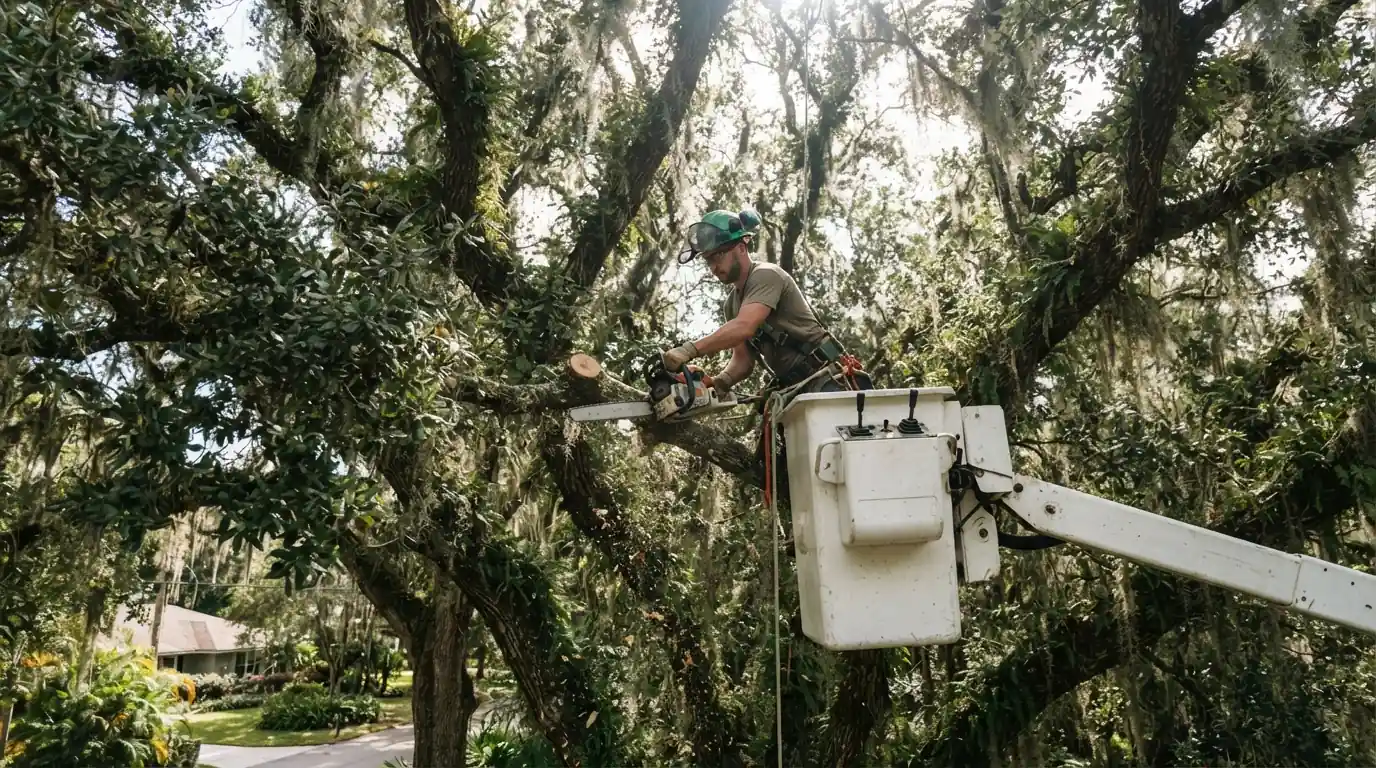
Fruit tree pruning in Tampa keeps citrus, mango, avocado and other yard fruit trees at a pickable height, opens the canopy to light, and removes dead or declining wood. Timing matters: citrus is usually pruned after harvest and before spring bloom, and mangoes right after fruiting. Heavy cuts at the wrong time can cost a season of fruit.
What a fruit tree visit covers
- Tree identified and timing checked against the crop
- Dead, crossing and diseased wood removed
- Height brought within picking reach over time
- Canopy opened to light without over-thinning
- Skirt lifted to keep fruit off the ground
- Cuttings chipped or hauled, fruit left on the tree
Pruning for fruit, not just shade
A shade tree is pruned for structure and clearance; a fruit tree is pruned for fruit. That means keeping it low enough to pick, open enough for sun to reach inside, and timed around when it flowers.
Many backyard fruit trees in Tampa have been left to grow for years, and the fix is gradual reduction, not one hard cut.
Citrus tree pruning
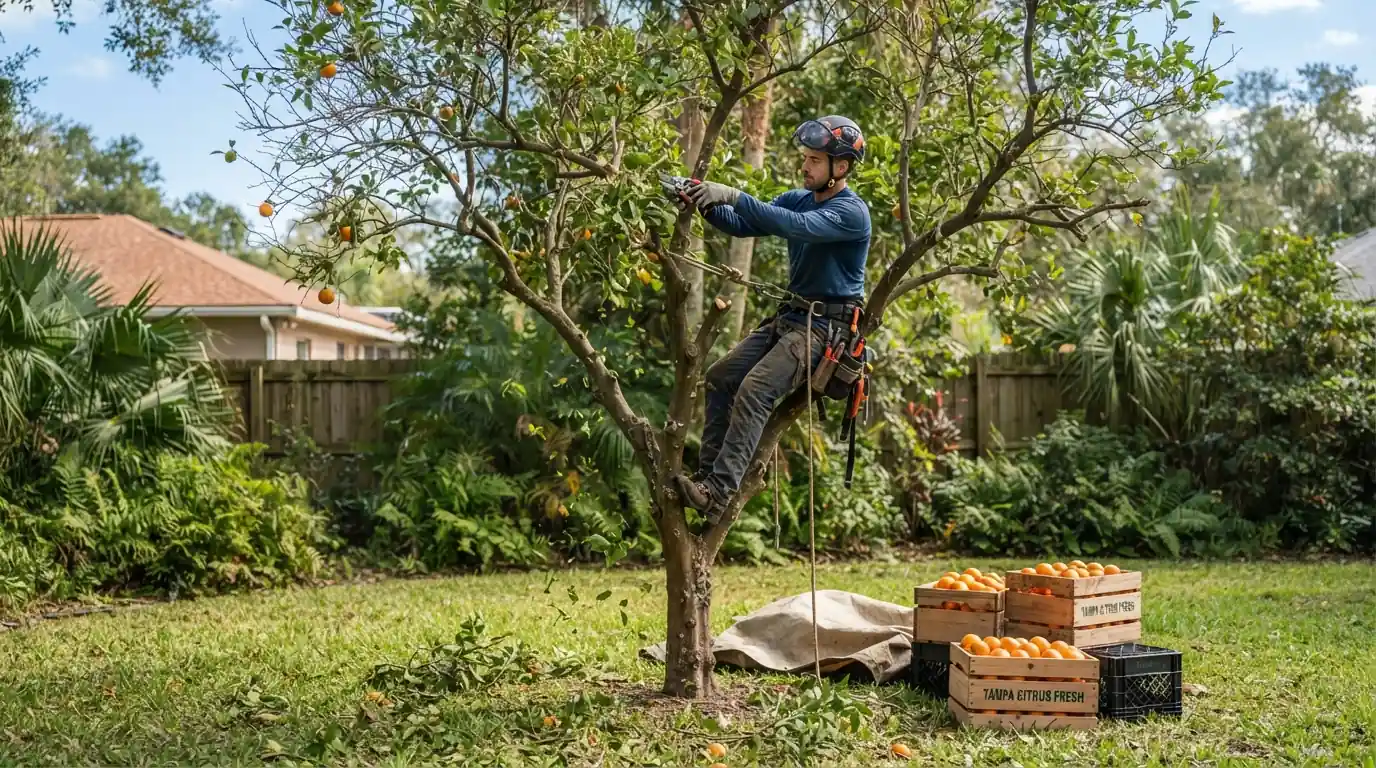
Citrus trees are pruned lightly and usually after harvest, before the spring bloom. We remove dead wood, crossing branches and water sprouts, lift the skirt slightly off the ground to keep fruit clean, and keep the height where you can reach it from a short ladder. Citrus does not need a hollow center like some fruit trees; a full, rounded canopy protects the fruit and bark from sun. The aim is steady crops every year, not a dramatic haircut that costs you a season.
Typical planning range: pruning averages $450 in Tampa with a general range of $375 to $525. Market figures, not a quote from us.
Mango and avocado pruning
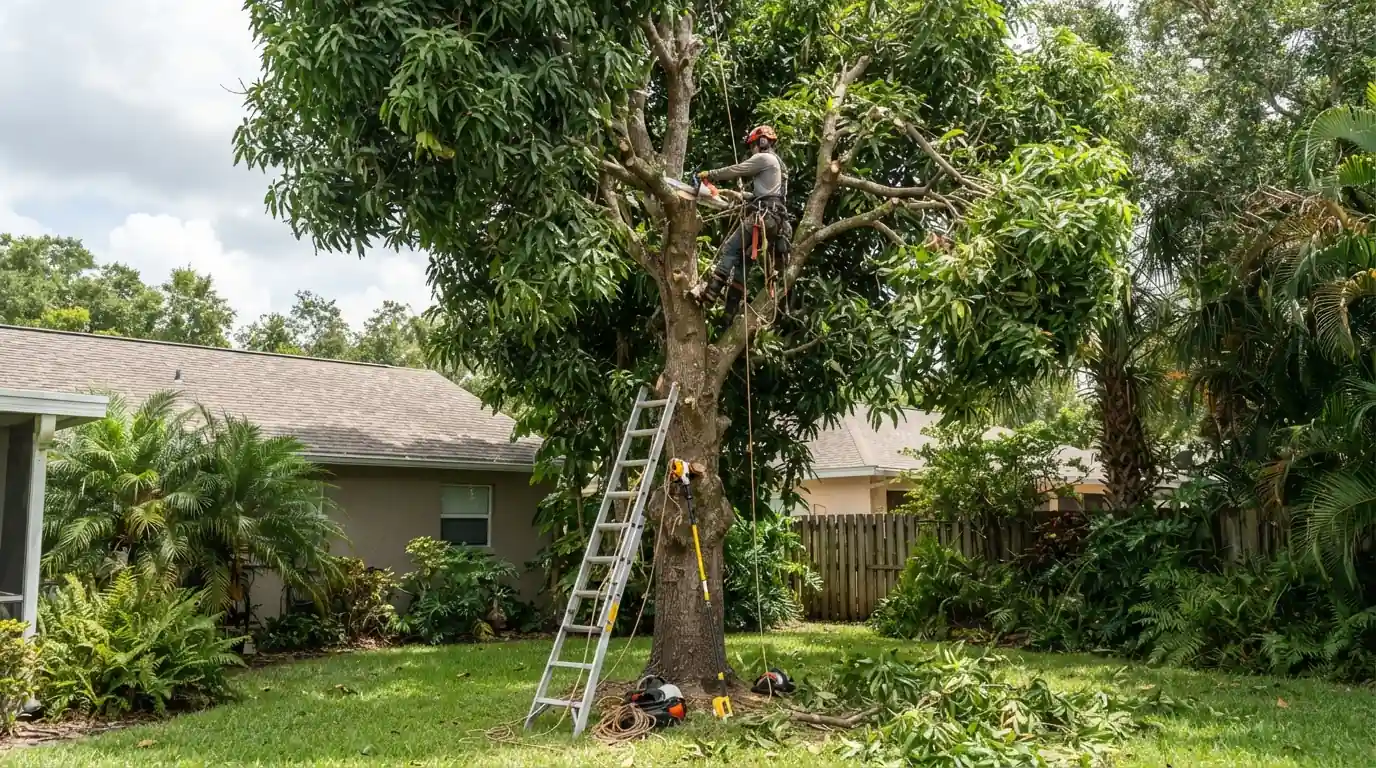
Mangoes and avocados can grow into huge trees if left alone, with fruit out of reach and branches over the roof. We prune them right after the fruit comes off, reducing height and spread gradually over a few seasons so the tree keeps producing. Cutting back to outward-facing branches keeps the canopy open and lets light reach the lower fruiting wood. A mango that shades the whole yard can be brought back to a manageable size without losing it.
Fruit tree size control
Size control is by far the most common request we get: a fruit tree that has grown taller than anyone can pick. We bring it down over two or three pruning seasons rather than all at once, because a hard cut on a fruit tree often triggers a flush of leafy growth and no fruit. Each visit takes the tallest limbs back to a lower branch, so the tree gets shorter and wider while still flowering and fruiting on its normal schedule.
Dead and declining fruit tree removal
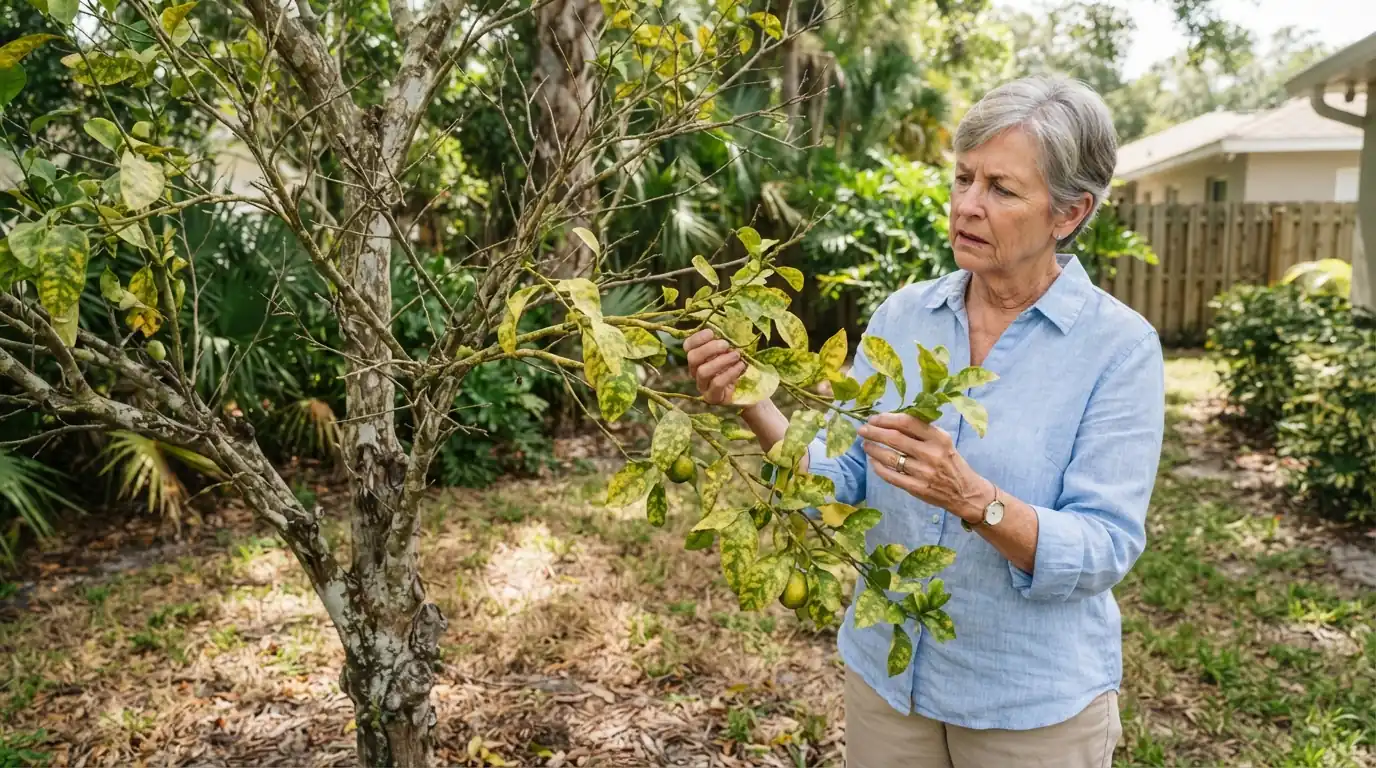
Some fruit trees are declining beyond what pruning can fix. Citrus greening, spread by a tiny insect and incurable, has affected citrus across Florida, and trees with yellow mottled leaves, lopsided sour fruit and heavy fruit drop rarely recover. We tell you honestly when a tree is on its way out, remove it cleanly and safely, grind the stump and talk through what to plant next. Many exotic fruit trees can be removed without a permit in unincorporated Hillsborough County.
Fruit trees and local rules around Tampa
In unincorporated Hillsborough County, exotic fruit trees such as guava, lychee and starfruit are on the permit-exempt list, so removing a declining one is simple. Inside Tampa, fertilizer containing nitrogen or phosphorus cannot be applied from June 1 through September 30, which shapes when a pruned fruit tree gets fed; many growers feed citrus in late winter and fall instead.
How long fruit tree pruning takes
Most backyard fruit trees take an hour or two each. Bringing an overgrown mango or avocado back to size is spread over two or three seasons so the tree keeps fruiting.
How a fruit tree visit runs
- 1Call
Tell us which fruit trees and what bothers you.
- 2Identify
Species and where it is in its crop cycle.
- 3Plan
Cuts for this season and any follow-up.
- 4Prune
Dead wood first, then height and light.
- 5Check
Balance and picking height reviewed.
- 6Clean
Cuttings chipped or hauled.
- 7Schedule
Next pruning timed to the crop.
What fruit tree pruning costs
Fruit trees are priced per tree, mostly by size and how overgrown they are.
- Tree sizeBig mangoes take longer.
- OvergrowthSize reduction takes more cuts.
- Number of treesSeveral trees in one visit.
- AccessFenced backyards and slopes.
- RemovalsDeclining trees taken out.
- DebrisChipped or hauled.
Typical planning range: pruning averages $450 in Tampa with a general range of $375 to $525. Market figures, not a quote from us.
Fruit tree pruning questions
Usually after harvest and before the spring bloom.
Right after the fruit comes off.
Yes, gradually over two or three seasons.
Good pruning helps light and access; heavy cuts can reduce the next crop.
Rarely. It is incurable, so we are honest about it.
Many exotic fruit trees are exempt in unincorporated Hillsborough.
No. We leave the crop on the tree unless you ask.
More trimming work
From our guides: Signs a Tampa Tree Is Dying or Dangerous