Updated October 2026
A tree lightning protection system runs a copper conductor from the top of the main trunk down to ground rods driven away from the roots, so a strike travels through the cable instead of the wood. It suits tall, valuable or isolated trees near a house. It protects the tree, not the building, and needs inspection as the tree grows.
What a lightning install covers
- Tree chosen for height, value and position
- Copper conductor from the top leaders down
- Branch conductors on wide spreading crowns
- Growth-allowing fasteners, no girdling
- Ground rods set away from the root flare
- Notes kept for future inspections
What the system does and does not do
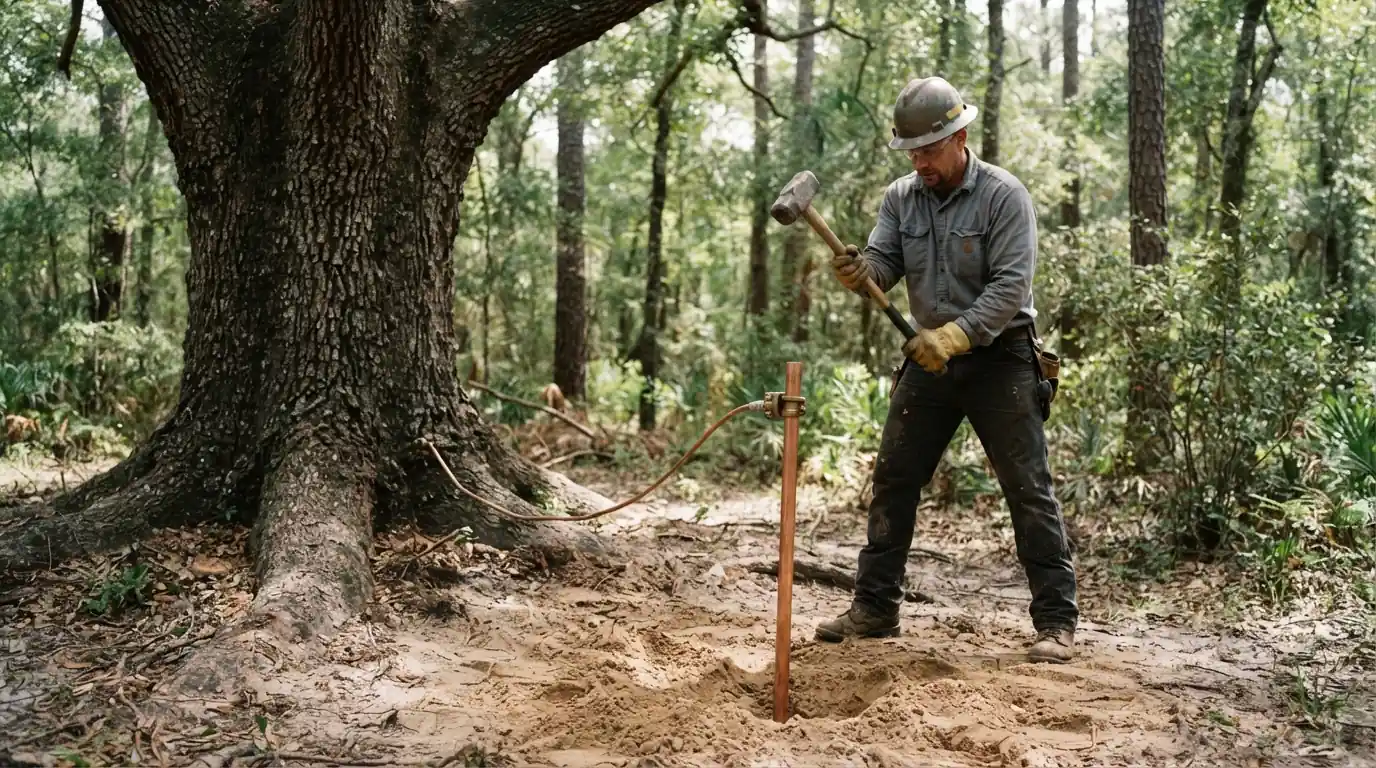
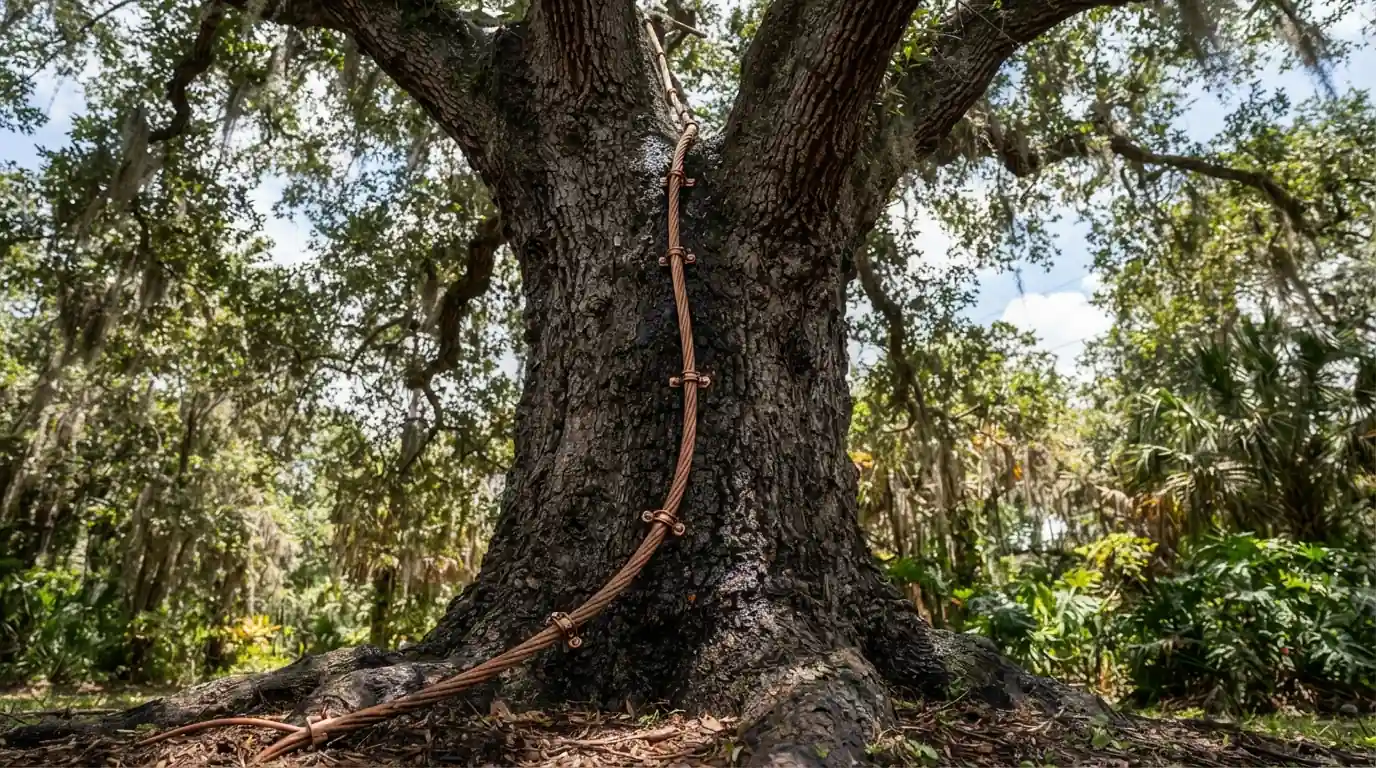
The conductor is fastened loosely to the trunk with fasteners that allow for growth, runs to the tallest leaders, and ends in ground rods set well out from the trunk.
It lowers the damage a strike does to the tree. It is not a substitute for the building's own lightning protection, and it does not attract lightning.
New lightning system installation
A new system is installed by a climber who runs copper conductor from the highest main leaders down the trunk, with branch conductors to other tall leaders on big spreading trees. Fasteners hold the cable against the bark without girdling it as the tree grows. At the base, the conductor runs underground, away from the trunk, to one or more ground rods set outside the main root area. The whole run is made without sharp bends, so the current stays in the copper.
Lightning-struck tree evaluation
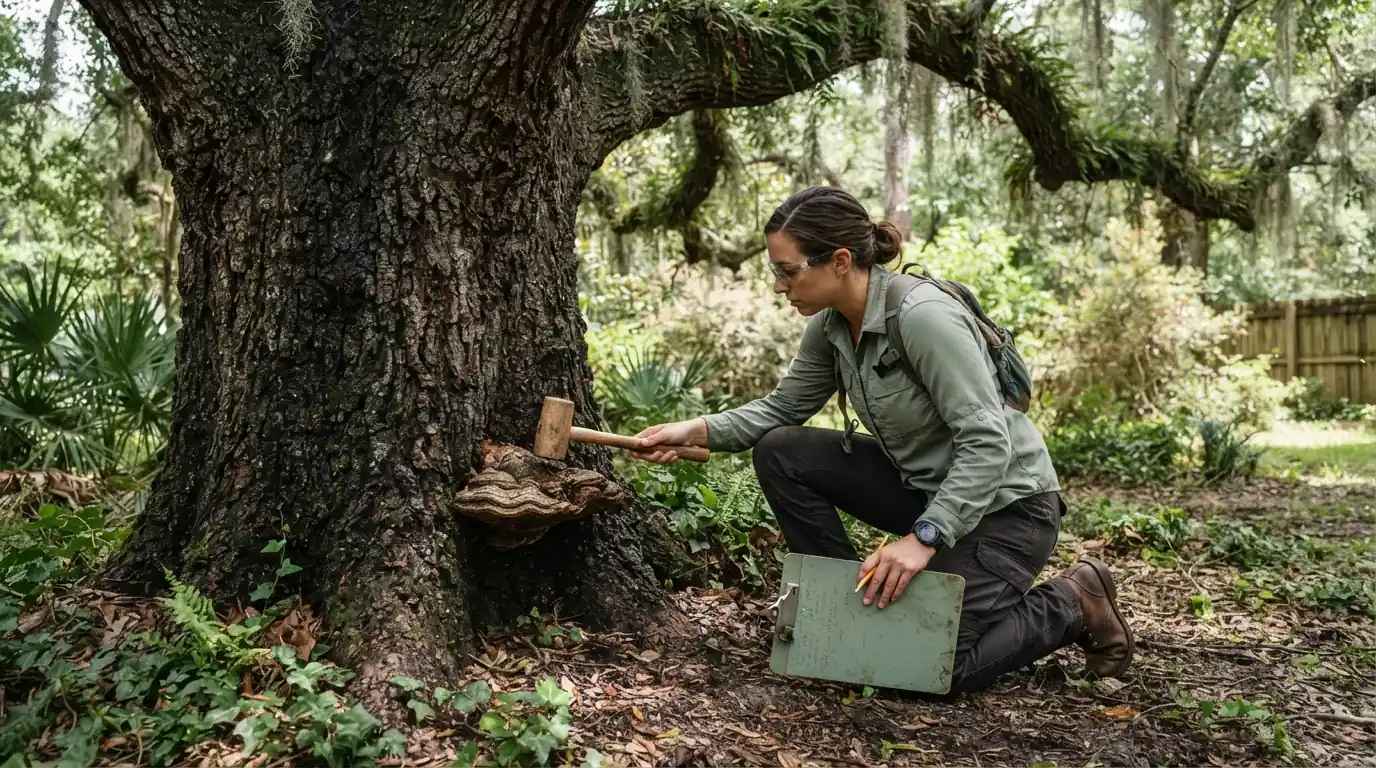
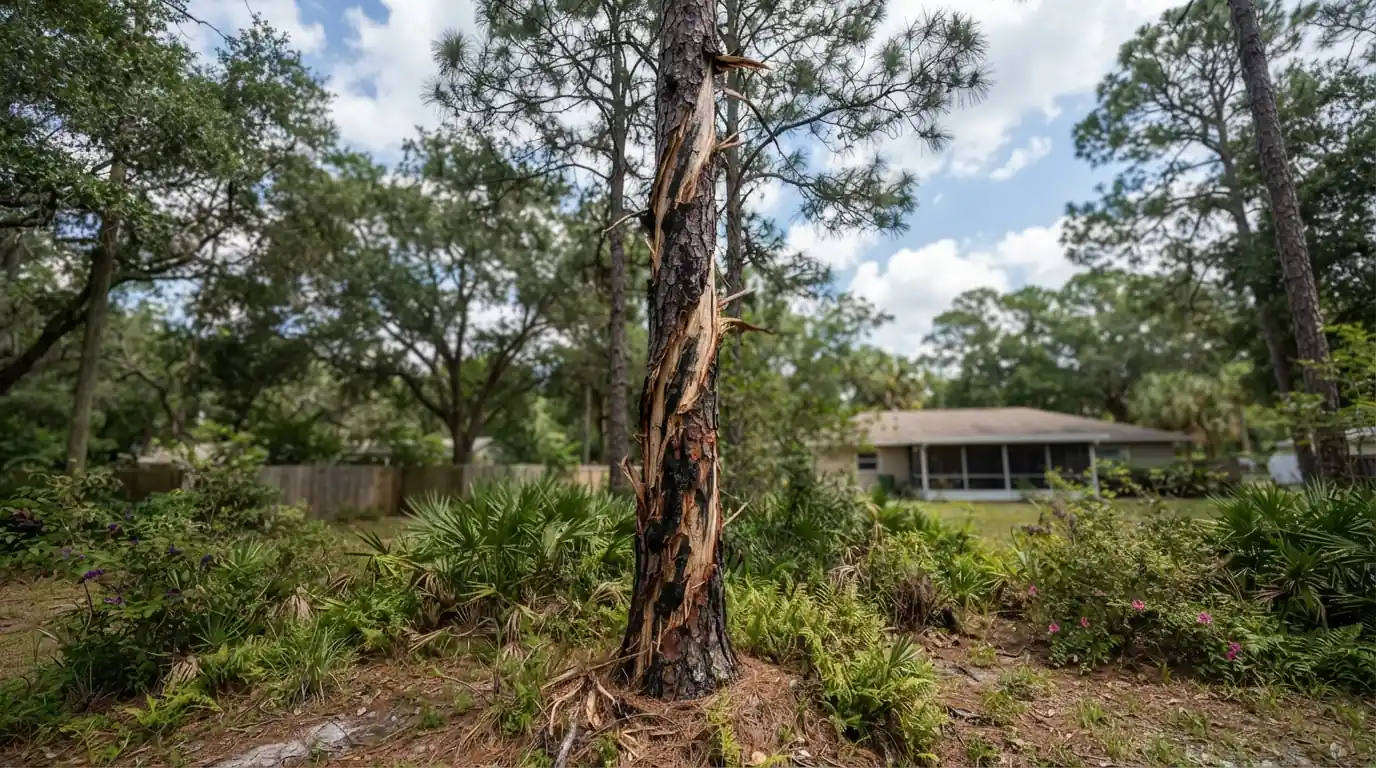
After a strike, the damage is not always obvious. Some trees split or lose a strip of bark down the trunk; others look fine for weeks and then decline because the roots were damaged. We look at the scar, the bark along it and the crown over the following season, remove any dangerous wood, and tell you what the odds of recovery look like. Pines often fail after a bad strike, because bark beetles move into the damaged wood quickly and finish what the strike started.
System inspection and repair
Existing systems need checking. Trees grow away from their conductors, fasteners can be pulled by growth, ground connections corrode, and storms can break branch conductors. We inspect the full run from the top leaders to the ground rods, extend the conductor as the crown grows, replace damaged sections and check the ground connection. A system that no longer reaches the top of the tree or has a broken ground connection does not do its job, however well it was installed.
Protection for grand oaks
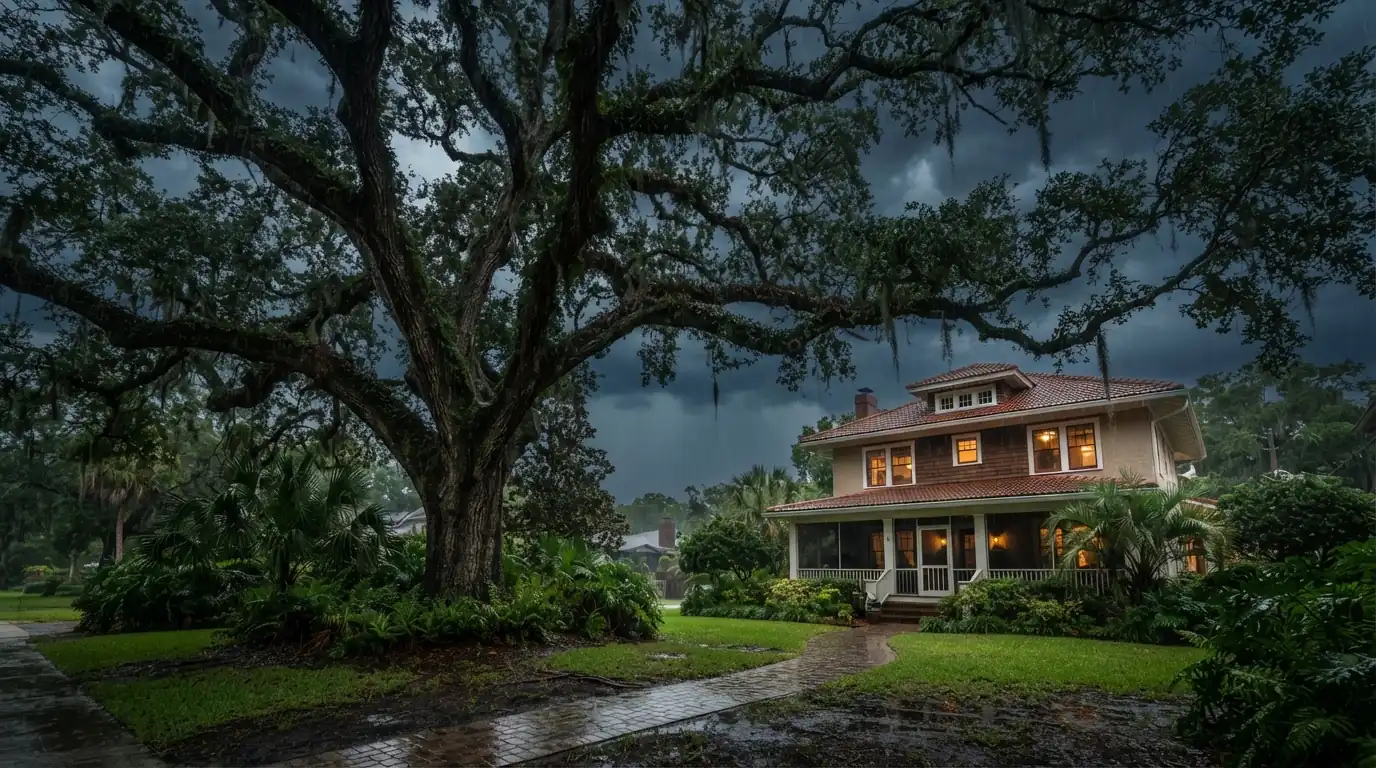
Grand oaks are the trees most owners protect. A live oak that took generations to grow, or a big tree that shades the house and anchors the yard, is worth far more than the cost of a system. Tall trees standing alone, or the tallest tree near a house, are the ones most likely to be struck. We look at which of your trees fits that description and recommend protection only where it makes sense for the tree and the house.
Which Tampa trees are worth protecting
Live oaks sit at the top of Florida's protection ladder, and larger ones often qualify as heritage trees. Inside Tampa, any tree 32 inches or more across is a Grand Tree that needs public notice before it can be removed, and massive oaks are common in Plant City, Bloomingdale and Valrico. Those big, long-lived trees are the ones where a lightning system makes the most sense.
How long an install takes
A single tree is usually a one-day job, including the climb, the conductor run and the ground rods. Very large oaks with several branch conductors can take longer.
How an install runs
- 1Call
Tell us which tree you want protected.
- 2Assess
Height, health and position checked.
- 3Plan
Conductor route and ground rods set.
- 4Locate
Utility lines marked before digging.
- 5Climb
Conductor fastened from the top down.
- 6Ground
Rods driven and connected.
- 7Record
Notes kept for inspections.
What tree lightning protection costs
There is no reliable published range for Tampa tree lightning systems, so we price the tree.
- Tree heightLonger conductor runs.
- Crown spreadBranch conductors on big oaks.
- Ground rodsNumber and distance from the trunk.
- AccessClimb or bucket truck.
- SoilSandy or wet ground changes grounding.
- InspectionsFuture checks and extensions.
Tree lightning questions
No. It gives a strike a safer path through copper.
No. It protects the tree; buildings need their own systems.
Tall, valuable or isolated trees, especially near a house.
Sometimes. We watch it over a season before deciding.
Every few years and after major storms.
Fasteners are designed to allow growth without girdling.
Beetles move into the damaged wood quickly.
More tree health work
From our guides: Hurricane Season Tree Prep for Tampa Yards