Updated October 2026
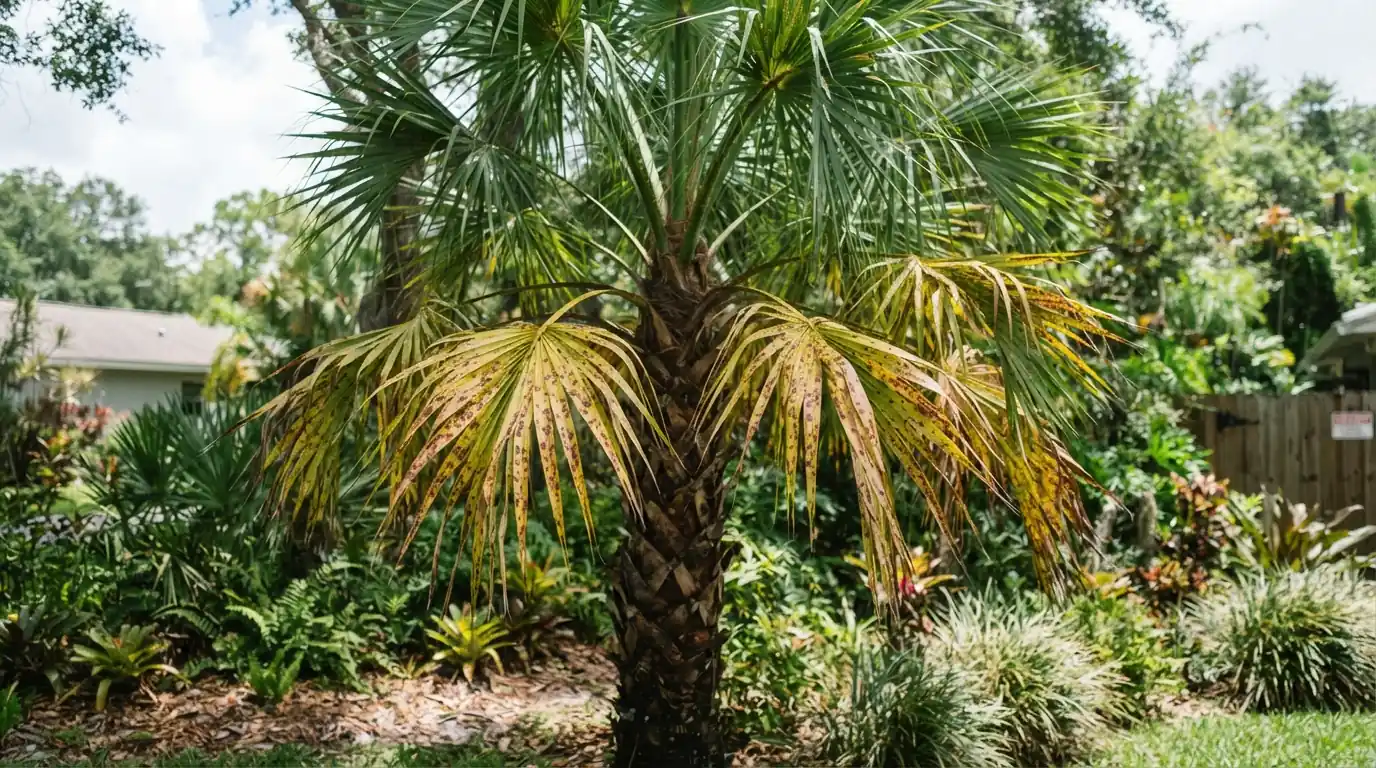
Palms in Tampa most often lack potassium, which shows as yellow or orange spotting on the oldest fronds, followed by magnesium, a broad yellow band along older frond edges, and manganese, which causes frizzled new leaves. A slow-release palm fertilizer with potassium and magnesium, applied a few times a year, corrects most cases over time.
What a palm feeding visit covers
- Each palm's frond pattern checked
- Deficiency identified before treating
- Palm-specific slow-release blend
- Spread under the canopy, not the trunk
- Timed around the summer fertilizer rules
- Schedule set for the year
Why palms need their own fertilizer
Palms grow from a single bud at the top and cannot repair damaged fronds, so a deficiency stays visible until new healthy fronds replace the old ones. Turf fertilizer makes it worse, because its high nitrogen pushes growth the soil cannot support with potassium.
The fix is the right blend, applied patiently.
Potassium deficiency treatment
Potassium deficiency is the most common palm problem in Florida. Old fronds develop yellow or orange spots and then brown, brittle tips, and in bad cases the crown shrinks as fronds die faster than new ones grow. We treat it with a slow-release potassium source along with magnesium so the two stay in balance. Damaged fronds will not recover, so we leave them until they fully brown to avoid stealing the potassium the palm is still drawing from them.
Magnesium and manganese correction
Magnesium deficiency shows as a broad yellow band along the edges of older fronds with green down the middle, and it often appears alongside potassium shortage. Manganese deficiency is different: the newest leaves come out weak, frizzled and stunted, sometimes called frizzle top, and is common on queen palms in alkaline soil. Each needs its own nutrient, so we identify the pattern before choosing the product. Treating the wrong nutrient wastes a season, and some products can make another shortage worse if they are used alone.
Slow-release palm feeding schedule
Palms do best on a fertilizer made for them, with most of the nitrogen, potassium and magnesium in slow-release form, spread evenly under the canopy rather than piled against the trunk. Applying it a few times a year keeps a steady supply in sandy soil that leaches quickly in summer rain. We set up a schedule for your palms and adjust it as the new fronds show what is working. Improvement shows in the new growth over months, not in the old fronds, so patience is part of the plan.
Feeding newly planted palms
A newly planted or transplanted palm has a small root system and is easy to overfeed. We wait until new growth shows the palm has rooted in, then start with light applications of a palm blend and build up over the first year. Feeding too much too early can burn the roots, while a little patience gives the palm the best start in its new spot. Watering matters as much as feeding in the first months, and we set out both on the same schedule.
Palm feeding and Tampa's fertilizer rules
The City of Tampa bars lawn and landscape fertilizer containing nitrogen or phosphorus from June 1 through September 30. Palm feeding is planned around that window, with complete palm blends applied in spring and fall and potassium and magnesium products used in summer where the rules allow. We check which rules apply to your address before treating, since neighboring towns and counties write their own.
Signs a palm needs feeding
- Spotted old fronds
Yellow or orange flecks.
- Yellow frond edges
Broad band, green middle.
- Frizzled new leaves
Weak, stunted spears.
- Shrinking crown
Fewer fronds each year.
- Brown brittle tips
Old fronds dying early.
How palm feeding runs
- 1Call
Tell us which palms and what you see.
- 2Look
Frond patterns checked.
- 3Identify
Deficiency named.
- 4Feed
Palm blend spread evenly.
- 5Schedule
Next feedings planned.
- 6Watch
New fronds tracked.
- 7Adjust
Plan changed if needed.
What palm fertilization costs
Palm feeding is priced by the number of palms and the treatment plan.
- Number of palmsOne or a whole yard.
- Palm sizeBigger canopies take more product.
- Deficiency typeBlend chosen per problem.
- ScheduleSingle visit or yearly plan.
- AccessBeds, lawns and pool decks.
- New plantingsLighter, more frequent feeding.
Palm feeding questions
Most often potassium deficiency.
Manganese deficiency in the newest leaves.
No. Its high nitrogen can make deficiencies worse.
A few times a year with slow-release palm blend.
No. New healthy fronds replace them over time.
Not with nitrogen or phosphorus from June to September.
Wait until they are fully brown.
More tree health work
From our guides: How Often Palms Need Trimming in Tampa, FL