Updated October 2026
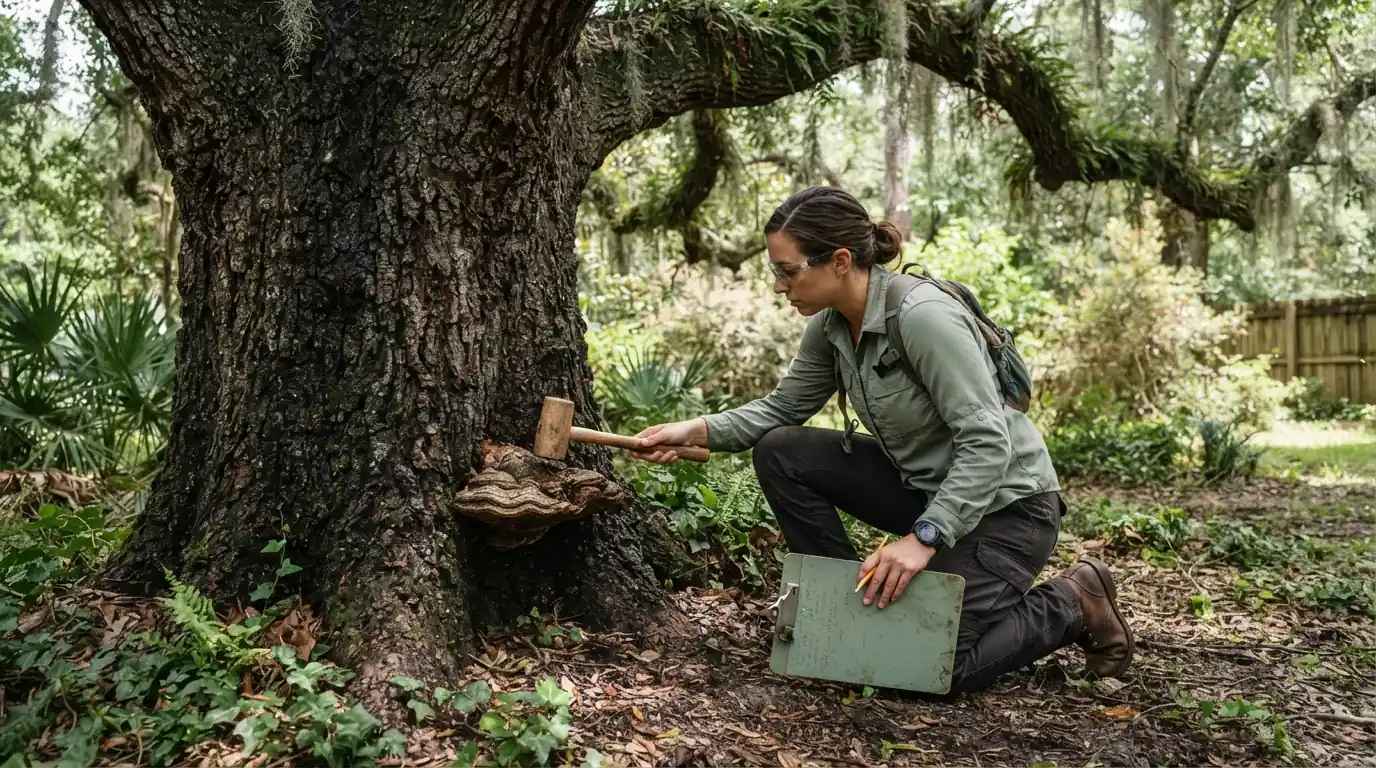
A tree survey lists and locates the trees on a property with their species, trunk diameter and condition, usually for a building or land permit. An arborist report or letter explains one tree's or several trees' condition for a removal permit, an HOA, a dispute or an insurance claim. Reviewers in Tampa Bay often ask for one before deciding.
Surveys and reports, and which one you need
A survey is about the whole site: every tree above the size the local code protects, measured at 4.5 feet above the ground and placed on a plan. A report is about judgment: what condition a tree is in, why it should stay or go, and what work it needs.
Many projects need both, at different stages.
What surveys and reports cost
These are priced by the number of trees and how much writing the job needs.
- Number of treesOne tree or a whole site.
- Lot sizeWalking time to tag each tree.
- MappingSketch or surveyor's plan.
- DetailA letter or a full report.
- DeadlinesRush permit timelines.
- Follow-upReviewer questions answered.
Tree surveys for building permits
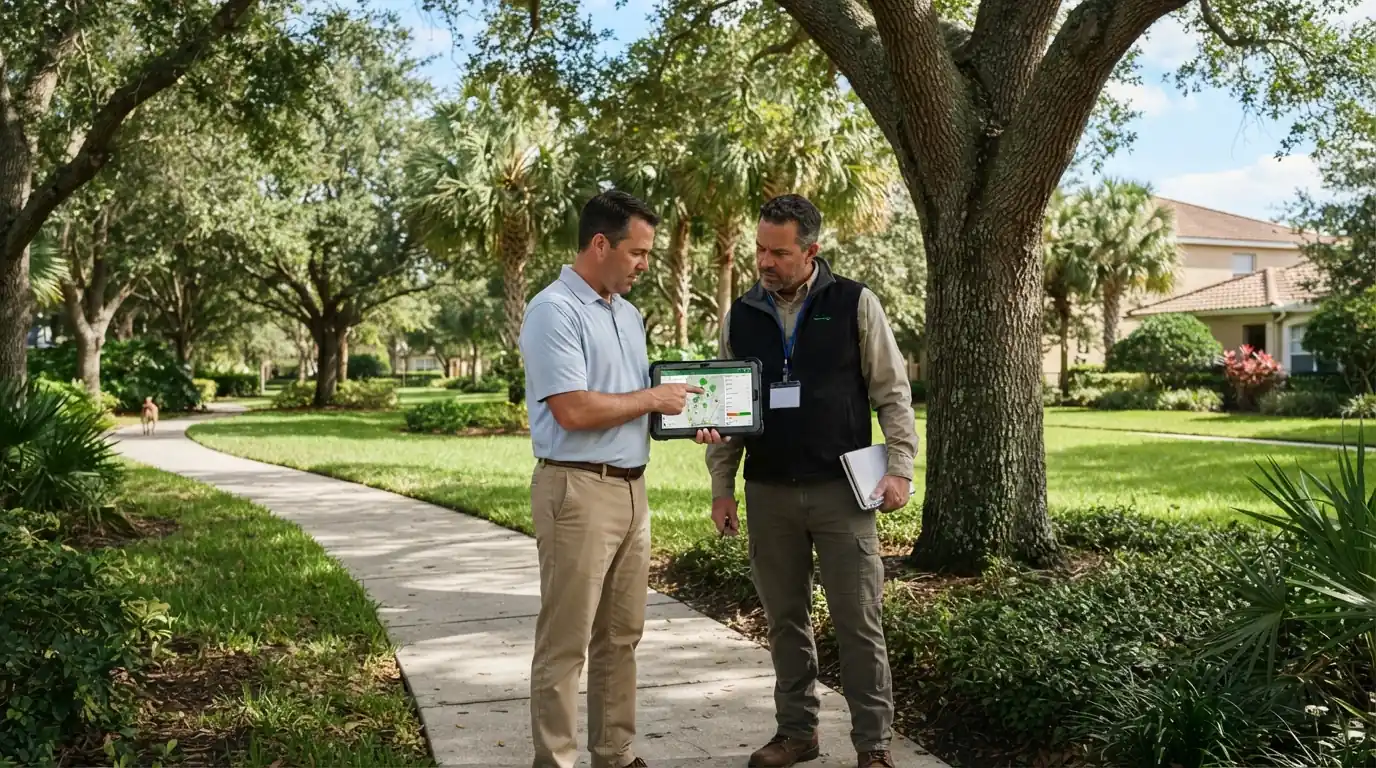
New homes, additions, pools and driveways often need a tree survey before the permit is issued, so the reviewer can see which protected trees are affected. We tag and measure each tree at breast height, identify the species, note its condition and mark it on a site sketch or the surveyor's plan. Protected oaks and large specimen trees are flagged so the design can work around them where possible. The finished survey is formatted the way the reviewing office expects to see it, which saves a round of corrections.
Arborist letters for removal permits
When a removal permit asks for proof that a tree is failing, or a homeowner relies on Florida's hazard-tree statute, the decision rests on a written assessment. A report describes the defects found, such as decay, cracks or root problems, explains the risk to people and property, and states a recommendation. Where the statute's documentation has to come from an ISA-certified arborist or a licensed landscape architect, we tell you that up front, so the paperwork you receive is the kind the reviewer will accept.
Tree inventories for HOAs and campuses
HOA boards, schools and business parks need to know what they have before they can budget. An inventory records every tree in the common areas with its size, species, condition and recommended work, sorted by priority. It becomes the plan for the next few years of pruning and removals, and it makes it easy to show residents why a tree is coming down. Updating the inventory every year or two keeps the record current as trees grow and conditions change.
Reports for insurance and disputes
After a storm, during a boundary dispute or when an insurer asks why a tree failed, a clear written record helps. We document what we see with measurements and photographs, describe the condition before and after where we can, and keep opinion separate from observation. The report states what was found and leaves legal conclusions to the people whose job they are, such as adjusters and attorneys. Photos are dated and tied to each tree so the record holds up when it is reviewed months later.
What goes into a tree survey
- Every protected-size tree tagged
- Trunk diameter measured at 4.5 feet
- Species identified
- Condition noted for each tree
- Location marked on a site sketch
- Protected and specimen trees flagged
How long a survey or report takes
A single-tree letter is usually ready within a few days of the visit. A full lot survey depends on the number of trees; most residential lots take one site visit and a few days to write up.
Tree surveys around Tampa
In unincorporated Hillsborough County, removing a protected oak usually takes a permit, a tree survey and a written arborist assessment, and oaks 34 inches or larger need a tree condition evaluation for the expedited review. Pinellas County and Pasco County set their own size thresholds, so a survey has to be measured against the code for that address and the office that will read it.
How a survey or report runs
- 1Call
Tell us who is asking and why.
- 2Scope
Survey, letter or inventory agreed.
- 3Site visit
Trees measured and inspected.
- 4Photos
Conditions documented.
- 5Write-up
Findings and recommendations.
- 6Deliver
Ready for the permit or board.
- 7Questions
Reviewer follow-ups handled.
Survey and report questions
A measured list of the trees on a site, placed on a plan.
Often for building, pool or land permits.
A written assessment of a tree's condition and risk.
Yes, it is often what the reviewer asks for.
Yes, on a sketch or your surveyor's plan.
Yes, sorted by priority for budgeting.
We document conditions; legal calls stay with others.
More tree health work
From our guides: Tree Removal Permits in Pasco, Pinellas and Hernando