By Jolene Inman, Tree Care Guides Author Updated October 2026
Live oaks and laurel oaks are the two most common oaks in Tampa yards, and they are easy to confuse. Live oaks have thick, dark leaves with edges that curl under and a wide, low crown; laurel oaks have thinner, glossier leaves and grow taller and faster, typically living 50 to 70 years against a live oak's centuries.
Most Tampa homeowners call every big oak a live oak. Many of them are laurel oaks, and the difference is not trivia. It decides how long the tree is likely to live, how it tends to fail, how it should be pruned and how carefully the law protects it. Five minutes with the leaves and the shape of the tree is usually enough to tell them apart.
Leaves: the quickest way to tell
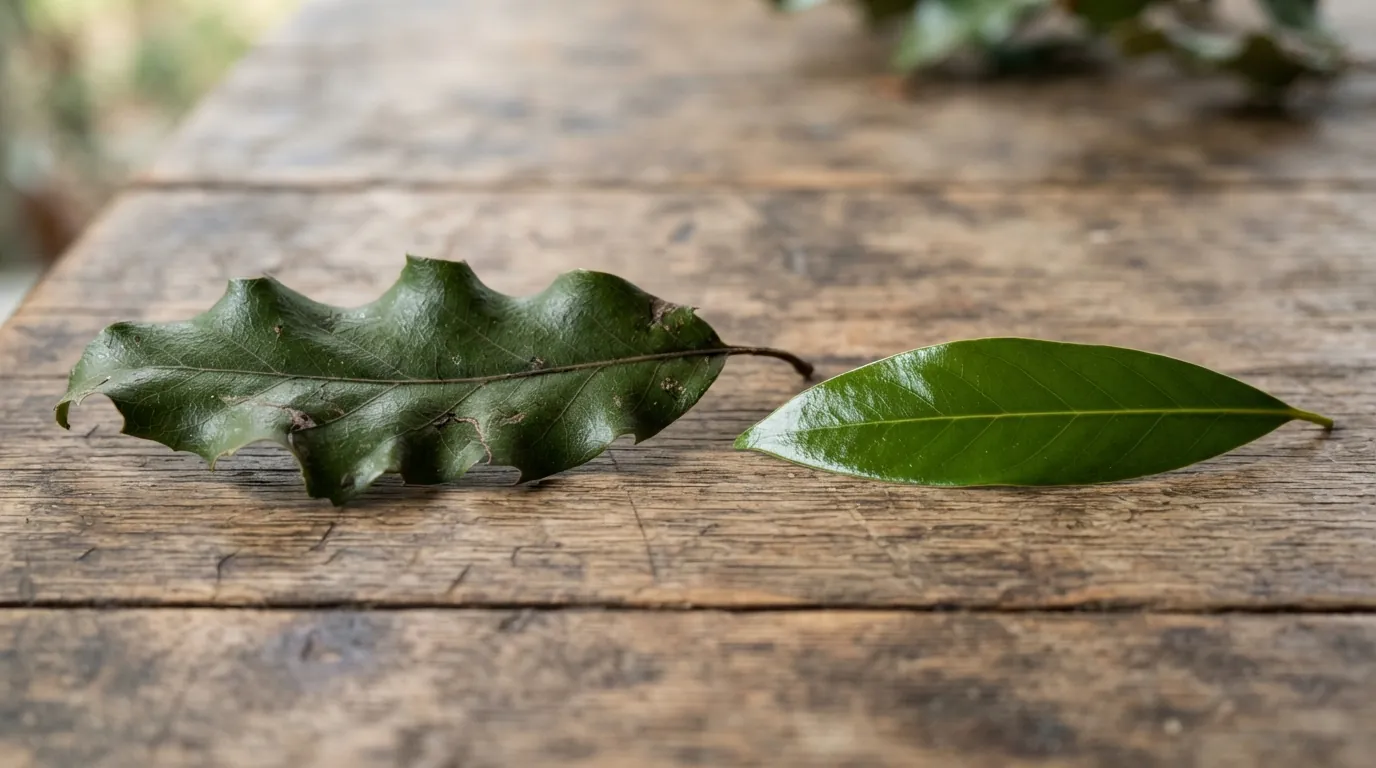
Pick a few mature leaves from a lower branch. Live oak leaves are thick and leathery, dark green on top and often paler and slightly fuzzy underneath, with edges that roll under a little. They stay on the tree year-round and are replaced gradually in spring.
Laurel oak leaves are thinner, flatter and glossier, usually a lighter green, narrow and tapered at both ends, with edges that lie flat. Laurel oaks also tend to drop many of their leaves in late winter before the new ones come in, which can make a healthy tree look briefly thin and worry its owner for no reason. By late spring the crown fills back in.
Shape and bark from across the yard
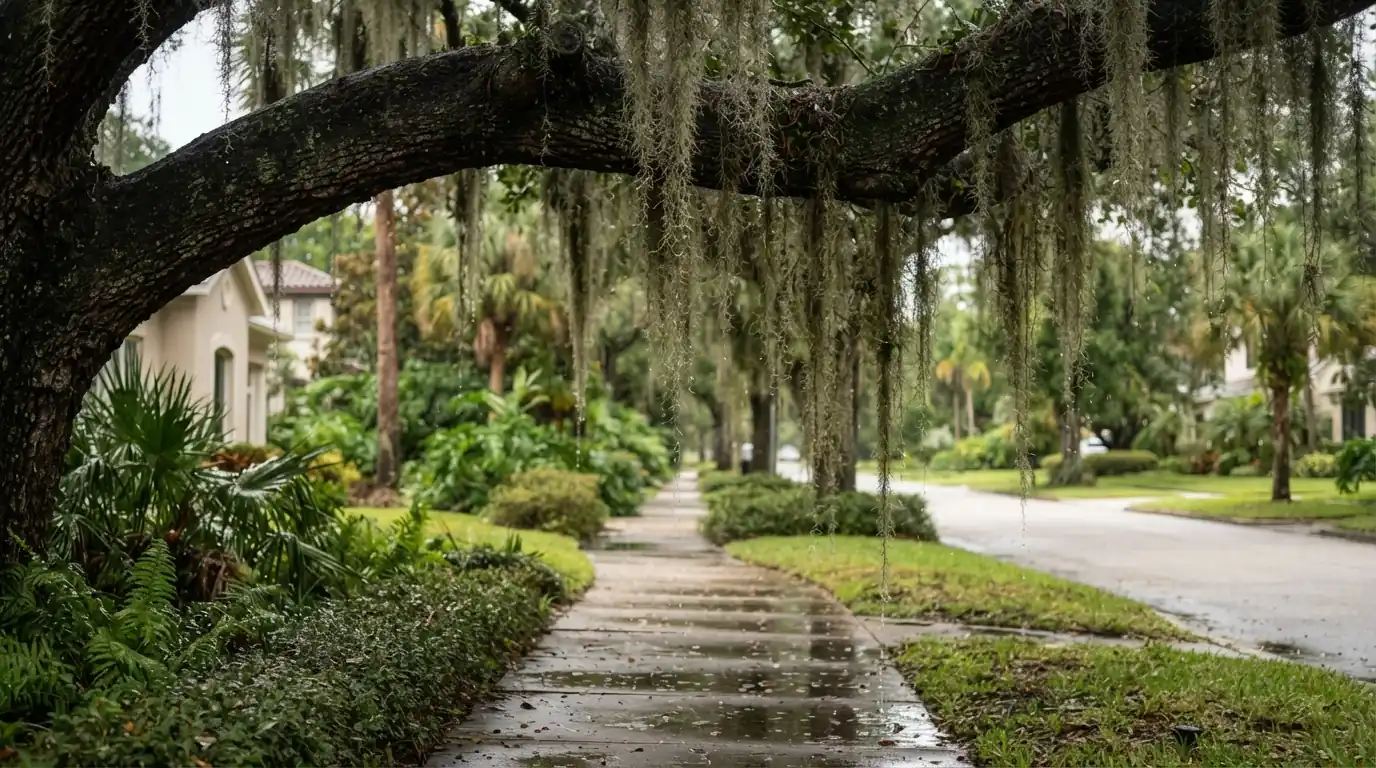
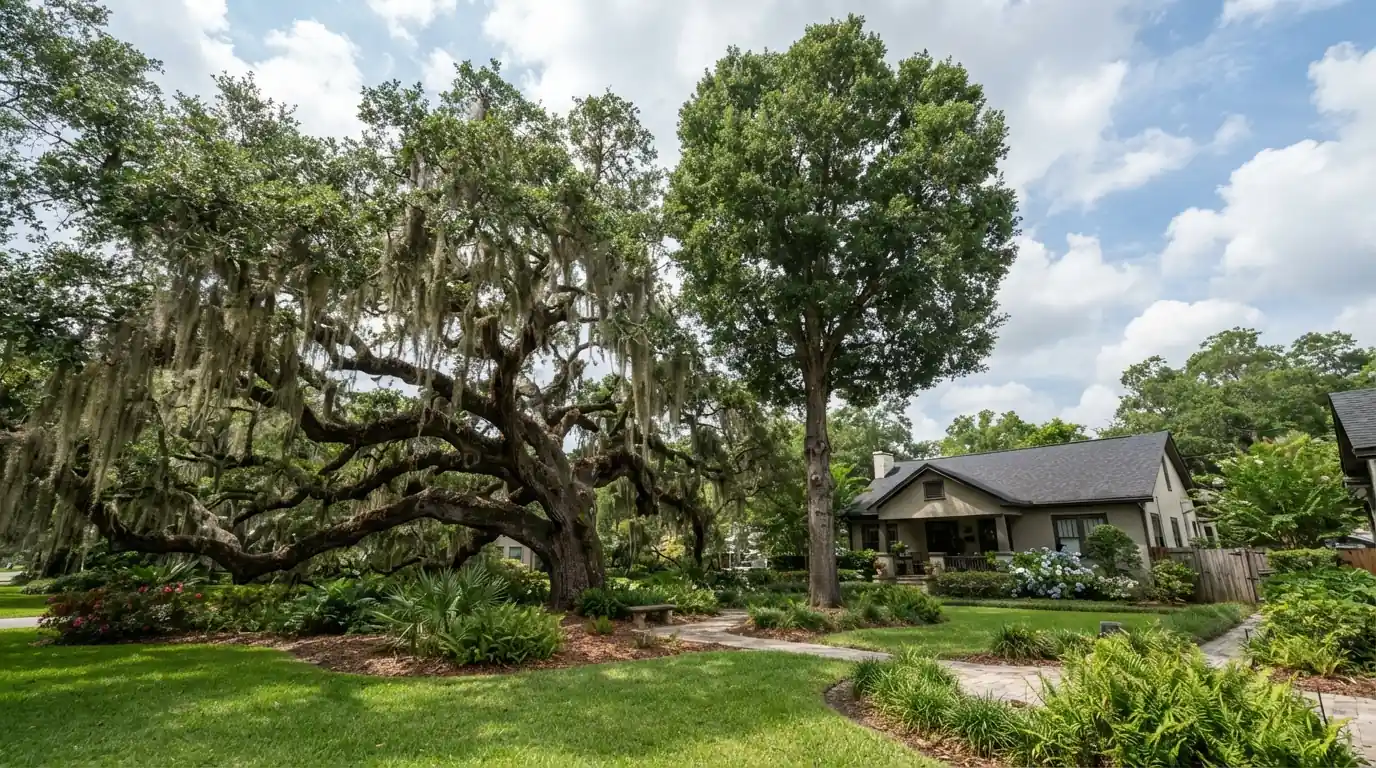
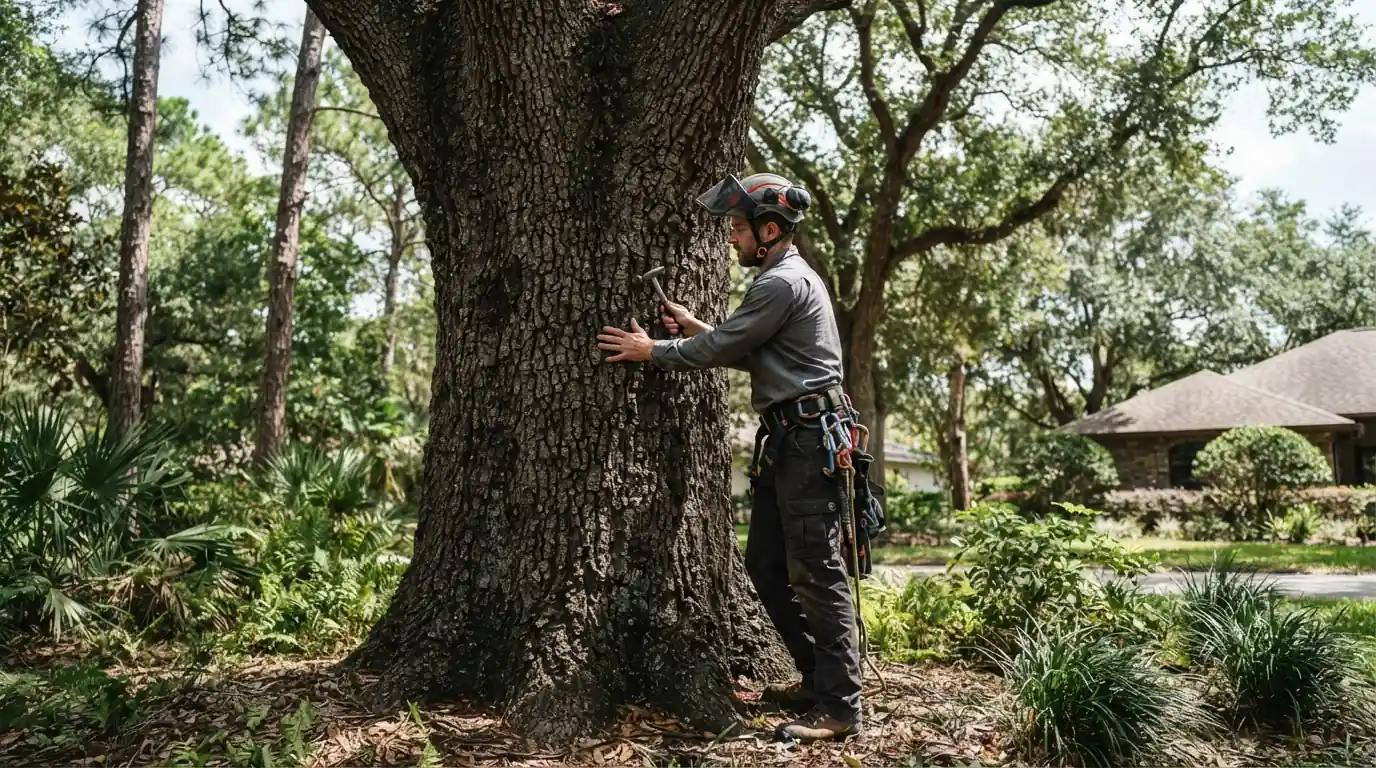
A mature live oak grows wide rather than tall, with long, heavy limbs reaching out low and often draped in Spanish moss. The bark is dark and blocky. A mature laurel oak grows taller and more upright, with a rounder, denser crown held higher off the ground and bark that is smoother on younger trees.
On older lots you will often see both side by side, planted at the same time. The laurel oaks are usually the taller ones, and the ones showing their age first, with dead limbs high in the crown and fungus at the base.
Other oaks you might be looking at
Not every oak in a Tampa yard is one of these two. Water oaks are common too, and their leaves give them away: shaped like a narrow spoon or paddle, widening toward the tip, sometimes with two or three shallow lobes at the end. They are fast-growing and shorter-lived, with the same decay concerns as laurel oaks as they age.
If the leaves do not match either description cleanly, take a photo of a leaf, a twig and the trunk, and ask. Identifying the tree correctly is the first step in every pruning or removal decision we make.
Not sure which oak you have, or whether it is sound? Call any hour and we will take a look.
Call (813) 548-5624Why lifespan changes everything
Laurel oaks in the Tampa Bay area grow fast but typically live 50 to 70 years, and they become highly susceptible to internal heart rot as they age. They commonly start hollowing and breaking down around 40 to 60 years. Live oaks can live for centuries.
That means a 50-year-old laurel oak and a 50-year-old live oak are at completely different stages of life. One is heading toward the end; the other is barely middle-aged. Many Tampa neighborhoods were planted with laurel oaks at the same time, so whole streets now have trees reaching the end of their lifespan together.
How each one fails in a storm
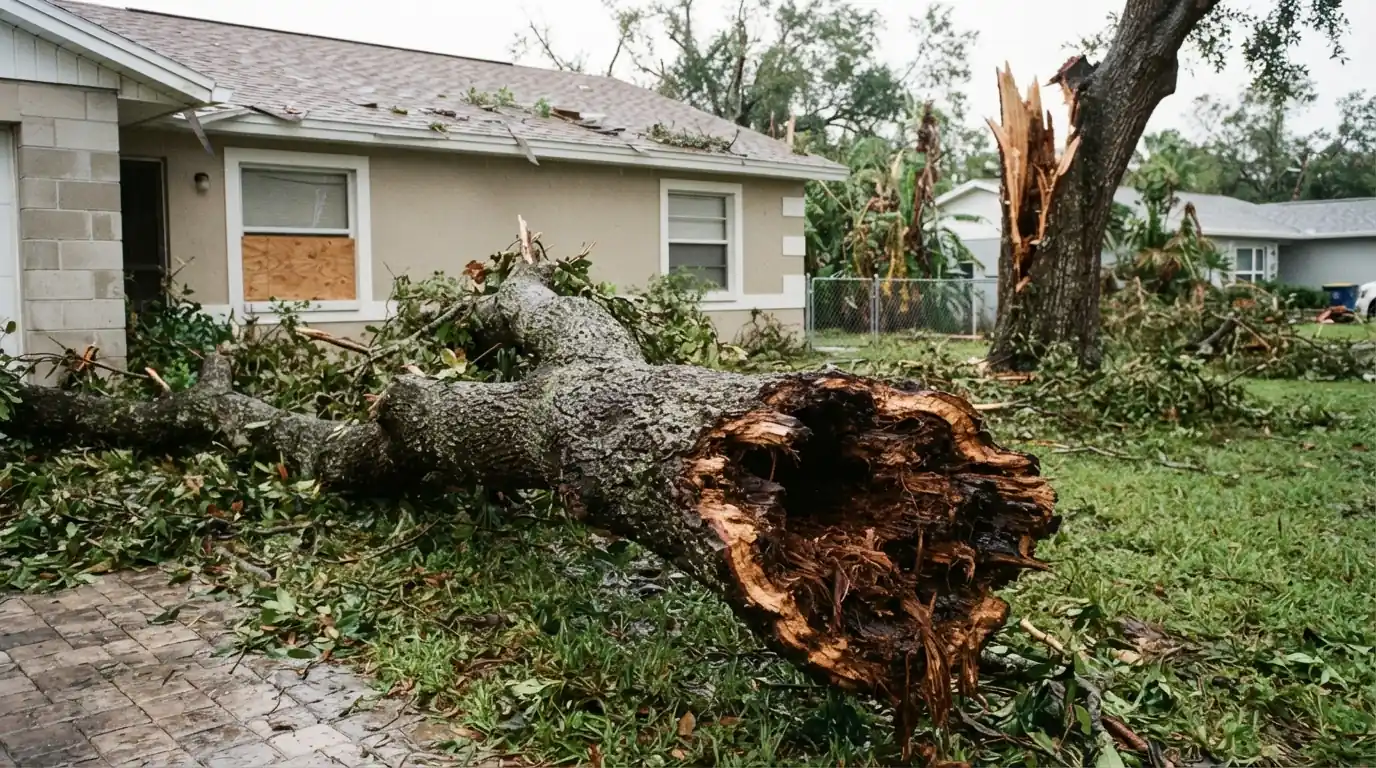
After Helene and Milton, older Tampa Bay neighborhoods planted with laurel oaks saw the most storm damage, and falling laurel oaks damaged homes in a Brandon neighborhood. Mature live oaks were lost too, especially where waterlogged soil weakened root systems, but most healthy trees were still standing after the storms.
The failure patterns differ. Laurel oaks tend to break at decayed limbs and hollow trunks. Live oaks are strong but grow dense, heavy canopies that catch wind like a sail, which is why interior thinning before hurricane season matters so much for them. Much of Hillsborough also sits on a high water table, and after a long soaking rain even a strong oak can lose its grip if its roots were already damaged by trenching or construction.
Pruning plans for each tree
Live oaks need their crowns thinned so wind can pass through, with long, low limbs shortened back to a smaller branch rather than removed flush. Laurel oaks need weight taken off the heaviest limbs over roofs and drives, deadwood removed, and a regular look at the trunk for hollows and fungus.
Both should be pruned with proper cuts at the branch collar and never topped. Our oak trimming page goes through how we handle each species, and why the plan for one would be the wrong plan for the other.
Protection, permits and when to remove
Live oaks sit at the top of Florida's protection ladder, and larger ones often qualify as heritage trees. Inside Tampa, any tree 32 inches or more across is a Grand Tree that needs public notice before removal, and pruning trees 24 inches or more across needs a permit.
When an old laurel oak is hollow and leaning over a house, removal is often the honest answer, and a live oak planted in its place will likely outlive everyone involved. Our permit guide explains what applies where.
Laurel oak and live oak questions
Typically 50 to 70 years, and they often start hollowing around 40 to 60.
Centuries, with good care and room to grow.
Laurel oaks often shed many leaves before new growth; it is usually normal.
Older laurel oaks, because of decay; dense live oaks need thinning to shed wind.
Not automatically. A sound one can be pruned; a hollow one near a house often should go.
Yes, and large ones often qualify as heritage or Grand Trees.
A live oak where there is room, or another wind-resistant native.