By Jolene Inman, Tree Care Guides Author Updated October 2026
The clearest signs a Tampa tree is dying are dead branches in the upper crown, shelf-like fungus at the base or on the trunk, cracks or cavities in the trunk, a lean that has changed recently, and soil heaving at the roots. In palms, watch for a bronzing crown or a dead spear leaf; in bay trees, sudden wilting.
A dying tree and a dangerous tree are not always the same thing. A tree can decline slowly for years in the middle of an open lot and threaten nothing, while a healthy-looking laurel oak over a bedroom can hide decay that makes it the most dangerous thing on the property. The signs below tell you what is happening to the tree; what sits beneath it tells you how urgent it is.
Dead wood at the top of the crown
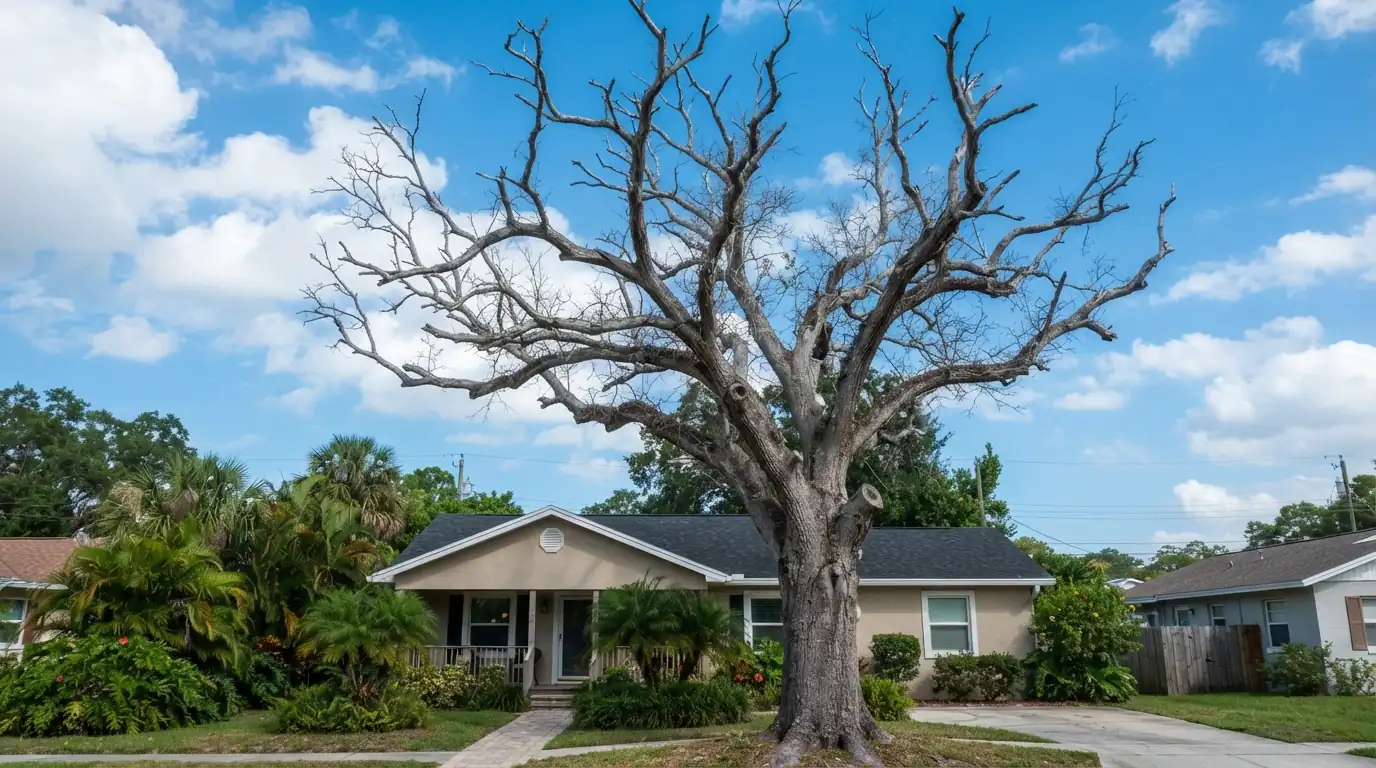
Look up from underneath and from across the yard. Branches that did not leaf out this spring, bare gray limbs at the top of the tree, and a crown that has thinned more each year are the most common early signs of decline. Dieback that starts at the top and works down often points to a problem at the roots: compaction, construction damage, waterlogging or rot.
One dead branch on a big tree is normal and simply needs removing. A third of the crown dead is a different story, and a tree like that needs a proper look before the next storm season.
Fungus, conks and mushrooms at the base
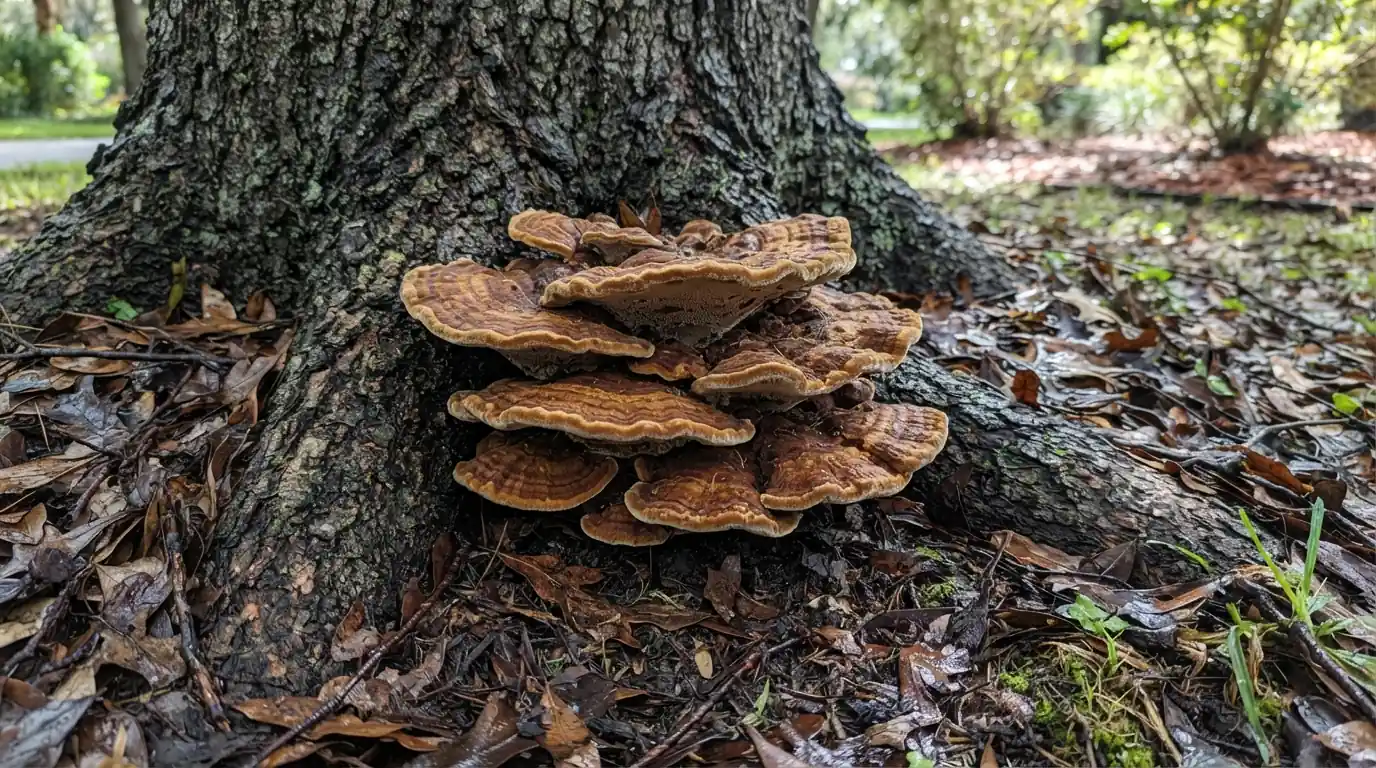
Shelf-like fungal bodies called conks, growing on the trunk or at the root flare, mean wood is decaying inside. In Tampa yards, Ganoderma is the one we see most, and live oaks with early Ganoderma at the base are among the first trees to fail in a storm. Mushrooms growing in a ring around the trunk after rain can also point to root decay.
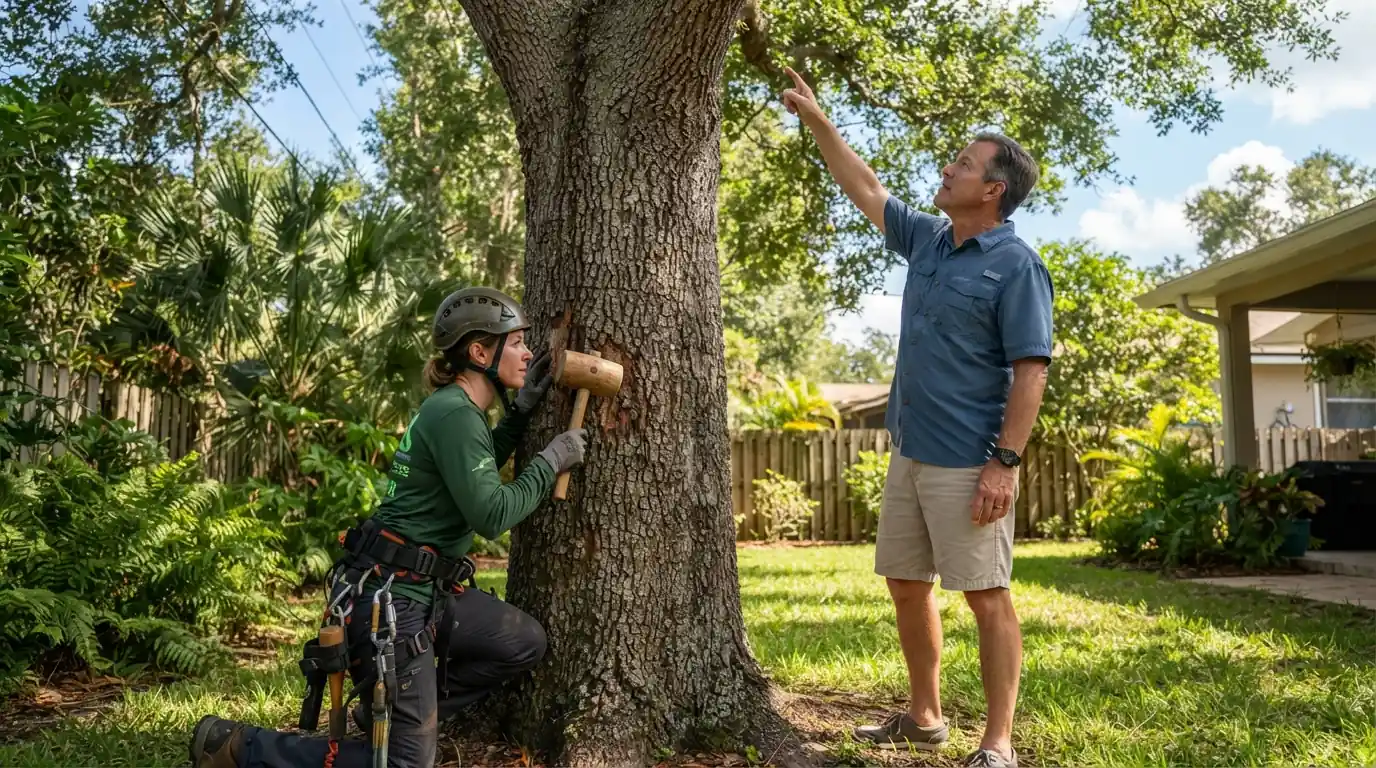
Do not knock conks off; they are evidence, not the problem. The question is how much sound wood remains around the decay, which takes sounding the trunk and looking at the root flare to answer.
Cracks, cavities and hollow trunks
A vertical seam running down the trunk, a crack below a fork, or an open cavity where a limb once was are all places where the tree is weaker. Laurel oaks commonly start hollowing and breaking down around 40 to 60 years, and many Tampa neighborhoods were planted with them at the same time, so whole streets now carry old, hollowing trees.
A hollow alone does not doom a tree. Plenty of trees stand for decades with a cavity, as long as the shell of sound wood around it is thick enough. The combination to worry about is a big hollow, a heavy crown and something important underneath.
Seeing one of these signs? Call any hour and we will take a look before it becomes an emergency.
Call (813) 548-5624A new lean or heaving soil
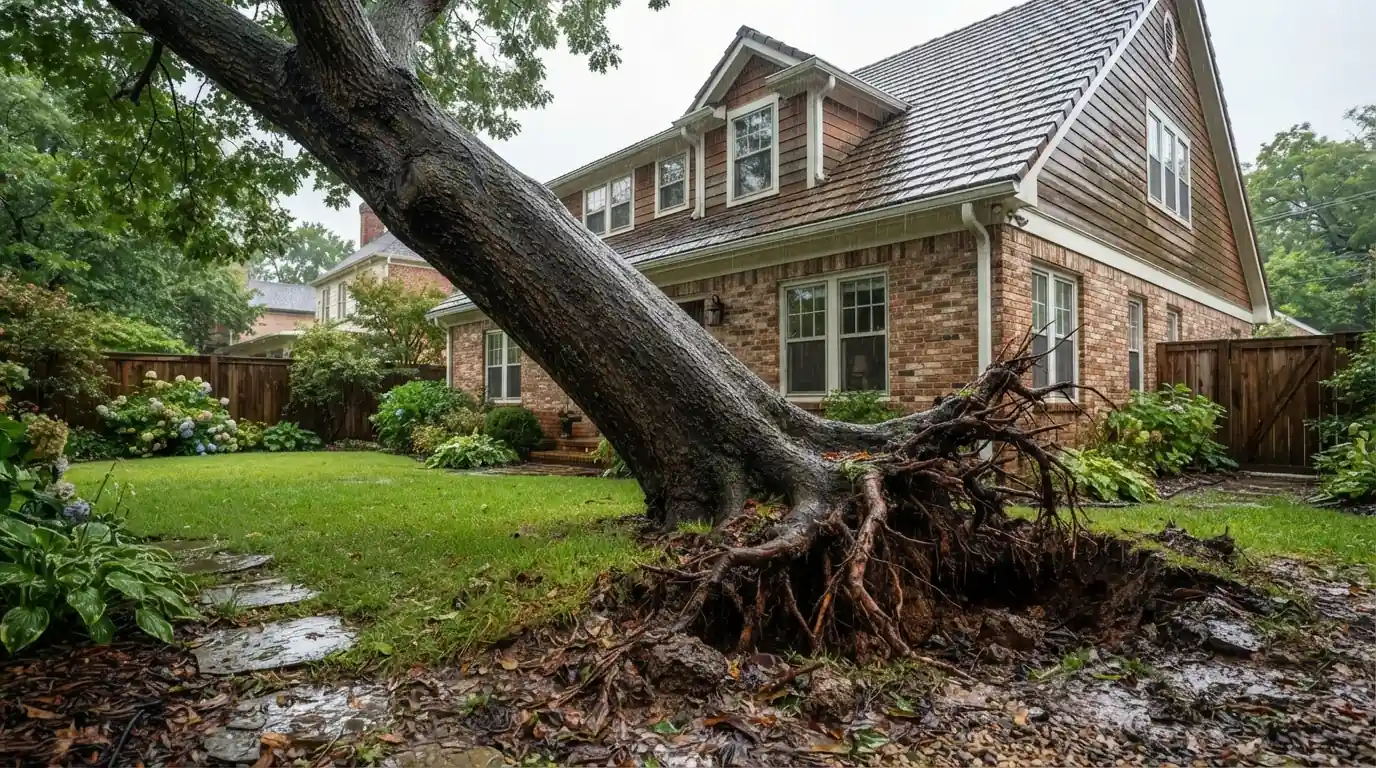
Many trees lean and stay put for decades. The warning sign is change: a lean that got worse after heavy rain, soil cracking or lifting on the side away from the lean, or roots newly exposed or snapped. Much of Hillsborough, Pinellas and Pasco sits on a high water table, and storm rain can saturate the soil until roots lose their grip and shear out under load.
A tree whose root plate is moving is one of the few true emergencies in tree care. Keep people and pets away from the side it leans toward and call right away.
Palms: bronzing, a dead spear, a shrinking crown
Palms show decline differently. A crown turning bronze or yellow all over, rather than just on the oldest fronds, is serious, and in communities like Carrollwood and Town 'n' Country, sabal palms going bronze in the crown are one of the first problems we see. A spear leaf, the newest center frond, that wilts or pulls out easily means the bud is dying.
A crown that gets smaller every year, or a trunk narrowing to a pencil point, usually means the palm has been starved or over-pruned for a long time. Some of those palms recover with feeding; a palm with a dead bud does not.
Bay trees and laurel wilt
If you have redbay or swamp bay trees, especially near water, watch for leaves that suddenly wilt and turn reddish brown while staying on the branch. That is the classic sign of laurel wilt, an incurable fungus carried by a tiny beetle that can kill a tree in as little as three weeks.
It is spreading through Tampa Bay, with roughly 200,000 trees at risk, mainly native swamp bays along the Hillsborough River floodplain and in the Brooker Creek, Alafia River and Little Manatee River watersheds. Despite the name, it does not affect laurel oaks. Dead bay trees should be removed and the wood kept on site, not moved as firewood.
Dying versus dangerous: what to do next
If a tree shows one of these signs and nothing important is within reach of it, you usually have time to watch it through a season. If it shows two or more, or if it could reach the house, a driveway, a play area or a neighbor's roof, get it looked at before storm season.
A tree risk assessment gives you a straight answer: leave it, prune it, support it or take it down. Most trees people worry about turn out to need pruning, not removal.
Questions about dying and dangerous trees
Dead branches in the upper crown, fungus at the base, cracks or cavities, and a thinning crown each year are the main signs.
Often, yes. It can mean decay in the roots or trunk and is worth a look.
Sometimes, if enough sound wood surrounds the hollow and nothing important is underneath.
Keep people away from the lean side and call right away; a moving root plate is urgent.
Several serious problems cause it; the palm should be looked at before money is spent on it.
No. It kills redbay, swamp bay and related trees.
If it can reach something important, usually yes. If not, it can sometimes be left.