By Jolene Inman, Tree Care Guides Author Updated October 2026
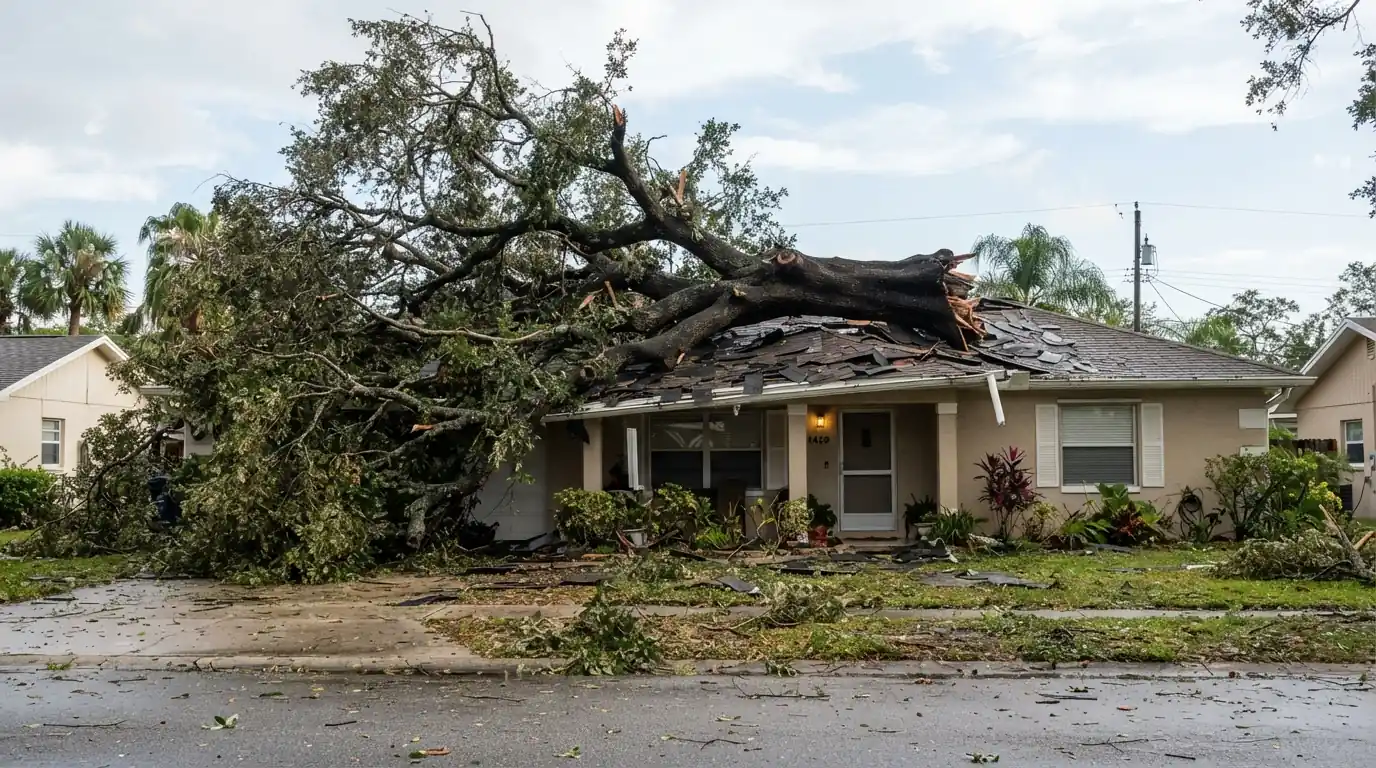
If a tree falls on your Tampa house, get everyone out of the rooms beneath it first, and leave the house entirely if you smell gas or see sagging ceilings. Stay away from any downed or touching wires and call the power company or 911. Then photograph the damage, call your insurer, and call a tree crew to get the weight off the roof.
A tree through the roof is frightening, and the natural instinct is to start pulling branches off or climbing up to look. Both are dangerous. The tree may still be shifting, wires may be live, and the roof deck under the trunk may be carrying far more weight than it was built for. The steps below are in the order they matter, and most of them take only a few minutes.
First: people, gas and wires
Get everyone out of the rooms under the tree and away from the side of the house it hit. If you smell gas, hear hissing, or see the ceiling sagging, leave the house and call 911 from outside. Keep children and pets well back from the tree and anything it is touching.
Treat every wire near the tree as live, including the service drop running to the house, cable and phone lines. Do not touch the tree if it is in contact with a line, and do not let anyone try to move it. Call the power company, or 911 if a line is down or sparking. Nothing else happens until the power situation is safe.
Second: stop the water, if you safely can
If a branch has pierced the roof, rain will follow it in. Move furniture, electronics and valuables out of the way, put down buckets and towels, and shut off the water if a pipe has been hit. If water is reaching ceiling fixtures or outlets, turn off the power to that part of the house at the panel, but only if you can reach the panel without walking through water.
Do not go onto the roof. A roof carrying a tree is not safe to walk on, and tarping cannot happen until the weight is off anyway. If the storm has knocked the power out and you run a generator, keep it outside, well away from doors and windows, and never plug it into a wall outlet.
Third: photograph everything before anything moves
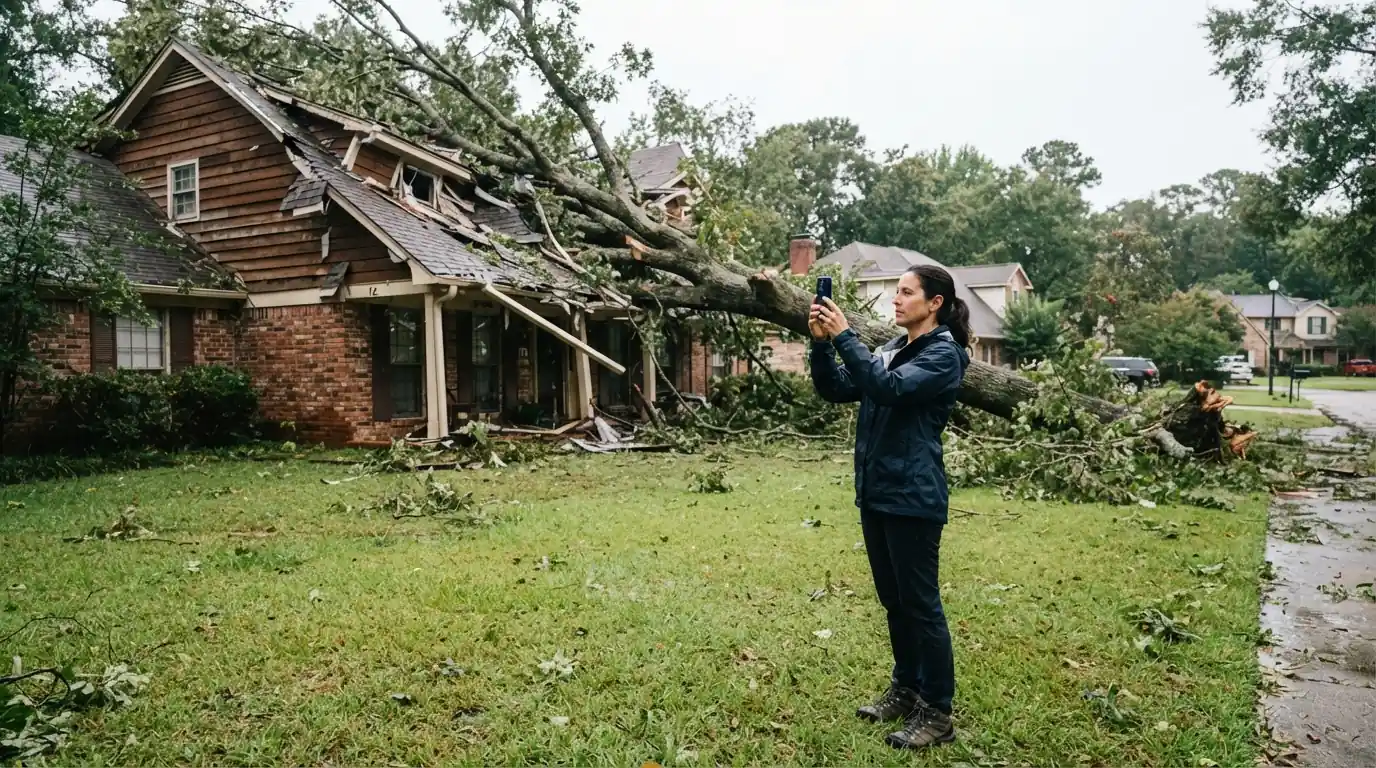
Insurance adjusters want to see the tree where it landed. Take wide photos from several angles showing the tree and the whole house, then close-ups of the damage inside and out: the roof, ceilings, walls, gutters, fences, cars and anything else it hit. Photograph the base of the tree and its roots too, since that shows why it fell.
Keep receipts for anything you spend from this point on, including emergency tree work, tarps, a hotel if you cannot stay, and supplies. Write down the time the tree fell, who you spoke to and what each of them told you to do next.
Tree on the house right now? Call any hour; a crew can be on the way.
Call (813) 548-5624Fourth: call your insurer, then a tree crew
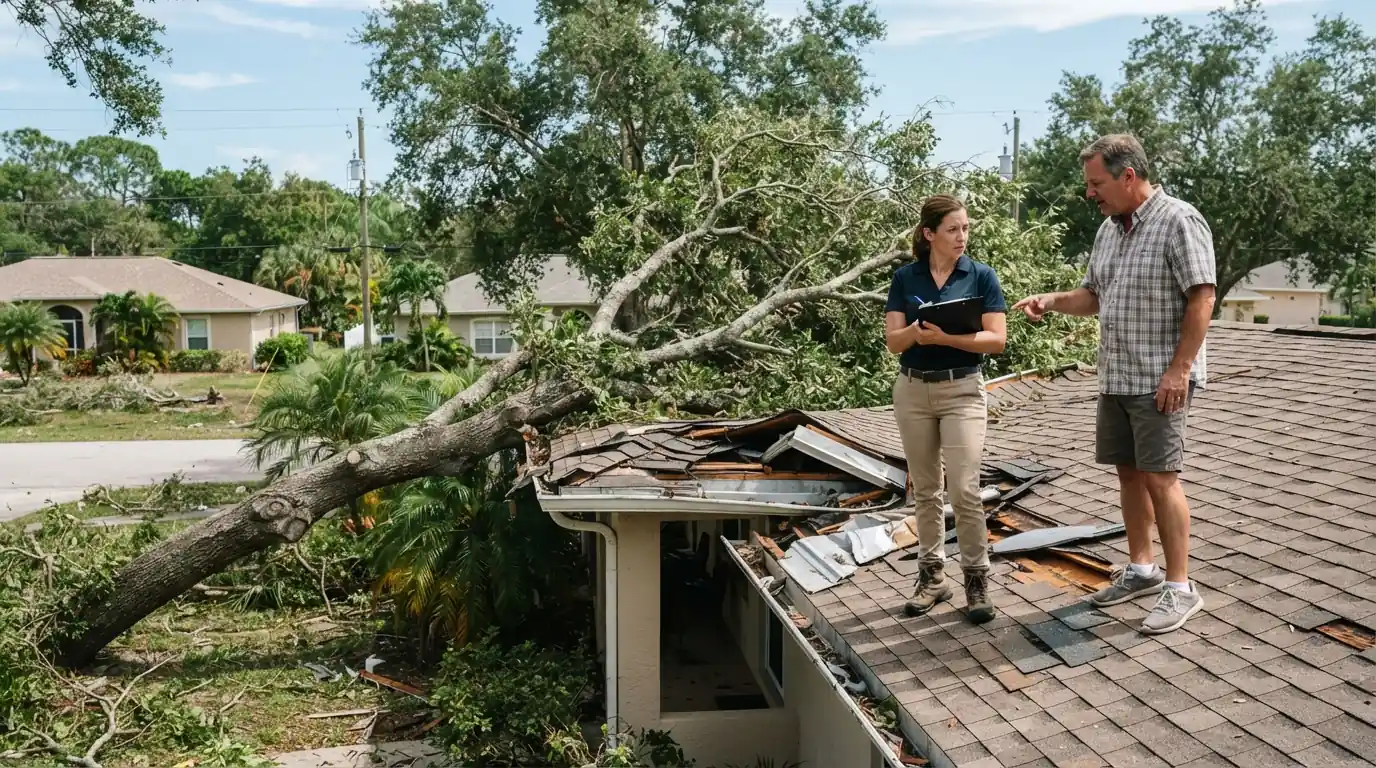
Report the claim as soon as you can. Policies often respond when a covered storm drops a tree on a covered structure, usually with a limit on tree removal, but your policy and your adjuster decide. Ask whether they want to see the tree before it is moved, and how emergency work to prevent further damage is handled.
Then call a tree crew. Getting the weight off the roof quickly limits the damage, because the load settles and shifts as wind picks up. We answer 24/7 and dispatch emergency tree removal crews at any hour.
What happens when the crew arrives
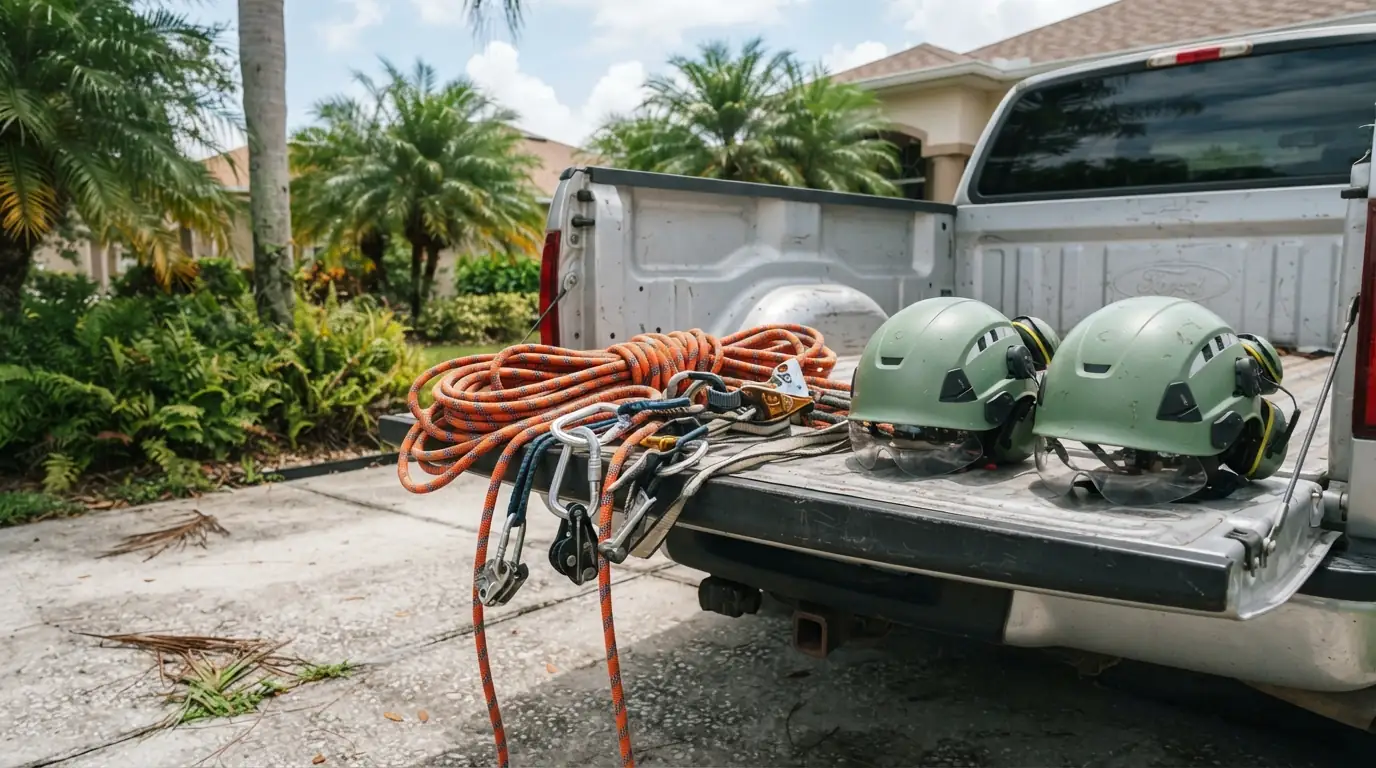
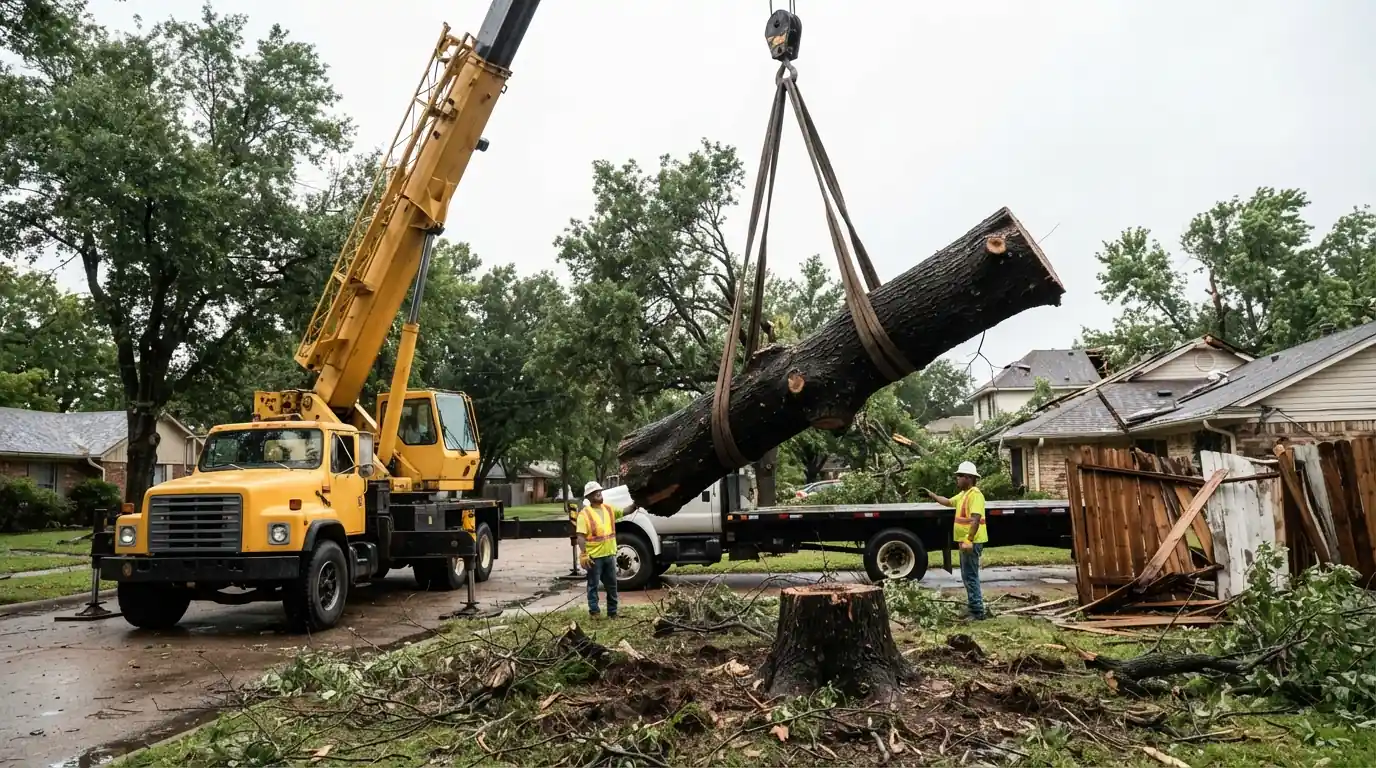
The foreman checks the wires, looks at what the tree is still resting on, and decides how the weight comes off. Branches that carry no load are cut first. The load-bearing pieces are tied off and lowered on ropes, or lifted by a crane when they are too heavy to rope, so the roof takes no second impact.
Once the tree is off the structure, the wood is cut into pieces that can be carried, the driveway and doors are opened, and the opening in the roof is pointed out so a roofer can cover it. Stump grinding and full cleanup usually wait for daylight and dry ground.
If the tree was your neighbor's
In most cases, your own homeowners policy handles damage to your house, whoever owned the tree. That can change if the tree was obviously dead or dangerous and the owner had been told, so mention any history to your adjuster. Talk to your neighbor early and share your photos; most people want to help, and a calm conversation now avoids a much harder one later.
Afterwards, look at the other big trees near your house with fresh eyes. The same storm that brought one down may have cracked another. A risk assessment once things settle is worth the peace of mind. Keep copies of every photo, invoice and conversation in one place until the claim is closed; it makes the process far easier for everyone involved.
Questions after a tree falls on a house
911 if anyone is hurt, lines are down or you smell gas; then your insurer and a tree crew.
Not from a roof. The load can shift, and wires may be live.
Often, when a covered storm causes it, usually with a removal limit. Your adjuster decides.
Ask your insurer; take thorough photos either way so the damage is recorded.
We dispatch at any hour; most single trees come off in one visit.
Usually your own policy, unless the tree was known to be dangerous.
Once the weight is off. We point out the opening so a roofer can cover it.