By Jolene Inman, Tree Care Guides Author Updated October 2026
For Tampa yards, live oak, southern magnolia, bald cypress and sabal palm hold up best in storms, and smaller spaces suit crape myrtle and native hollies. Avoid replanting laurel oak, water oak or sand pine close to the house, never plant invasives such as Brazilian pepper or camphor, and place big trees well away from roofs and power lines.
After the 2024 hurricanes, many Tampa homeowners are replanting where a laurel oak or an old pine used to stand. The choice matters more than it looks on the nursery lot. A tree planted today will be big in twenty years, and how it handles wind, wet soil and a tight yard decides whether it becomes shade or the next removal.
This guide sorts the common choices by what they do well and where they belong, based on how Florida trees have held up in past storms. It finishes with the trees to avoid and the planting mistakes that cause most young trees to fail, so the new tree gets the best start you can give it.
Plant for the next storm
Studies of trees after Florida hurricanes keep finding the same pattern. Live oaks, sabal palms, southern magnolias and bald cypress tend to stay standing, while laurel oaks, water oaks and sand pines are among the first to break or uproot. Wind resistance comes from wood strength, a low, spreading crown and a root system that holds in wet sandy soil.
No tree is storm-proof, and a well-chosen tree still needs structural pruning while it is young. But starting with a strong species makes that pruning easier and the tree far more likely to last.
Right tree, right place
Most storm damage to houses comes from big trees planted too close. As a rule of thumb, give large shade trees such as live oaks 20 feet or more from the house and keep them out from under power lines. Medium trees need less room, and small trees and palms can go closer.
Think about what sits underground too. Roots lift driveways and sidewalks when a large tree is squeezed into a narrow strip, so match the tree's mature spread to the space it has to grow into. Septic drain fields, irrigation lines and pool plumbing deserve the same distance.
Shade trees that hold up
Live oak is the classic Tampa shade tree for good reason: it is long-lived, strong and holds its leaves most of the year. It needs space and early structural pruning to grow a strong single trunk. Southern magnolia gives dense shade and big flowers on a smaller footprint, and bald cypress suits wet spots and low areas where other trees struggle.
Before planting a large shade tree inside the City of Tampa, remember that it will one day be a protected tree with its own permit rules, so place it where you will be glad to keep it.
Replacing a tree that just came down? Call any hour and we will help you plan the new one.
Call (813) 548-5624Smaller trees for tight yards
For narrow side yards, foundation beds and small lots, choose trees that stay small at maturity. Crape myrtles come in sizes from shrubs to medium trees, so pick the variety for the space. Dahoon and yaupon hollies are native, tough and take Tampa's heat and wind well.
Smaller trees make sense near pools and lanais too, where leaf drop and roots are a constant chore under bigger trees. Simpson stopper and other native small trees take sun, wind and sandy soil, and they give birds cover without crowding the house.
Palms that belong here
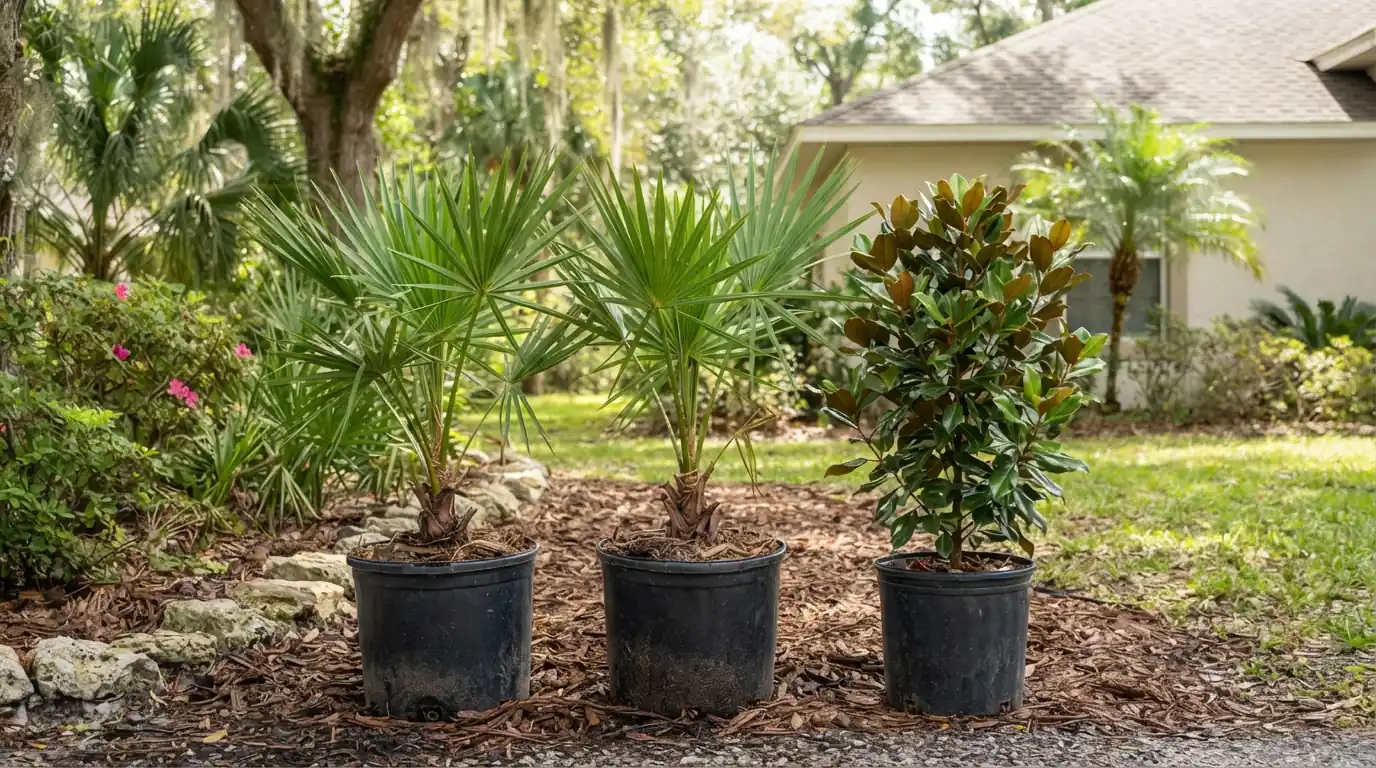
The sabal palm, Florida's state tree, is about as storm-tough as any tree in the state and needs little care once established. Many other palms are planted for looks, and some, like queen palms, struggle with nutrient problems in local soils and need regular feeding.
Palms do not give the shade of a broad tree, but they fit spaces where a big canopy would not, and they rarely damage a roof when they fail. Plant them a few feet out from the eaves so the fronds have room as the trunk grows.
Give the stump spot time
Planting in exactly the same spot as the old tree is possible after stump grinding, but the ground is full of wood chips and decaying roots that tie up nitrogen as they break down. Clearing the chips, adding good soil and shifting the new tree a few feet to one side gives it a better start.
If the old tree died of a disease, ask before replanting the same species there. Laurel wilt, for example, kills bays and avocados, so a different kind of tree is the safer choice in that spot.
What to avoid
Do not replant laurel oak, water oak or sand pine where a falling tree could hit the house; they tend to fail young and in storms. Never plant invasive species. Brazilian pepper, camphor, Chinese tallow and similar trees are on Hillsborough County's exempt list precisely because they spread and crowd out native trees.
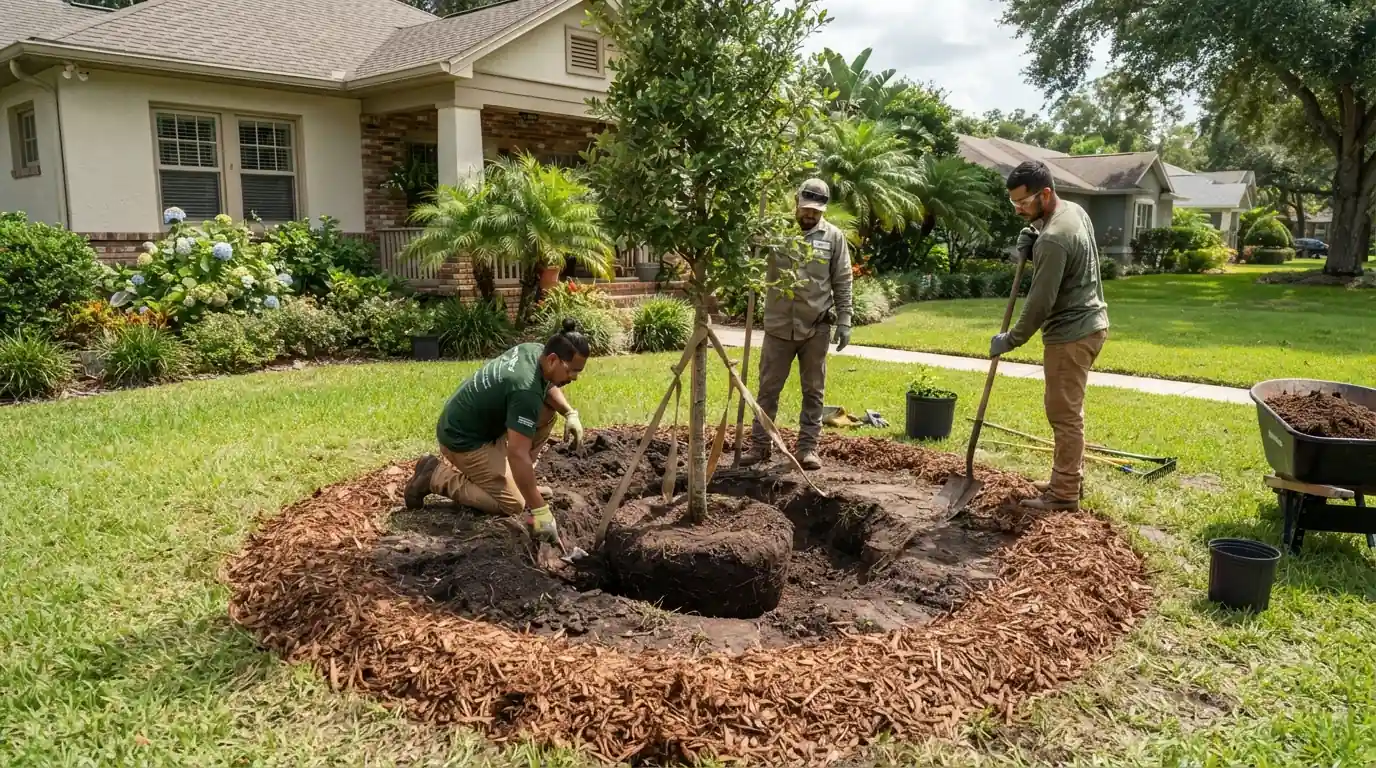
Plant at the right depth, with the root flare at or just above the soil, water deeply and often for the first months, and add mulch kept away from the trunk. Most young trees that fail do so because they were planted too deep or left dry.
Replanting questions
Live oak and sabal palm are among the strongest.
Twenty feet or more for a large shade tree.
Not close to the house; it tends to fail young.
A small crape myrtle or a native holly.
They look good but need regular feeding here.
Invasives such as Brazilian pepper and camphor.
With the root flare at or just above the soil.