By Jolene Inman, Tree Care Guides Author Updated October 2026
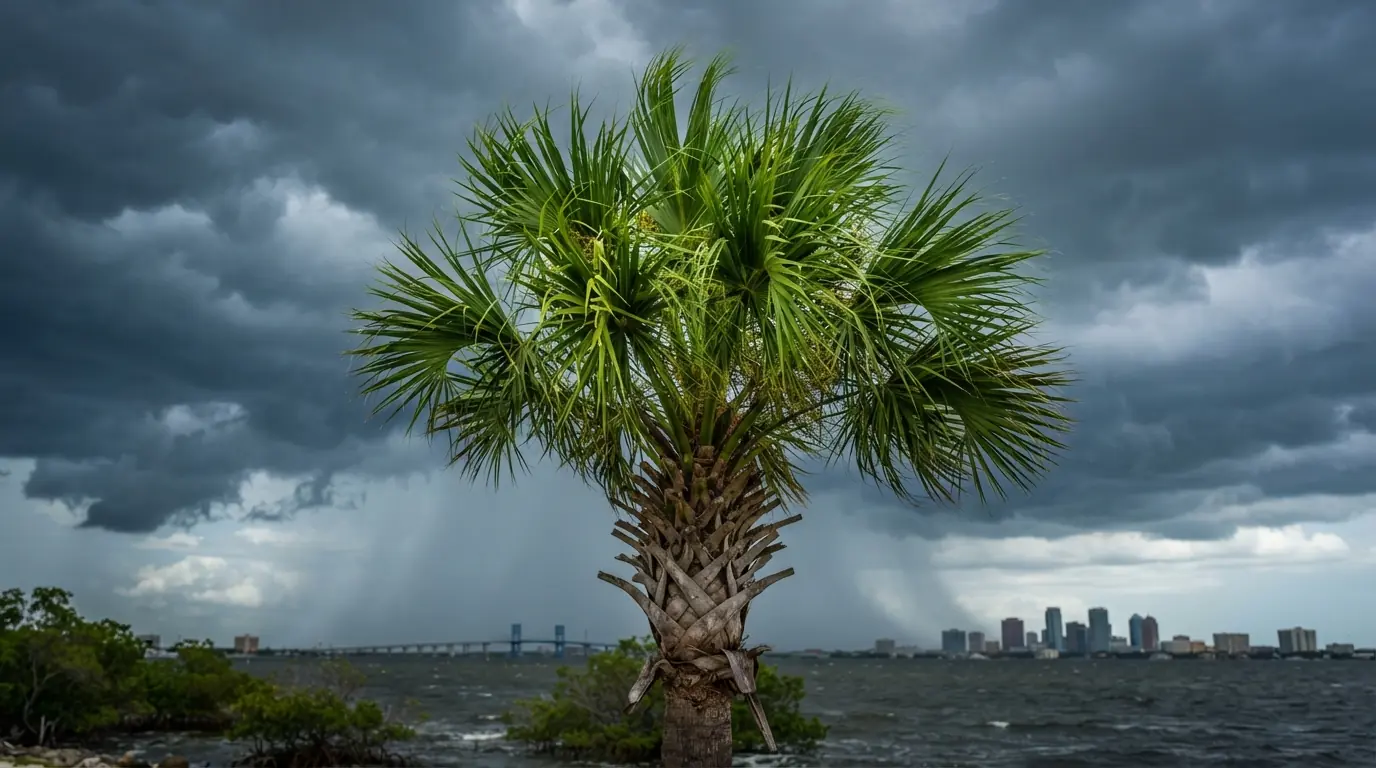
Hurricane season runs June 1 through November 30, and Tampa trees are best prepared in spring. Walk every tree within reach of the house, remove dead wood and hangers, thin dense live oak crowns, clean palms without stripping green fronds, and deal with any hollow or leaning tree before June rather than after a storm.
Most storm damage to Tampa homes comes from a small number of trees that were already weak: a laurel oak with decay in the trunk, a live oak so dense it acts like a sail, a pine rooted in soggy sand beside the house, a palm carrying a year of dead fronds and seed pods. The good news is that most of those problems are visible in spring, and most are fixable in a single day of work if you start early enough.
What 2024 taught Tampa about which trees fail
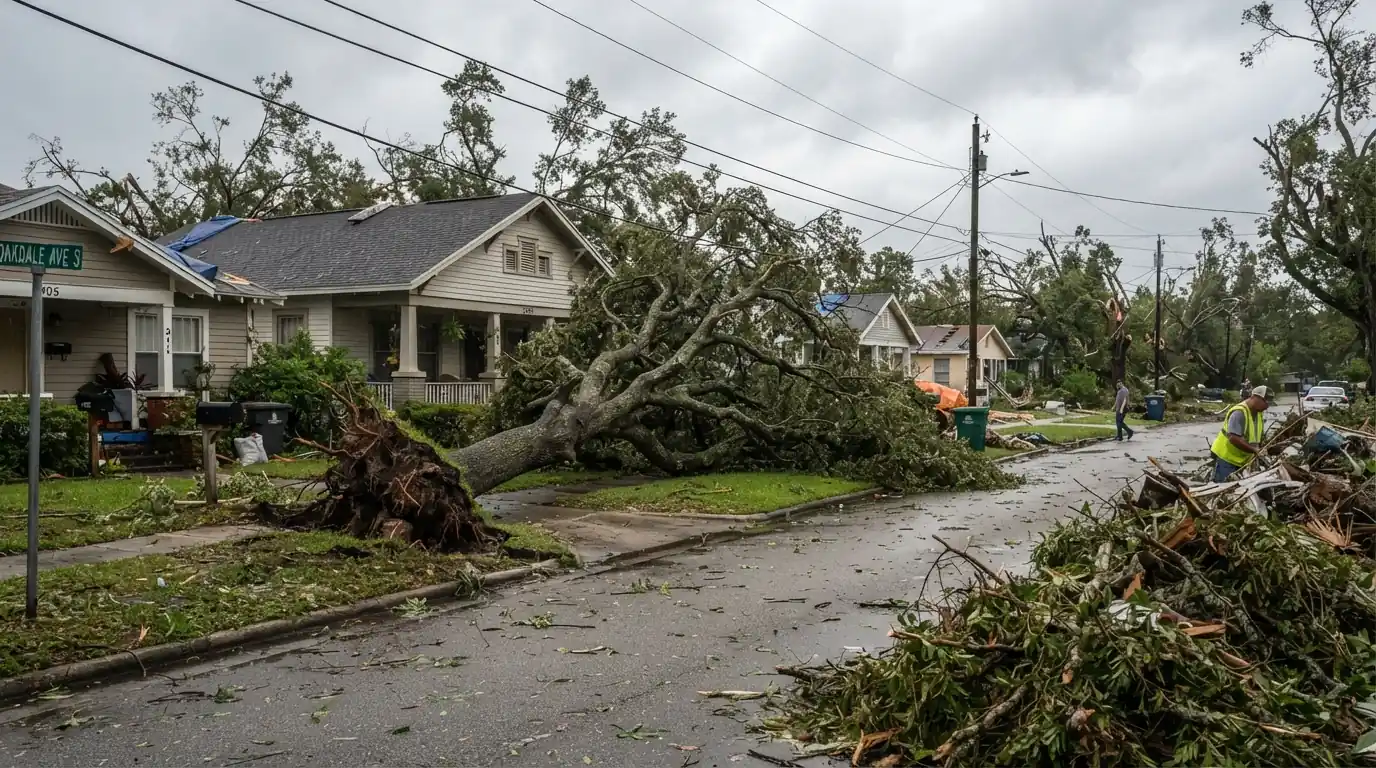
Hurricane Helene soaked Tampa with 2 to 5 inches of rain before Milton brought 11.43 inches in a single day, the second-highest one-day total on record. Waterlogged soils weakened root systems so badly that even wind-resistant species failed. Laurel oaks did the most damage, including homes hit by falling laurel oaks in a Brandon neighborhood, and recently planted trees were vulnerable because their roots had not spread yet.
USF researchers found the storms cost Tampa nearly 5 percent of its canopy, with South Tampa and East Tampa losing the most. Yet most healthy trees were still standing afterwards. The lesson is not that big trees are dangerous; it is that weak, neglected trees are.
January to March: walk the yard and make a list
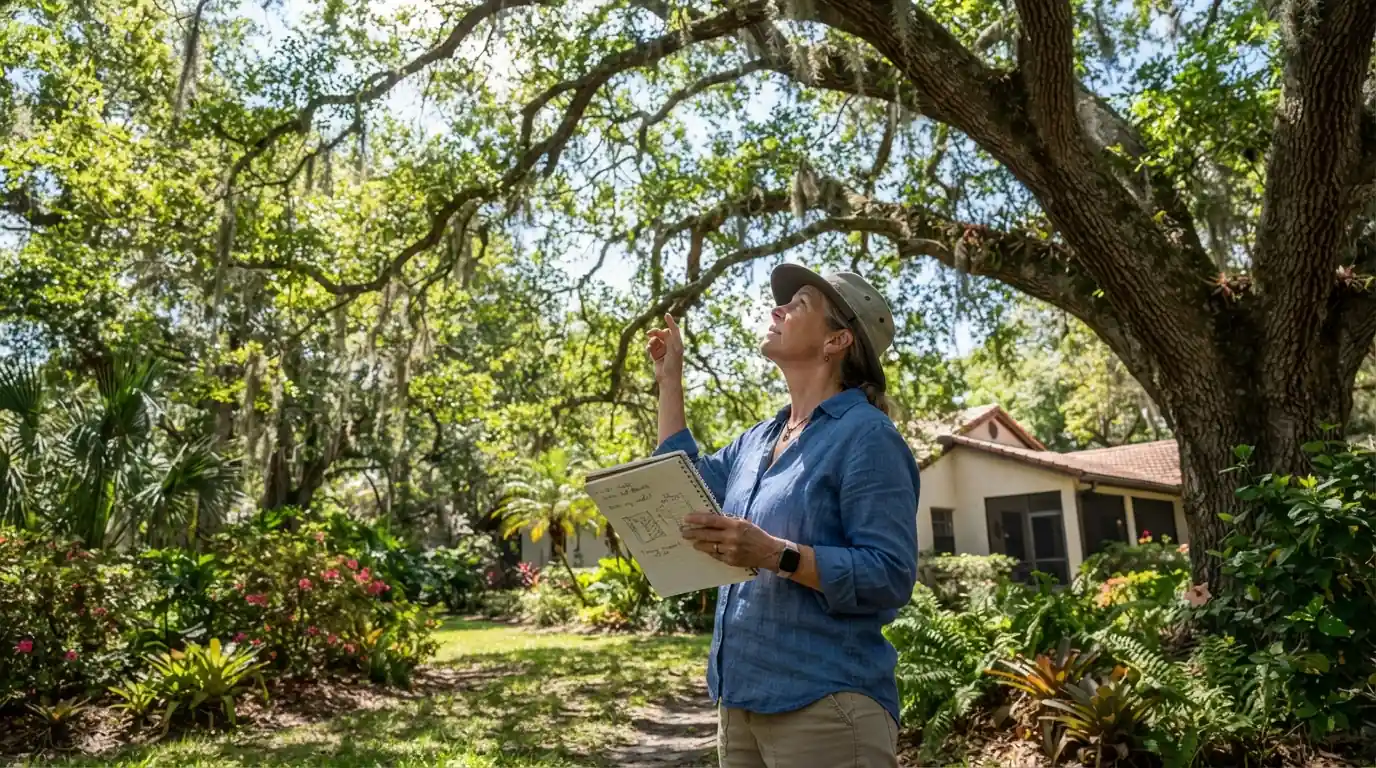
Start with every tree that could reach the house, the driveway, the pool cage or a neighbor's roof if it fell. Look up for dead branches that did not leaf out, cracked limbs and broken branches hanging in the canopy. Look at the trunk for cavities, seams and fungus, and at the base for shelf-like conks, heaving soil or a lean that has changed.
Write the problems down with photos. Laurel oaks past middle age, live oaks with crowns you cannot see through, and any tree with fungus at the base go to the top of the list. If you are unsure about a tree, this is the time for a risk assessment, not August.
April and May: prune, remove and permit
Spring is the working window. Dead wood and hangers come out first, especially over roofs and drives. Live oaks get interior thinning so wind can pass through the crown. Heavy laurel oak limbs over the house get shortened. Trees that are too far gone come down while there is time to get a permit and schedule the work calmly.
Permits are the reason to start early. Inside Tampa, pruning a tree 24 inches or more across needs a permit, and so does removing most trees 5 inches or more across. Waiting until a storm is forecast means competing with everyone else who waited. Our hurricane tree preparation visits are built around this timing.
Want the trees checked before June? Call any hour to book a pre-season walk.
Call (813) 548-5624Palms: clean them, do not strip them
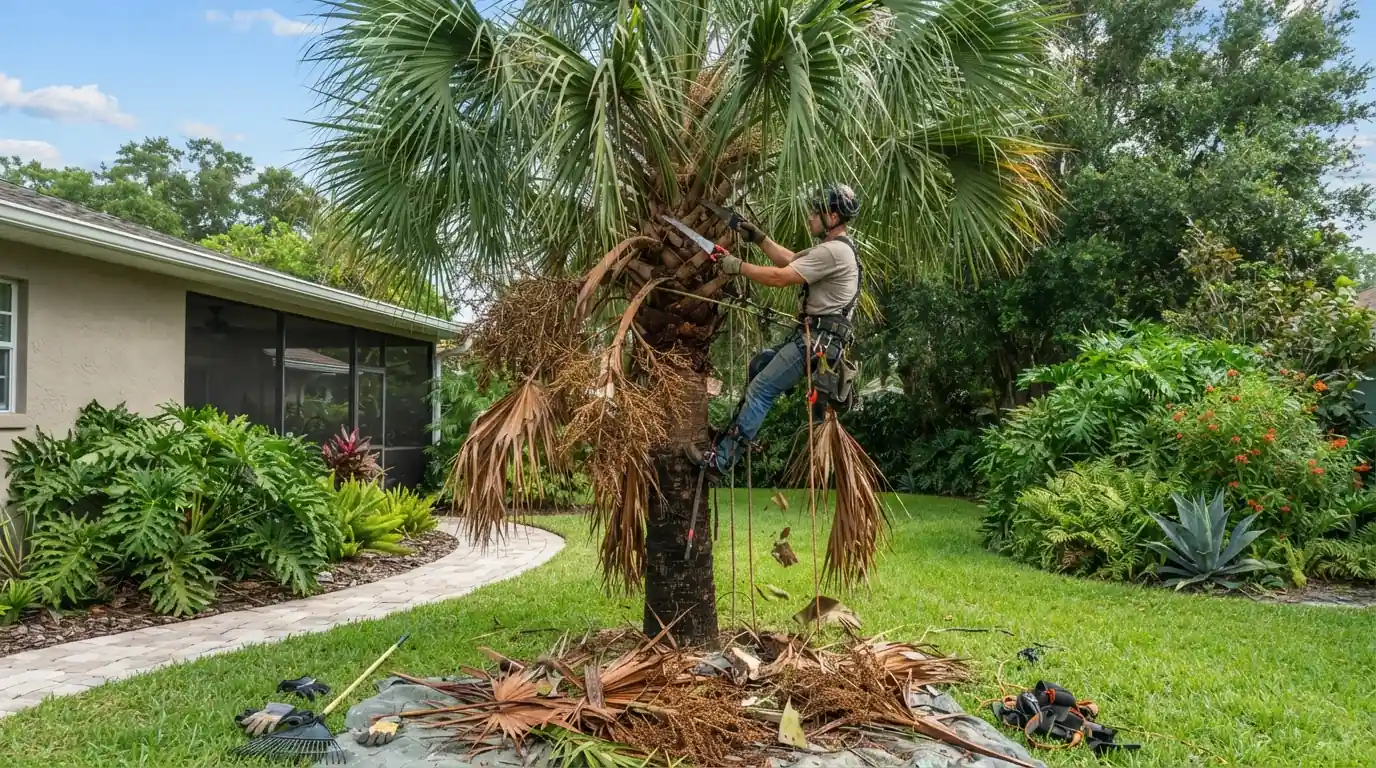
Palms are some of the most storm-resistant trees in Tampa yards, as long as their crowns are left alone. Remove dead fronds, seed stalks and fruit clusters, which become projectiles in high wind. Leave the green fronds, including the ones angled below horizontal, because they protect the bud and feed the palm.
The so-called hurricane cut, stripping a palm to a narrow tuft at the top, does the opposite of what it promises and can weaken a palm for a year or more. If your palms are bronzing or dropping fronds early, have them looked at before the season rather than just trimmed.
June to November: watch, do not panic-prune
Once the season is underway, keep an eye on anything that changes: a new lean after heavy rain, a crack in a limb, a branch newly resting on the roof. Much of Hillsborough sits on a high water table, and after a long soaking rain even a healthy tree has a weaker grip on the ground than usual.
When a storm is forecast, it is too late for major pruning. Crews are booked, and fresh large cuts do not make a tree stronger in 48 hours. Focus on what you can safely do yourself: pick up loose branches and fallen fronds from the yard, secure outdoor furniture, and make sure you know where your shut-offs are.
The day before and the day after
The day before, park cars away from big trees, clear the gutters of leaves if it is safe from a ladder, and take photos of your trees and roof for insurance. Save our number, because phone lines and crews get stretched after landfall. Stay out of rooms under large trees during the storm if you can.
The day after, stay away from downed lines, do not walk under hanging limbs, and photograph everything before anything is moved. If a tree is on the house, read our guide on what to do when a tree falls on your house, then call. We answer 24/7.
Hurricane tree prep questions
Spring, well before June 1, while crews have time and permits can be filed.
Thin and deadwood them in spring; do not top them or panic-prune days before a storm.
Older laurel oaks, dense unthinned live oaks and shallow-rooted trees in waterlogged soil.
Only dead fronds, pods and fruit. Green fronds protect the palm.
Inside Tampa, for trees 24 inches or more across. Start early.
Yes, especially in saturated soil, but healthy, well-pruned trees fail far less often.
Stay clear of lines and hanging limbs, take photos, and call before moving anything big.