By Jolene Inman, Tree Care Guides Author Updated October 2026
Inside the City of Tampa, removing a tree 5 inches or more across at 4.5 feet needs a permit unless it is a listed invasive species, and Grand Trees of 32 inches or more need public notice. Unincorporated Hillsborough County, Temple Terrace, Pasco County and Pinellas County each run their own rules, so the address decides.
Tree permits are one of the most common surprises in Tampa tree work. A homeowner books a removal, the crew arrives, and someone asks whether the permit is in hand. The rules are not complicated once you know which ones apply to your address, and the difference between the city and the county matters more than most people expect. A few minutes checking the address and measuring the trunk saves weeks of waiting later.
Inside the City of Tampa: the 5-inch rule
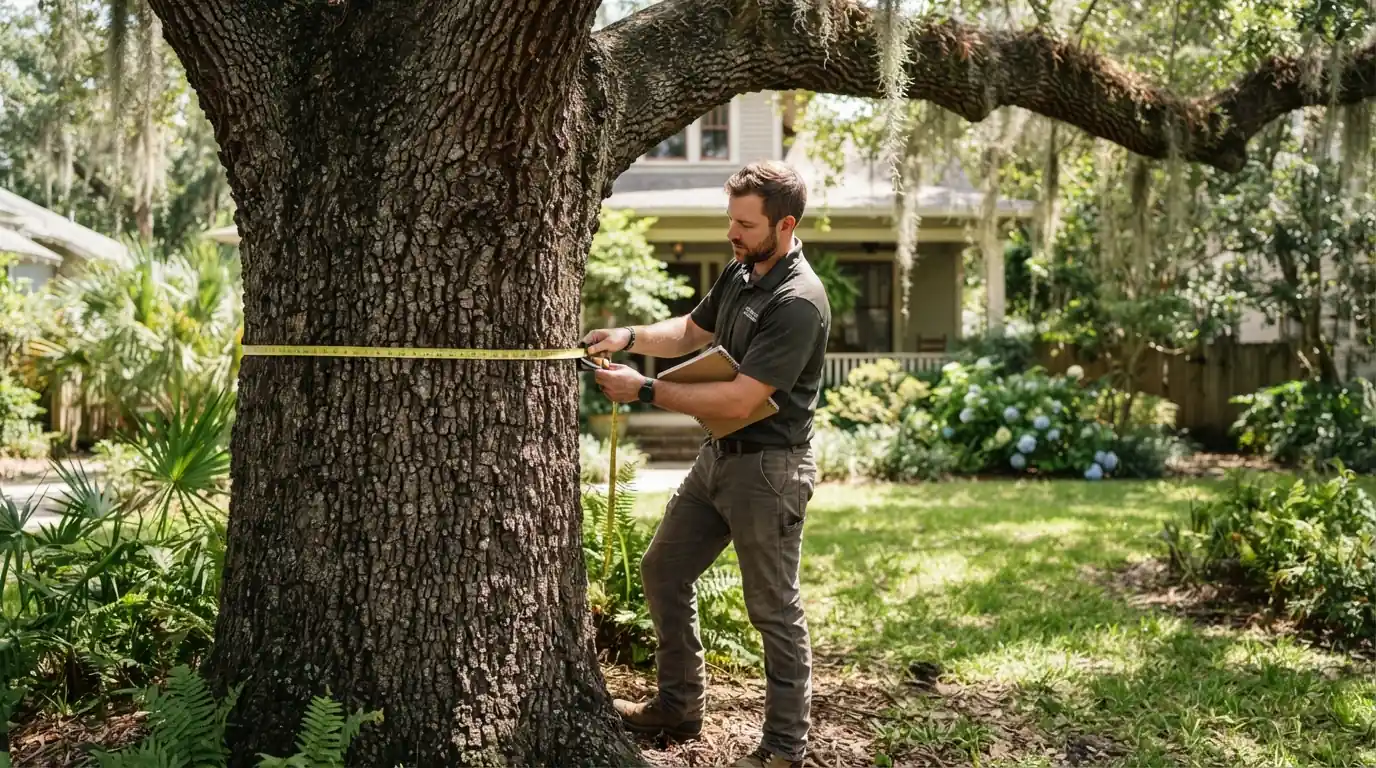
The city requires a permit to remove a tree 5 inches or more in diameter, measured 4.5 feet above the ground, with an exception for listed invasive species. The protected examples the city gives are oaks, pines and elms over that size, which covers most shade trees in a Tampa yard.
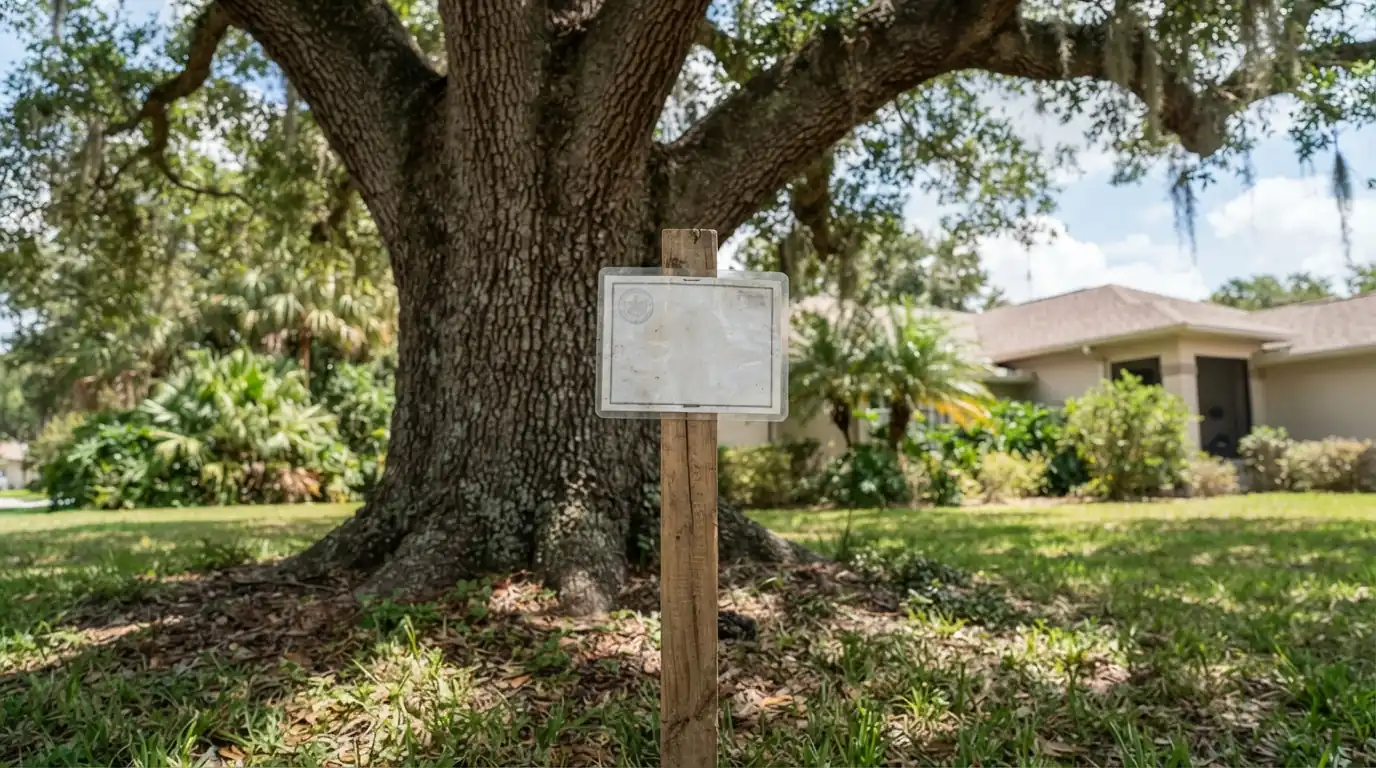
Removals tied to construction are evaluated under the building permit rather than a separate tree permit, and pruning a tree in the city right-of-way needs Parks Forestry permission. Reviews are handled by a city forester or through a Self-Certified Private Arborist report.
The 24-inch pruning line and Grand Trees
Pruning is regulated too once a tree gets big. Inside Tampa, pruning a tree 24 inches or more across needs a permit, and any tree 32 inches or more across is a Grand Tree that needs public notice before it can be removed. Live oaks sit at the top of Florida's protection ladder, and larger ones often qualify as heritage trees.
In practice this means the biggest, oldest trees in the city take the longest to deal with. If a grand oak is in decline, start the conversation early rather than waiting for it to become an emergency.
Unincorporated Hillsborough County
Outside city limits, Hillsborough County issues its own removal permit. Using a certified arborist affidavit skips the field inspection, and the result issues in about five days. Oaks 34 inches or more across need a tree condition evaluation for that expedited review.
Site work usually needs a Land Alteration and Landscaping permit, which is 60 dollars for a single-family lot, plus 55 dollars if a grand oak inspection is needed. Up to 25 percent of a non-grand oak's canopy can be pruned without a permit. Protected oak removals usually need a permit, a tree survey and a written arborist assessment, with fees and fines often calculated per inch of trunk diameter.
Not sure which rule covers your address? Call any hour and we will check before anything is cut.
Call (813) 548-5624Species you can remove without a permit
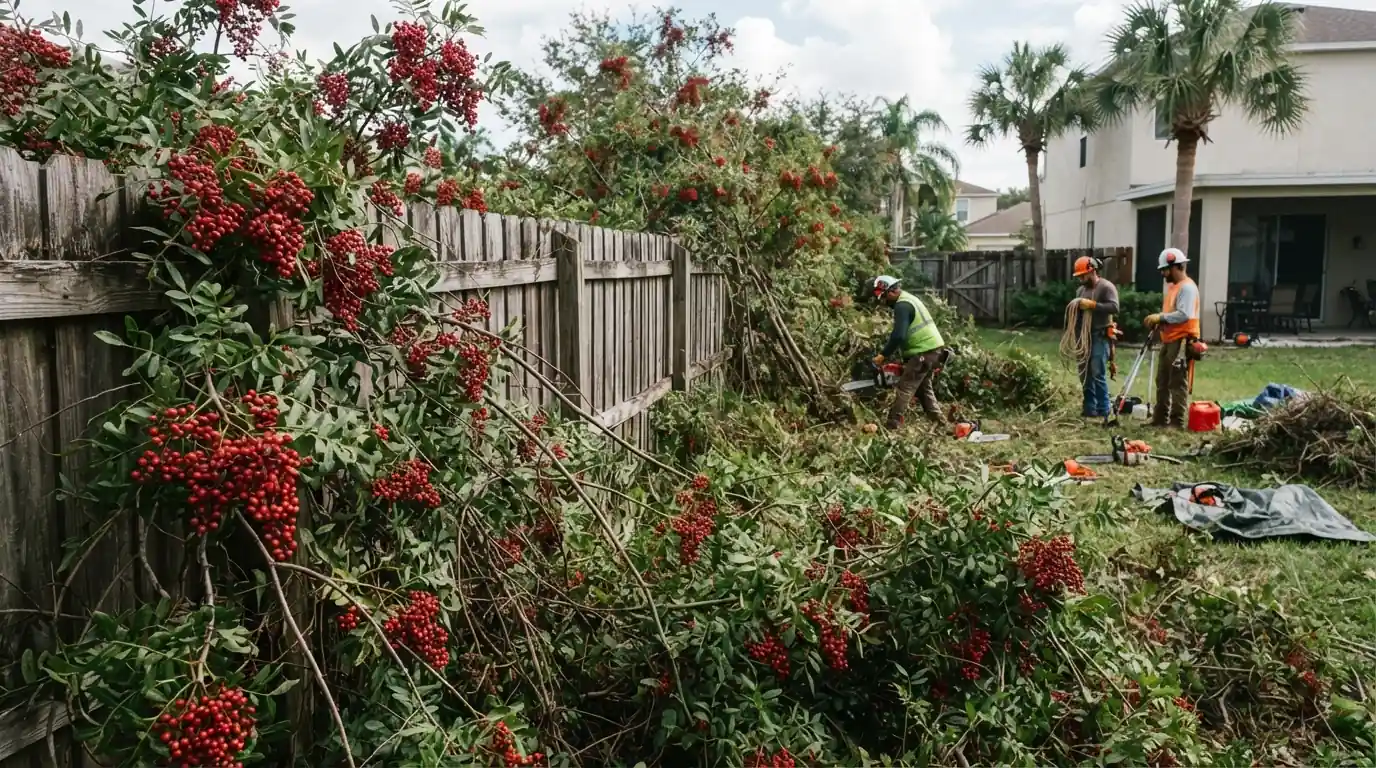
Hillsborough County's exempt list lets Brazilian pepper, chinaberry, camphor, Norfolk Island pine, Chinese tallow and queen palm come out without a removal permit, and exotic fruit trees such as guava, lychee and starfruit are exempt too. There is one important catch: trees inside a wetland or water body are still regulated by the Environmental Protection Commission, whatever the species.
That makes invasive removal one of the fastest jobs to start. Our invasive tree removal page covers how those jobs run and why regrowth is the real problem.
Temple Terrace, Pasco and Pinellas
Temple Terrace runs its own code: permits for trees 12 inches or more across, including standing dead trees of that size on single-family lots, palms protected once they have 4.5 feet of clear trunk with queen palms exempt, debris removed within 3 business days, and permits valid for 6 months.
Pasco County generally requires a permit to remove trees 5 inches or more across at an existing single-family home. Unincorporated Pinellas requires a habitat permit for most trees 4 inches or more across, with a homesteaded versus non-homesteaded distinction from January 2026, and Palm Harbor follows the county ordinance.
What to have ready before the permit
Most permit questions come down to three facts: the species, the trunk diameter measured 4.5 feet above the ground, and exactly where the tree stands relative to the property line, the house and any water. Photos of the whole tree, the trunk and any damage help reviewers understand the request and speed things up.
If the tree is dead, leaning or storm-damaged, say so and include the evidence. For construction projects, bring the trees into the building conversation early, since Tampa evaluates those removals under the building permit. Once approved, keep the permit on site during the work, because crews and inspectors will ask to see it.
Dangerous trees and the state-law exception
Florida Statute 163.045 lets a residential property owner remove a tree without a local permit when documentation from an ISA-certified arborist or a Florida-licensed landscape architect shows it poses an unacceptable risk. Tampa recognizes the statute but requires that assessment to be on site at the time of the work.
This is not a loophole for removing healthy trees. It exists for trees that are genuinely dangerous, and the documentation has to show why. If you think a tree qualifies, a risk assessment is the place to start.
Tree permit questions
Not if the trunk is under 5 inches across at 4.5 feet, or it is a listed invasive species.
Only for trees 24 inches or more across, or trees in the city right-of-way.
Inside Tampa, a tree 32 inches or more across; removal needs public notice first.
About five days with a certified arborist affidavit.
Yes in unincorporated Hillsborough County and Temple Terrace, where it is exempt.
State law allows removal with documentation from an ISA-certified arborist or licensed landscape architect.
Usually the tree company. Ask before you book so the date is realistic.