By Jolene Inman, Tree Care Guides Author Updated October 2026
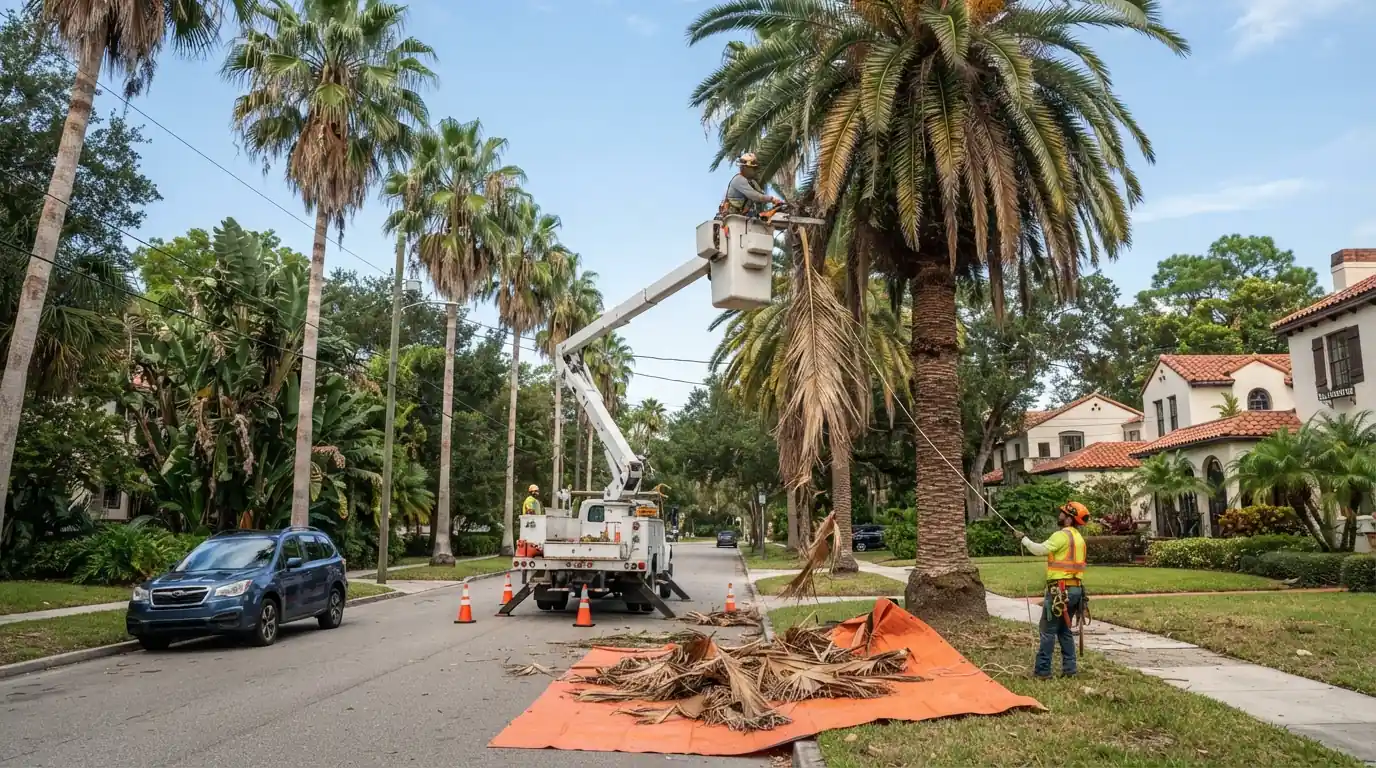
Most palms in Tampa need trimming once or twice a year, and queen palms more often because of their constant fruit. A proper trim removes only dead or hanging fronds, seed stalks and fruit clusters. Green fronds, including those below horizontal, should stay, because they feed the palm and protect its bud.
Palms are the easiest trees in a Tampa yard to over-maintain. A hard cut looks tidy for a week, and many homeowners ask for it every year. But a palm has only one growing point and makes its food through its fronds, so each unnecessary cut costs it something. The right schedule depends on the species, and the right trim is usually lighter than people expect.
How often each common palm needs attention
Sabal palms, Florida's native cabbage palm and the most common palm in Tampa yards, usually need a clean-out once a year to remove dead fronds, seed stalks and loose boots. Queen palms drop fronds and heavy, sticky fruit clusters year-round, so many owners have them cleaned two or three times a year, mainly to keep fruit off pool decks and cars.
Tall washingtonias hold dead fronds as a hanging skirt that can become a fire and pest problem, so they are usually trimmed once a year from a bucket or by a climber. Whatever the species, the schedule follows what the palm is shedding, not the calendar.
What to remove, and what to leave alone
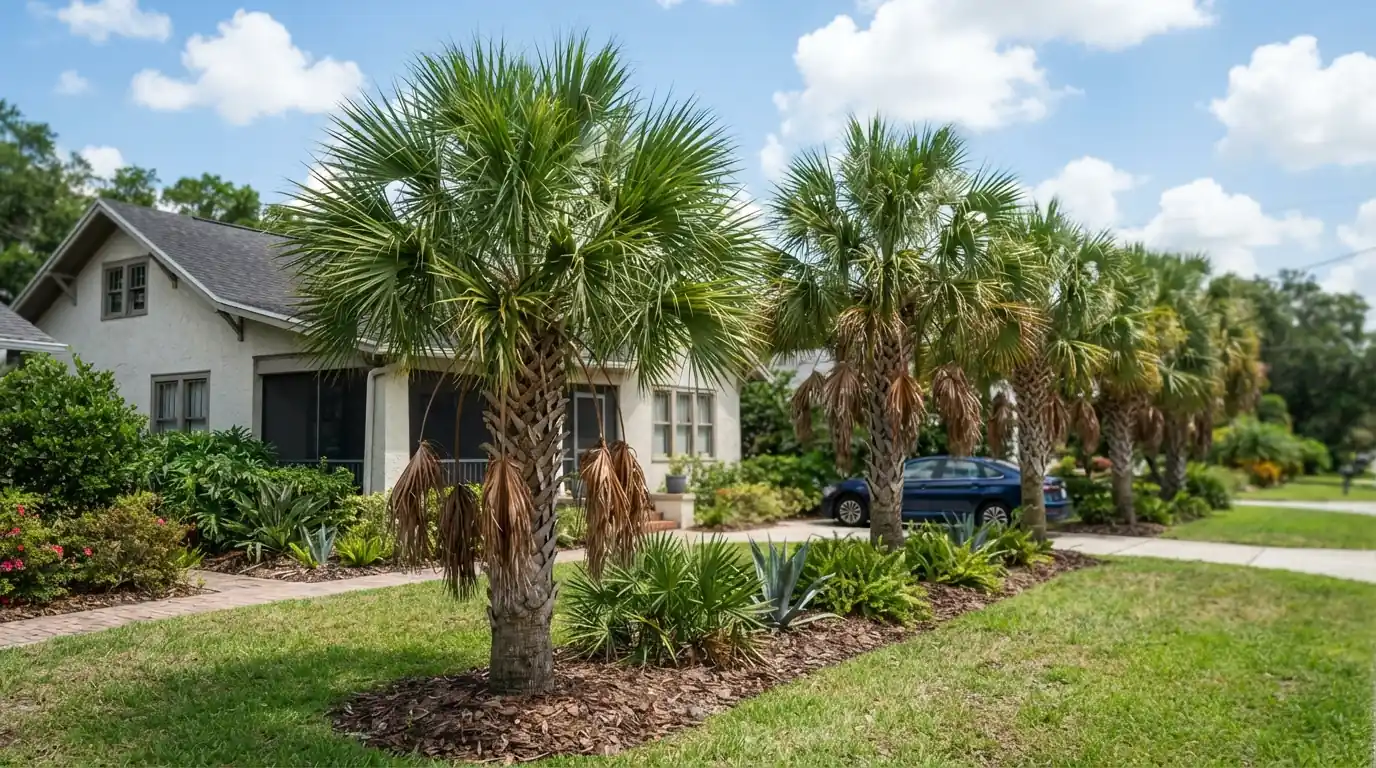
Remove fronds that are fully brown or hanging dead against the trunk, seed and flower stalks, fruit clusters, and boots that are loose enough to come off by hand. Leave green fronds, and leave fronds that are yellowing but not yet brown, because the palm is still pulling nutrients back out of them.
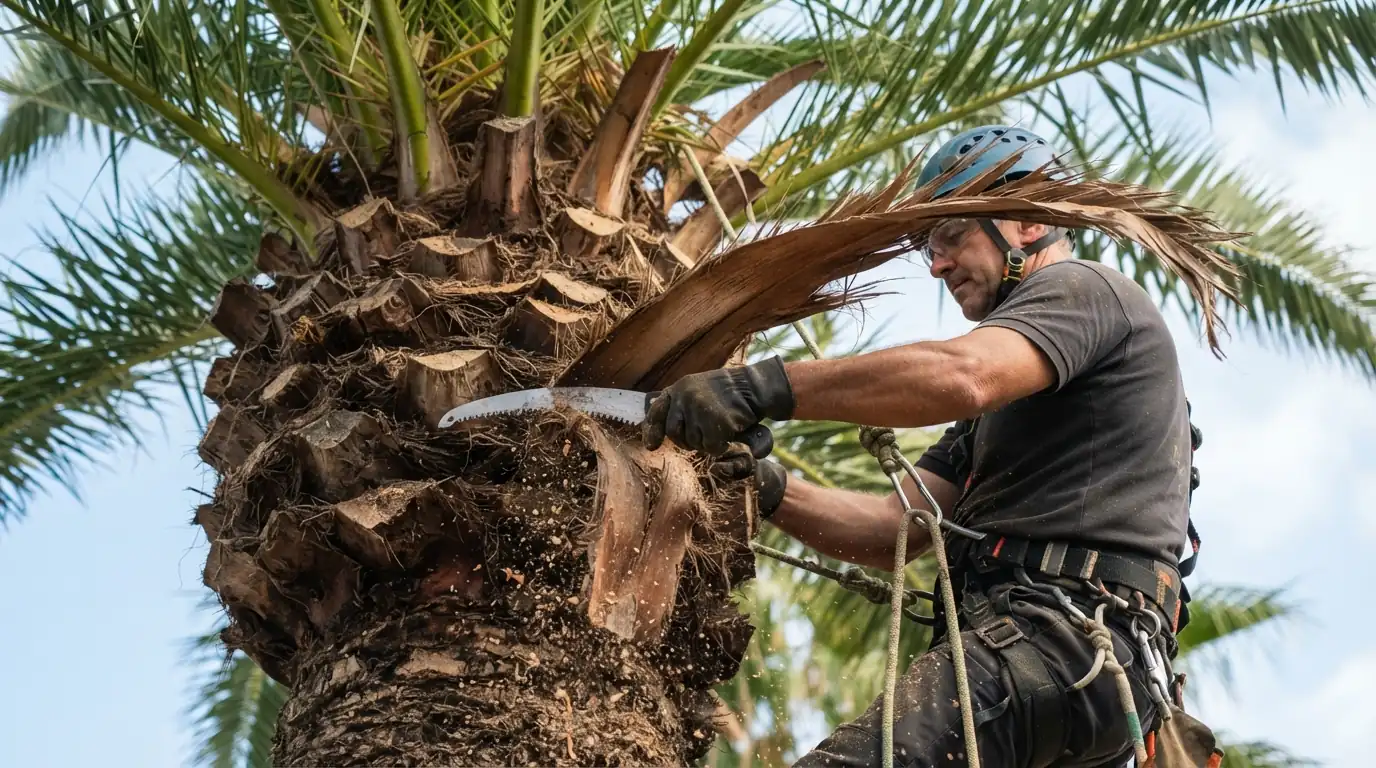
A simple rule many arborists use: do not cut fronds that sit above a horizontal line through the crown. Firmly attached boots stay too, because cutting them off tears into the trunk, and any climber working on a palm you are keeping should never use spikes, since the holes never heal.
Why over-pruning backfires
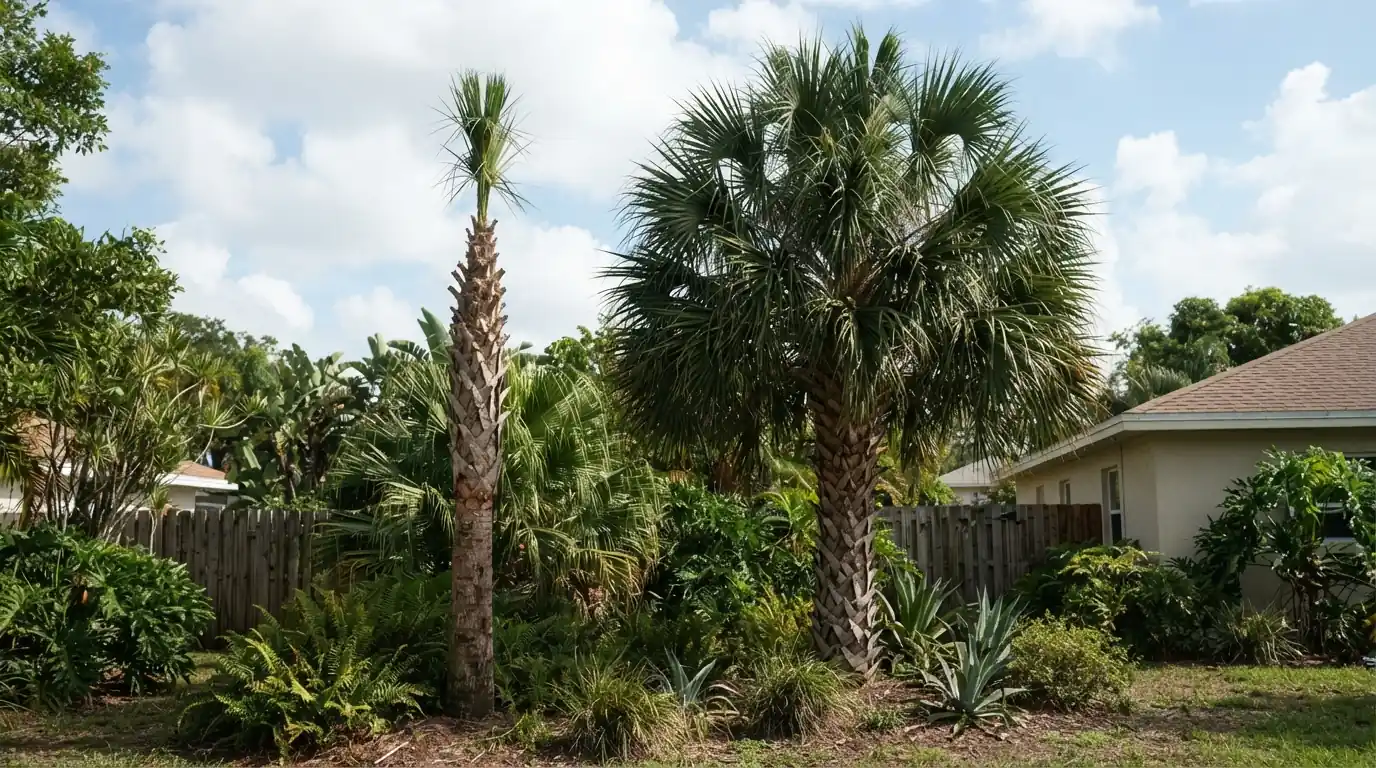
Stripping a palm to a narrow tuft, often sold as a hurricane cut, removes the fronds that shield the bud in high wind and the fronds that feed the palm. The palm responds by growing fewer and smaller fronds, and repeated hard cuts can leave the trunk narrowing where growth slowed, which is a permanent weak point.
Over-pruning also makes nutrient problems worse. Florida's sandy soils run short of potassium, and a palm moves its potassium out of older fronds before they die. Cutting those fronds early takes that supply away. A palm that looks worse every year despite regular trimming is often being trimmed too hard.
Palms looking ragged? Call any hour to get them on the schedule.
Call (813) 548-5624When yellowing means more than a trim
Yellowing and spotting on the oldest fronds usually point to a nutrient shortage that can be corrected with a palm-specific feeding program, though damaged fronds will not turn green again; only new growth comes in healthy. Small, frizzled new fronds point to a different shortage.
Bronzing through the whole crown, a spear leaf that wilts or pulls out, or shelf-like conks near the base are more serious. In Carrollwood and Town 'n' Country, sabals going bronze in the crown are one of the most common problems we see. Those palms need a diagnosis before any money is spent trimming them.
What palm trimming costs
Palm trimming is priced per palm, mostly by height, since tall palms need a bucket truck or a climber. Groups of palms cost less each than a single visit for one. The range below is a published Florida market figure, not our price.
| Job | Published market range |
|---|---|
| Palm trimming, Florida | $100 to $500 per palm in Florida; short palms under 15 feet $75 to $150; tall palms over 30 feet needing a bucket truck $250 to $500+ |
Market figures from published cost guides, not a quote from us. Size, access and permits move every number.
Trimming versus removal, and the rules around each
Normal trimming does not need a permit anywhere around Tampa. Removal is different. Temple Terrace protects palms once they have 4.5 feet of clear trunk, with queen palms exempt, so taking one out there needs a permit. In unincorporated Hillsborough County the queen palm is on the exempt list and can be removed without one.
If a palm is declining despite good care, removal and replanting can be the better answer. A palm root ball is a dense fibrous mat with no taproot, so it has to be ground out properly before anything new goes in the same spot.
Doing it yourself versus calling a crew
Short palms can be cleaned from the ground with a pole saw and gloves, as long as you only take brown fronds and pods and keep well clear of where they fall. Anything tall, near a power line, or over a pool cage is a different job; fronds are heavier than they look, and ladders and falling fronds are a bad mix.
If you have many palms, a single visit that cleans all of them usually costs less than you would expect per palm. Our palm trimming service follows the rules above on every palm we keep.
Palm trimming questions from Tampa homeowners
Once or twice a year for most; queen palms more often for fruit.
Leave them until they are brown; the palm is still using them.
No. It removes the fronds that protect the bud and weakens the palm.
Short ones, carefully, from the ground. Tall palms need a bucket or climber.
Over-pruning and nutrient shortages are the usual causes.
Only loose ones. Firm boots protect the trunk.
Not for normal trimming; removal rules vary by city and county.