By Jolene Inman, Tree Care Guides Author Updated October 2026
Stump grinding chews a stump and its surface roots into chips several inches below grade, and it is enough for lawns, beds and most replanting. Full stump removal digs out the entire root ball, costs several times more, and is needed when a slab, pool, pavers or footing will sit on the spot, because buried wood rots and the ground settles.
After a tree comes down, the stump is the last decision, and the one most often made without thinking about what comes next. Grinding is quick, cheap and tidy, and for most yards it is all you need. But if you are planning a pool, a patio, a driveway or an addition, the roots left under a ground stump can cause trouble years later. Here is how to decide.
What stump grinding actually does
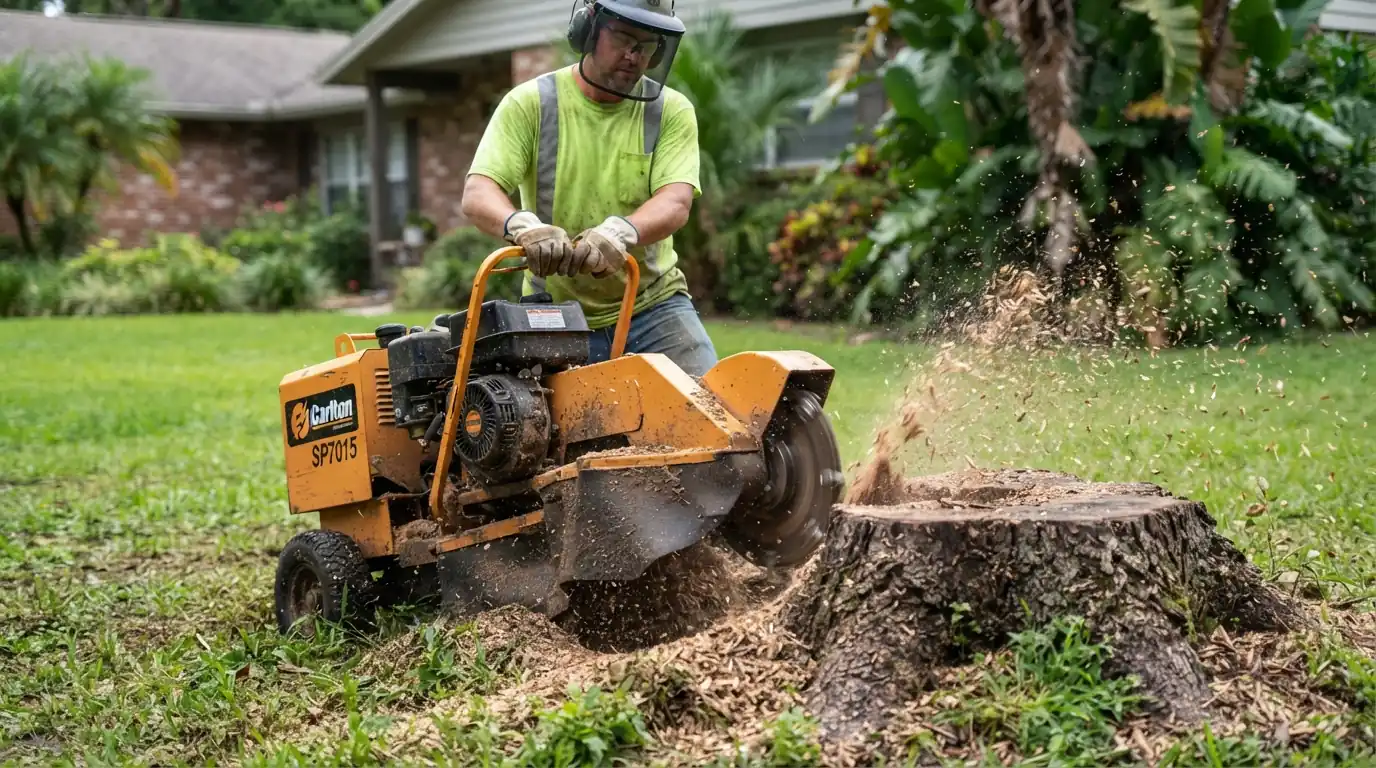
A stump grinder has a heavy rotating wheel with carbide teeth that works back and forth across the stump, chewing it into chips in passes until the wood is gone several inches below the soil line. The main surface roots running out from the stump can be ground along with it. The chips that come out are the stump itself, mixed with soil.
What grinding does not do is remove the deep roots. They stay in the ground and break down slowly over years. Under a lawn or a planting bed that is harmless; the soil settles a little as they rot, and a bit of topsoil fixes it.
What full stump removal involves
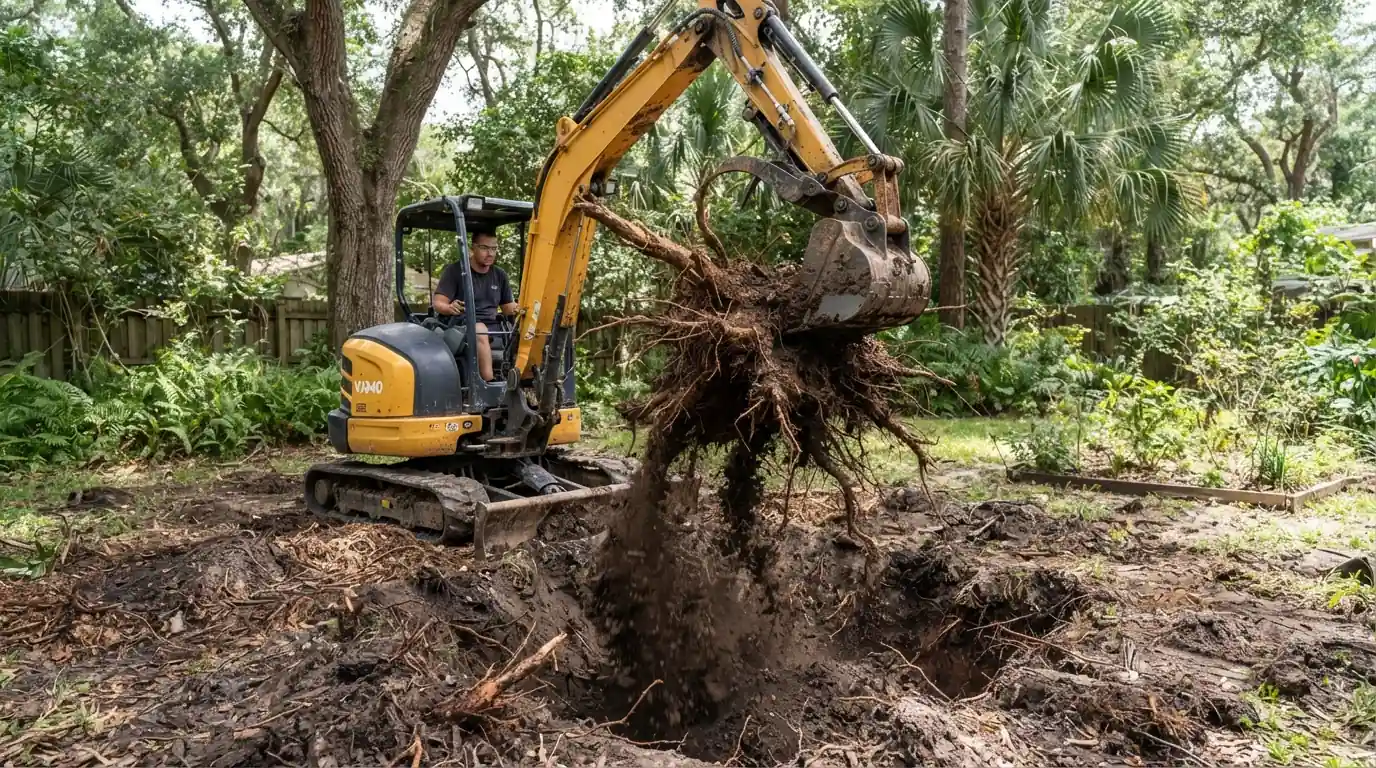
Full removal means excavating the root ball: digging around the stump, cutting the main lateral roots, and lifting the whole mass out with an excavator, or by hand for smaller stumps. It leaves a large hole, often several feet across, that has to be backfilled with clean fill and compacted in layers so it does not sink later.
It is a bigger, slower and more expensive job, with hauling for the wood and soil, and fill brought in. In return, nothing is left underground to rot and settle under what you build next.
What each one costs
Grinding is usually priced per stump by diameter, and many companies charge by the inch. Full excavation costs several times more because of the digging, hauling and fill. These published market figures give a sense of the gap; they are not our prices.
| Job | Published market range |
|---|---|
| Stump grinding, Tampa | $175 to $550 per stump in Tampa, quoted separately from removal |
| Stump grinding, Florida | $150 to $500 per stump across Florida, average single stump $250 to $350; many companies price $2 to $5 per inch of diameter; palm stumps $100 to $300 |
| Full root ball excavation | $500 to $2,000+ to excavate an entire root ball versus $150 to $500 to grind it |
| Palm stumps, Florida | $100 to $300 for most palm stumps in Florida |
Market figures from published cost guides, not a quote from us. Size, access and permits move every number.
Stump in the way of a project? Call any hour and we will tell you which approach fits.
Call (813) 548-5624When grinding is all you need
Grinding is the right call for a stump in the lawn, a stump in a planting bed, a stump you want gone so the mower can pass, and most stumps where you plan to plant a new tree nearby. For replanting in the same spot, deep grinding and removing the chips does the job, because a pile of fresh chips under new roots ties up nitrogen as it breaks down.
Grinding also makes sense when access is tight. Machines come in sizes that fit through a normal backyard gate, so no fence panels need to come down.
When the root ball has to come out
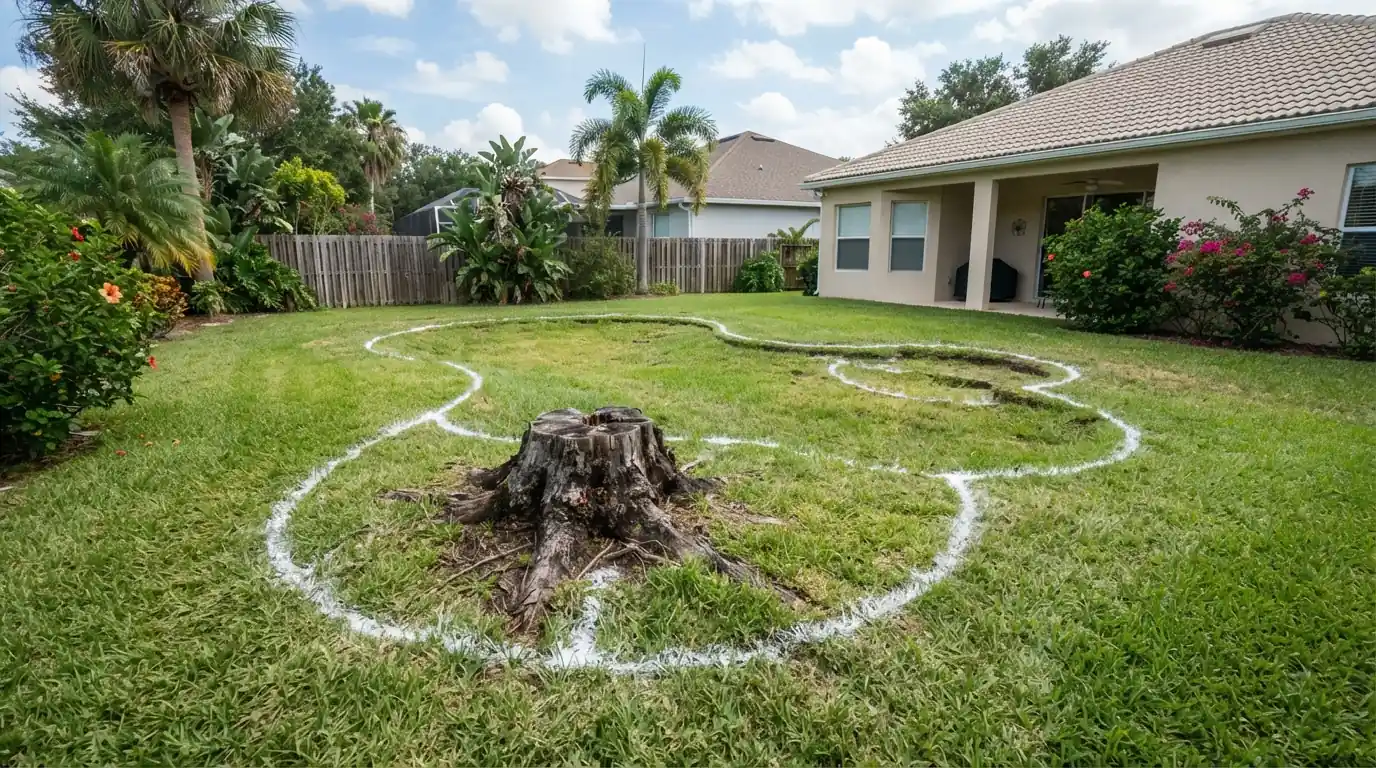
Anything built on a compacted base needs undisturbed ground: a pool shell, a paver patio, a driveway, a slab, an addition, a garage footing. Buried wood rots, voids form, and the surface above sinks and cracks, sometimes years after the work is finished. Builders generally will not pour over a known stump, and they are right not to.
If a pool outline or patio crosses an old stump, excavate the root ball and any big roots running into the footprint, then compact the fill properly. In unincorporated Hillsborough County, site work like that usually falls under a Land Alteration and Landscaping permit, so plan the stump with the rest of the project.
Palm stumps are their own case
Palms do not leave a normal stump. A palm root ball is a dense, fibrous mat with no taproot, and it grinds slower than a hardwood stump of the same size. Inland lots in Brandon, Riverview and Lutz carry mostly sabal palms in open yards, so palm root balls are a large share of the stumps we grind there.
Grinding a palm root ball well below grade and clearing out the fibers leaves clean soil for sod or a new palm. Planting straight into an unground palm spot tends to leave a soft, sinking patch as the old mat breaks down.
After the stump: chips, settling and replanting
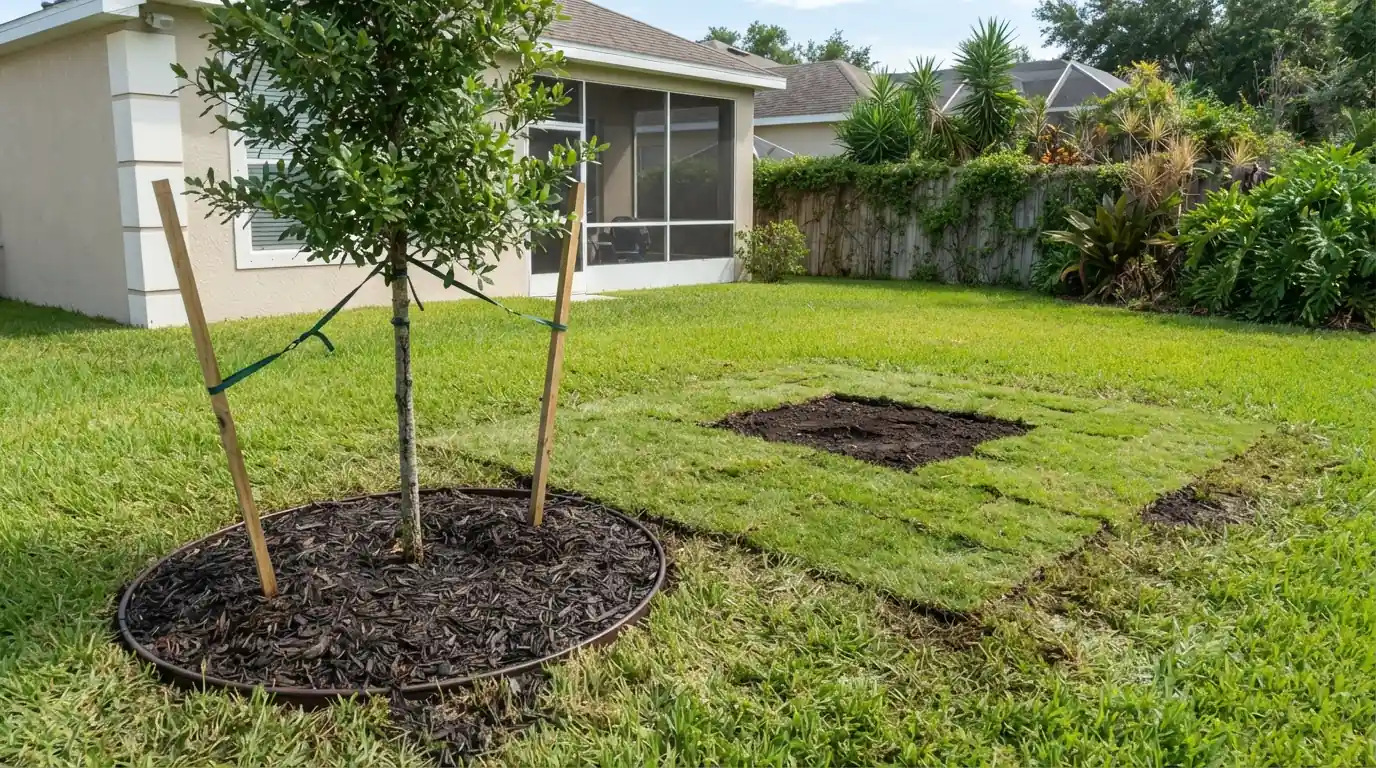
Ground chips can be raked back into the hole, spread as mulch, or hauled away. Chips in the hole settle as they break down, so top the spot with soil before laying sod. An excavated hole backfilled with compacted clean fill stays level.
Either way, have utility lines located before any grinding or digging. If a new tree is going in, choose the spot and species first; our planting page covers what grows well in Tampa's wind and wet soil.
Stump questions
Yes, usually by several times, because excavation needs digging, hauling and fill.
Most hardwoods stop; some species send up sprouts that need a follow-up.
Several inches below grade as standard, deeper for replanting.
It is risky; buried wood rots and pavers can settle. Remove the root ball.
Palm root balls are fibrous mats that grind slower than hardwood.
It is backfilled with clean fill and compacted in layers.
Utility lines should be located before any grinding or digging.