By Jolene Inman, Tree Care Guides Author Updated October 2026
Around Tampa Bay the rule that applies depends on whether a property sits inside a city or in the unincorporated county. Unincorporated Pinellas protects most trees 4 inches and up but, since January 2026, only trees over 24 inches on homesteaded single-family homes; Pasco's 2026 code covers native trees 5 inches and up; cities such as St. Petersburg and Clearwater write their own rules.
Our Tampa permit guide covers the City of Tampa, Temple Terrace and unincorporated Hillsborough County. This one covers the neighbors: Pinellas County and its cities, Pasco County, and Hernando County to the north. The thresholds differ, and so do the exceptions, which is why the first step on any removal is confirming exactly whose rules apply.
Codes change, and the details below were current when this guide was updated. A quick check with the county or city before work starts is always worth it, because an after-the-fact permit usually costs far more than the original one would have.
First question: city or county?
In Florida, cities write their own tree rules and counties regulate the unincorporated land around them. A house in Palm Harbor, which is unincorporated, follows Pinellas County's code. A house a few miles away in Clearwater or Largo follows that city's code instead. Wesley Chapel, Land O' Lakes and Hudson are unincorporated, so Pasco County's rules apply there.
Your property tax record or the county's address lookup will tell you which side of the line you are on. Everything else depends on that answer.
Unincorporated Pinellas after January 2026
Pinellas County updated its tree code effective January 23, 2026, for unincorporated Pinellas, Belleair Bluffs and Belleair Shore. On most properties, trees with a trunk 4 inches or wider and palms over 6 feet tall need a permit to remove or transplant.
The big change was for homeowners: on a homesteaded, actively occupied single-family home, only trees larger than 24 inches in diameter are protected. Routine pruning needs no permit, though it should follow the ANSI A300 standard so it does not count as effectively removing a tree, and dead, dying, invasive or nuisance trees need no replacement planting.
St. Petersburg and Clearwater
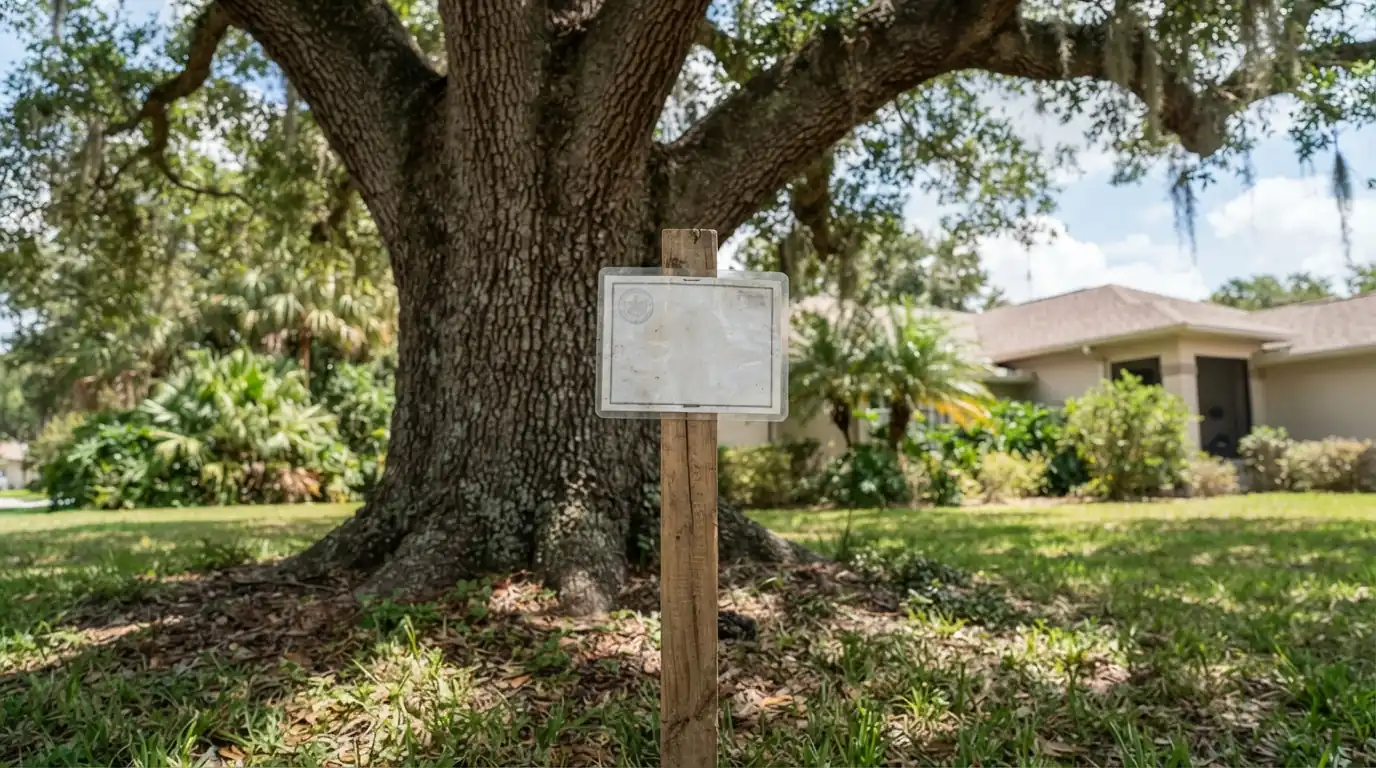
St. Petersburg protects shade trees 4 inches and up and understory trees 8 inches and up. Grand Trees, protected trees 30 inches or larger other than laurel oaks, get extra protection, and even cutting a Grand Tree branch 8 inches thick needs a permit. The city charges a 25 dollar inspection fee, and an approved permit lasts six months and has to be posted where it can be seen from the street.
Clearwater requires a permit to remove any nonhazardous tree 4 inches or wider and any palm with 10 feet of clear, straight trunk. Its permits also run for six months. Largo, Dunedin, Safety Harbor and the other Pinellas cities each have their own versions.
Not sure whose rules cover your tree? Call any hour and we will check your address.
Call (813) 548-5624Unincorporated Pasco County
Pasco County updated its tree rules in 2026. In the unincorporated county, native trees 5 inches or more across need a tree removal permit, while non-native trees are generally exempt. A tree with several trunks is measured as one tree, with the trunks added together.
One catch in newer subdivisions: trees a developer planted as part of an approved landscape plan can need a permit even when they are smaller than 5 inches. HOAs in Wesley Chapel and Land O' Lakes often add their own approval step on top of the county's.
Hernando County and Spring Hill
Spring Hill is unincorporated, so homes there follow Hernando County's code, while Brooksville has its own city rules. Hernando's requirements differ from both Pasco and Pinellas, and like everywhere else they treat protected species, wetland trees and right-of-way trees more strictly than ordinary yard trees.
Because the county line runs right past Hudson and the Pasco coast, it is common for neighbors a mile apart to be under different codes. Confirming the county is the first job, followed by a call or email to the county's permitting office with the tree's size and species. Most offices can say within a day or two whether a permit applies.
Getting the paperwork right
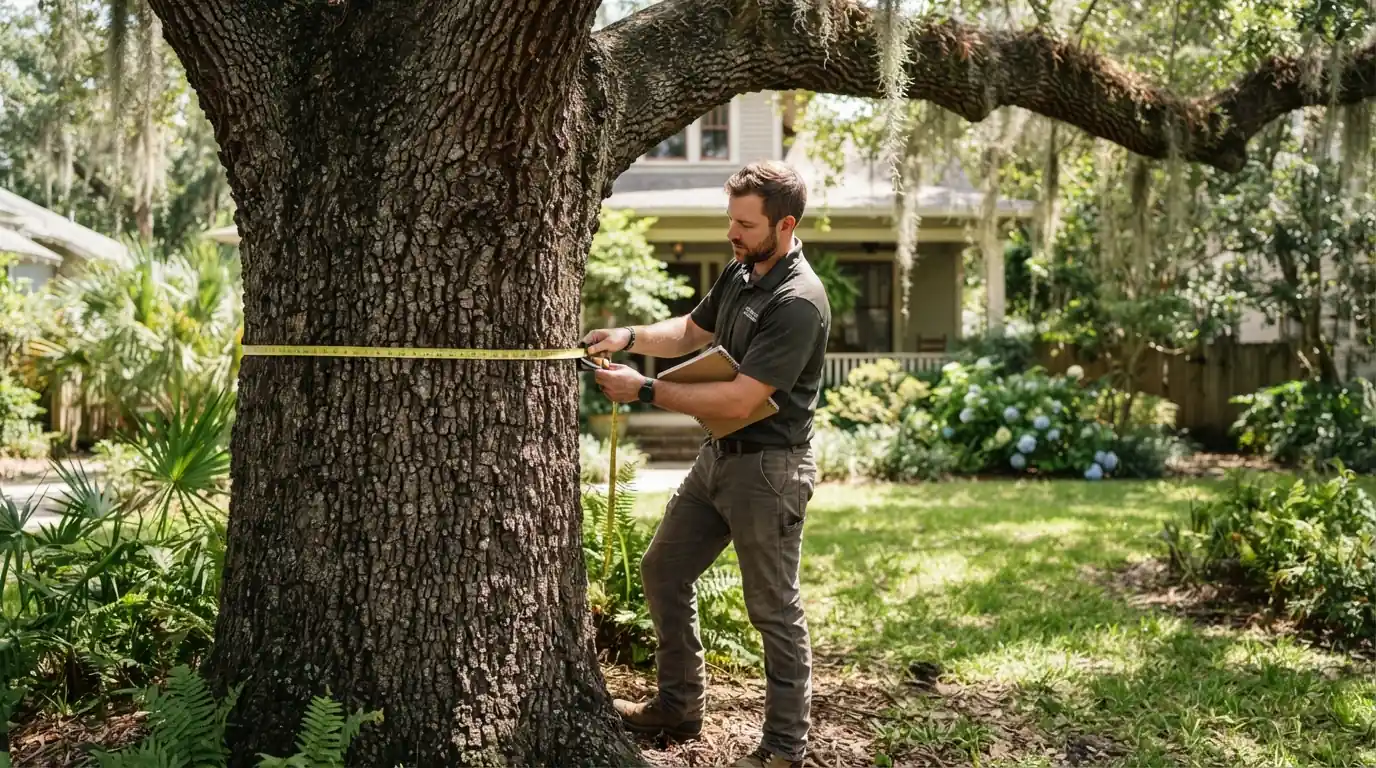
Whatever the jurisdiction, the same things usually come up: the tree's species, its trunk diameter measured at 4.5 feet above the ground, where it stands on the lot, and why it needs to come out. A photo of the tree and the address often settles whether a permit is needed at all, and Pinellas County takes those questions by email before you apply.
Some reviewers want a site sketch, a tree survey or a written arborist assessment, especially for large oaks or for trees near construction. Having those ready speeds approval and avoids a second inspection.
The state law that applies everywhere
Florida Statute 163.045 lets a residential property owner prune, trim or remove a tree without a local permit when an ISA-certified arborist or a Florida-licensed landscape architect documents that the tree poses an unacceptable risk. It applies in every county and city in this guide, though some, St. Petersburg among them, still ask to be notified or to see the documentation.
Mangroves are separate: they fall under the state mangrove law, which limits trimming heights and does not allow removal without a permit. Wetland trees and trees in the public right-of-way also stay regulated whatever the size.
Permit questions outside Tampa
Yes, it is unincorporated, so the county code applies.
Homesteaded single-family homes now only need permits for trees over 24 inches.
For native trees 5 inches or larger, generally yes.
Generally yes under the 2026 code.
A protected tree 30 inches or larger, except laurel oaks.
Six months from issue.
Hernando County's, because Spring Hill is unincorporated.