By Jolene Inman, Tree Care Guides Author Updated October 2026
Most residential tree removals in Florida fall between $800 and $3,500 per tree, and Tampa runs above average for tree work. A large tree near a house typically costs more than one in an open yard, crane-only trees cost far more, and stump grinding is usually a separate line on the quote.
Tree removal prices look random until you know what the crew is pricing. It is rarely the tree itself. It is the rigging needed to get it down without hitting anything, the equipment that has to reach it, the permit paperwork, and what happens to the wood and the stump afterwards. Two quotes for the same oak can differ by thousands because they describe two different jobs.
The published price ranges for Tampa jobs
These are market figures from published cost guides for Florida and Tampa, not our prices. They are a useful starting point for a budget and a sanity check on any quote you receive.
| Job | Published market range |
|---|---|
| Most residential removals, Florida | $800 to $3,500 per tree for most residential removals in Florida; small trees under 30 feet from about $200 with easy access; very large, hazardous or crane-only trees over 80 feet $5,000 to $15,000+ |
| Large tree near a structure, Tampa | $875 to $2,750 to remove a large tree near a structure in Tampa |
| Palm removal, Tampa | $300 to $1,500 for most palm removals in Tampa; short sabals and clumping palms at the bottom, tall washingtonias and Canary Island dates at the top, crane jobs above it |
| Stump grinding, Tampa | $175 to $550 per stump in Tampa, quoted separately from removal |
| Full stump excavation | $500 to $2,000+ to excavate an entire root ball versus $150 to $500 to grind it |
| Emergency trimming, Tampa | emergency trimming around $250 per hour in Tampa; clearing broken or dead branches from a large tree about $1,000 |
Market figures from published cost guides, not a quote from us. Size, access and permits move every number.
Why two similar trees get very different quotes
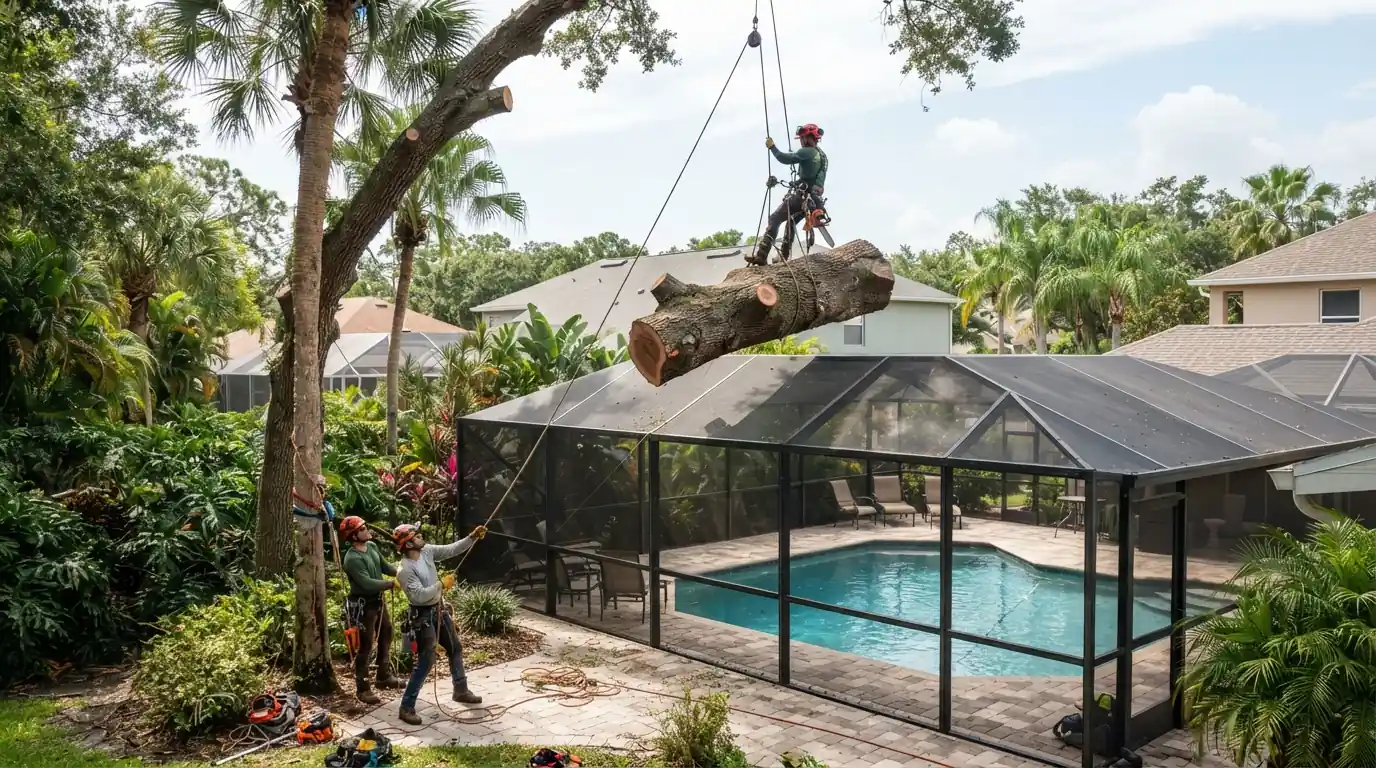
Height and trunk size matter, but what sits under the tree matters more. A laurel oak standing alone in a Brandon backyard can often be felled in one piece and cut up on the ground. The same tree leaning over a roof and a pool cage has to come down in sections, each one tied off and lowered on a rope, which can take a crew most of a day.
Condition changes the price too. Dead and hollow wood cannot be trusted as a rigging point, so a dead tree near a house may need a bucket truck or a crane even when a healthy one of the same size would not. Access is the last big factor: older South Tampa lots with narrow side yards and no path for a chipper mean every piece is carried out by hand.
What a crane adds, and when it saves money
A crane has a high hourly rate, and published ranges for crane-only trees run far above a normal removal. But on the right job it lowers the total. A crew that would spend two days roping a big oak off a house can often finish in one when the crane holds each section before it is cut and lifts it straight to the street.
The honest test is whether the wood can be lowered safely on ropes. If it can, a crane is usually unnecessary. If the pieces are too heavy, or there is simply nowhere to lower them, the crane is what keeps the roof whole. Our crane removal page explains how those jobs run.
Want a real number instead of a range? Call any hour and we will set up a walk of the tree.
Call (813) 548-5624Permits cost time more than money
Inside the City of Tampa, removing a tree 5 inches or more across at 4.5 feet needs a permit unless it is a listed invasive species, and Grand Trees of 32 inches or more need public notice first. Unincorporated Hillsborough County runs its own permit, and an arborist affidavit brings the result back in about five days. Site work there usually needs a Land Alteration and Landscaping permit, which is 60 dollars for a single-family lot, plus 55 if a grand oak inspection is needed.
The fee is rarely the problem; the wait is. A quote that includes the permit, and a crew that files it before booking the removal, saves weeks. Our permit guide covers which rule applies where.
Stumps, hauling and the lines that get left off
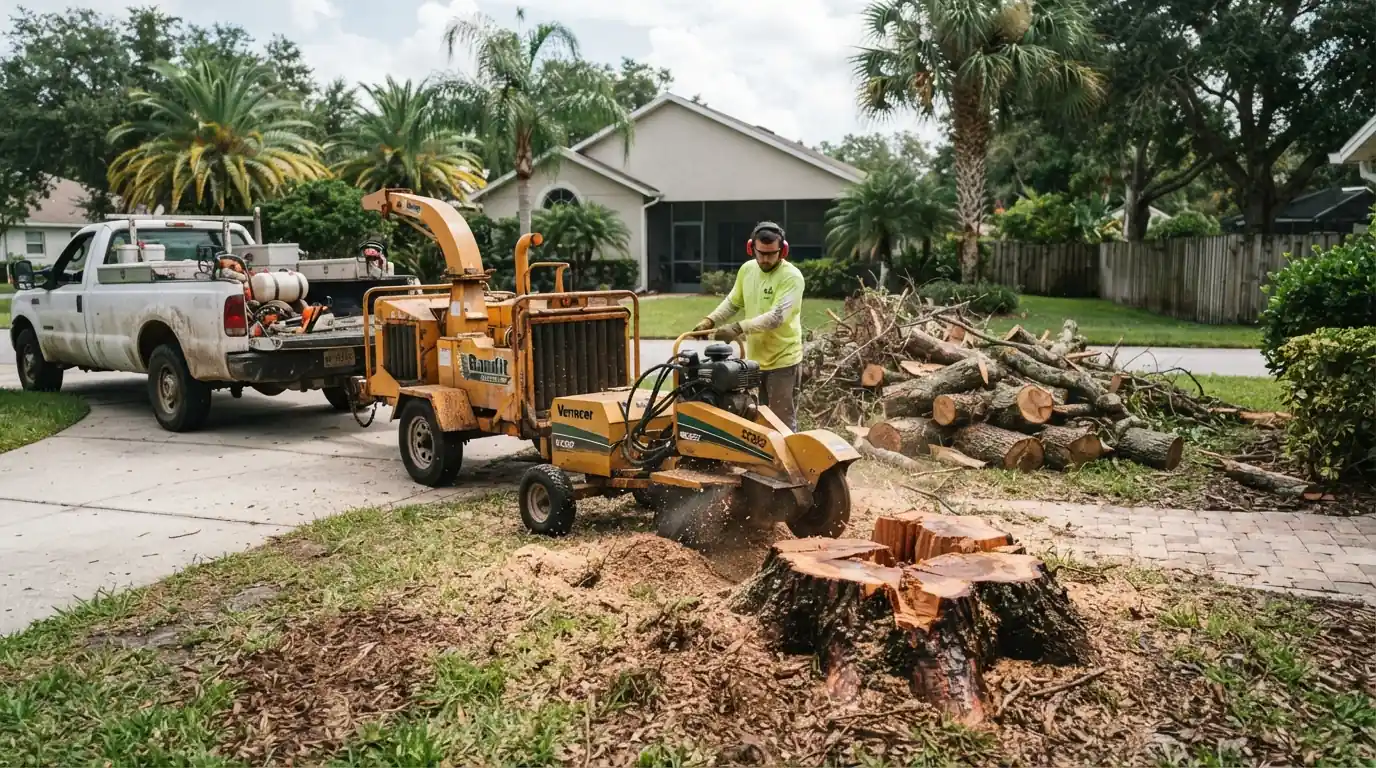
The cheapest quote is often the one missing a line. Stump grinding is normally priced separately, and full excavation of the root ball costs several times more than grinding because of the digging, hauling and fill. Hauling the wood away costs more than leaving it cut and stacked at the curb. Chipping the brush on site saves hauling, but only if the chipper can reach the pile.
Ask every company to spell out the same things: the permit, the stump, the wood, the brush and the cleanup. Then you are comparing jobs, not guesses.
How to get quotes you can actually compare
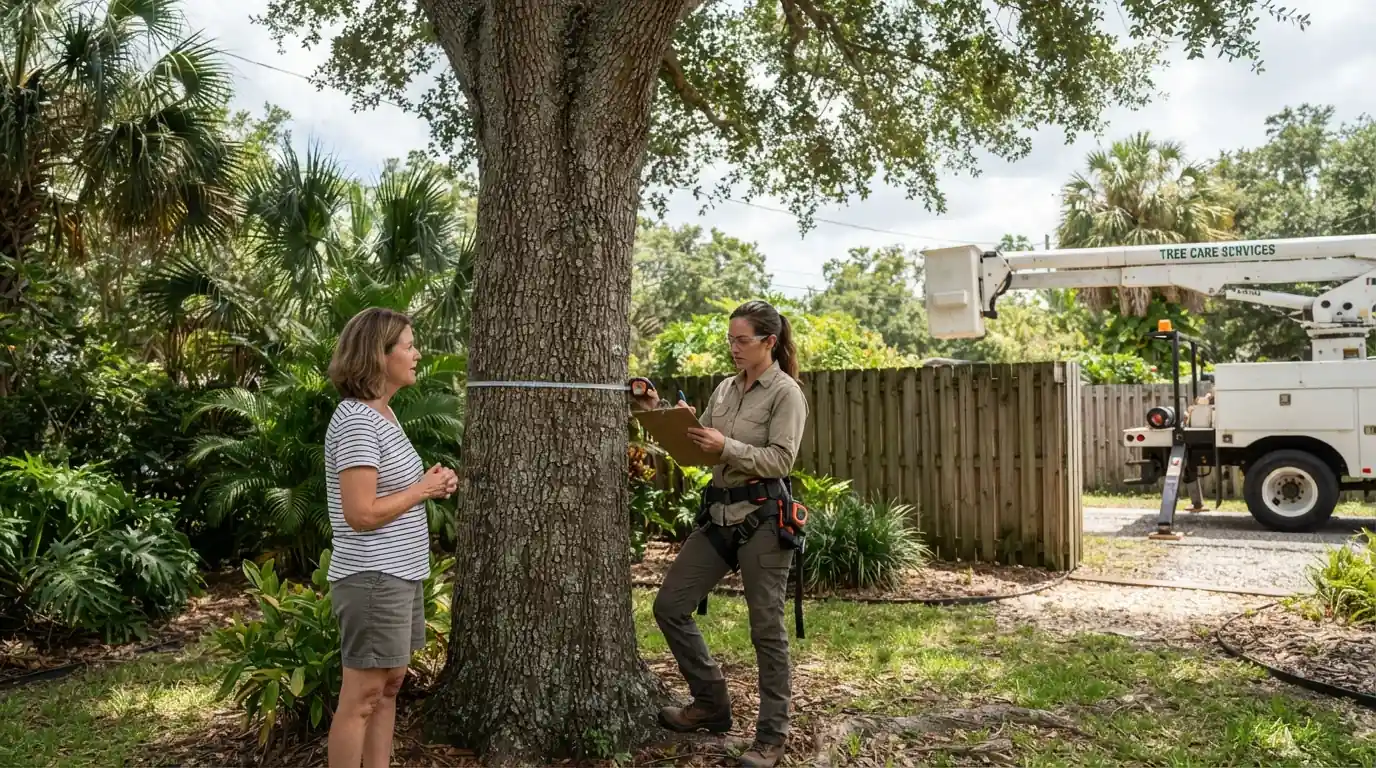
Give every company the same description and ask each to walk the tree in person. A price given over the phone for a big tree near a house is a guess. Ask how the tree will come down, whether a crane is needed, who files the permit, and what the stump and wood lines cost. Ask for proof of insurance before anyone climbs.
Be wary of a quote that is much lower than the rest with no explanation, and of anyone offering to top a tree instead of removing or properly pruning it. Our guide to choosing a tree service has the full list of questions.
Tree removal cost questions from Tampa homeowners
Published Florida ranges put most residential removals between $800 and $3,500; large trees near structures and crane jobs cost more.
Usually not. Most companies list it separately so you can choose.
It has to come down in roped sections or by crane instead of being felled in one piece.
The fees are modest; the time is what matters, so ask who files it.
Often not. Dead wood cannot be trusted for rigging and may need a bucket or crane.
Yes, with the same description to each company and an in-person look at the tree.
Policies often respond when a covered storm drops a tree on a covered structure. Ask your adjuster.