By Jolene Inman, Tree Care Guides Author Updated October 2026
Crape myrtles in Tampa should be pruned in late winter, usually January or February, by removing suckers, crossing branches and weak twiggy growth while keeping the main trunks. Topping every branch back to the same point, nicknamed crape murder, causes swollen knuckles, floppy sprouts and a tree that never shows its best bark or shape.
Drive through almost any Tampa neighborhood in February and you will see them: crape myrtles cut back to bare stubs at the same height every year. The trees still bloom that summer, which is why the habit continues. But the way a crape myrtle is pruned decides how it looks, how well its branches hold their flowers and how long it stays healthy.
This guide explains what goes wrong with topping, when to prune instead, and how to bring back a tree that has been topped for years. It also covers which jobs are easy to do yourself and how to pick a variety that never needs the chop in the first place.
What crape murder looks like
A topped crape myrtle has thick, rounded knobs where the branches have been cut back to the same point year after year. Each spring a cluster of thin, fast shoots sprouts from every knob. By summer those shoots carry heavy flower heads and bend or droop, especially after rain.
The tree also loses the feature many people planted it for: the smooth, peeling, mottled bark on mature trunks and limbs. Topping keeps the tree locked in a cycle of stubs and sprouts, so the limbs never get the chance to develop.
Why the habit keeps going
Crape myrtles flower on new growth, so a hard cut does not stop them blooming. Topping also makes a tree look neat for a few months and keeps it smaller, which suits a tree planted too close to a house or a power line. Once a neighborhood has a few topped trees, it starts to look like the normal way to prune them.
The real fix for a tree that is too big is usually a smaller variety, not a yearly chop. Crape myrtles range from shrubs that stay a few feet tall to trees that pass 20 feet, and matching the variety to the space removes most of the reasons to top.
When to prune in Tampa
The best time is late winter, while the tree is bare and before new growth starts. In Tampa that usually means January or February. Without leaves you can see the structure clearly, the cuts heal as growth starts in spring, and that season's flowers form on the new shoots as usual.
Light work can happen at other times. Suckers at the base can be removed whenever they appear, and spent flower clusters can be snipped in summer if you want a second, smaller flush of bloom on some varieties.
Want your crape myrtles pruned the right way this winter? Call any hour to book a visit.
Call (813) 548-5624How to prune one properly
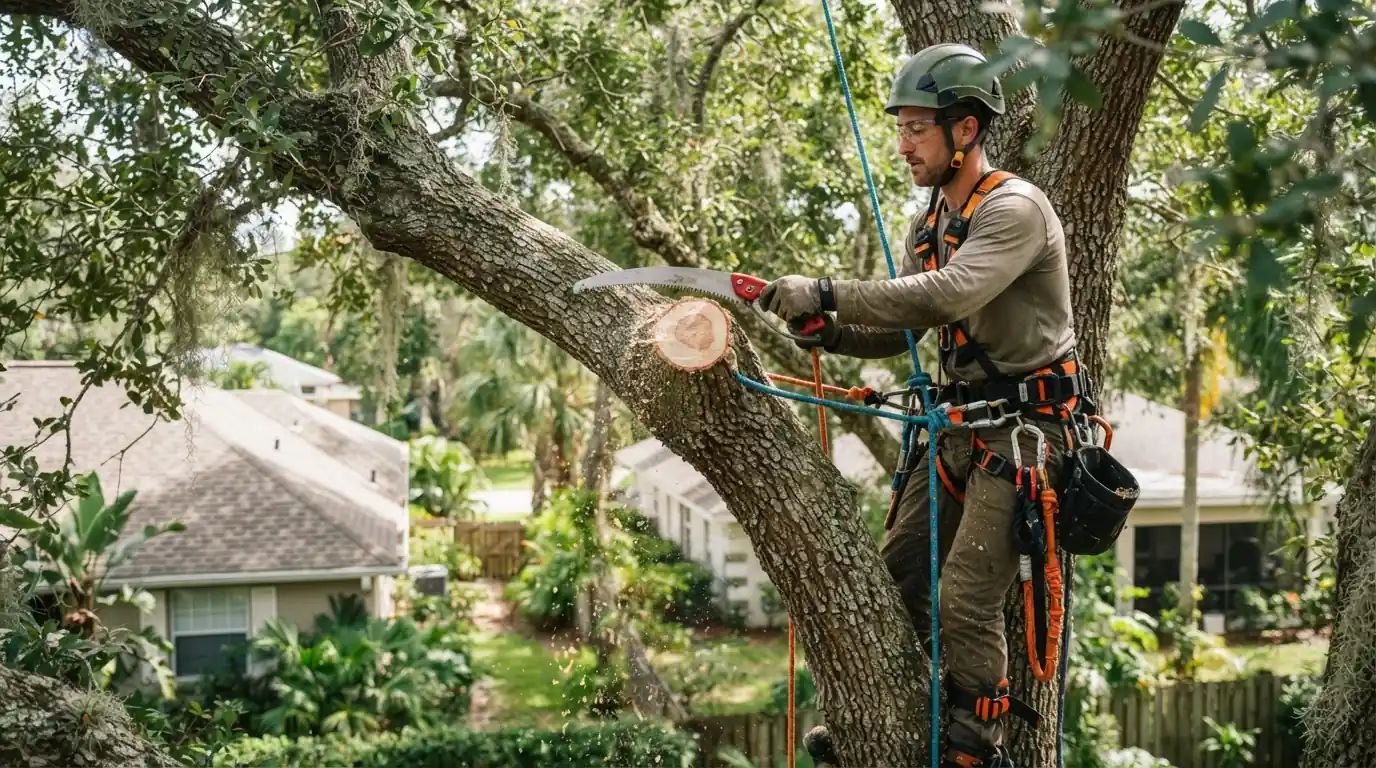
Start at the base: remove suckers coming up around the trunks. Then thin the center, taking out branches that cross or rub and weak twiggy growth crowding the middle of the tree. Cut back to a side branch or the trunk, just outside the branch collar, rather than leaving a stub.
Keep the main trunks and the natural vase shape. Most years a healthy crape myrtle only needs a handful of cuts, and none of them should be the same height across the whole tree. If a limb is reaching a roof or a walkway, shorten that limb back to a side branch heading away from the house instead of cutting everything down.
Bringing back a topped tree
A tree that has been topped for years can be restored. In the first winter, choose two or three of the strongest, best-placed sprouts on each knuckle and remove the rest. Over the next two or three seasons those kept sprouts grow into real branches, and the knuckles gradually fade into the wood.
It takes patience, and the tree may look sparse for a season. The result is a crape myrtle with branches thick enough to hold their blooms upright, and trunks that finally show their bark.
Doing it yourself or calling a crew
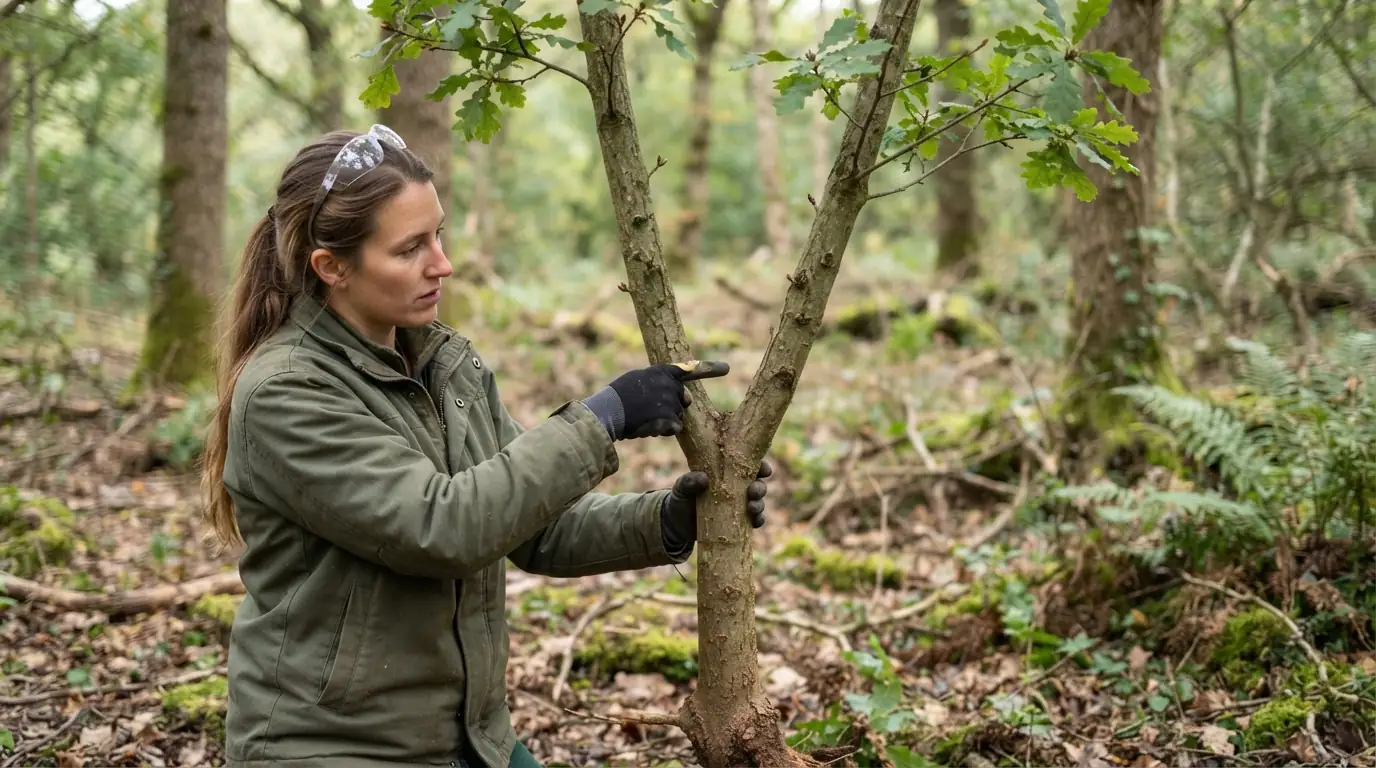
Suckers, seed pods and the occasional crossing branch on a small crape myrtle are easy jobs with clean hand pruners and a little patience. Step back after each cut and look at the whole tree before making the next one, and stop sooner than you think you should.
Taller trees, ladder work and restoring a tree that has been topped for years are better left to a crew. Large cuts in the wrong place undo years of growth, and the restoration process depends on choosing the right sprouts to keep in the first winter.
Choosing the right crape myrtle for the space
If you are replacing a crape myrtle, or planting one after a larger tree comes out, check the mature height on the tag. Dwarf and semi-dwarf varieties suit foundation beds and small front yards; tree-form varieties suit open spots away from the house, where they can reach full size without yearly cutting.
Plant in full sun with room for air to move through the canopy, which helps limit leaf diseases in Tampa's humid summers. Powdery mildew and sooty mold from aphids are the usual problems, and both are worse on crowded, shaded trees. A tree with the right spacing and a lightly thinned center stays cleaner with almost no spraying.
Crape myrtle pruning, answered
January or February, before new growth starts.
Thin sprouts from the knuckles bend under heavy blooms.
No. They flower on new growth either way.
Usually two or three growing seasons.
Yes, whenever they appear at the base.
Plant a dwarf or semi-dwarf variety for the space.
Just outside the branch collar, never as a stub.